Understanding opposites Easy Worksheets for Ages 5-8
4 filtered results
-
From - To
Explore the fun and engaging "Understanding Opposites Easy Worksheets" designed for children ages 5-8! Our worksheets help young learners grasp fundamental concepts of opposites through colorful visuals and interactive exercises. Perfect for classroom or home use, these activities promote critical thinking and vocabulary development, making learning enjoyable. With a variety of worksheets that cover different pairs of opposites, children will enhance their understanding while honing essential skills in a playful manner. Ideal for early grade teachers and parents, these resources are tailored to support young minds on their educational journey. Start building strong foundations in language today!
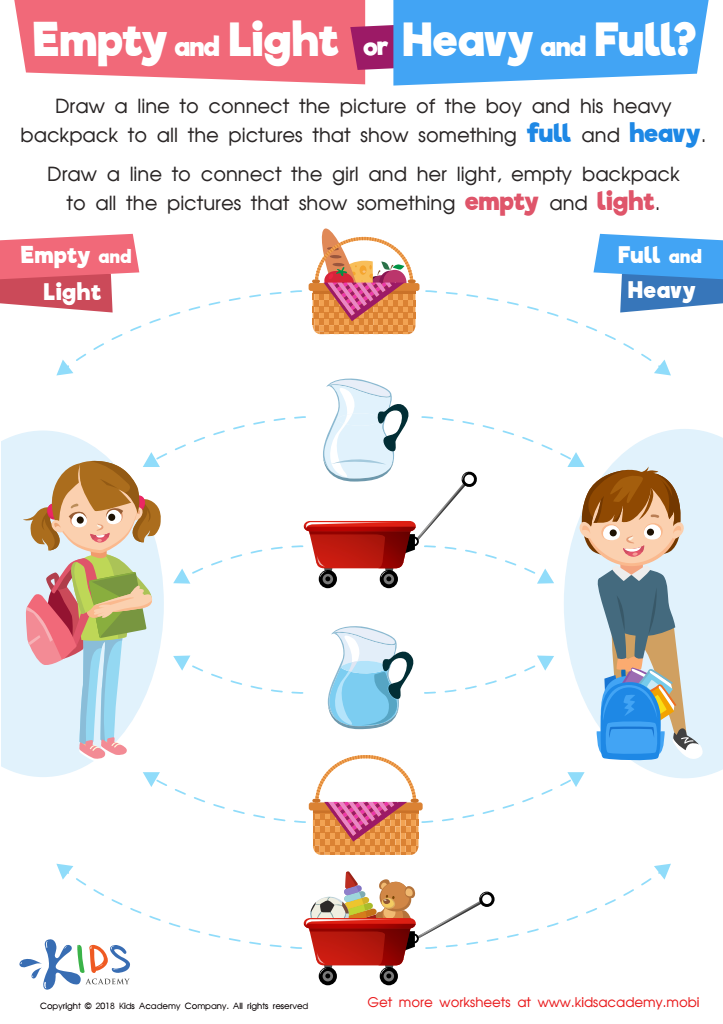
Empty and Light or Heavy and Full? Worksheet
 Assign to My Students
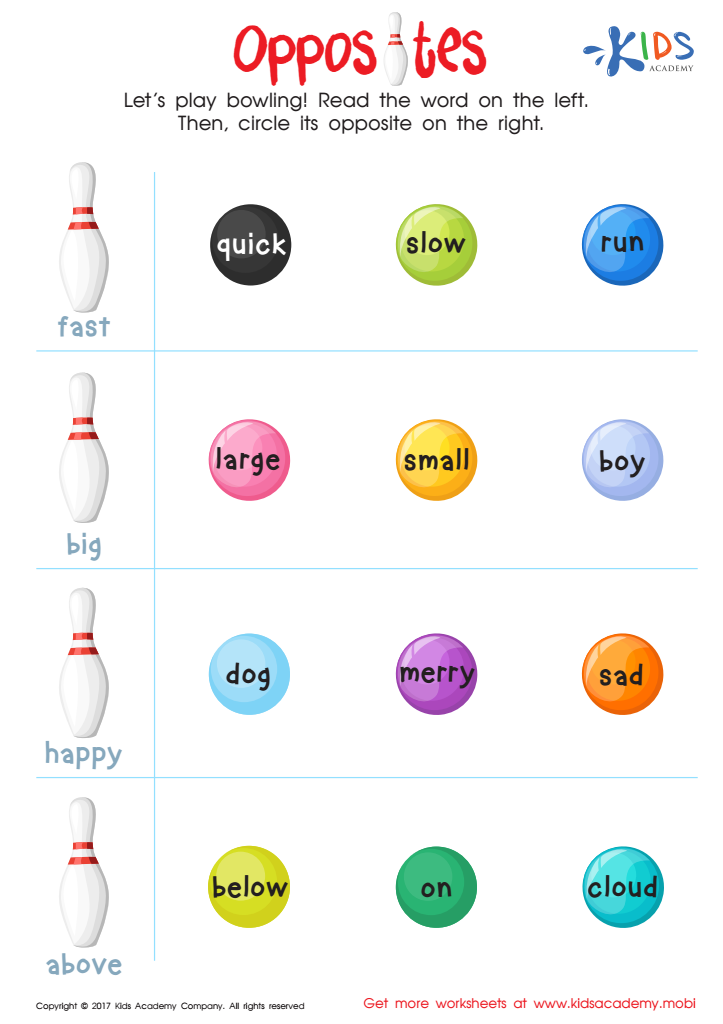
Opposites Worksheet
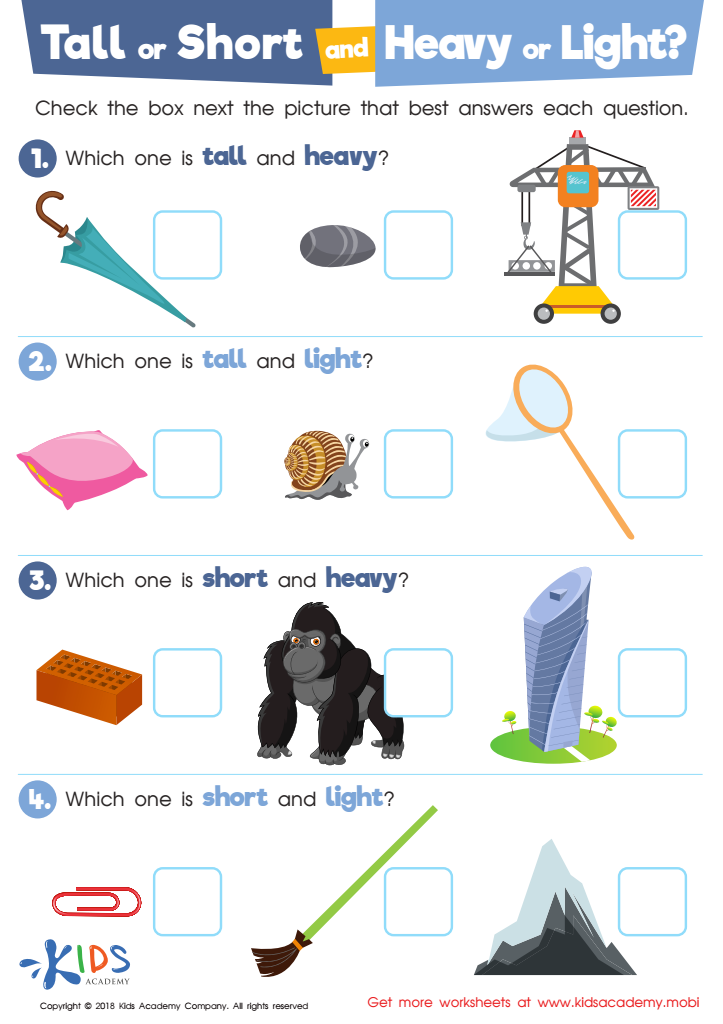
Tall or Short and Heavy or Light? Worksheet
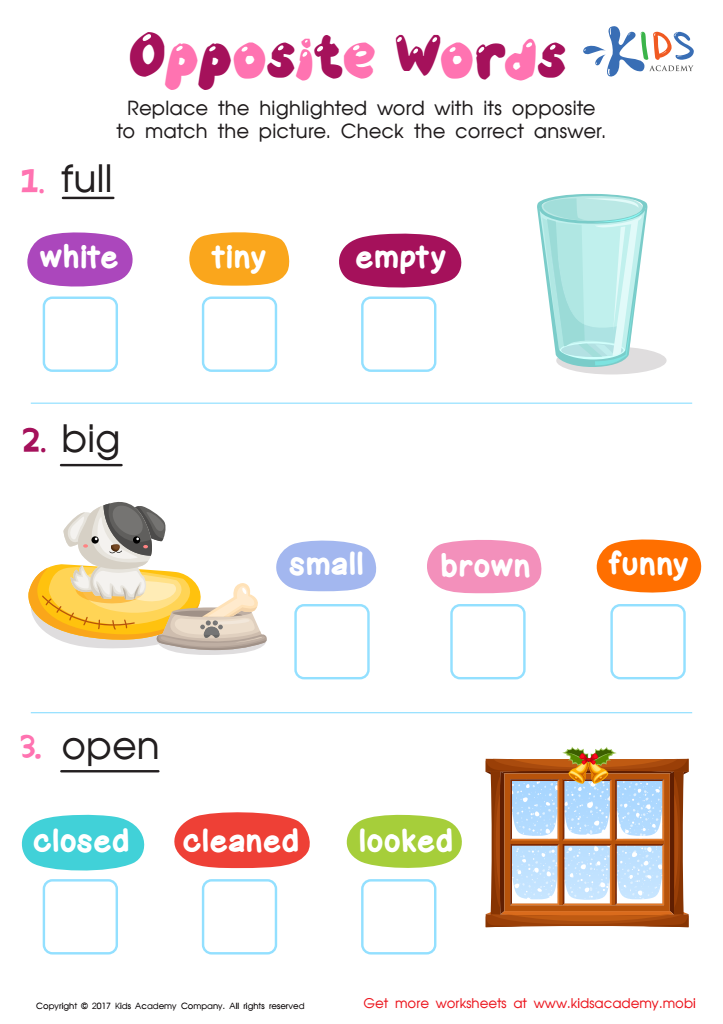
Opposite Words Worksheet






Understanding opposites is essential for children aged 5 to 8 as it builds a foundation for critical thinking, language development, and social skills. Learning opposites helps children grasp complex concepts and relationships in the world around them. For instance, understanding terms like "hot" and "cold" or "big" and "small" gives them the ability to categorize and differentiate things, which enhances cognitive flexibility.
Additionally, teaching opposites introduces children to descriptive language, enriching their vocabulary. When children articulate what is cold by contrasting it with hot, they develop clearer communication skills that are vital for effective conversation and expression.
Socially, recognizing opposites can help children navigate their relationships. Understanding emotional opposites, such as happy and sad, fosters empathy and emotional intelligence, helping them relate to peers and adults alike.
Moreover, activities centered around opposites can engage children actively, making learning enjoyable and memorable. For parents and teachers, emphasizing this concept not only promotes cognitive and emotional development but also encourages creativity through games and storytelling. Ultimately, fostering an understanding of opposites lays the groundwork for well-rounded development, critical for future academic success and social interactions.








