
Understanding subtraction Easy Worksheets for Ages 5-8
4 filtered results
Difficulty Level
Grade
Age
-
From - To
Subject
Activity
Standards
Discover engaging and easy-to-understand worksheets designed to help children ages 5-8 master subtraction! Our “Understanding Subtraction Easy Worksheets” provide a fun and interactive way for young learners to develop their subtraction skills at their own pace. With vibrant illustrations and relatable examples, children will enjoy practicing and reinforcing their math concepts. Worksheets are designed to cater to various learning styles, ensuring that every child can grasp subtraction easily. Promote confidence in math with our thoughtfully crafted activities that make learning subtraction enjoyable. Explore our selection and give your child the tools they need to succeed in early math mastery!
Favorites
With answer key
Interactive
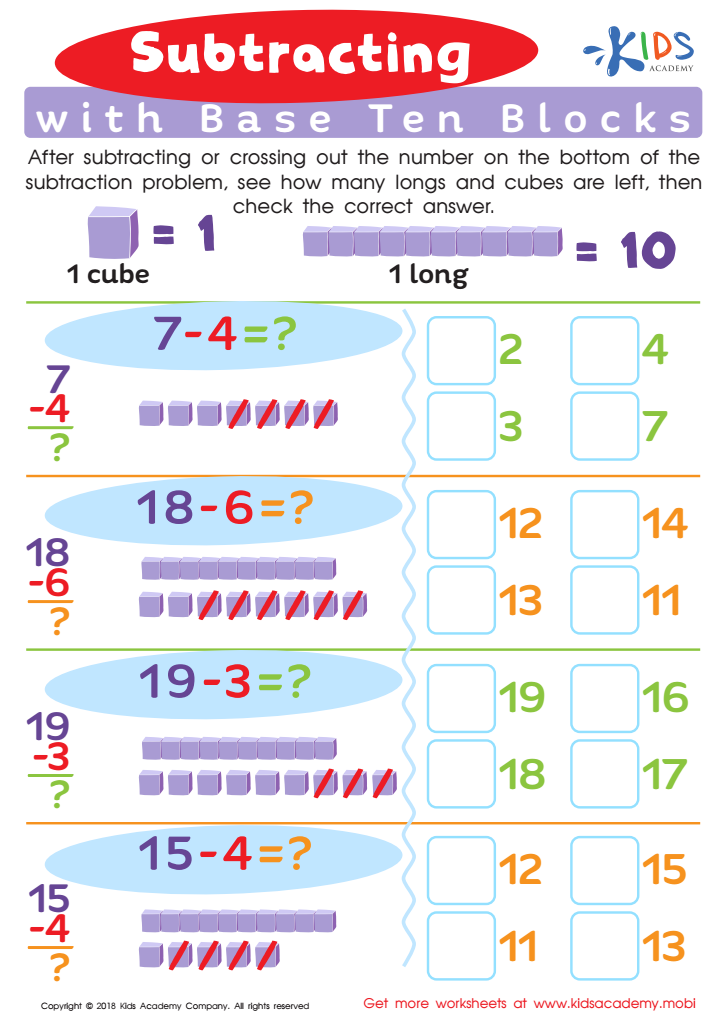
Subtracting With Base 10 Blocks Worksheet
Ask your child to count the cubes then help them check the answer. This problem may seem tricky, but it's just basic math. If they can count, they should have no trouble completing the exercise.
 Assign to My Students
Subtracting With Base 10 Blocks Worksheet
Worksheet
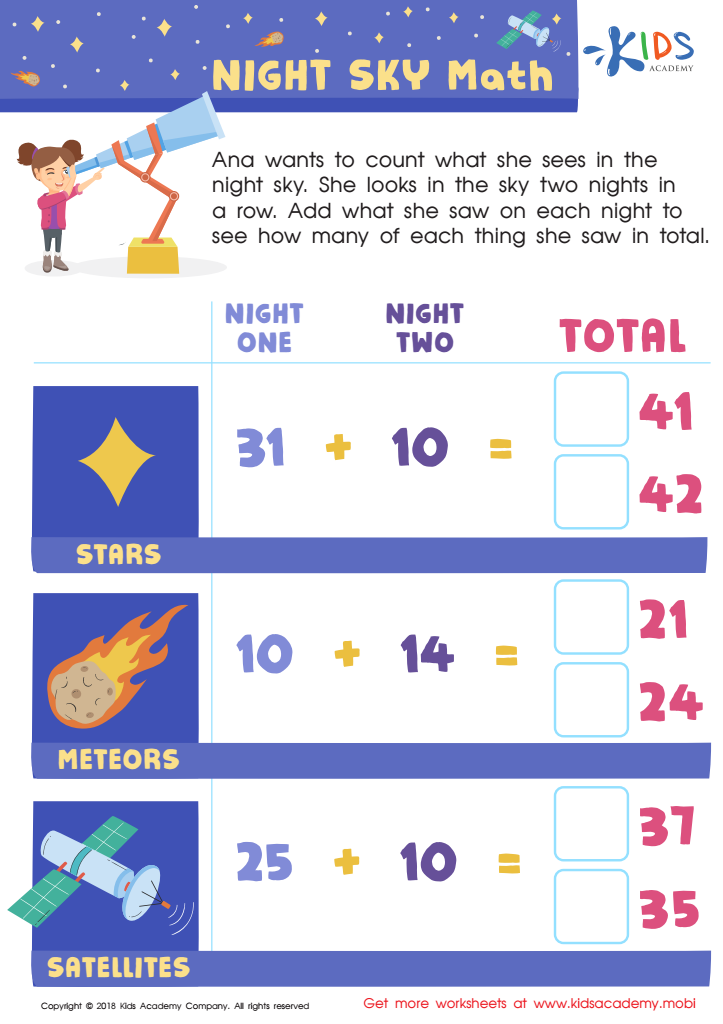
Night Sky Math Worksheet
Kids can use this colorful worksheet to learn math and addition while also exploring the night sky. Invite them to use a telescope to identify the things they see. Ask them to join Ana, the little girl in the worksheet, to count what she saw in two nights. Help them add the totals of each night to find out how many of each item she saw!
Night Sky Math Worksheet
Worksheet
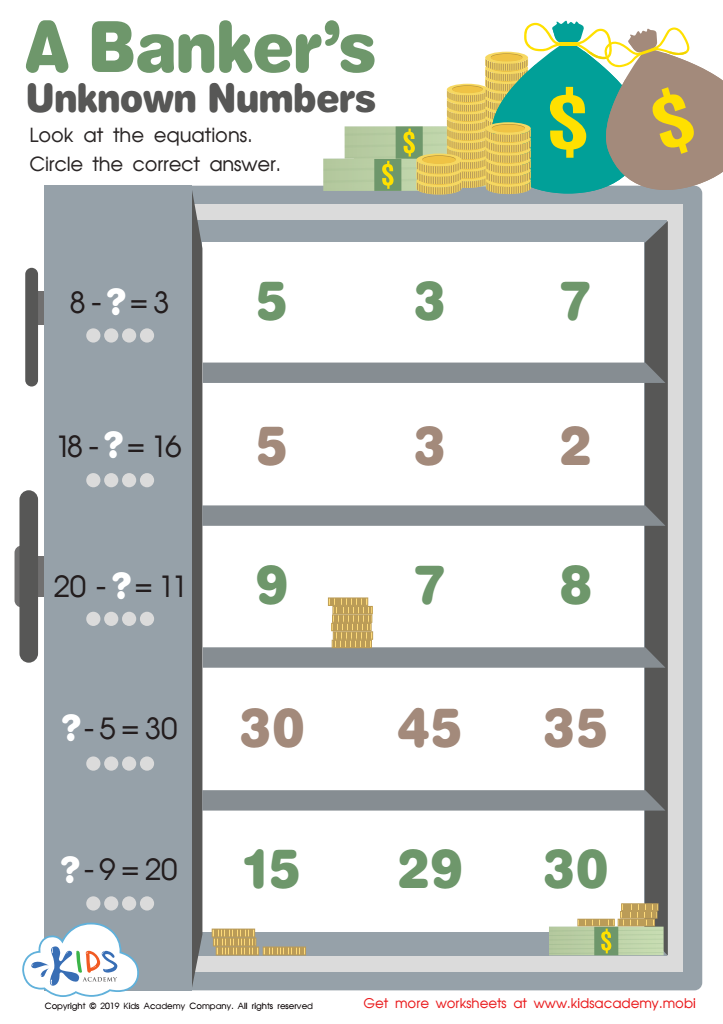
A Banker's Unknown Numbers Worksheet
At the bank, bankers count and record money properly to avoid losses. In this worksheet, kids count money and solve simple equations to find the correct answer. Help your kids work through the equations and circle the answer.
A Banker's Unknown Numbers Worksheet
Worksheet
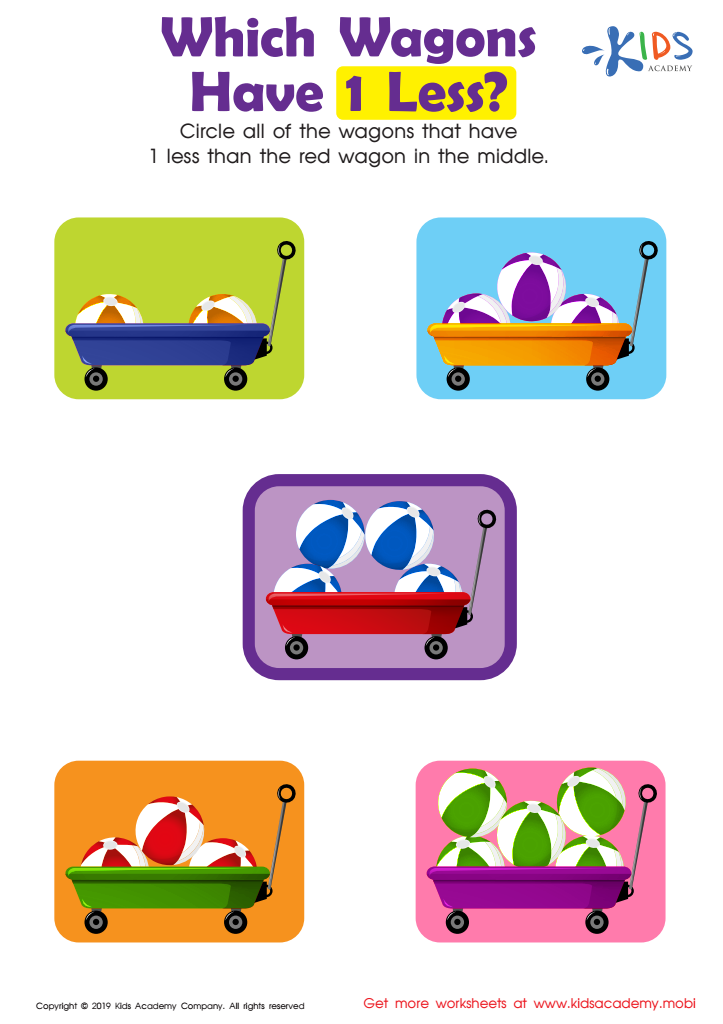
Which Wagons Have 1 Less? Worksheet
Test your kid's counting skills with a simple exercise. Ask them to count the balls in the five wagons shown and to circle the wagons with one less than the red wagon in the middle. This will give their brains a simple task that tests their knowledge of numbers.
Which Wagons Have 1 Less? Worksheet
Worksheet
Join Kids Academy for Free
Who is primarily going to use this learning content?








Understanding subtraction is crucial for children aged 5-8 as it lays the foundation for their future mathematical skills. At this early stage, children begin to grasp the concept of taking away, which enhances their number sense and cognitive development. Parents and teachers play a pivotal role in making subtraction relatable and enjoyable. Engaging children with interactive and visual methods—like using objects, drawings, or games—helps them visualize concepts, making subtraction easier to understand.
Subtraction is not just about numbers; it teaches critical problem-solving and reasoning skills. As children tackle subtractive challenges, they learn to think logically and approach problems systematically. Furthermore, solidifying subtraction skills fosters confidence in their mathematical abilities, encouraging a positive attitude toward learning.
Understanding subtraction also holds importance beyond academics. It enables children to navigate everyday situations, such as sharing and dividing, reinforcing social skills like fairness and cooperation. By investing time and effort into teaching subtraction, parents and teachers equip learners with essential skills that will benefit them throughout their education and personal lives. Forming a strong mathematical foundation sets the stage for more advanced concepts in the future, influencing overall academic success.








