Shape Recognition Easy 2D Shapes Worksheets for Ages 5-8
9 filtered results
-
From - To
Welcome to our Shape Recognition Easy 2D Shapes Worksheets for Ages 5-8! Designed to make learning fun and interactive, these worksheets help young learners identify and understand basic 2D shapes like circles, squares, triangles, and more. Each worksheet is crafted to foster shape recognition skills through engaging activities, including tracing, coloring, and matching games. Ideal for both classroom and home use, our resources support early math development while nurturing creativity. Perfect for preschool and early elementary students, these worksheets provide the perfect blend of education and enjoyment to help children build a strong foundation in geometry. Start exploring shapes today!
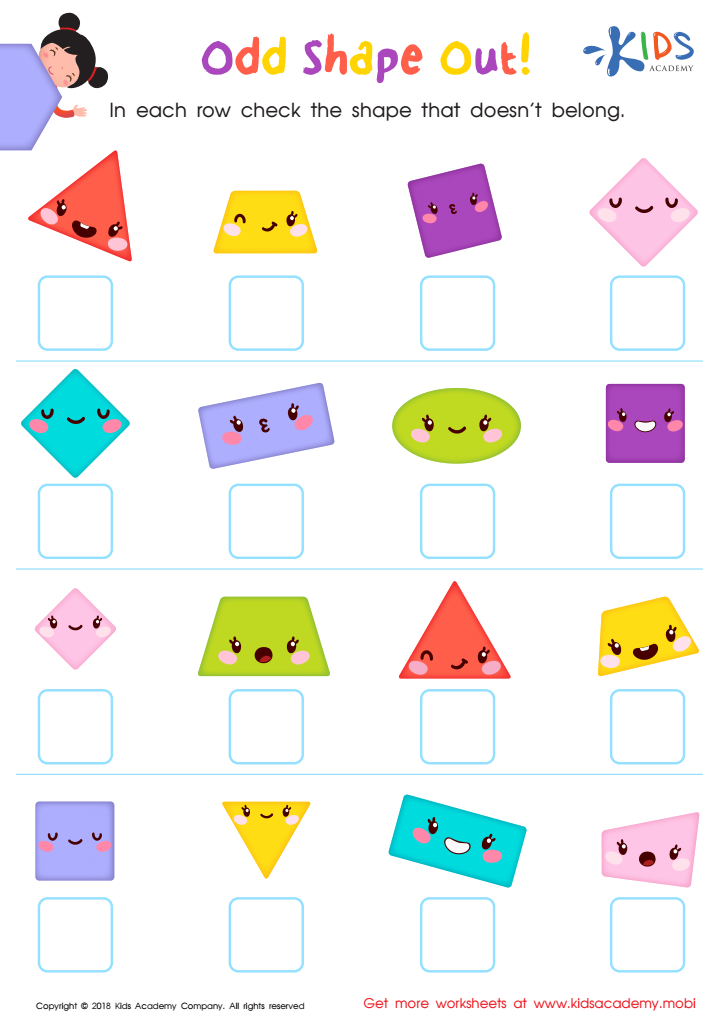
Odd Shape Out Worksheet for Grade 3
 Assign to My Students











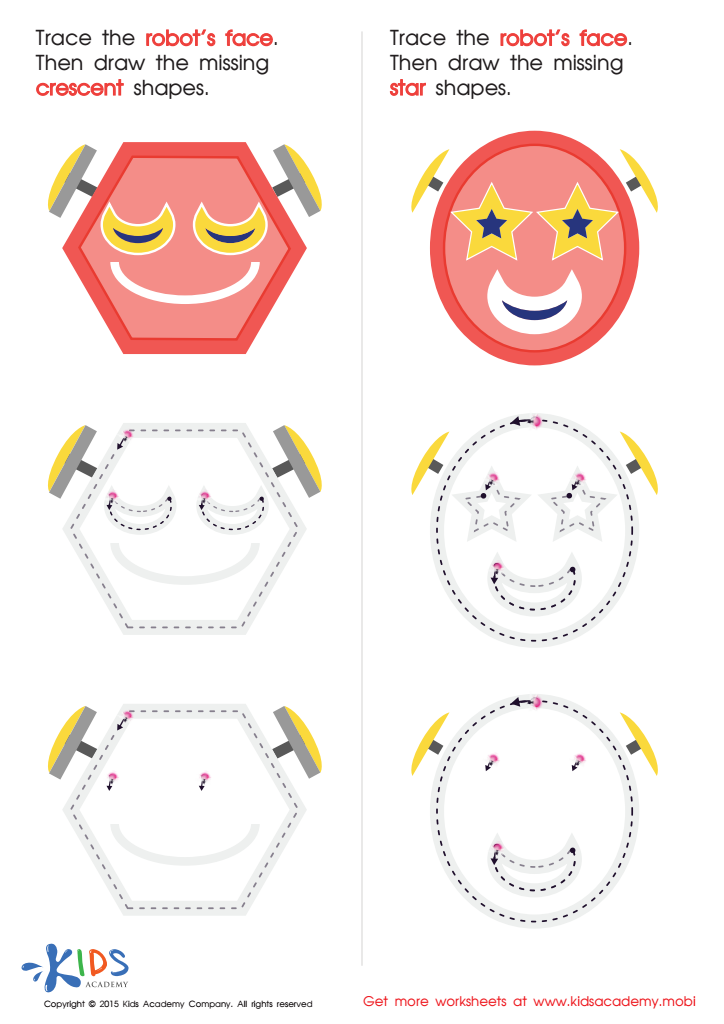
Composing a Robot's Face of Crescents And Stars Worksheet
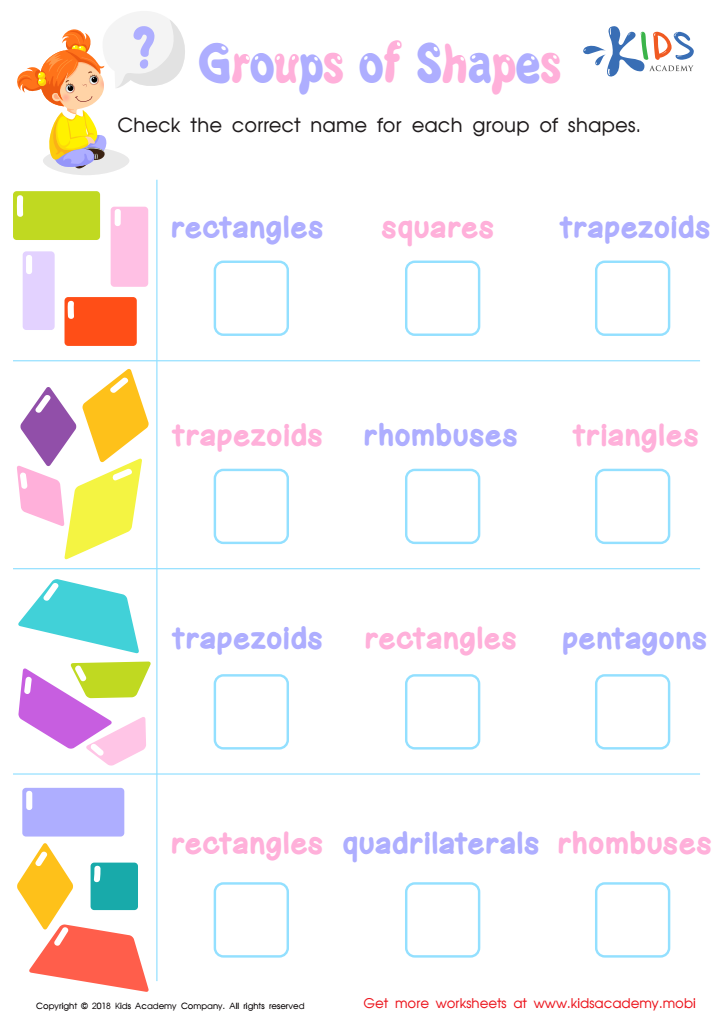
Groups of Shapes Worksheet
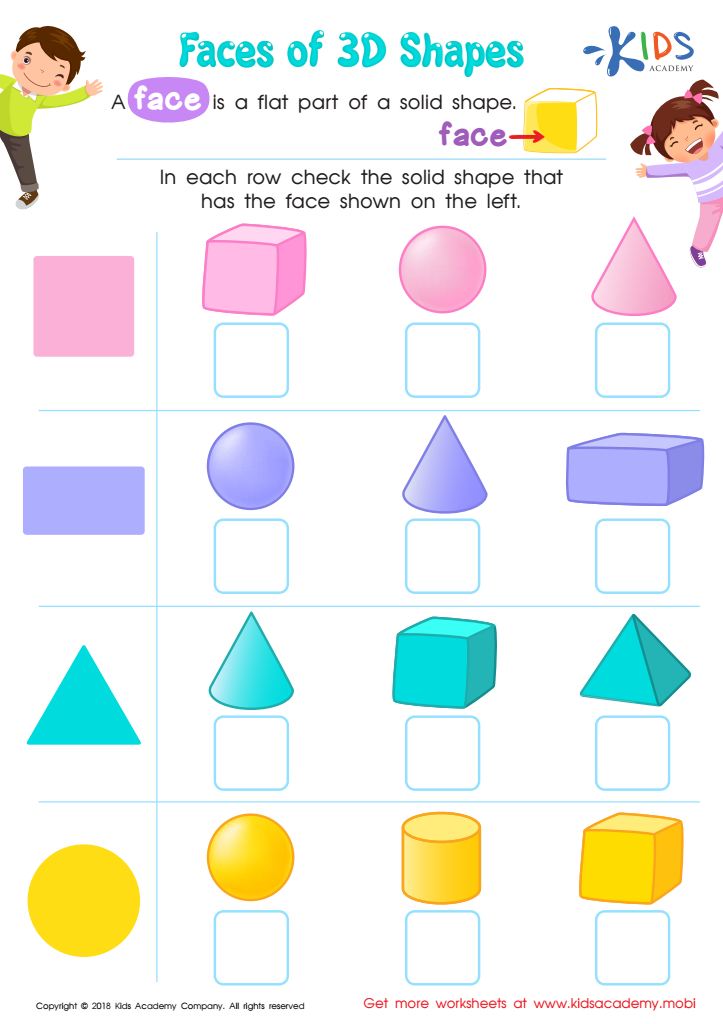
Faces of 3D Shapes Worksheet
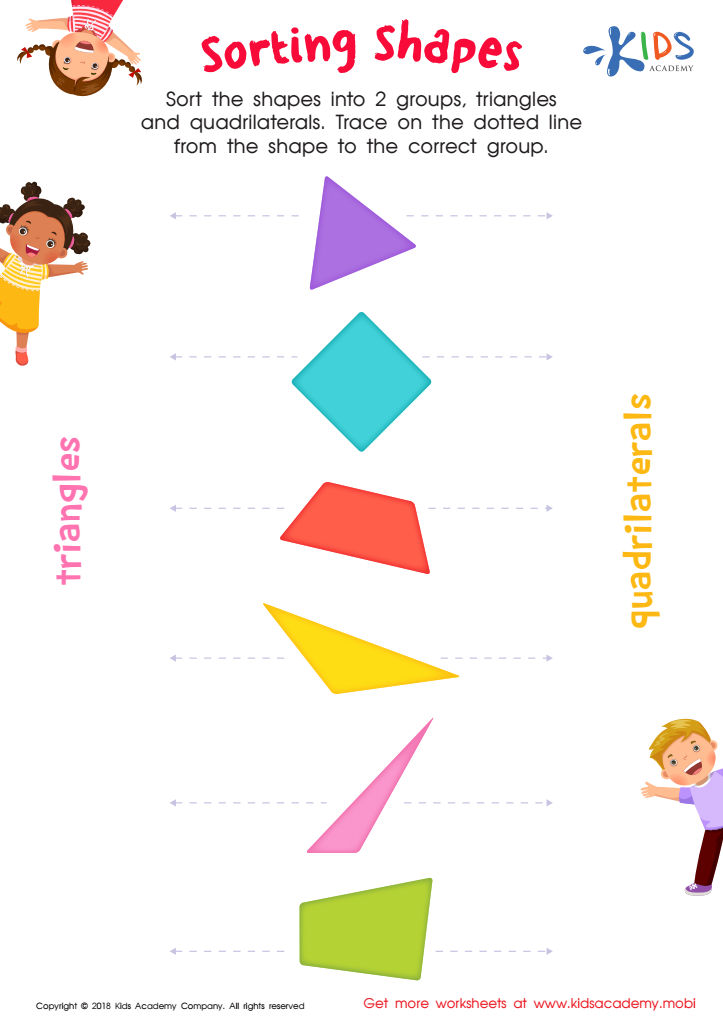
Sorting Shapes Worksheet
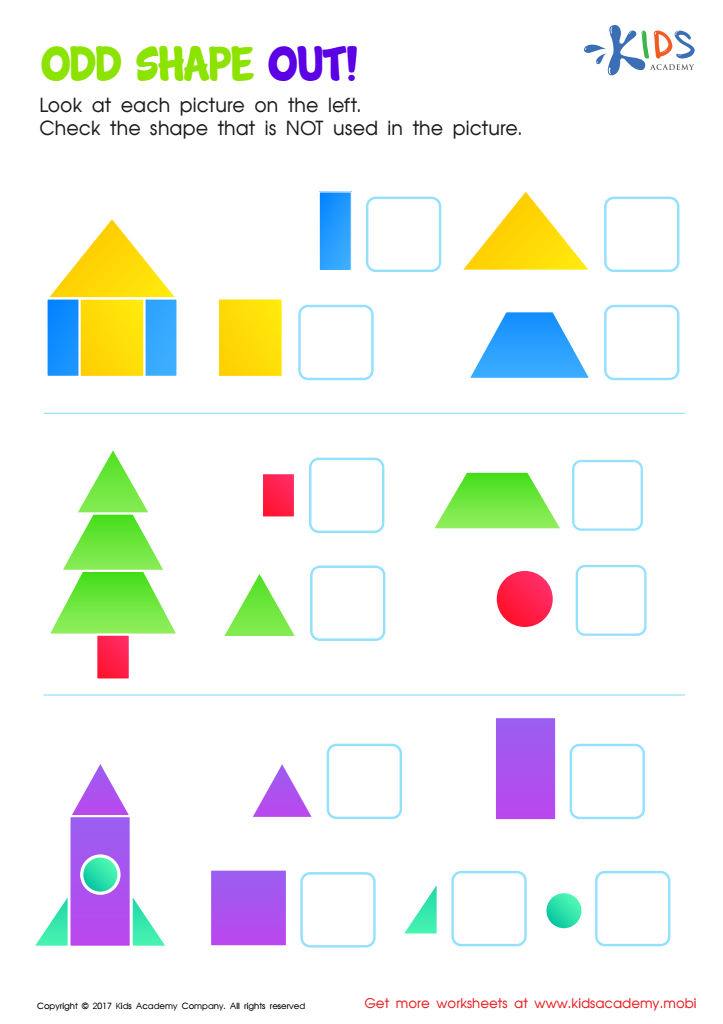
Odd Shape Out Worksheet for Grade 1
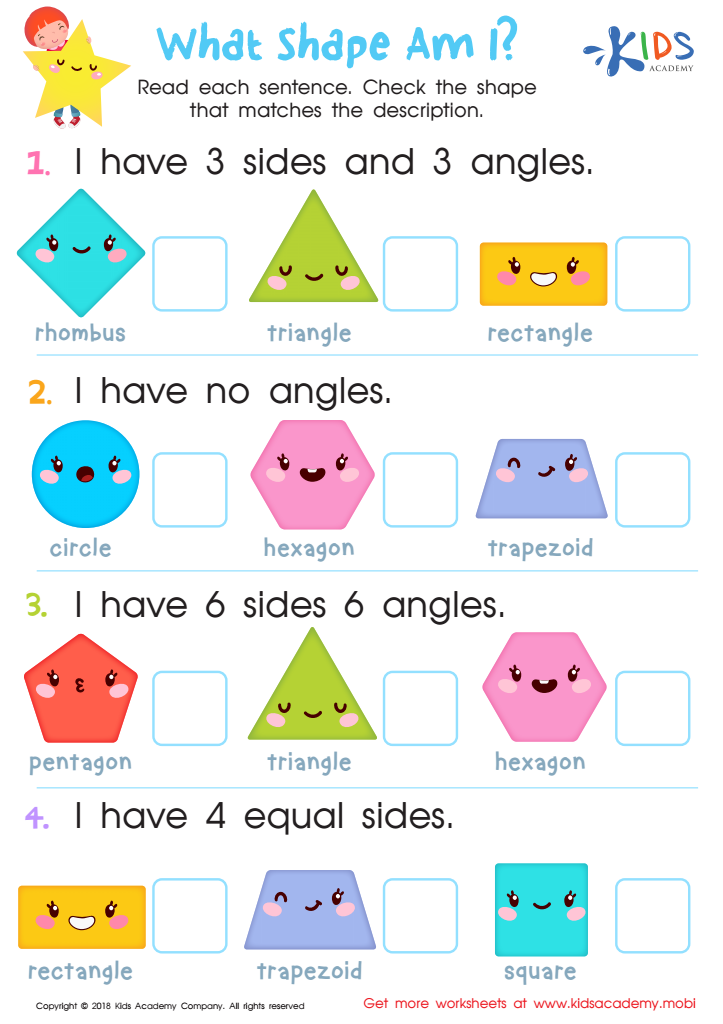
What Shape Am I? Worksheet
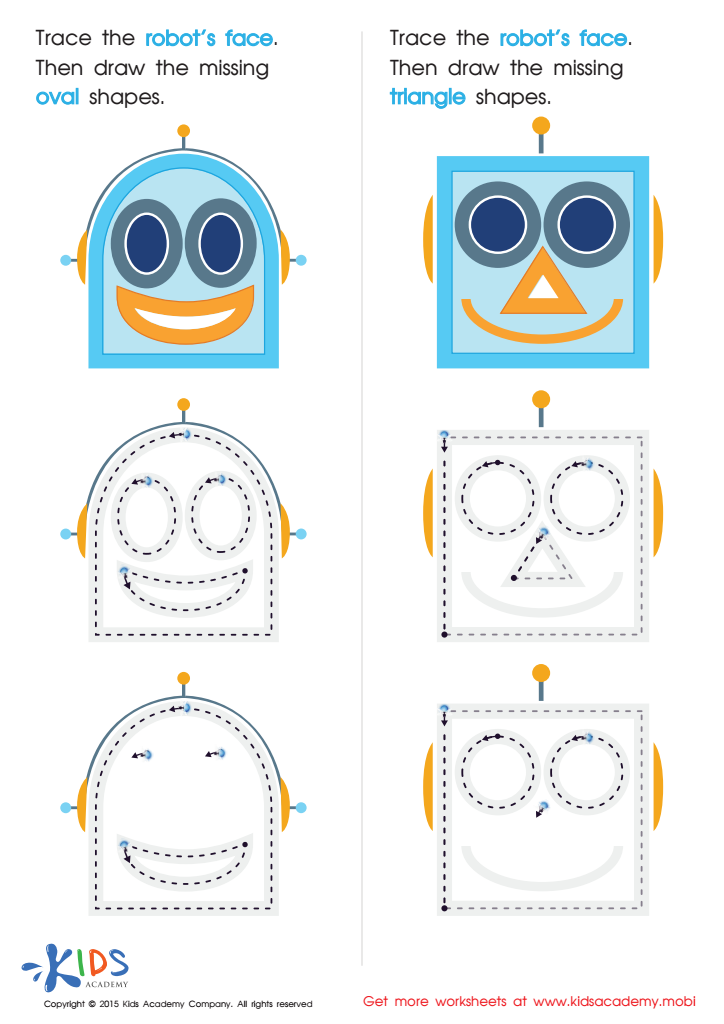
Drawing Ovals And Triangles with Fun Printable
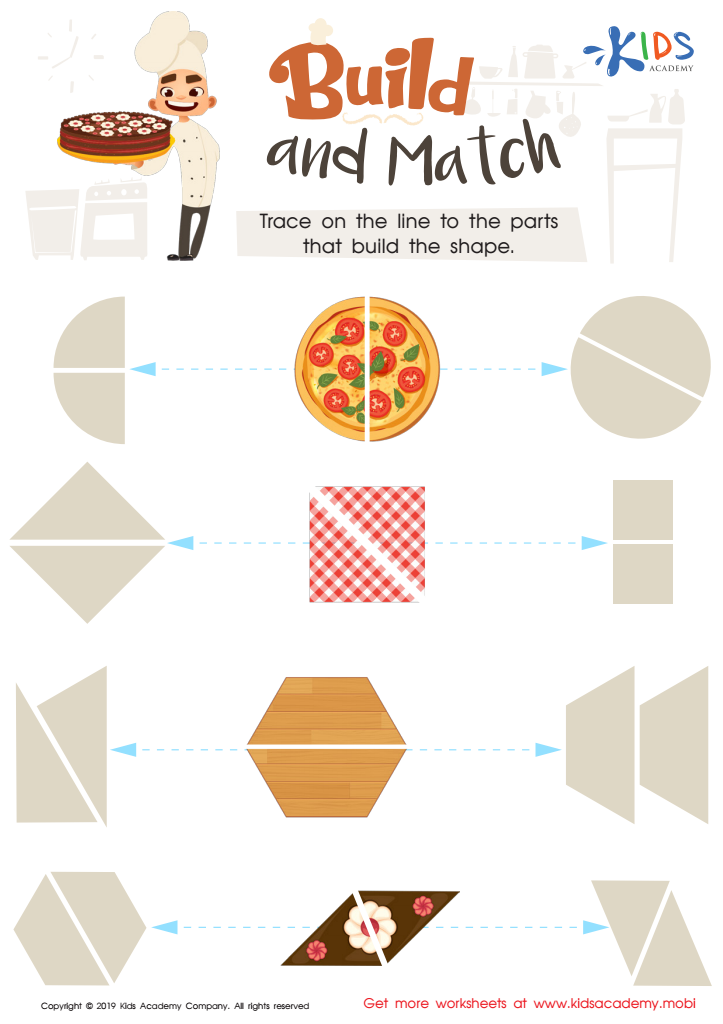
Build and Match Worksheet








Shape recognition is a fundamental skill that forms the basis for more complex mathematical concepts, making it crucial for children aged 5-8. During these formative years, recognizing and understanding simple 2D shapes—such as circles, squares, triangles, and rectangles—enhances critical thinking and problem-solving skills. When children learn to identify shapes, they not only build a strong mathematical foundation but also develop spatial awareness, which is vital for geometry and real-world applications.
Parents and teachers should care about shape recognition because it fosters cognitive development and reinforces connections between play and learning. Engaging activities that involve shape recognition help children cultivate observation skills, creativity, and fine motor development, essential for later academic success. Furthermore, these activities encourage collaborative play and communication, boosting social skills alongside cognitive growth.
By integrating shape recognition into daily routines and classroom activities, we equip children with confidence in their abilities, setting the stage for positive attitudes toward learning. Recognizing shapes is not just about mathematics; it cultivates a broader understanding of the world, promoting skills that apply beyond the classroom. Investing in shape recognition today lays a strong foundation for future learning and development in various areas.