Problem-Solving Skills Easy Geometry Worksheets for Ages 5-8
6 filtered results
-
From - To
Unlock your child's potential with our "Problem-Solving Skills Easy Geometry Worksheets for Ages 5-8." Designed to captivate young minds, these worksheets help children grasp essential geometry concepts through engaging, age-appropriate activities. Each worksheet fosters critical thinking and problem-solving skills, combining fun puzzles with educational value. Perfect for home or classroom use, our expertly crafted resources align with early grade math standards, ensuring foundational geometric knowledge. Help your little ones build confidence in math while enhancing their analytical abilities. Dive into a world of shapes, patterns, and problem-solving fun with our easy-to-navigate printable worksheets today!
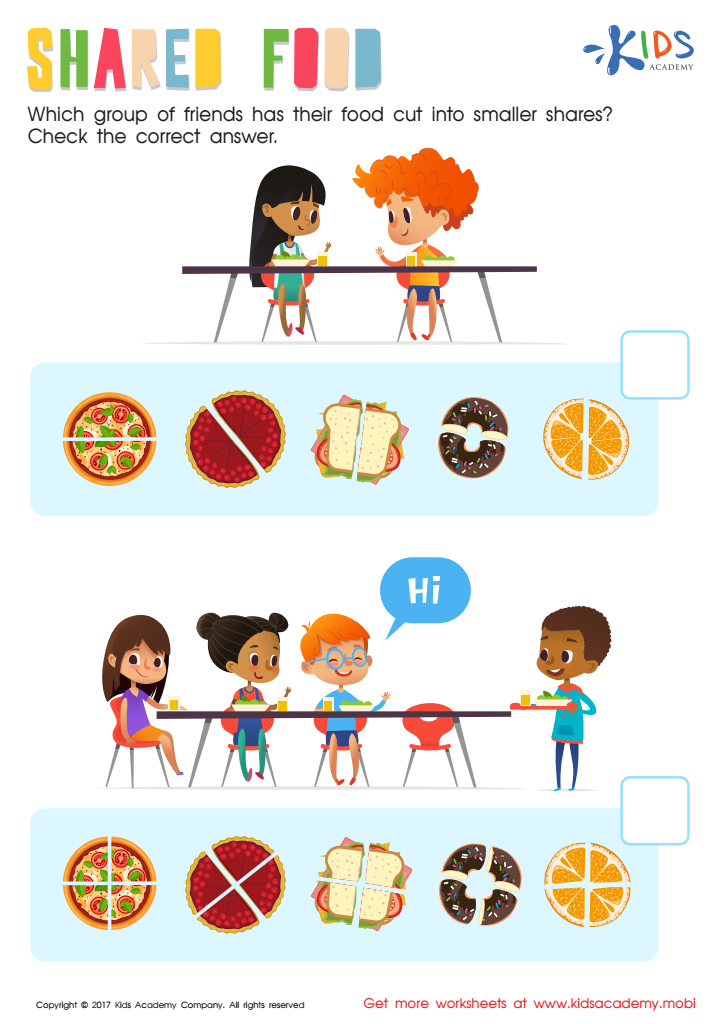
Shared Food Worksheet
 Assign to My Students











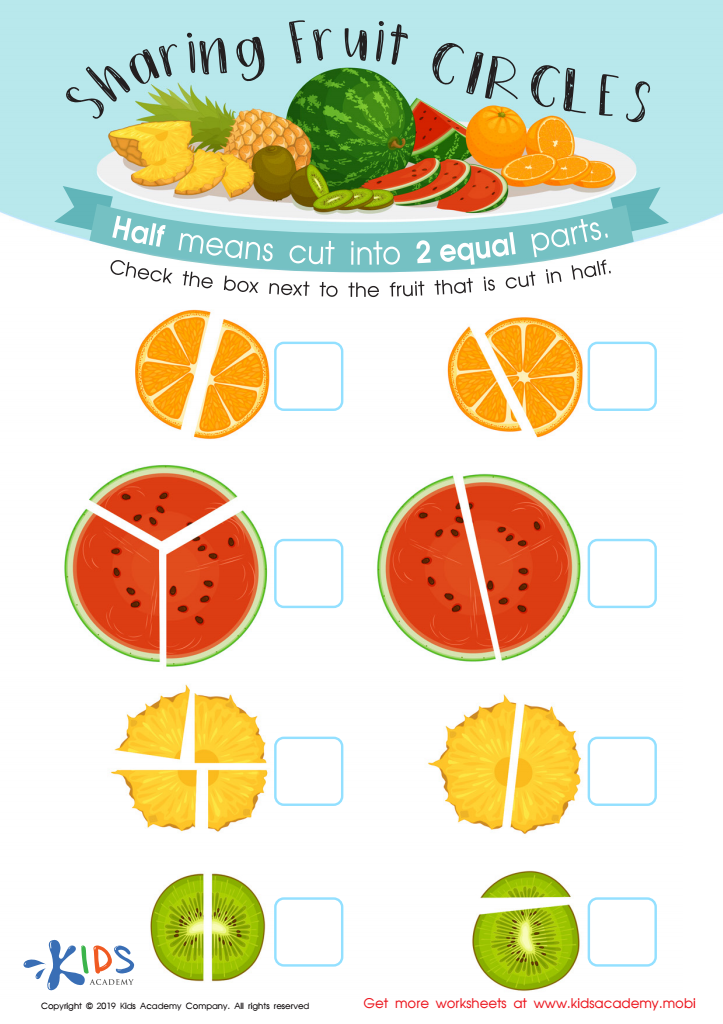
Sharing Fruit Circles Worksheet
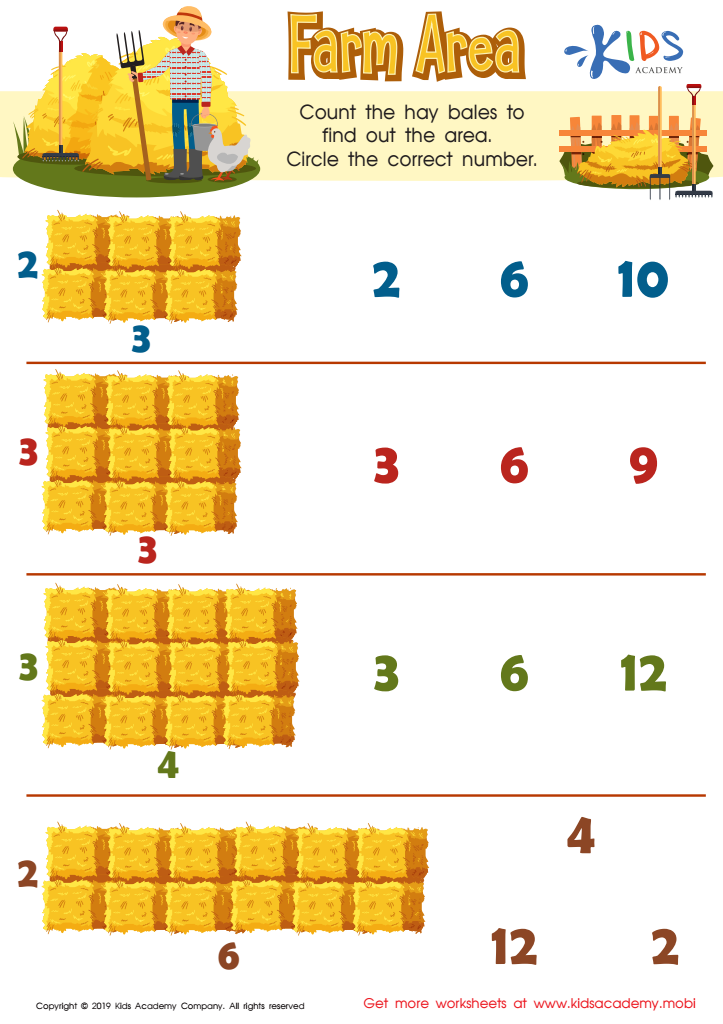
Farm Area Worksheet
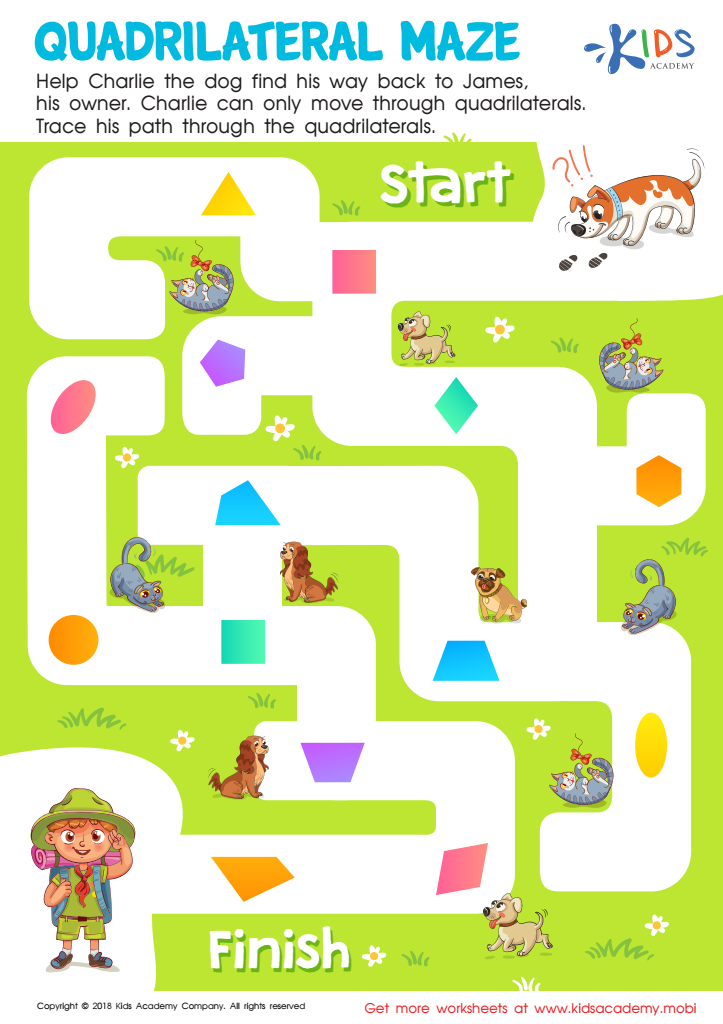
Quadrilateral Maze Worksheet
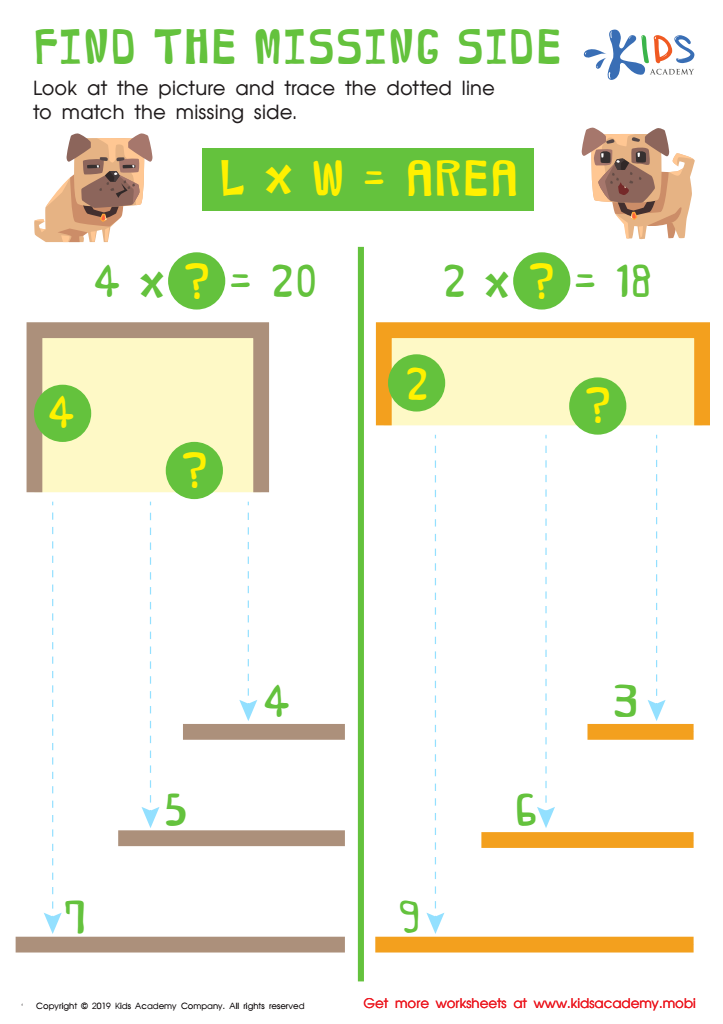
Find the Missing Side Worksheet
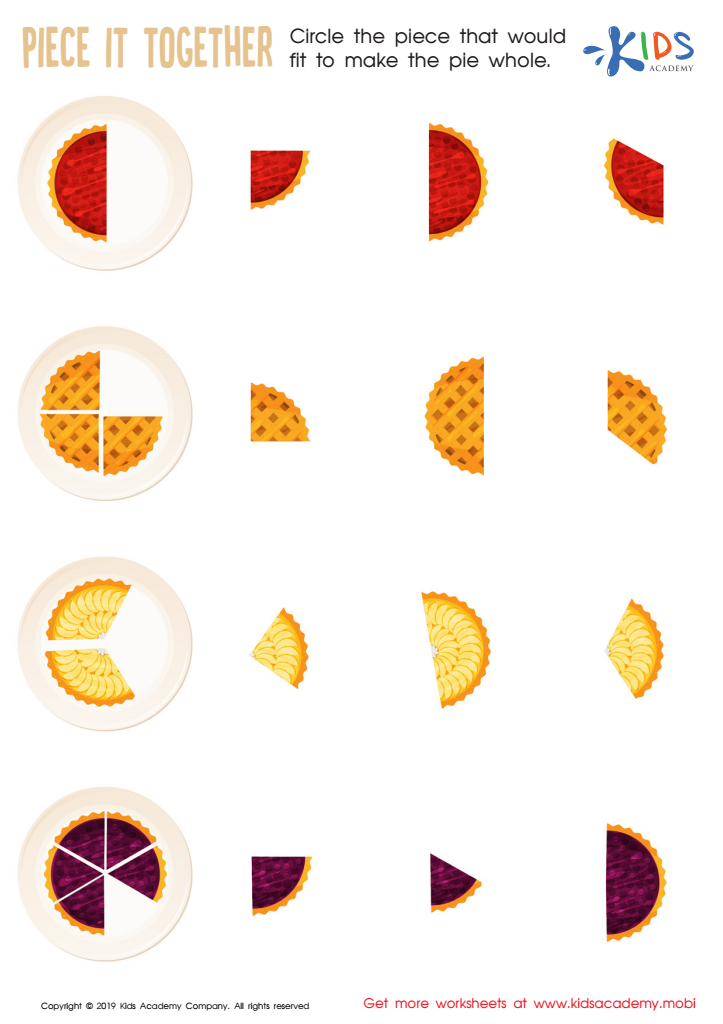
Piece it together Worksheet








Problem-solving skills in easy geometry for children aged 5-8 are foundational to their cognitive development and academic success. Firstly, engaging with geometry encourages spatial awareness, which helps children understand the world around them through concepts such as shape, size, and position. These skills are crucial as they underpin abilities used in everyday activities.
Introducing geometry at an early age also helps develop critical thinking and logical reasoning. When young children manipulate shapes to solve puzzles or work through geometric problems, they learn to approach tasks methodically and think outside the box, cultivating patience and persistence in finding solutions.
Moreover, early exposure to geometry lays a solid groundwork for future STEM (Science, Technology, Engineering, and Mathematics) education. Many advanced topics in these fields relate directly to spatial understanding and geometric reasoning. By fostering these skills early, children are better prepared as they progress academically.
Parent and teacher involvement is essential in nurturing these abilities. Engaging activities like puzzles, drawing shapes, and interactive games can make learning geometry enjoyable and stimulating. Supported by guided instruction and encouragement, children are more likely to develop a positive attitude towards mathematics and problem-solving in general, ensuring they grow into confident, skilled learners.








