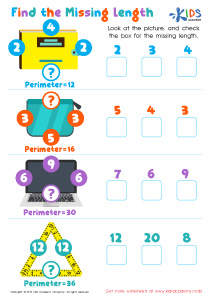
Number Recognition Easy Subtraction Worksheets for Ages 5-8
5 filtered results
Difficulty Level
Grade
Age
-
From - To
Subject
Activity
Standards
Welcome to our Number Recognition Easy Subtraction Worksheets designed specifically for children ages 5 to 8! These printable resources focus on cultivating essential math skills while making learning engaging and fun. Our worksheets seamlessly integrate number recognition and basic subtraction concepts, helping young learners develop a solid foundation in math. With interactive exercises, children can practice identifying numbers, counting objects, and solving simple subtraction problems. Our colorful and visually appealing layouts capture kids' interest, ensuring an enjoyable educational experience. Perfect for classroom use or homeschooling, our worksheets encourage independent learning and bolster confidence in budding mathematicians! Download your worksheets today!
Favorites
With answer key
Interactive
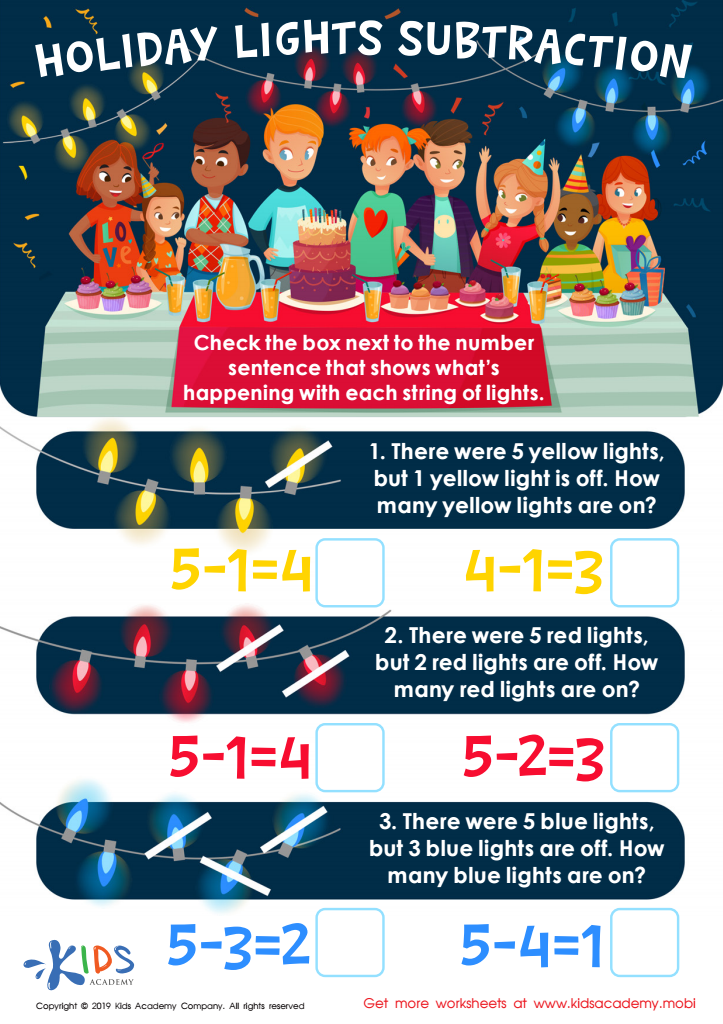
Holiday Lights Subtraction Worksheet
Before tackling the math problem, get your kids ready by asking them to share their favorite holiday and why. Then, look at the picture on the worksheet with them. Help them examine the numbers and problems, and select the number sentence that shows what's happening with each string of light. 80 words.
 Assign to My Students
Holiday Lights Subtraction Worksheet
Worksheet
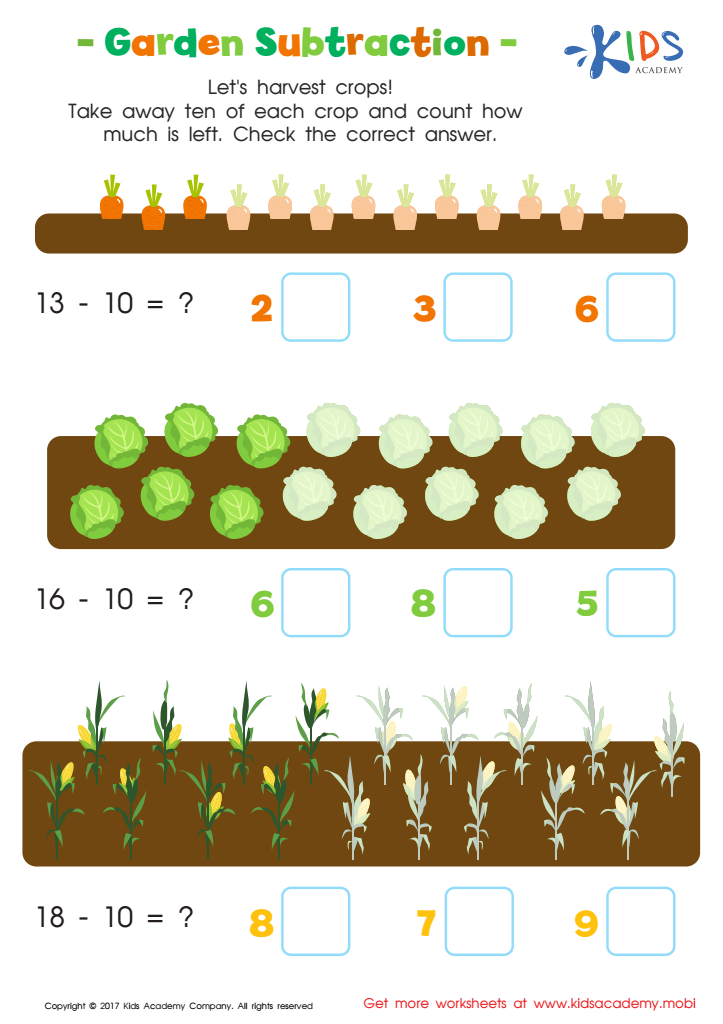
Garden Subtraction Worksheet
Help your kids understand math with this fun, garden-themed subtraction worksheet! Have them read the number sentences and count the veggies in each row. Then, subtract 10 from each row to find the answer. They'll love counting the colorful veggies and solving the problems!
Garden Subtraction Worksheet
Worksheet
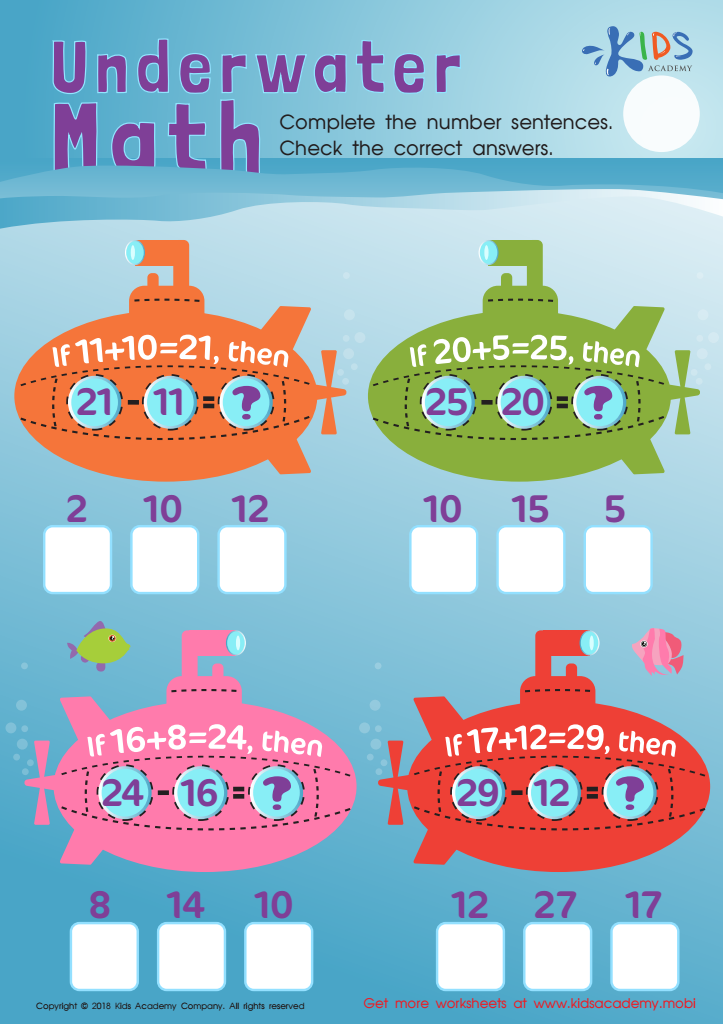
Addition and Subtraction: Underwater Math Worksheet
Take your little mathematicians on an undersea adventure as they work to solve number sentences. With fun worksheets, they'll analyze numbers, orders of operation and use if/then statements. They'll learn addition and subtraction are opposites, helping them solve more problems!
Addition and Subtraction: Underwater Math Worksheet
Worksheet
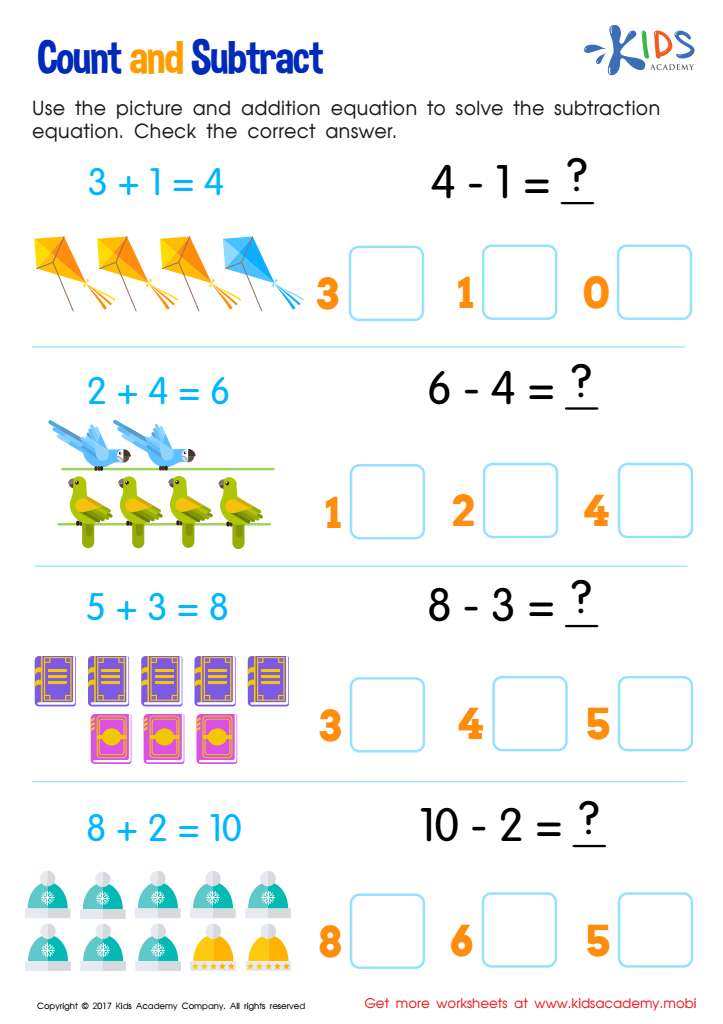
Count and Subtract Worksheet
This worksheet helps your child learn math via colorful pictures and equations. Count the items together, adding and subtracting as necessary. Your child will be challenged to get the correct total, thereby developing their math skills.
Count and Subtract Worksheet
Worksheet
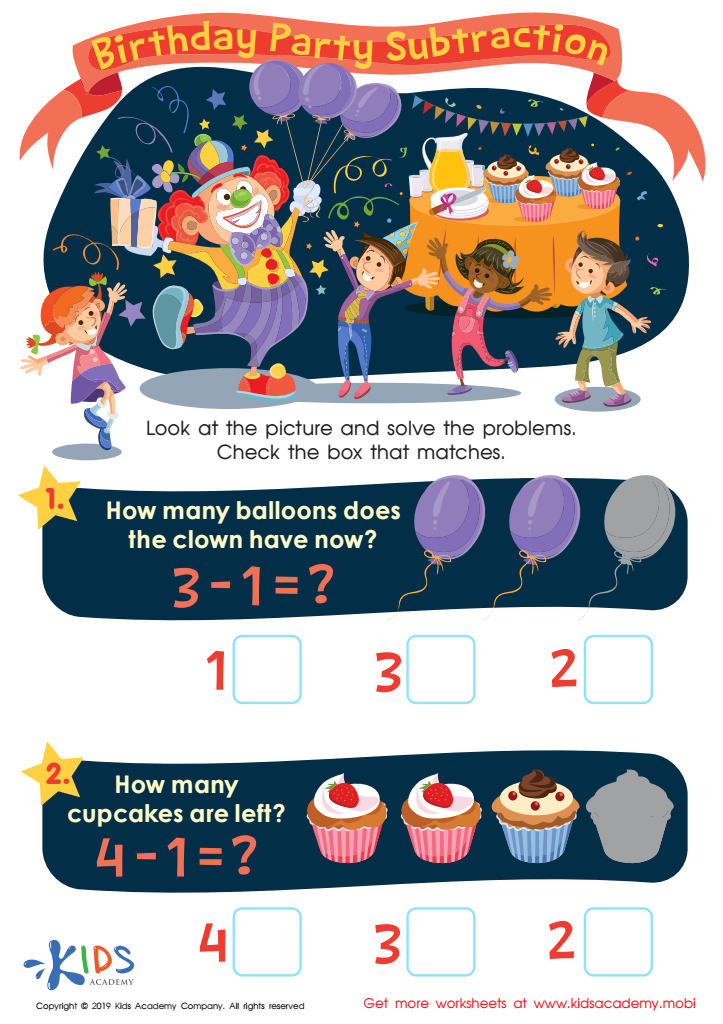
Birthday Party Subtraction Worksheet
Kids love birthday parties, with fun activities and yummy treats. Make math fun with this worksheet! It has pictures of a party, and your kids should solve the problems and check the matching box. They'll get to learn math, and have fun too!
Birthday Party Subtraction Worksheet
Worksheet
Join Kids Academy for Free
Who is primarily going to use this learning content?








Number recognition and easy subtraction are foundational skills vital for children's mathematical development, especially for those aged 5-8. Parents and teachers play a critical role in nurturing these skills that set the groundwork for more complex mathematics in later years.
At this young age, children are beginning to develop number sense, which is crucial for their overall cognitive development. Recognizing numbers helps them understand quantities, sequences, and relationships between numbers, forming the building blocks for all future math concepts. When children recognize numbers, they gain confidence which fosters a positive attitude towards mathematics.
Easy subtraction, on the other hand, introduces children to basic arithmetic. Mastering subtraction provides them with essential problem-solving skills and helps them understand how quantities can change through addition and removal. This critical thinking ability is spontaneously applied in daily situations, enhancing their comprehension of the world around them.
Moreover, participating in these activities promotes engagement between parents and teachers, creating a team approach to learning. By caring about these skills, adults contribute to the development of logical thinking, patience, and focus in the young learners, empowering them to tackle more challenging concepts in the future with ease and confidence. These early math skills form the bedrock of lifelong learning in mathematics and beyond.