Number Recognition Easy Numbers up to 100 Worksheets for Ages 5-9
10 filtered results
-
From - To
Enhance your child's math skills with our "Number Recognition Easy Numbers up to 100 Worksheets." Specially designed for ages 5-9, these engaging activities help young learners master number recognition and counting with ease. Our worksheets feature fun exercises that promote understanding of numbers up to 100, crucial for building a solid math foundation. Ideal for both classroom use and homeschooling, these resources cater to various learning styles, ensuring every child can succeed. Give your child the confidence they need in mathematics by incorporating these user-friendly, printable worksheets into their daily practice. Help them thrive and excel!
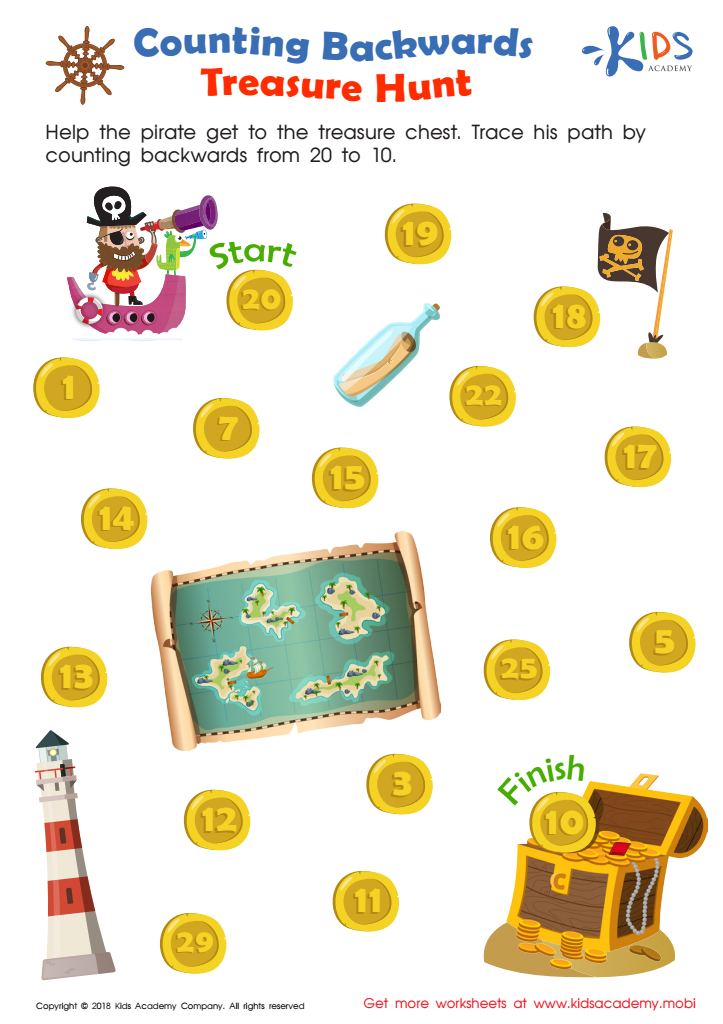
Counting Backwards: Treasure Hunt Worksheet
 Assign to My Students
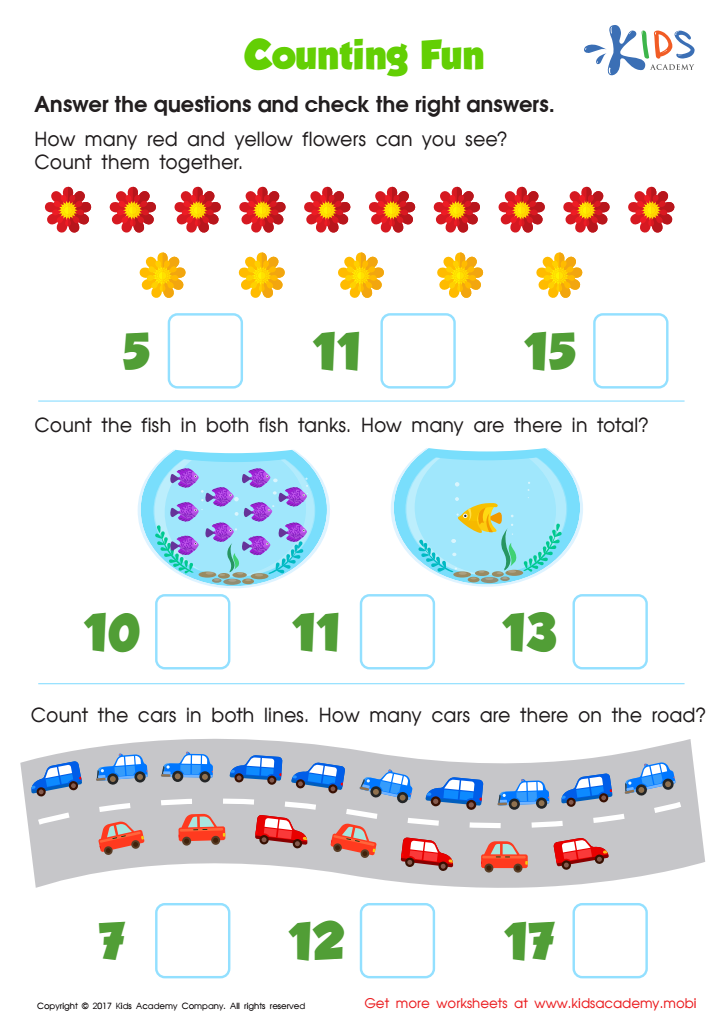
Counting Fun Worksheet
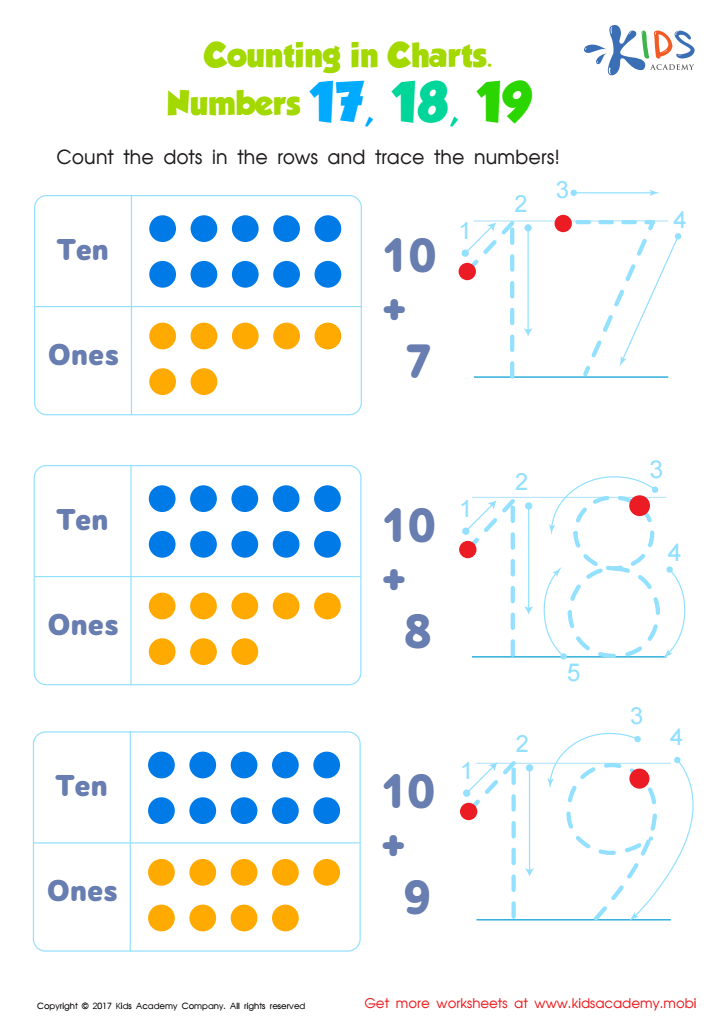
Kindergarten Number Tracing: Counting in Charts Worksheet
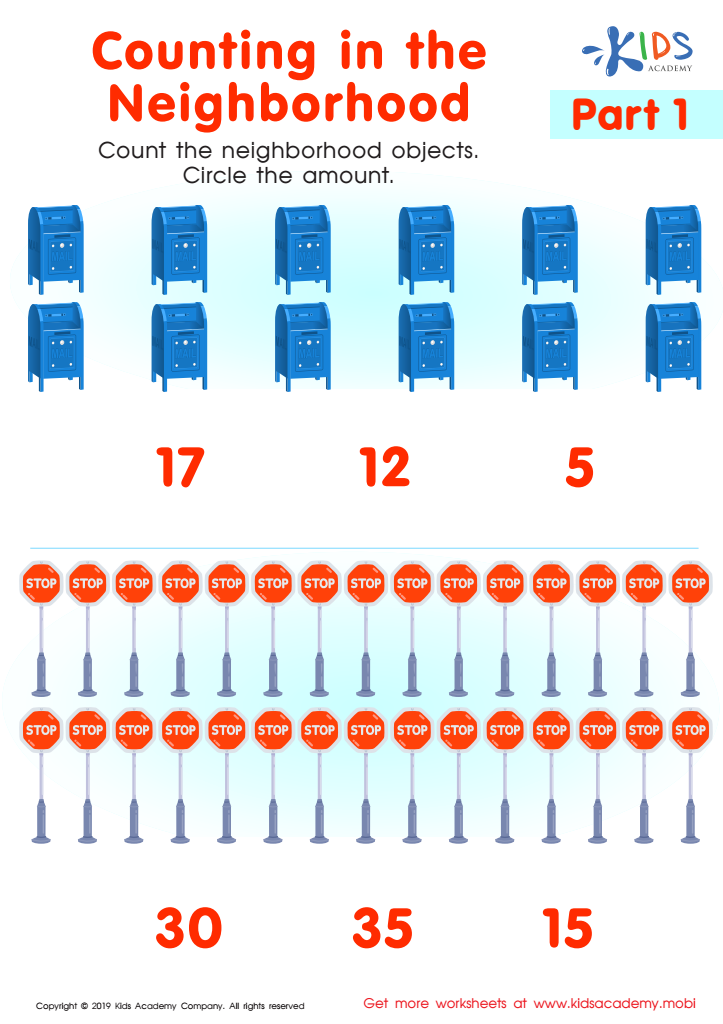
Counting in the Neighborhood Part1 Worksheet
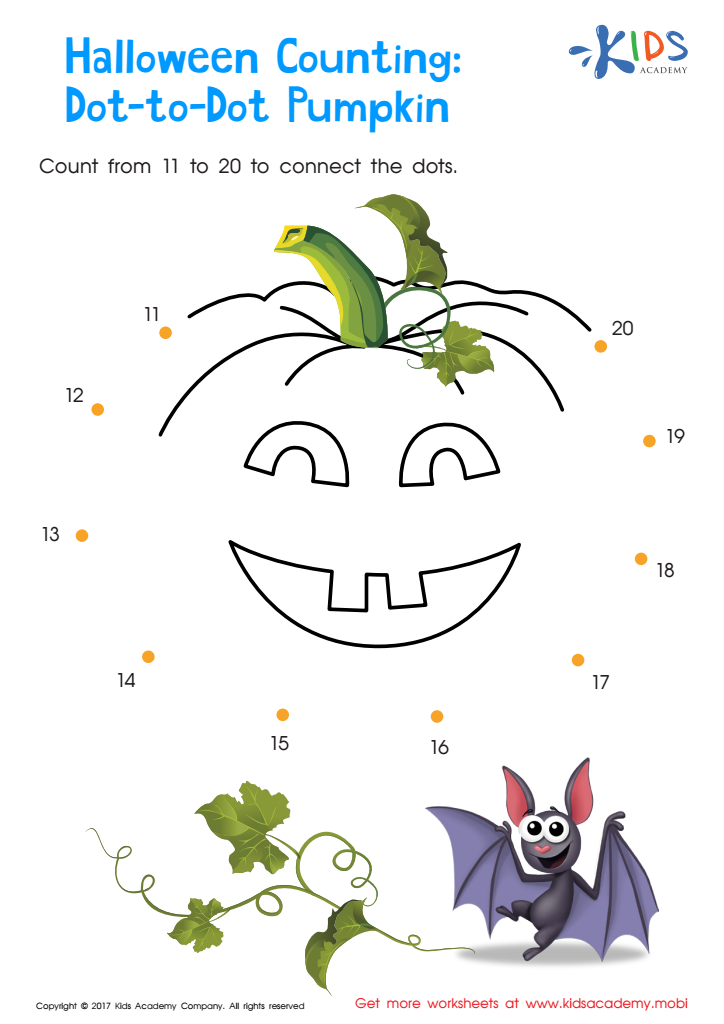
Ordering 11–20: Halloween Counting Worksheet
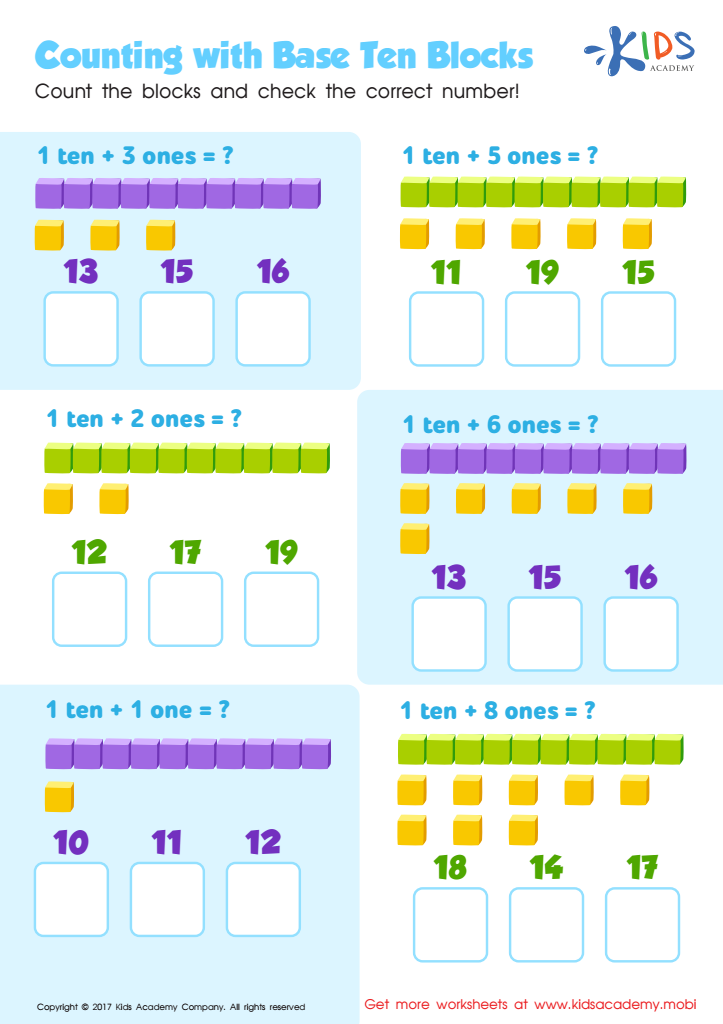
Counting with Base Ten Blocks Worksheet
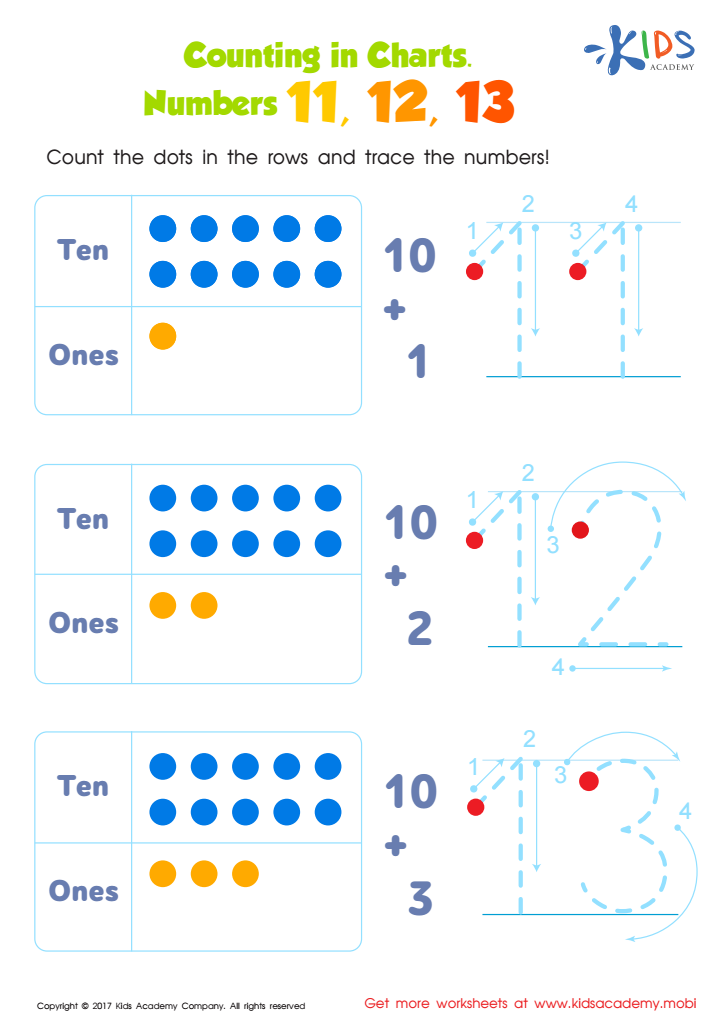
Number Tracing Worksheet For Kindergarten
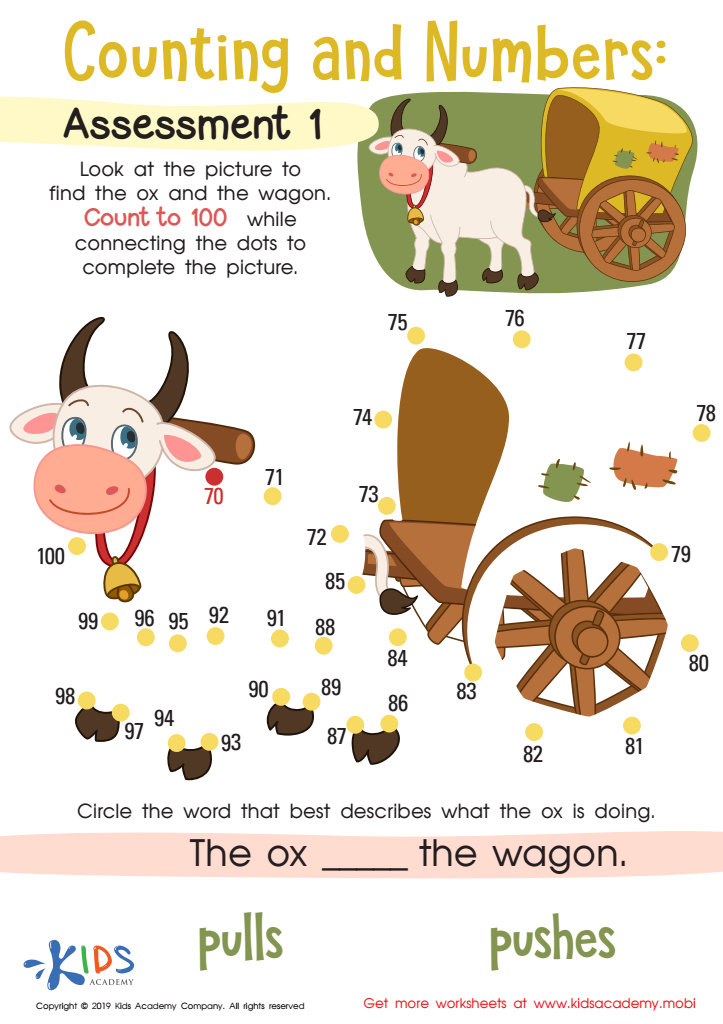
Counting and Numbers: Assessment 1 Worksheet
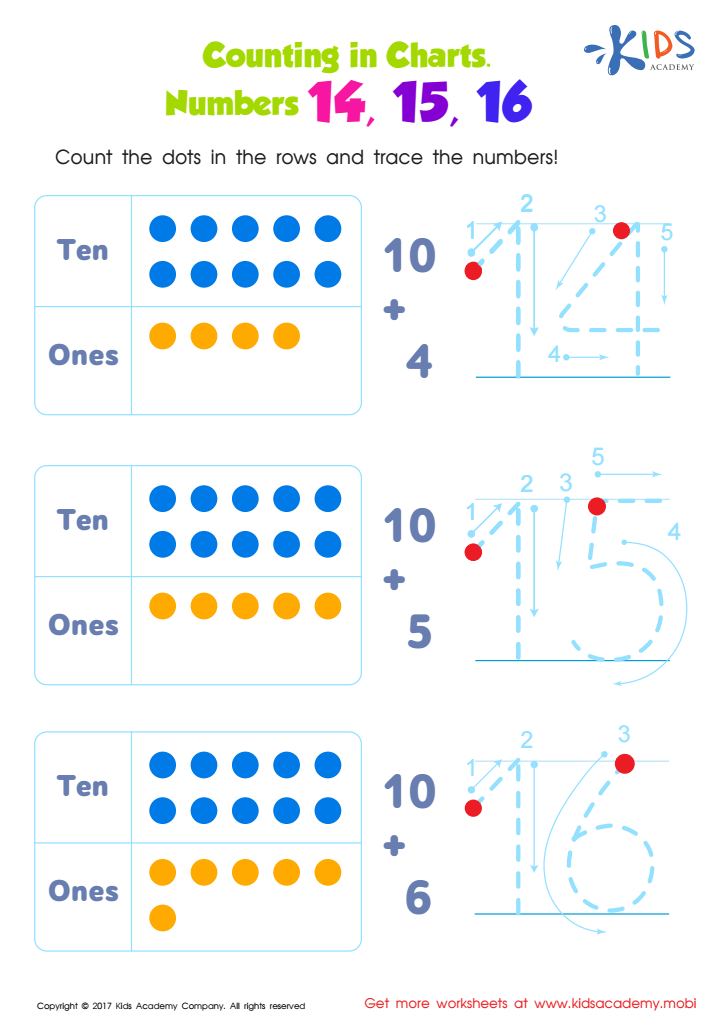
Number Tracing Worksheet

Counting on the City Skyline: Dot-to-Dot Worksheet








Number recognition is a foundational mathematical skill that serves as a building block for future learning. For children aged 5-9, developing the ability to recognize numbers up to 100 is crucial for several reasons. Firstly, it enhances their numerical literacy, making it easier to understand basic arithmetic operations like addition, subtraction, multiplication, and division. Children who can confidently identify numbers are more likely to succeed in more complex math tasks as they progress academically.
Secondly, number recognition contributes to a child's ability to estimate quantities and understand real-world concepts involving numbers, such as time, money, and measurement. This skill is essential for navigating everyday situations—like counting change or reading a clock—and fosters independence.
Moreover, practicing number recognition helps to strengthen cognitive skills, including memory and attention. These cognitive benefits extend beyond mathematics and support learning across various subjects. Also, familiarity with numbers builds confidence and a positive attitude towards mathematics, which can have long-term academic benefits.
Finally, early skill development creates opportunities for interactive and cooperative learning at home and in the classroom. By engaging in number-related games and activities, parents and teachers can make learning enjoyable while reinforcing key concepts. Cultivating these skills sets the stage for lifelong numerical competence and academic success.