Vocabulary expansion Easy Reading Fiction Worksheets for Ages 5-9
5 filtered results
-
From - To
Discover our engaging Vocabulary Expansion Easy Reading Fiction Worksheets designed specifically for children ages 5 to 9. These interactive resources cultivate vocabulary skills while enhancing early reading comprehension through fun, relatable stories. Each worksheet encourages young learners to explore new words in context, promoting language acquisition and boosting confidence in reading. With vibrant illustrations and age-appropriate language, our materials effectively support diverse learning styles, making vocabulary expansion enjoyable and impactful. Whether at home or in the classroom, these worksheets await to inspire a love for reading and learning. Start your child’s journey towards literacy success today with our engaging resources!
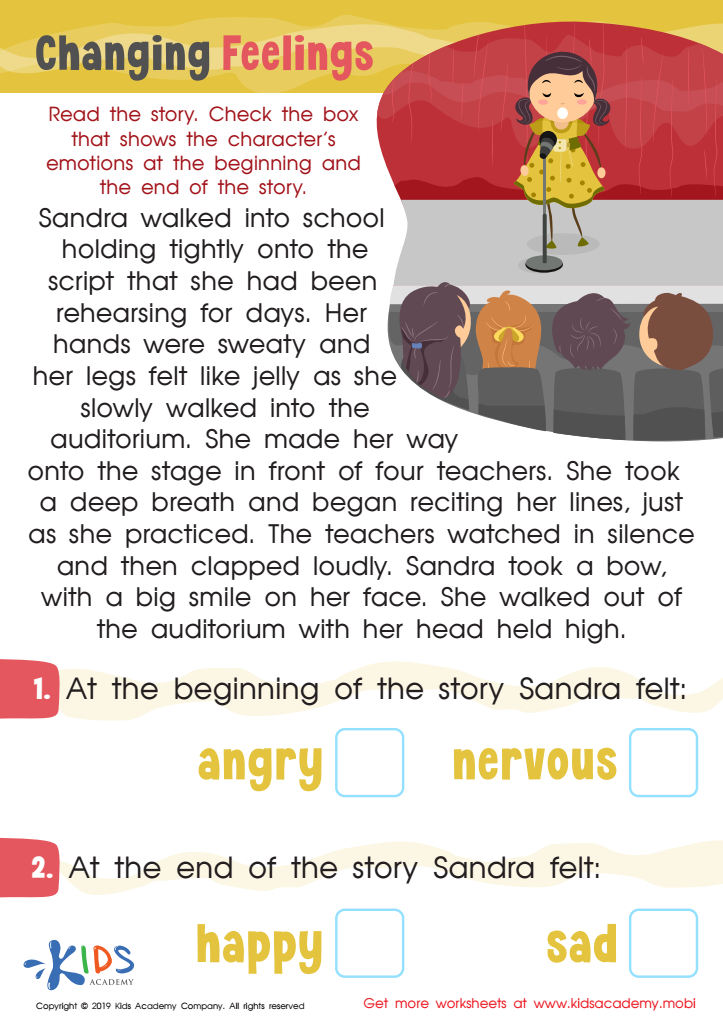
Changing Feelings Worksheet
 Assign to My Students
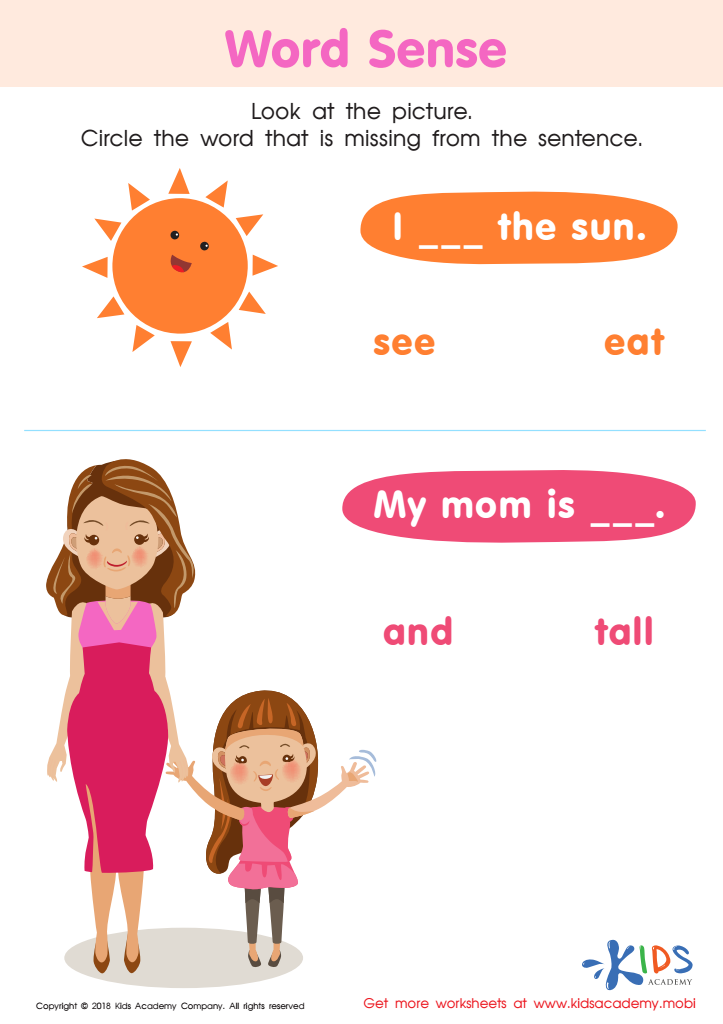
Word Sense Worksheet
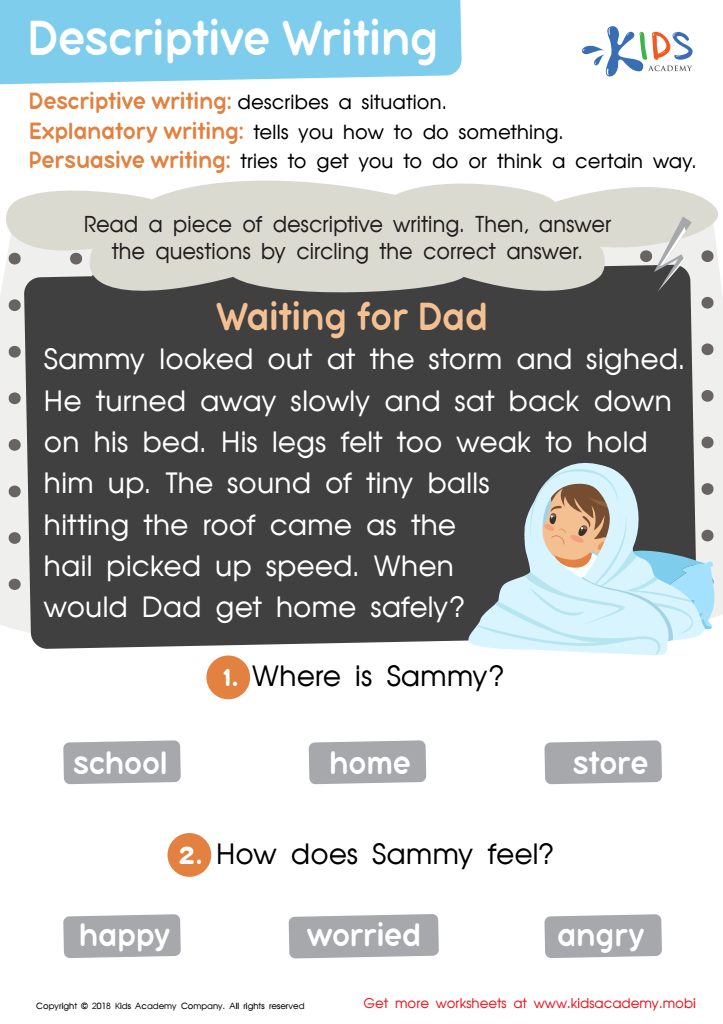
Descriptive Writing Worksheet: Part 2
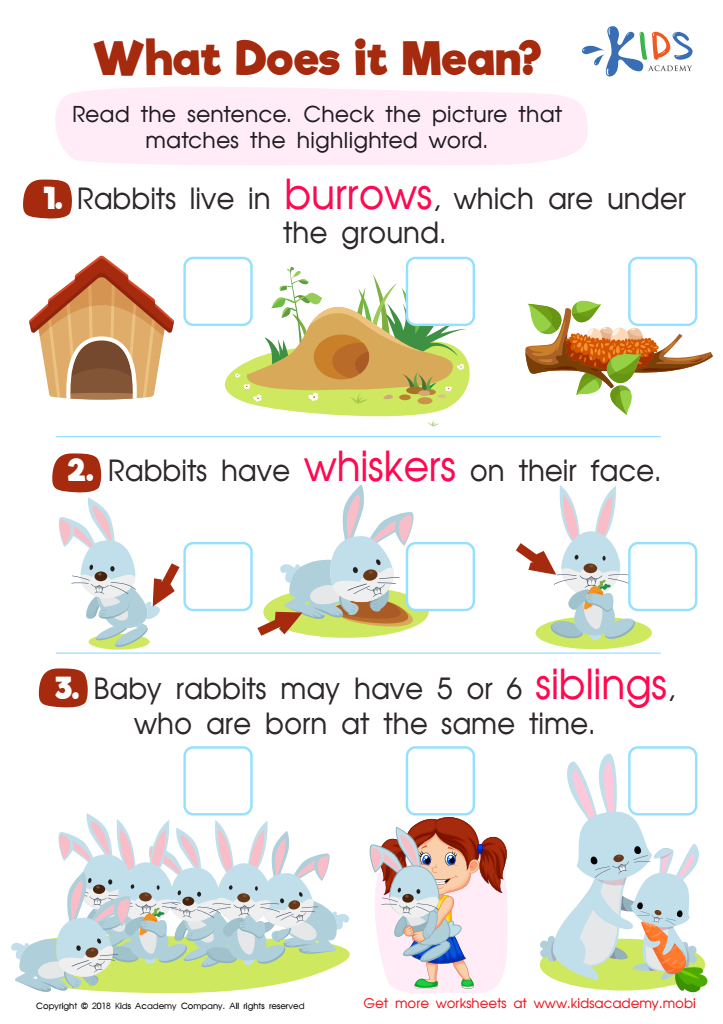
What Does It Mean? Worksheet
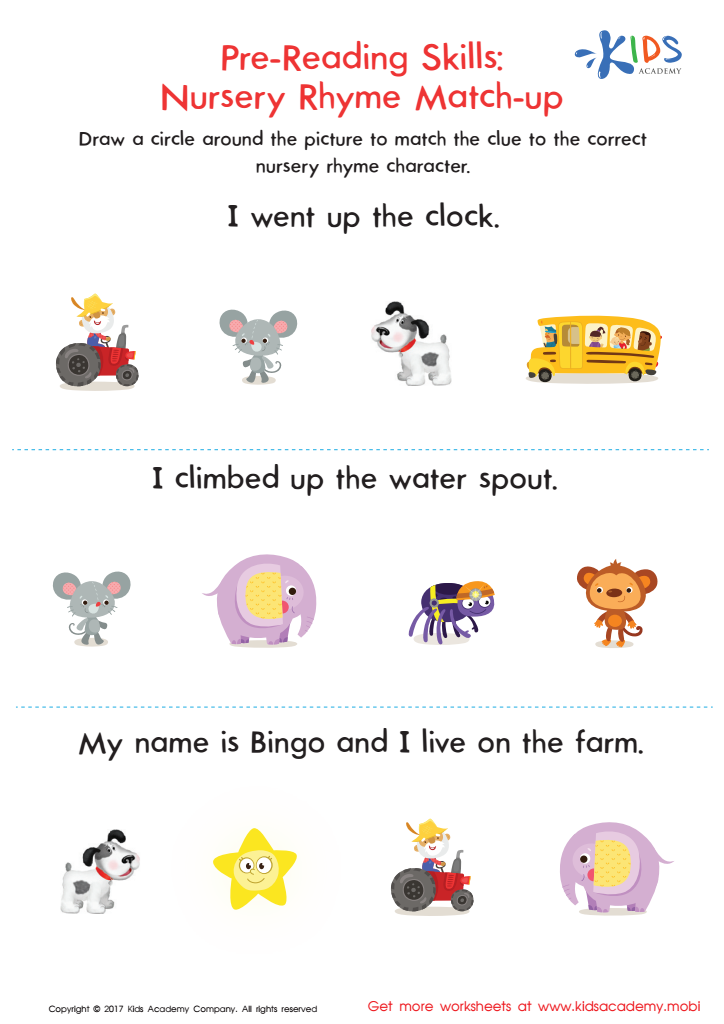
Nursery Rhyme Match–Up Worksheet








Vocabulary expansion through easy reading fiction for ages 5-9 is crucial for young learners' development. During these formative years, children are laying the foundations for literacy, and exposure to rich vocabulary and diverse linguistic structures significantly enhances their language skills. Engaging with age-appropriate fiction not only captivates their imagination but also introduces them to new words in meaningful contexts, making acquisition easier and more enjoyable.
Moreover, a robust vocabulary is linked to improved reading comprehension. When children encounter new words within stories, they learn to infer meanings, enhancing their ability to understand and analyze texts. This skill becomes increasingly important as they progress in their education, influencing their overall academic performance.
Parents and teachers play a vital role in nurturing a love for reading and promoting discussions around stories, which can spark curiosity and encourage vocabulary growth. By selecting books that are not only entertaining but also challenging in terms of vocabulary, they can create engaging educational experiences. Ultimately, fostering a rich vocabulary at an early age builds confidence in young readers and equips them with the linguistic tools necessary for future success in school and beyond.