Filters

77 filtered results

Clear all filters
Favorites
With answer key
Interactive

77 filtered results

Difficulty Level

Grade


Check out this FREE "Fine Motor Skills" Trial Lesson for age 6-7!

Making Shapes 3D

Favorites
With answer key
Interactive
  • 6-7
  • Fine Motor Skills
  • Easy
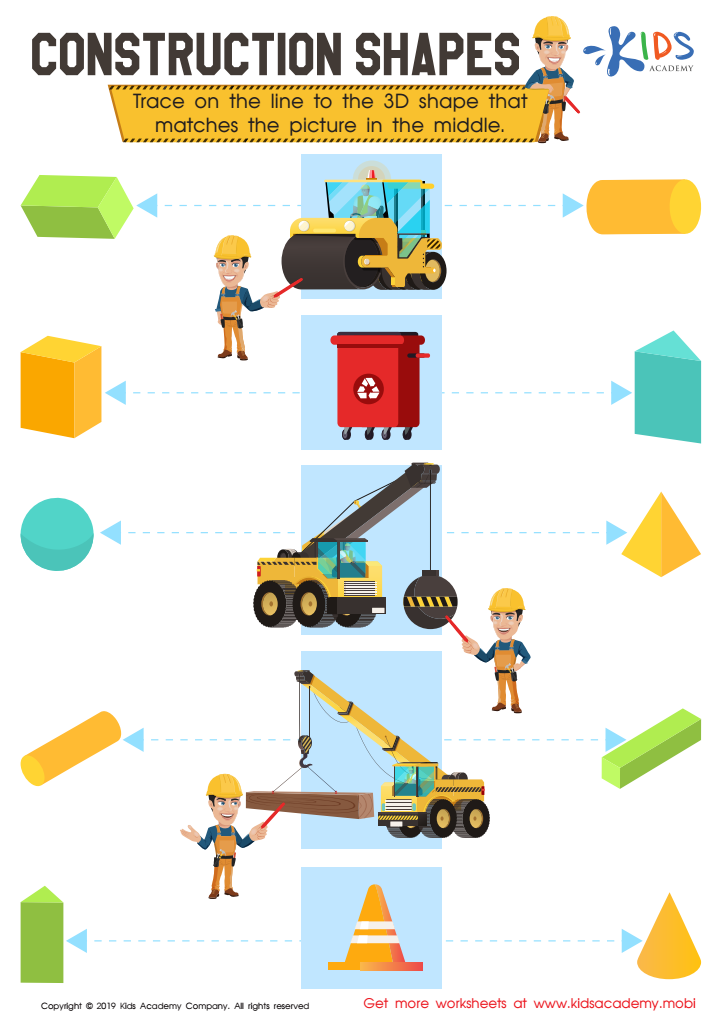
Construction Shapes Worksheet

Construction Shapes Worksheet

Construction workers are professionals who build structures like buildings. In this worksheet, kids will learn about shapes with the help of workers and their equipment. Help them trace the lines to the 3D shape that matches the picture in the middle.
Construction Shapes Worksheet
Worksheet
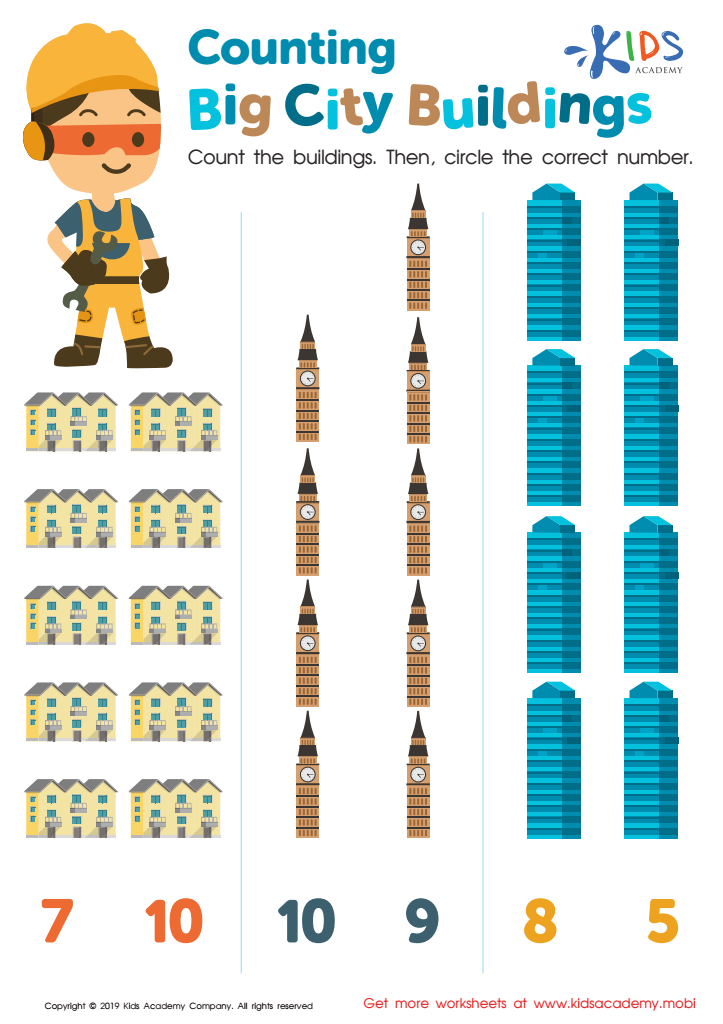
Counting Big City Buildings Worksheet


Counting Big City Buildings Worksheet

Test your child's counting skills! Ask them to count as high as they can and use the worksheet to brush up on any areas that need improvement. There are 3 sets of buildings in the picture; help your kids count them and circle the correct number. Mastering the art of counting is essential for advancing in math and solving equations, so take this opportunity to ensure your kids are ready!
Counting Big City Buildings Worksheet
Worksheet
Night Sky Numbers Worksheet
Night Sky Numbers Worksheet

Help your child develop their writing skills with this fun PDF worksheet! Using guiding stars, it teaches them the correct patterns for numbers 1, 2 and 3. They'll have a great time tracing their way from the top and will feel a sense of achievement when they finish.
Night Sky Numbers Worksheet
Worksheet
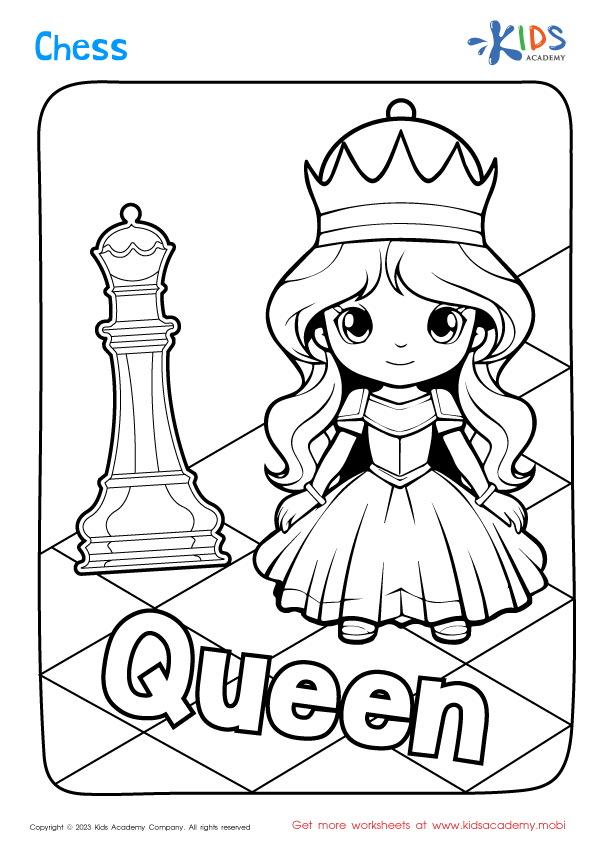
Queen Chess Coloring Page

Queen Chess Coloring Page

Queen Chess Coloring Page
Worksheet
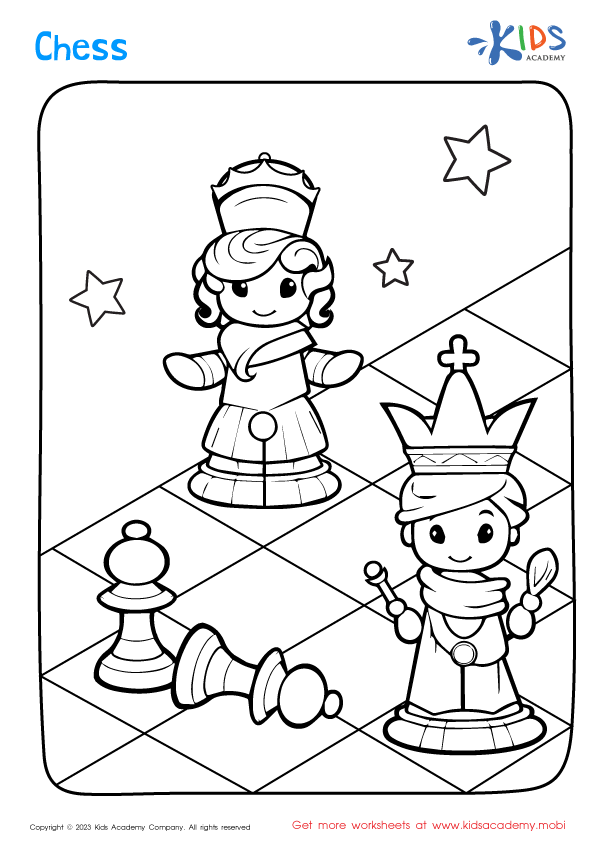
King and Queen Chess Coloring Page
Worksheet


... 3 4

Fine motor skills are crucial for children aged 6-7 as they are foundational for their overall development. At this age, children engage in many tasks that require precise hand movements, such as writing, drawing, and using scissors. Developing these skills impacts school readiness and academic performance.

Parents and teachers should care about fine motor skills because these abilities extend beyond academics into everyday life. Mastery of fine motor tasks helps children gain independence, allowing them to dress themselves, tie shoelaces, and manage personal belongings. Good fine motor skills also contribute to self-esteem; children feel more capable and confident when they can perform tasks successfully.

Moreover, fine motor skills are closely linked to cognitive development. Activities that strengthen hand-eye coordination and dexterity foster problem-solving skills and enhance brain connectivity. Engaging in games, arts and crafts, and hands-on activities can make learning enjoyable while promoting these skills.

Finally, awareness of fine motor development helps in early identification of any potential challenges. By prioritizing fine motor skill building at this age, parents and teachers can lay a strong foundation for future learning and empower children to thrive both in and out of the classroom.