Number Sequencing Easy Numbers Worksheets for Ages 6-7
3 filtered results
-
From - To
Welcome to our "Number Sequencing Easy Numbers Worksheets" page, designed specifically for children aged 6 to 7. Our engaging worksheets help young learners master the essential skill of number sequencing through interactive and enjoyable activities. Students will practice arranging numbers in order, identifying patterns, and developing a strong foundational understanding of numerical relationships. Perfect for home or classroom use, these worksheets cater to various learning styles and encourage independent problem-solving. With vibrant illustrations and easy-to-follow instructions, your child will build confidence and competence in math. Explore our collection today and turn number sequencing into an exciting adventure for your little learner!
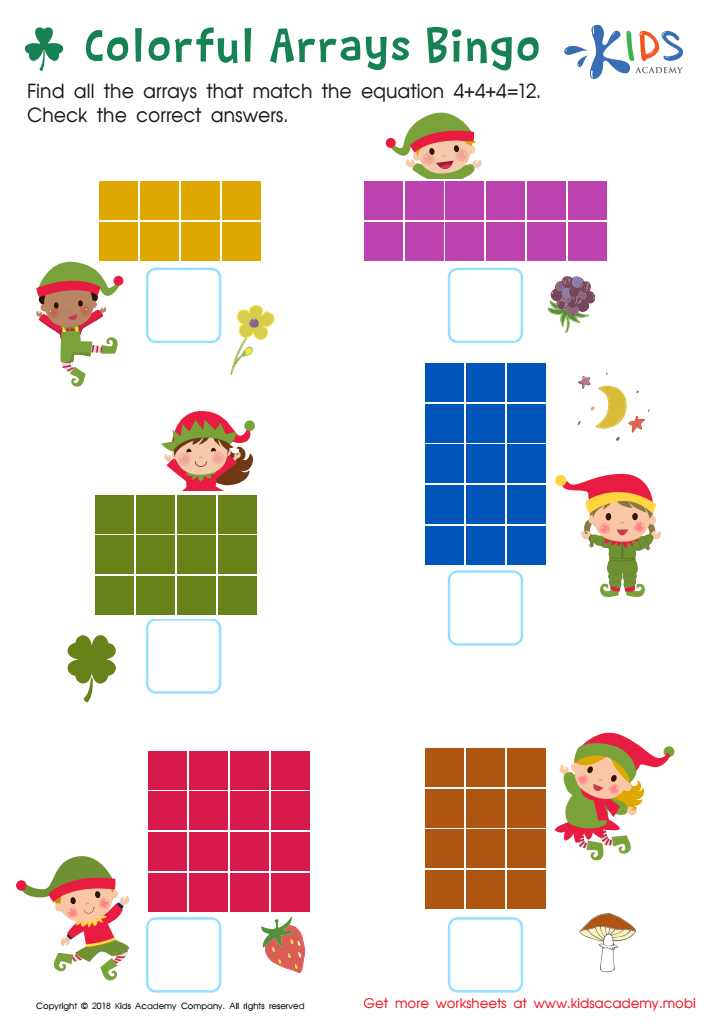
Colorful Arrays Bingo Worksheet
 Assign to My Students
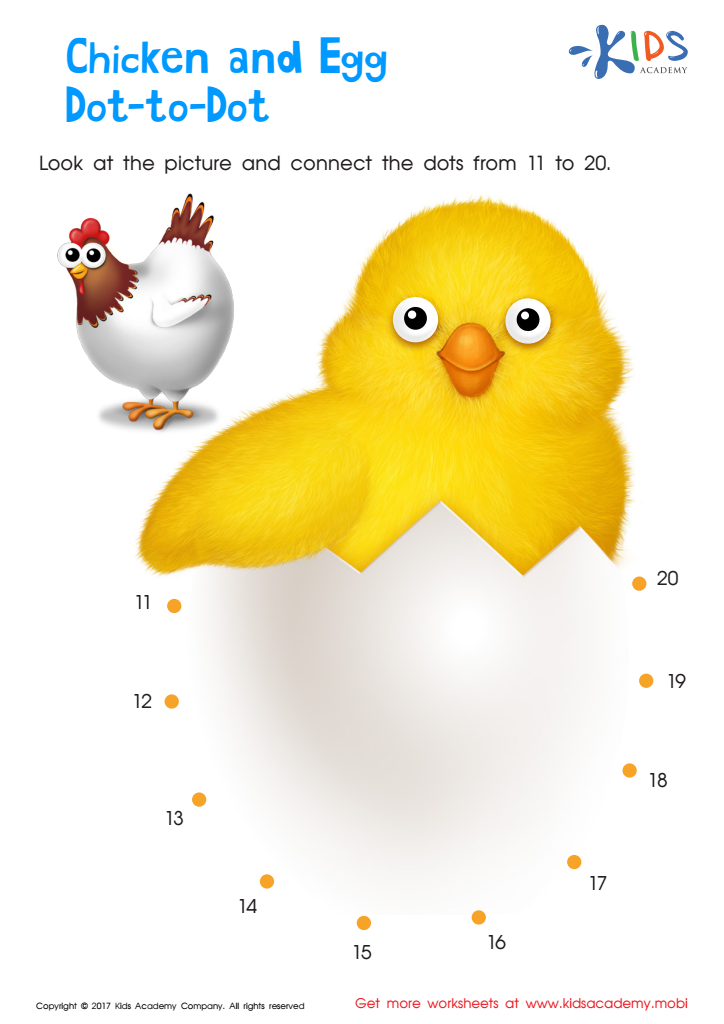
Ordering 11–20: Chicken & Egg Dot–to–dot Worksheet
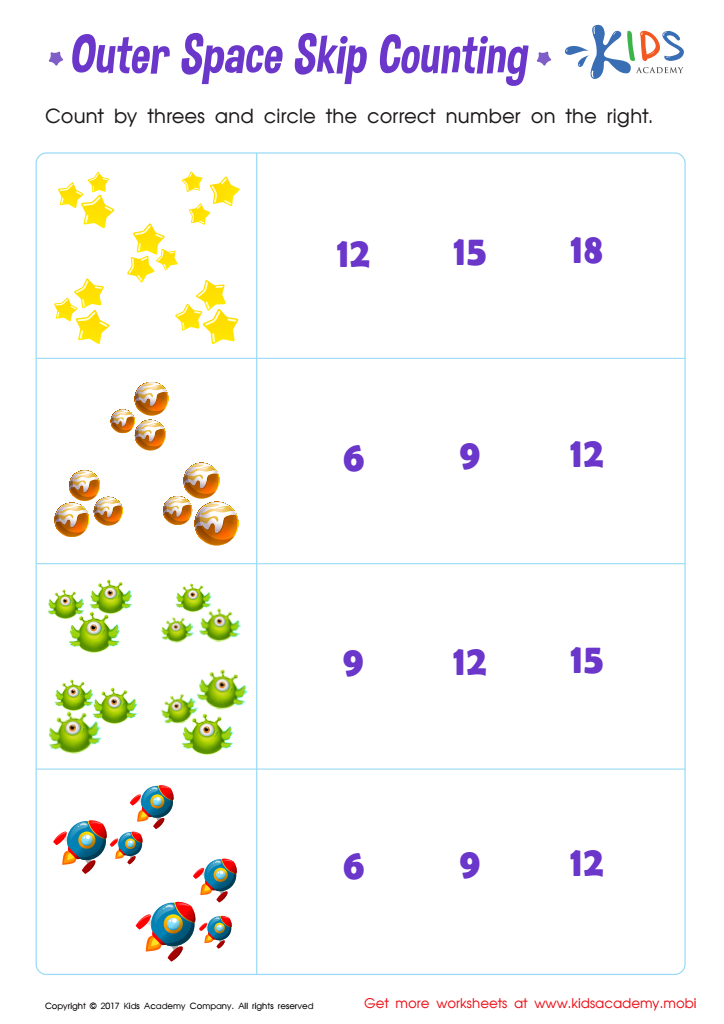
Skip Counting by 3s: Outer Space Skip Counting Printable







Number sequencing is a crucial skill for children aged 6-7, laying a strong foundation for their mathematical understanding. Parents and teachers should prioritize this area because it develops essential cognitive skills, including problem-solving, pattern recognition, and logical thinking. Mastery of number sequences helps children understand not only counting but also more complicated concepts such as addition, subtraction, and later, multiplication and division.
At this age, children are eager to make connections between numbers and the world around them. Learning to sequence numbers encourages them to engage with numerically-relevant concepts, fosters confidence, and boosts their performance in more complex math tasks. It also supports literacy, as recognizing patterns is similar to breaking down words, enhancing their overall academic ability.
Furthermore, number sequencing improves fine motor skills through activities involving writing and manipulating numbers, promoting a well-rounded educational experience. For teachers, understanding each student’s grasp of number sequencing can inform instruction and targeted interventions. For parents, being involved in this aspect of learning can strengthen their children’s confidence in math, promoting a positive attitude towards the subject. Nurturing these skills collectively empowers children to excel mathematically and prepare them for future academic success.








