Contextual understanding Easy Worksheets for Ages 6-8
5 filtered results
-
From - To
Discover engaging "Contextual Understanding Easy Worksheets for Ages 6-8" on our website. Tailored to boost children's comprehension skills, our worksheets use age-appropriate content and fun activities that make learning enjoyable. These printable resources help young learners grasp the context in various scenarios, enhancing their reading and critical thinking abilities. Each worksheet is thoughtfully designed to support classroom learning or homeschooling. By focusing on contextual clues and comprehension, Kids Academy ensures that children steadily progress toward stronger literacy skills in a supportive and interactive way. Explore our worksheets and watch your child's understanding blossom!
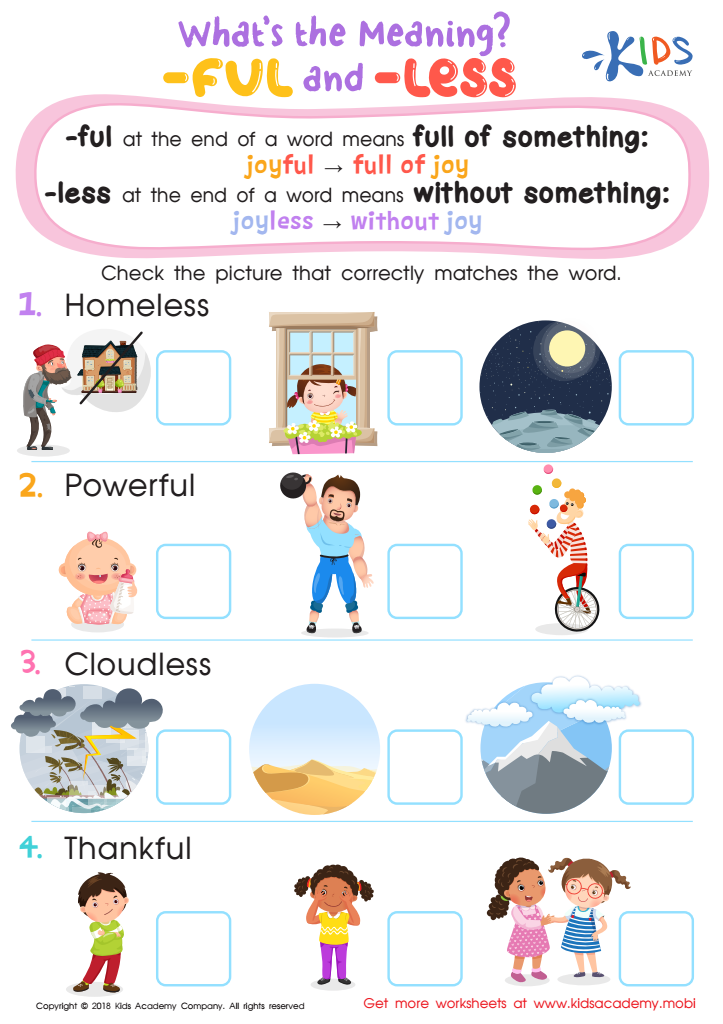
What's the Meaning? Worksheet
 Assign to My Students
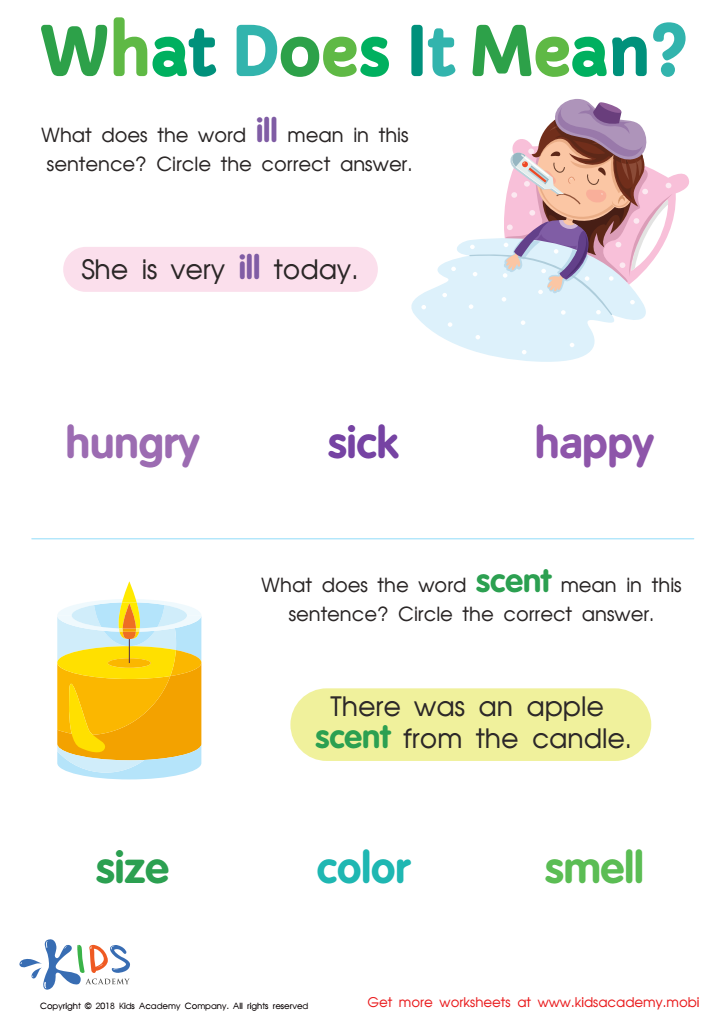
What Does It Mean? Worksheet
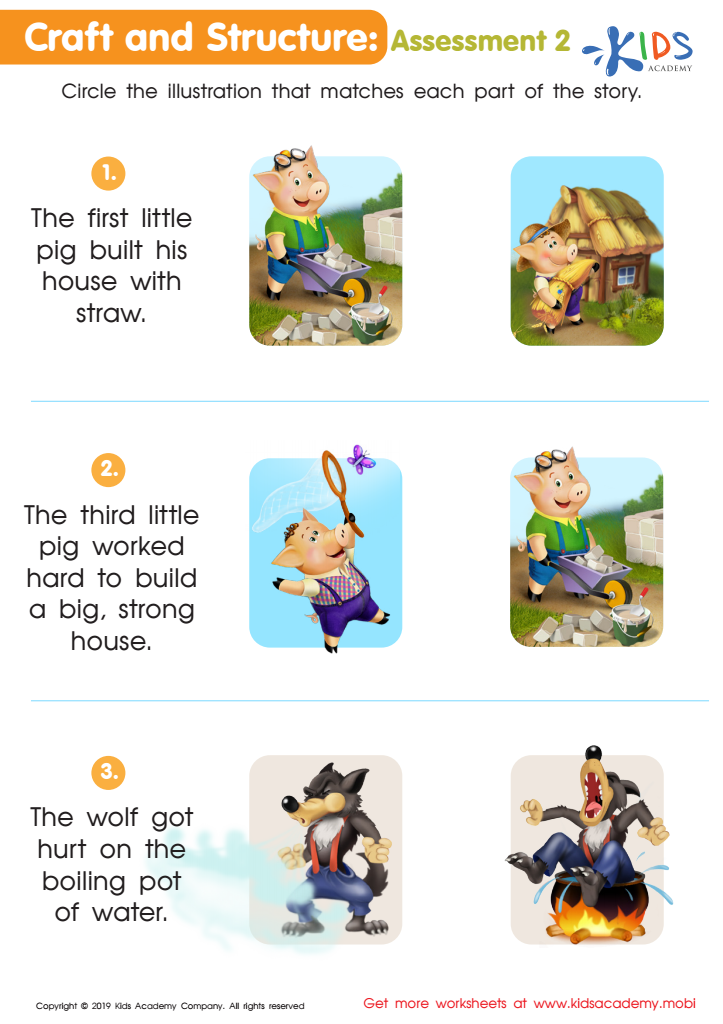
Craft and Structure: Assessment 2 Worksheet 2
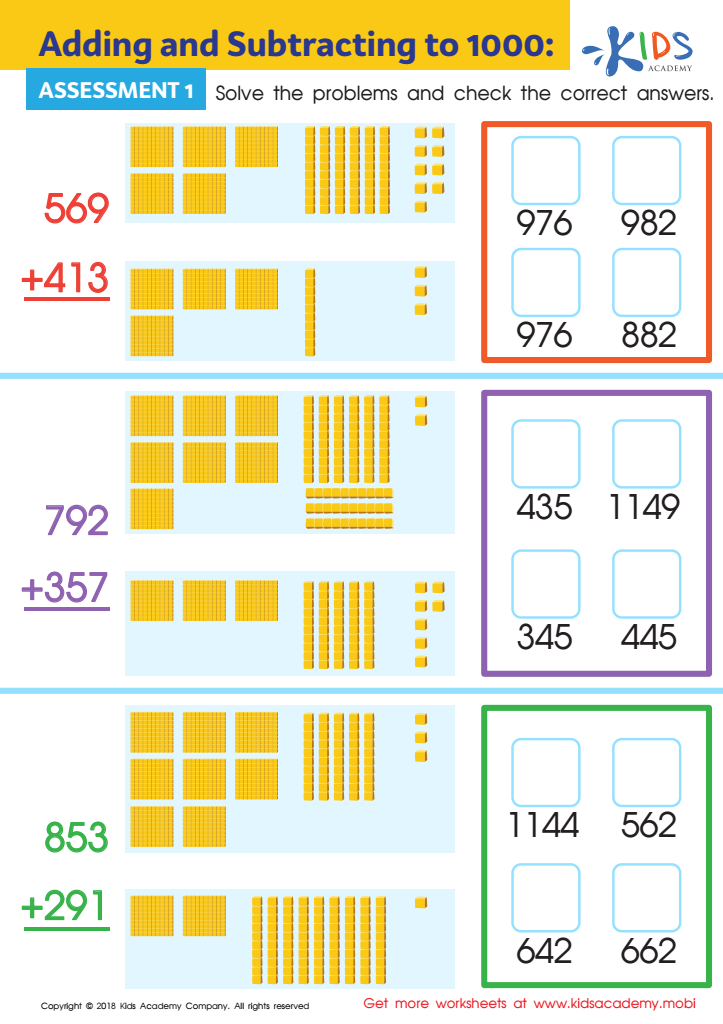
Adding and Subtracting to 1 Worksheet: Assessment 1
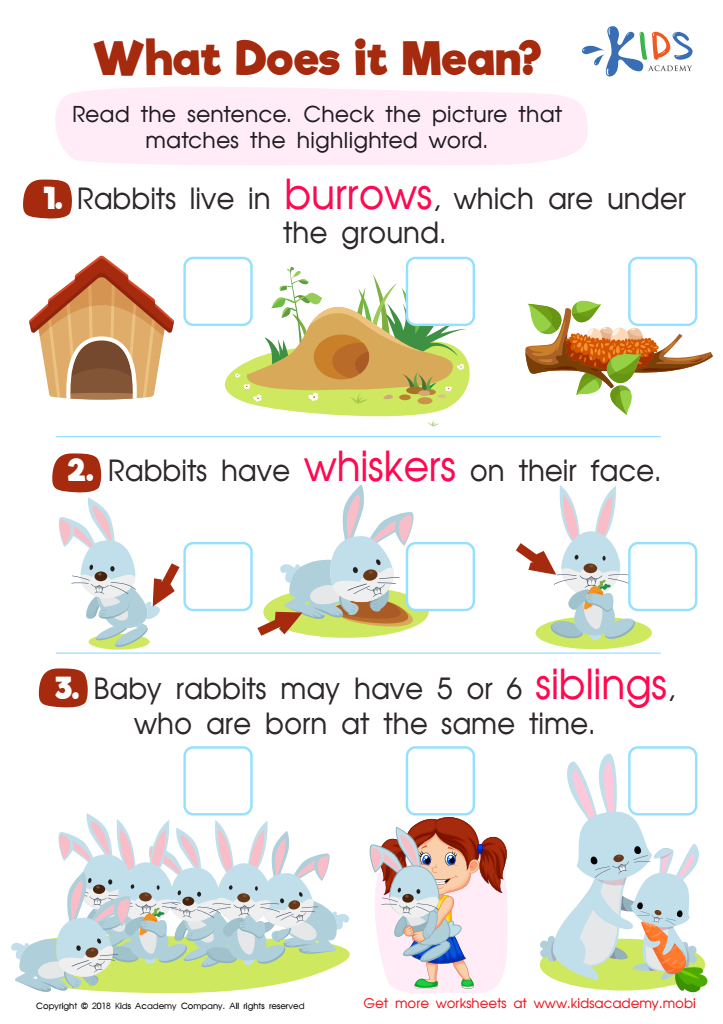
What Does It Mean? Worksheet







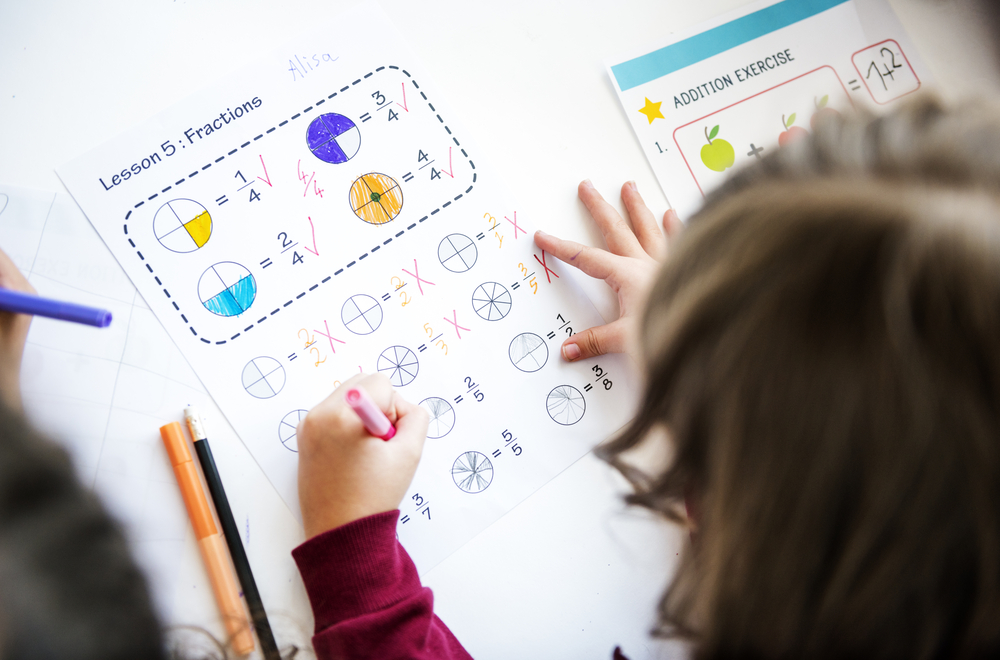
Contextual understanding is crucial for young learners ages 6-8 because it forms the foundation for effective communication, critical thinking, and problem-solving skills. At this formative age, children are rapidly developing cognitive and language abilities. Context helps them make sense of the new information they encounter daily, both in the classroom and beyond.
When parents and teachers emphasize contextual understanding, they enable kids to see how ideas and concepts fit into the bigger picture. For instance, when a child reads a story, understanding the setting, characters, and plot allows them to grasp the narrative fully. Similarly, in math, knowing why they might need to count or measure in real-world scenarios makes learning more meaningful and relatable.
Moreover, a strong grasp of context aids in social interactions, as children learn to interpret verbal and non-verbal cues, understand different perspectives, and respond appropriately. This skill is vital for developing empathy and effective communication.
Finally, engaging young minds with contextual learning stimulates curiosity and a love for learning. It transforms rote memorization into deeper comprehension and helps children become more adaptive and insightful thinkers as they grow. Therefore, both parents and teachers should prioritize and nurture contextual understanding to support well-rounded, lifelong learning.








