
Develop problem-solving abilities Easy Worksheets for Ages 6-8
3 filtered results
Difficulty Level
Grade
Age
-
From - To
Subject
Activity
Standards
Unlock your child's potential with our engaging "Develop Problem-Solving Abilities" worksheets, designed specifically for ages 6-8. These easy-to-follow printable activities foster critical thinking and creativity while making learning fun and interactive. Covering a variety of topics, our worksheets challenge young minds to analyze situations, draw conclusions, and apply their knowledge effectively. Perfect for home or classroom use, these resources support children's cognitive development in a playful way. Whether they’re solving puzzles, answering riddles, or tackling real-world scenarios, your child will build essential skills that last a lifetime. Start their journey to becoming confident problem solvers today!
Favorites
With answer key
Interactive
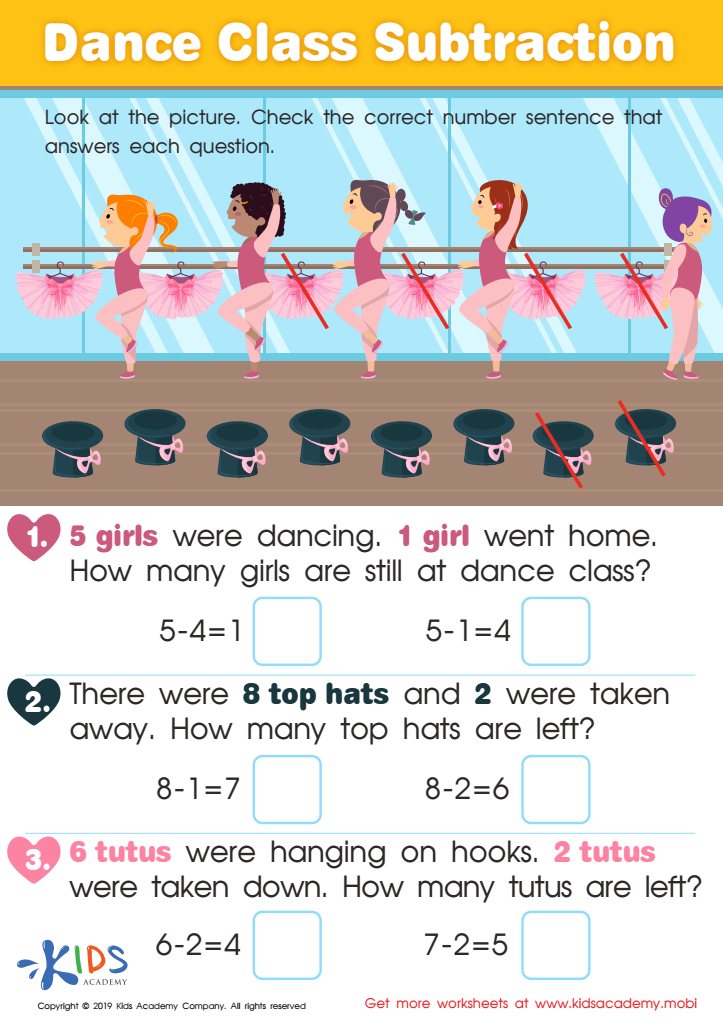
Dance Class Subtraction Worksheet
Dancing is an excellent form of exercise, and some people dance professionally, expressing their feelings through body movements. Help your kids identify the type of dance in the picture and answer the word problems in this worksheet. Encourage them to check the correct number sentence that answers the question.
 Assign to My Students
Dance Class Subtraction Worksheet
Worksheet
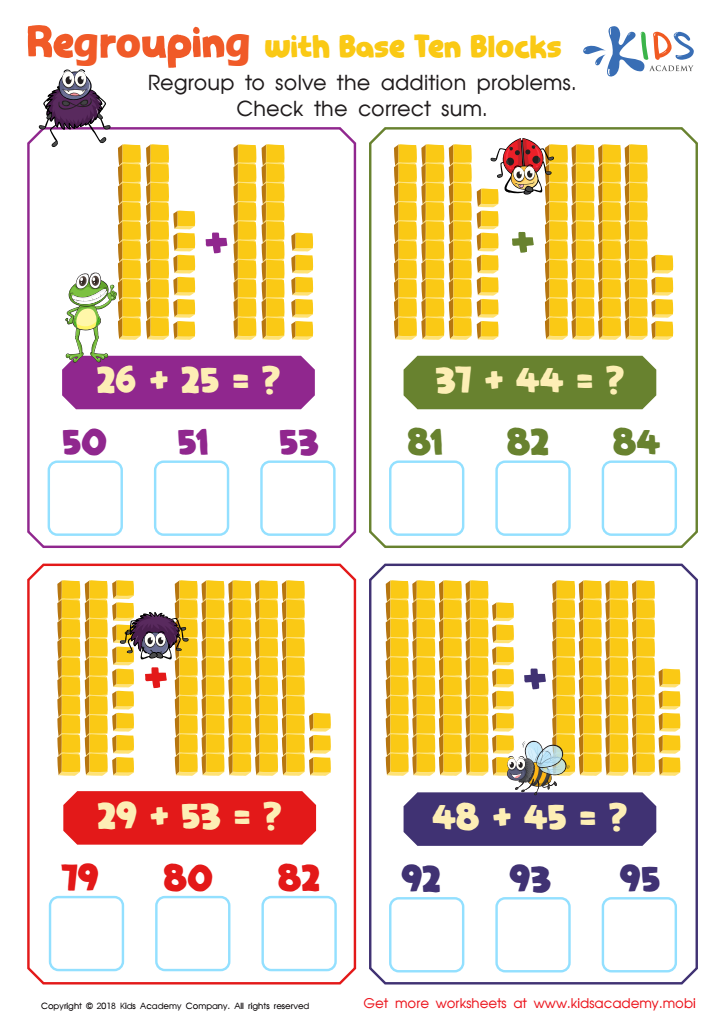
Regrouping With Base Ten Blocks Worksheet
Challenge your child to regroup the base ten blocks and solve the four equations in this worksheet. This exercise requires counting and adding up in base ten. When they are done, help them check the correct sum.
Regrouping With Base Ten Blocks Worksheet
Worksheet
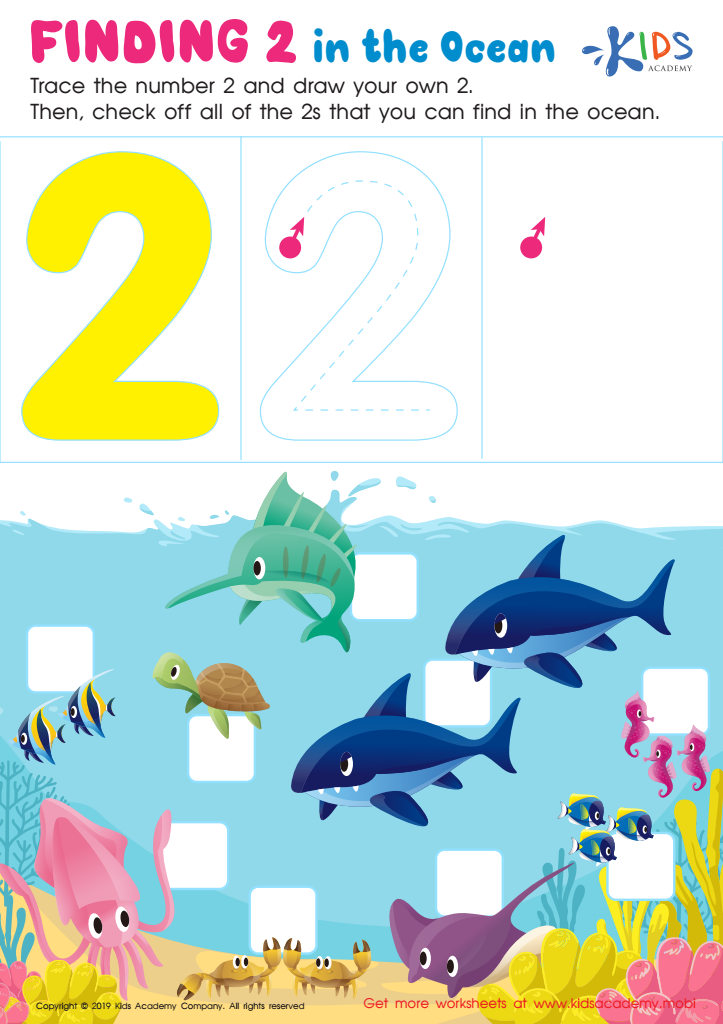
Finding 2: In the Ocean Worksheet
Kids start their math journey with basic numbers. Finger counting, number representation with pictures and this worksheet help build number sense. Kids trace lines and dots to write the number two and identify groups of two sea creatures for easy success and to feel proud of their math skills.
Finding 2: In the Ocean Worksheet
Worksheet
Join Kids Academy for Free
Who is primarily going to use this learning content?








Developing problem-solving abilities in children aged 6-8 is crucial for their overall growth and success. At this stage, children's cognitive and emotional skills are rapidly developing, making it an ideal time to cultivate their ability to approach and resolve challenges effectively. Strong problem-solving skills encourage critical thinking, creativity, and persistence, enabling students to tackle academic tasks and everyday situations with confidence.
Parents and teachers should care about this developmental aspect because it lays the foundation for future learning and independence. By engaging children in problem-solving activities, whether through puzzles, group projects, or real-life scenarios, adults can help foster resilience and a growth mindset. These abilities not only enhance academic performance but also prepare children for social interactions and life decisions.
Moreover, teaching children to navigate challenges can significantly reduce anxiety and frustration, equipping them with tools to face disappointments and setbacks. Such skills promote cooperation and communication, essential for building strong relationships. In summary, emphasizing problem-solving in early education empowers children, ensuring they develop into thoughtful, responsible, and resourceful individuals. Encouraging these skills creates a positive cycle of learning, self-esteem, and effective collaboration that children will carry into adulthood.








