Understanding life cycles Easy Worksheets for Ages 6-8
4 filtered results
-
From - To
Explore the fascinating world of life cycles with our "Understanding Life Cycles Easy Worksheets" specially designed for children ages 6-8. These engaging worksheets provide a fun and interactive way for young learners to grasp the concept of life cycles in nature. From understanding insects to plant growth, each worksheet is crafted to enhance critical thinking, vocabulary, and observation skills. Perfect for classroom settings or at-home learning, these resources foster curiosity and a love for science. Help your child embark on an educational journey with activities that spark imagination while reinforcing essential learning concepts about the natural world!
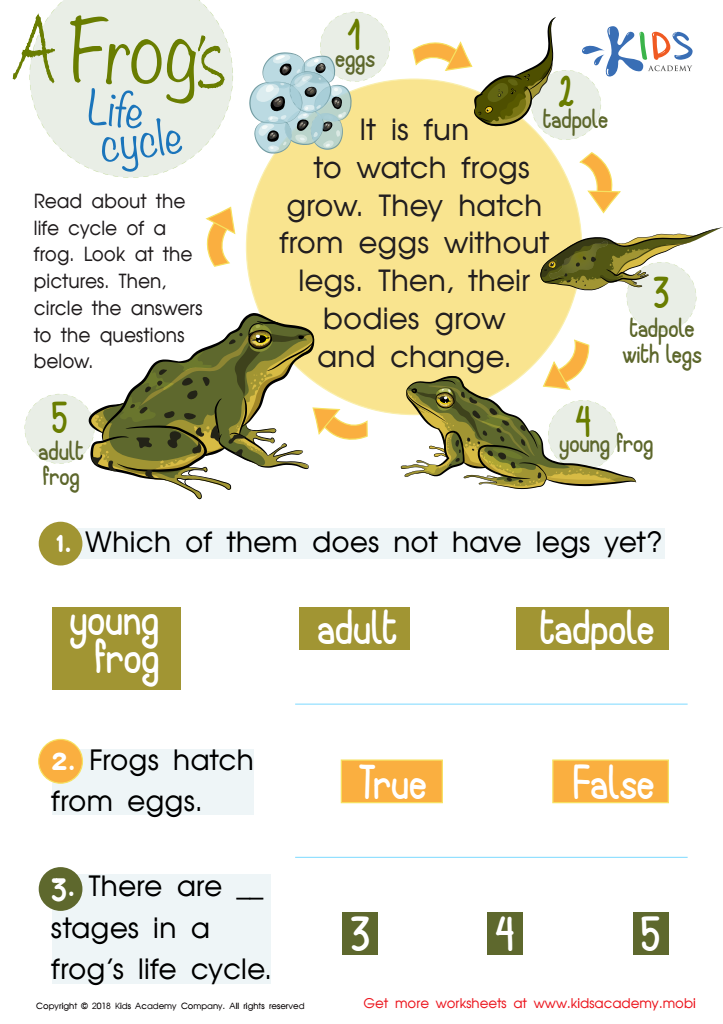
A Frog’s Life Cycle Worksheet
 Assign to My Students
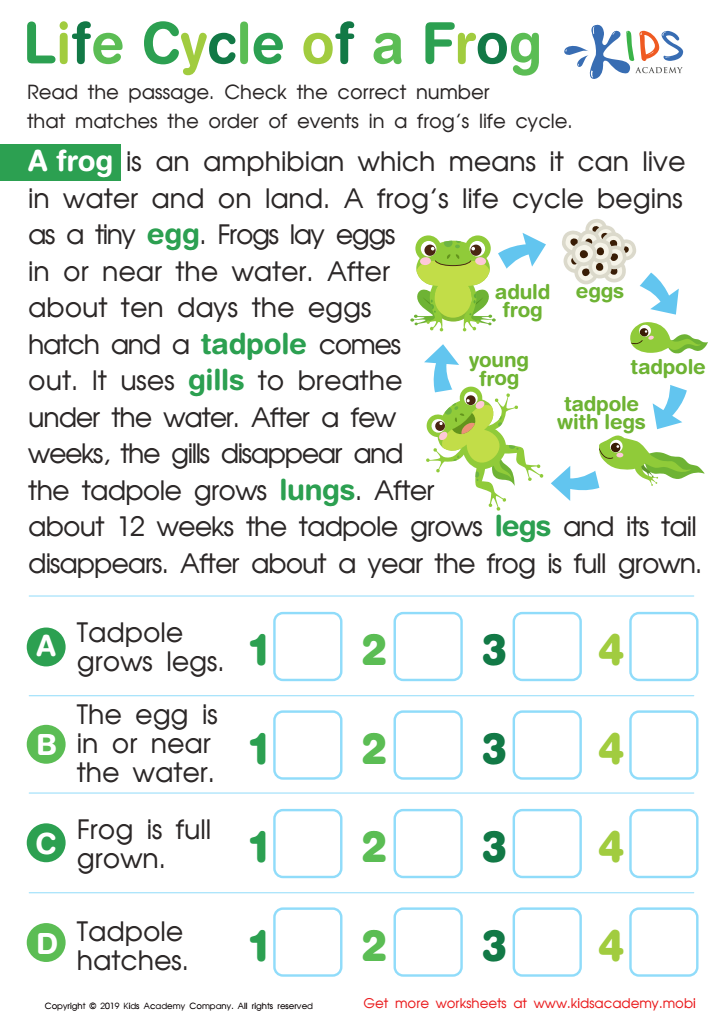
Life Cycle of a Frog Worksheet
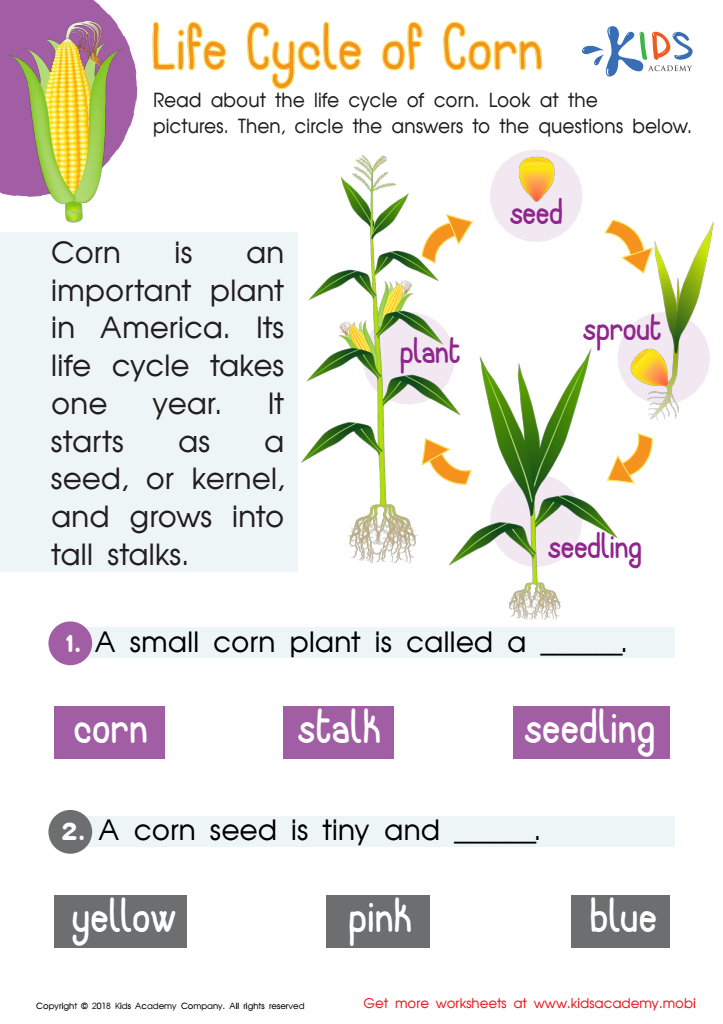
Life Cycle of Corn Worksheet
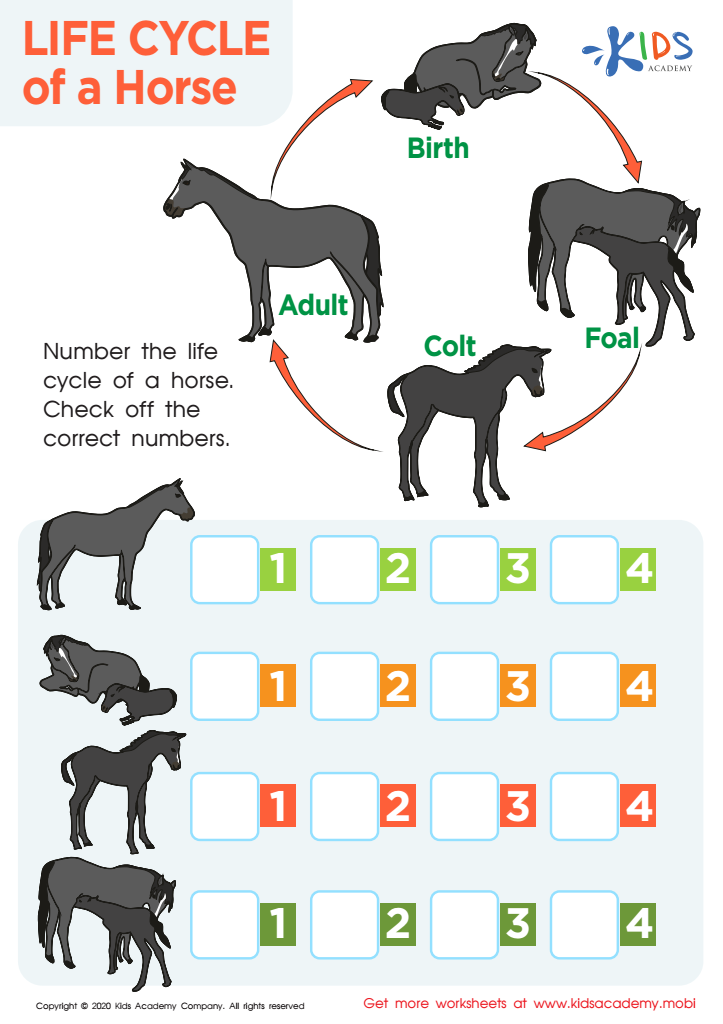
Life Cycle of a Horse Worksheet




.jpg)


Understanding life cycles is essential for both parents and teachers, especially for children aged 6 to 8. At this stage, kids are naturally curious about the world around them. Learning about life cycles—such as those of butterflies, frogs, and plants—fosters their curiosity, encouraging scientific exploration.
Firstly, life cycles help children grasp the concept of change and growth. Knowing that all living things, including themselves, go through various stages of development promotes empathy and respect for nature. This understanding lays the groundwork for environmental stewardship, teaching kids the importance of caring for the planet.
Additionally, studying life cycles enhances critical thinking and observation skills. Children learn to notice details and make connections, which are vital components for their overall cognitive development. Engaging them in hands-on activities, like watching caterpillars transform into butterflies, makes learning interactive and memorable.
Finally, discussing life cycles opens doors for meaningful conversations between parents and teachers. It builds relationships by allowing for shared experiences and explorations—whether at home or in the classroom—creating a supportive learning environment. By emphasizing life cycles, we contribute to well-rounded, observant, and caring individuals who are aware of their place within the larger ecosystem.








