Understanding number patterns Easy Worksheets for Ages 6-8
3 filtered results
-
From - To
Discover our engaging "Understanding Number Patterns Easy Worksheets" designed for children ages 6-8! These worksheets encourage young learners to explore and recognize patterns in numbers through fun and interactive activities. Tailored to enhance critical thinking and problem-solving skills, each worksheet provides clear instructions and colorful illustrations to captivate young minds. Whether your child is just beginning to understand number sequences or is ready for a challenge, our resources cater to varying skill levels. Printable and easy to use, these worksheets make learning numbers enjoyable. Help your child build a strong mathematical foundation today!
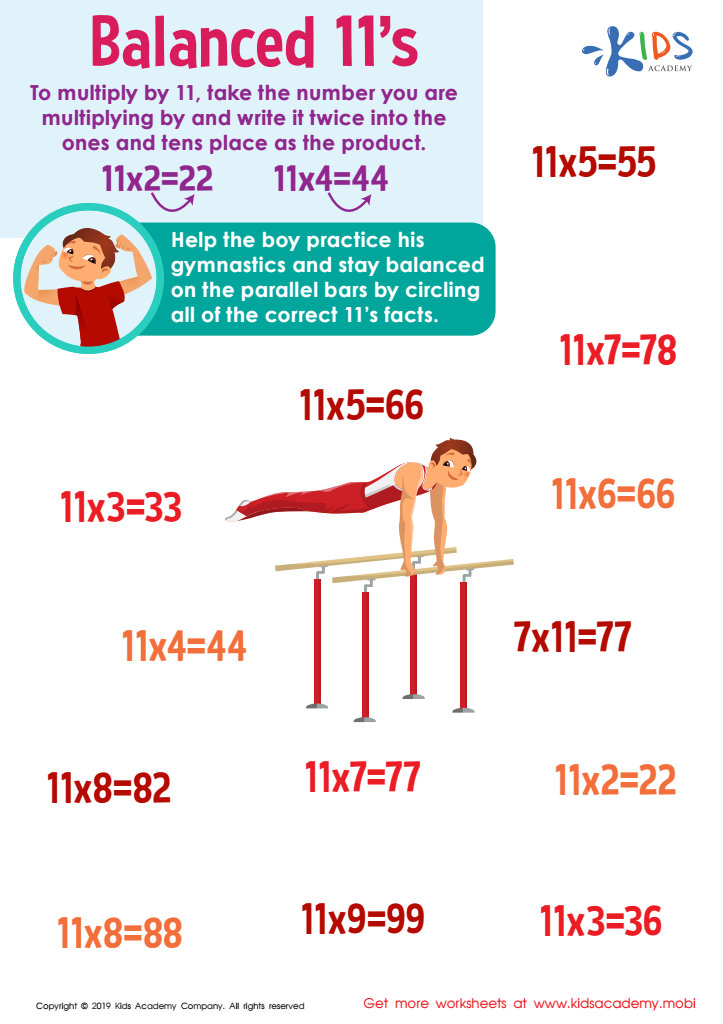
Balanced 11s Worksheet
 Assign to My Students
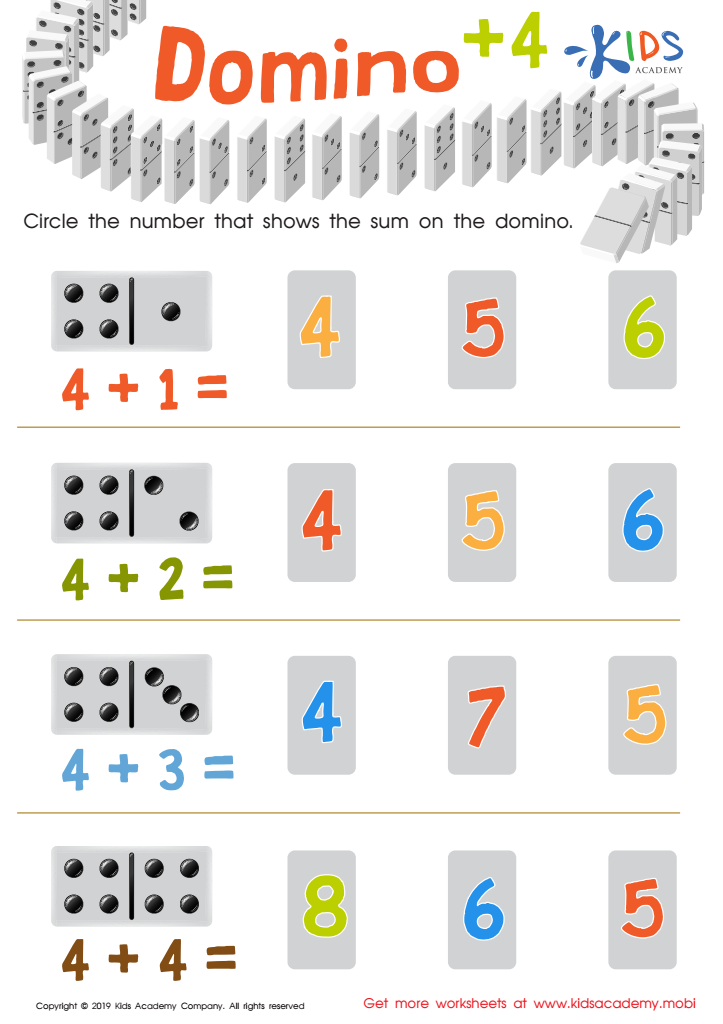
Domino +4 Worksheet
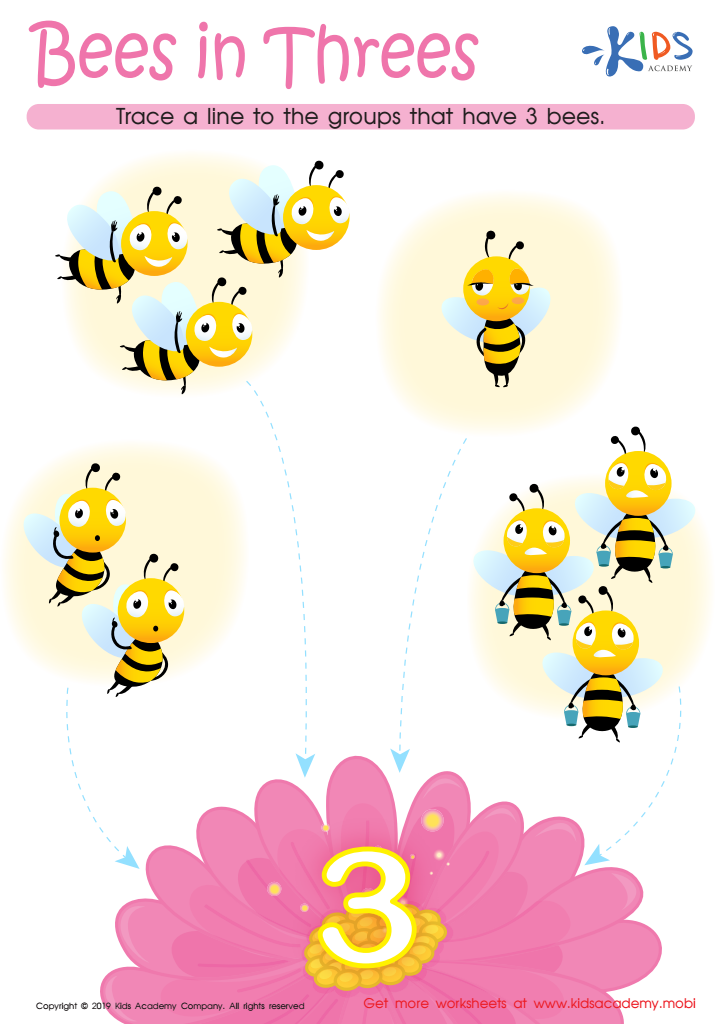
Bees in Threes Worksheet






Understanding number patterns is crucial for young learners aged 6-8, as it forms the foundation for more advanced mathematical concepts they will encounter later. Parents and teachers should care because recognizing patterns enhances critical thinking and problem-solving skills. It allows children to make connections between numbers, which is essential for understanding basic operations like addition and subtraction.
When children learn to identify patterns, such as even and odd numbers or sequences like 2, 4, 6, and so forth, they develop a sense of number sense and mathematical thinking. This foundational skill not only makes math more accessible but also fosters a sense of achievement and confidence in young learners.
Moreover, understanding number patterns promotes engagement and makes learning fun through games and activities that involve discovery and exploration. This helps develop a positive attitude towards math, reducing anxiety and fear often associated with the subject.
Additionally, educators can leverage pattern recognition in interdisciplinary ways, connecting math to art, music, and nature, for rich learning experiences. In summary, fostering an understanding of number patterns equips children with essential life skills, laying the groundwork for their future academic success and self-confidence in learning.








