Understanding time Easy Worksheets for Ages 6-8
3 filtered results
-
From - To
Welcome to our "Understanding Time Easy Worksheets for Ages 6-8" page! Here, you’ll find a fabulous collection of printable worksheets designed to help young learners grasp the concept of time. Tailored for children aged 6 to 8, these engaging activities mix fun with foundational skills, making it easy for kids to learn about clocks, schedules, and time intervals. Each worksheet features lively illustrations and interactive questions to captivate young minds. Whether you’re a teacher, parent, or caregiver, these resources are perfect for enhancing your child's understanding of time in a fun and enjoyable way. Start exploring and watch their skills grow!
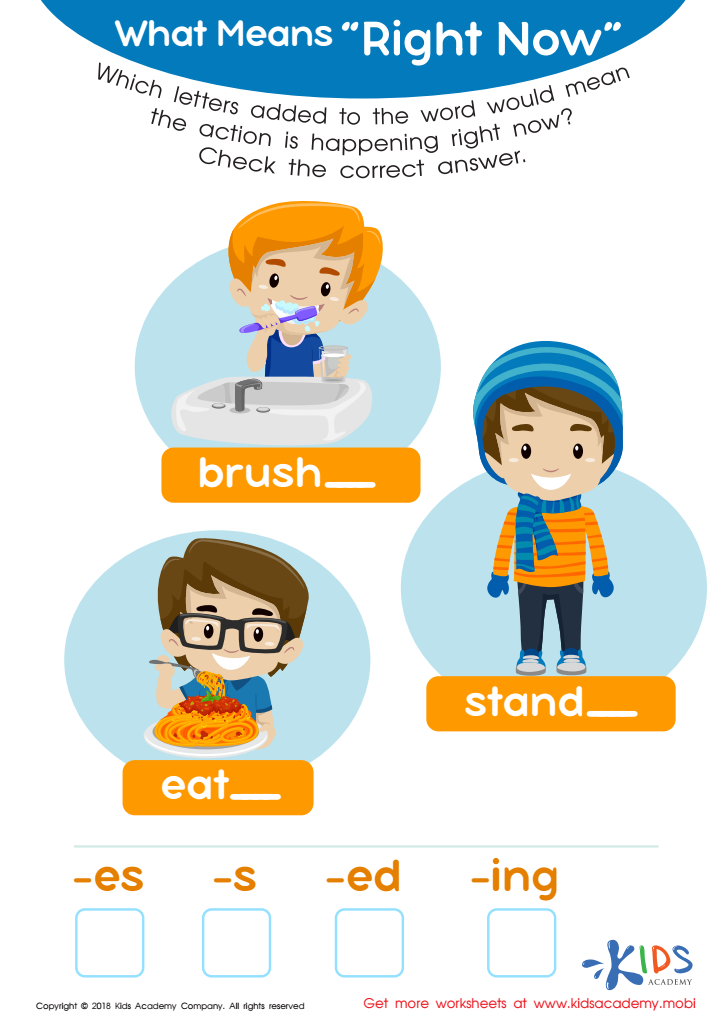
What Means "Right Now" Worksheet
 Assign to My Students
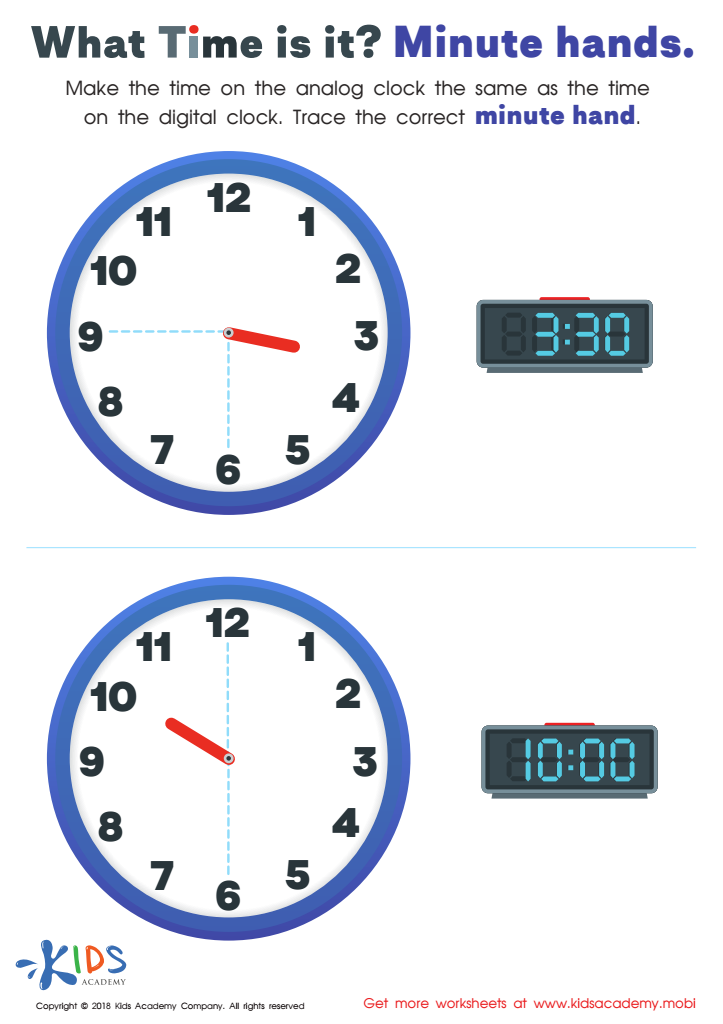
What Time Is it? Minute Hands Worksheet
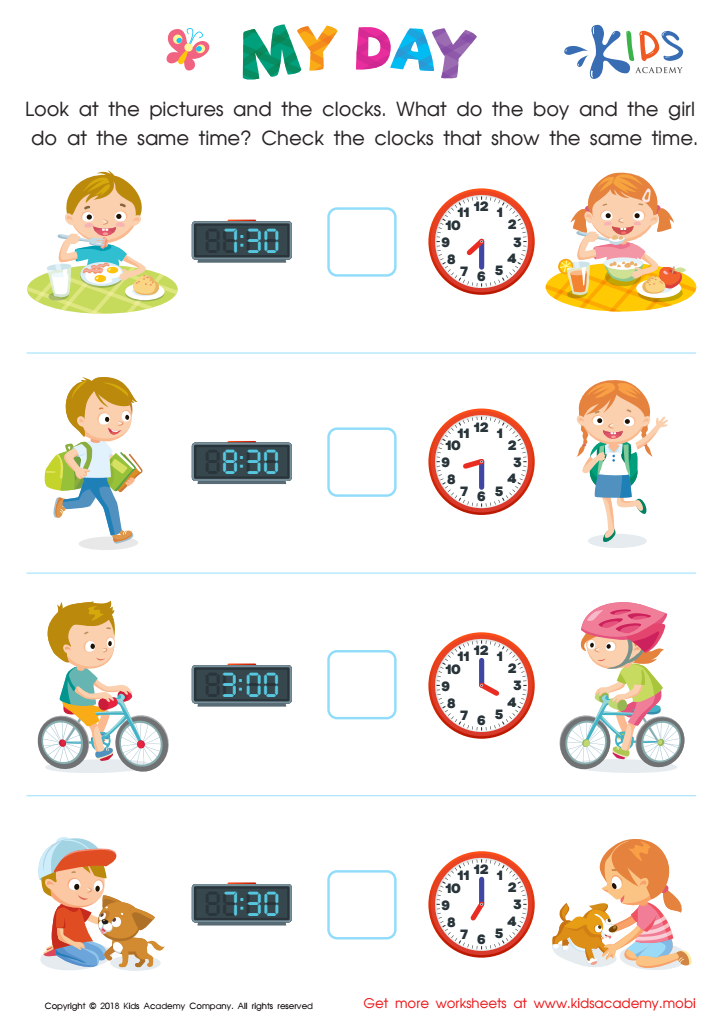
My Day Worksheet






Understanding time is a crucial skill for children aged 6-8, and it significantly impacts their daily lives and future learning. At this developmental stage, children are becoming more independent and starting to navigate routines, which makes grasping concepts of time essential. It helps them understand schedules, such as school hours, meal times, and bedtime, fostering a sense of responsibility and self-management.
Moreover, learning about time enhances cognitive skills. Children begin to comprehend sequences of events—recognizing past, present, and future. This understanding aids in their reading comprehension and storytelling abilities, as they learn to construct timelines and organize narratives logically.
For parents and teachers, instilling a solid foundation of time-telling skills cultivates confidence in children. Mastering concepts like hours, minutes, and the daily clock helps reduce anxiety associated with waiting or uncertainty. Furthermore, this foundational understanding promotes involvement in math literacy from an early age, setting the stage for future academic success.
In summary, teaching children about time is not merely about clock-reading; it enriches their understanding of the world, promotes routine management, and lays the groundwork for essential life skills. It is a fundamental aspect of their growth that parents and educators should prioritize.








