
Visual discrimination Easy Worksheets for Ages 6-8
5 filtered results
Difficulty Level
Grade
Age
-
From - To
Subject
Activity
Standards
Unlock your child's potential with our Visual Discrimination Easy Worksheets, specially designed for ages 6-8! These engaging and interactive worksheets focus on enhancing critical visual skills through fun activities tailored for young learners. By practicing sorting, comparing, and identifying differences, children develop vital visual discrimination abilities essential for reading, math, and everyday tasks. Our printable resources cater to various learning styles and make it easy for parents and educators to support children's growth at home or in the classroom. Dive into our collection of worksheets and watch your child's confidence and skills soar as they enjoy learning through play! Start today!
Favorites
With answer key
Interactive
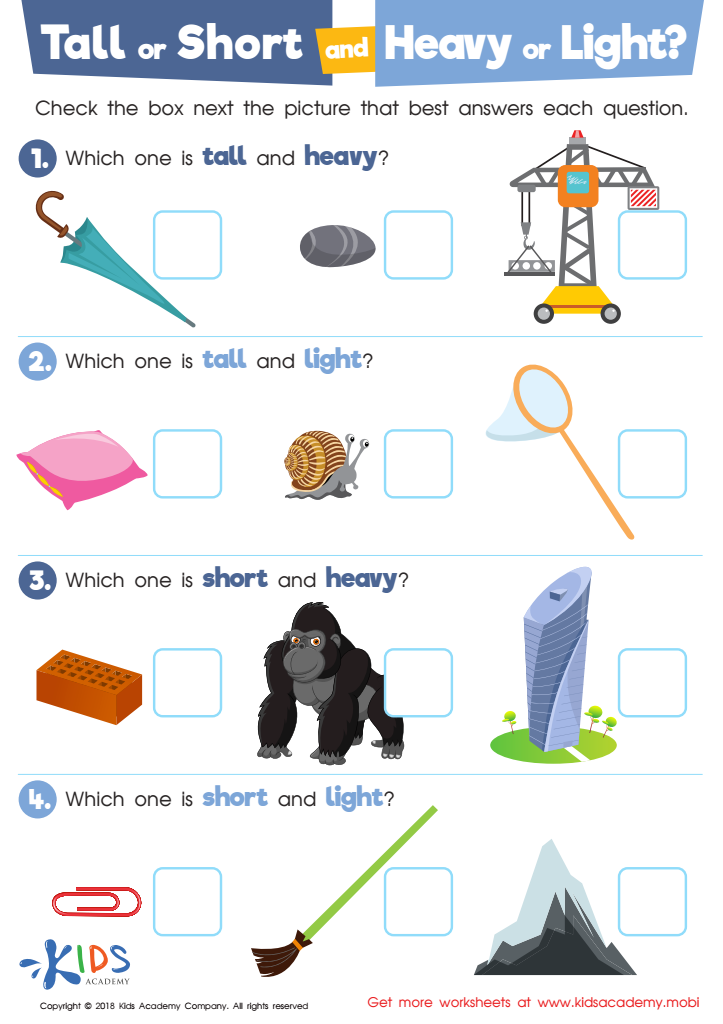
Tall or Short and Heavy or Light? Worksheet
Young children can find basic measurement concepts tricky. This PDF introduces them to the appropriate vocabulary for describing heavy, light, tall and short items, by using familiar pictures. It helps them accurately select which items fit each category.
 Assign to My Students
Tall or Short and Heavy or Light? Worksheet
Worksheet
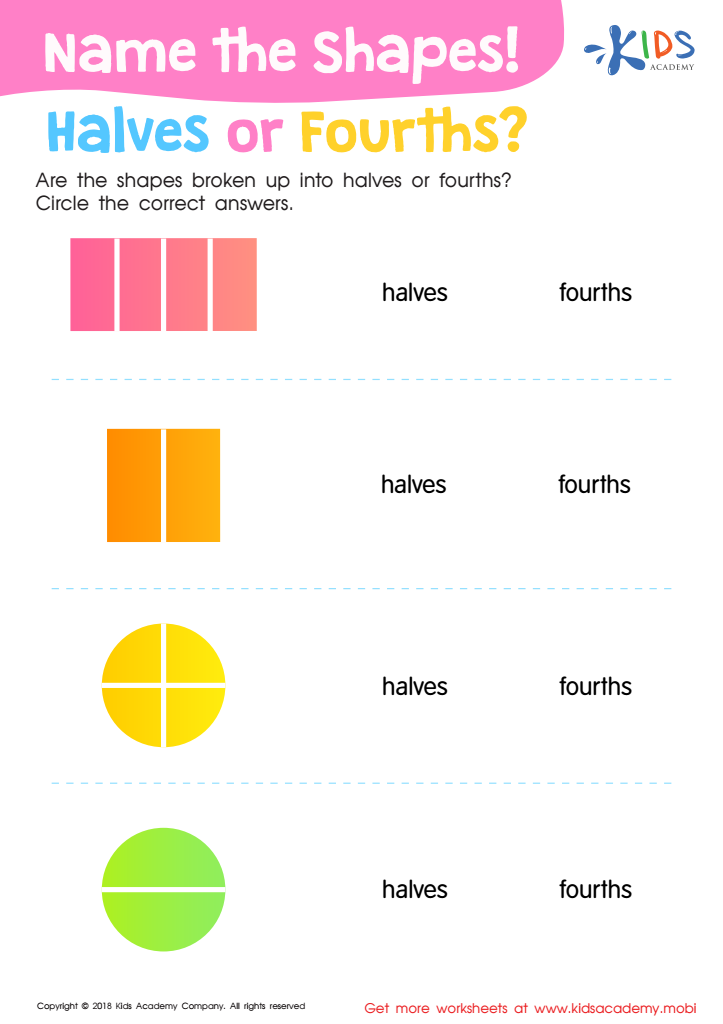
Name the Shapes Halves or Fourths? Worksheet
Before starting, ask your child if they understand what halves and fourths are. If they can answer correctly, move on with the worksheet. Help them circle the right option beside each shape, showing if it's split into halves or fourths.
Name the Shapes Halves or Fourths? Worksheet
Worksheet
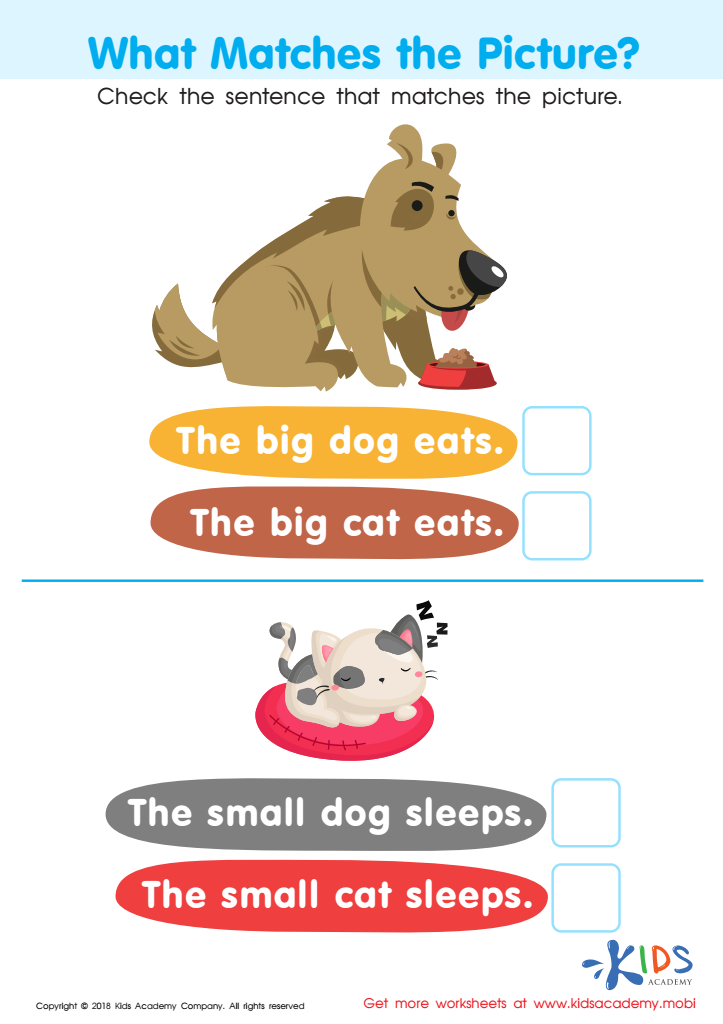
What Matches the Picture? Worksheet
Emerging readers can use pictures of cute pets and phrase repetition to match sentences to pics, building skills while having fun! It's a great way to bolster vocab and confidence, motivating them to keep reading.
What Matches the Picture? Worksheet
Worksheet
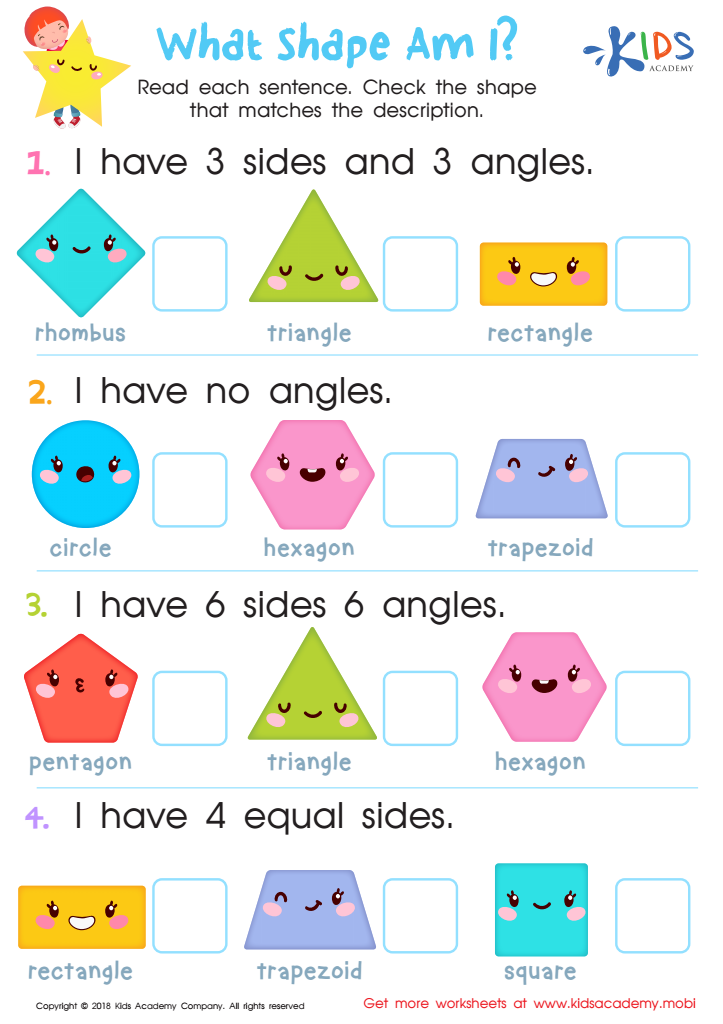
What Shape Am I? Worksheet
Help your child read each sentence in this colorful worksheet. Have them identify the shapes described and check the boxes. To prepare, ask simple questions like "How many sides does a triangle have?" and "Which shape has 4 equal sides?" Your child will become more skilled at shapes by the end of this activity.
What Shape Am I? Worksheet
Worksheet
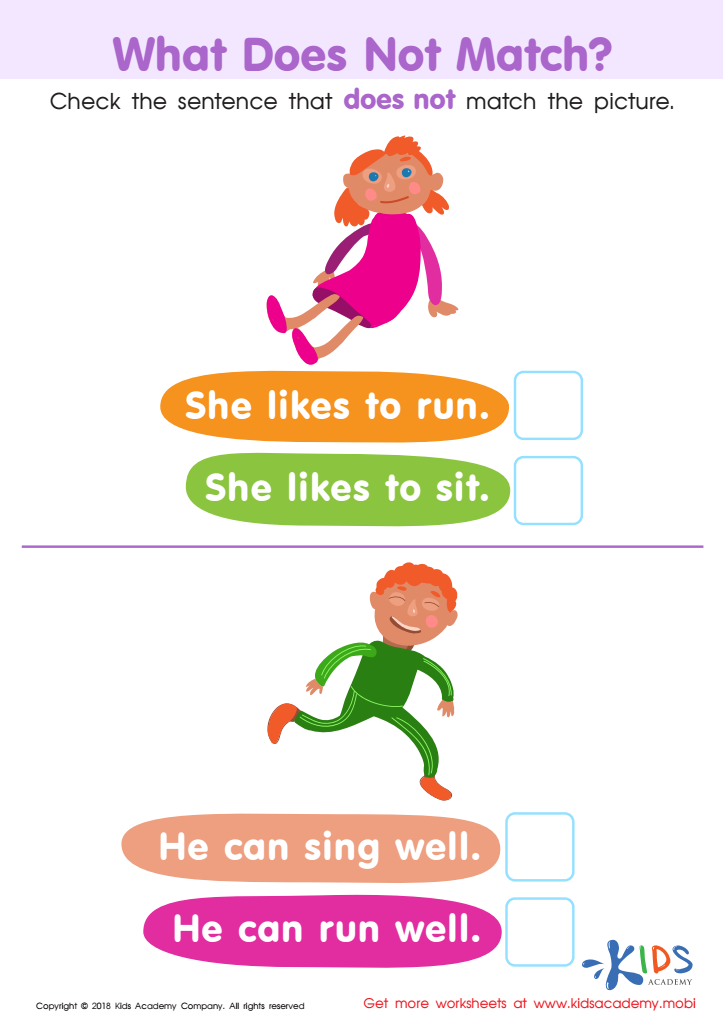
What Does Not Match? Worksheet
Emerging readers need to practice using visual cues and repetitive text. This colorful PDF provides them with an opportunity to look at pictures, use discrimination and discern which phrase does not match. It also enables them to gain familiarity with high-frequency words to aid decoding longer sentences.
What Does Not Match? Worksheet
Worksheet
Join Kids Academy for Free
Who is primarily going to use this learning content?


.jpg)




Visual discrimination is an essential skill for children aged 6 to 8, and parents and teachers should prioritize its development. This skill allows children to notice and differentiate between visual details, such as shapes, colors, and patterns. When they can effectively distinguish these elements, they're better equipped to recognize letters and numbers, which are fundamental for reading and math.
Strong visual discrimination aids in problem-solving and critical thinking. For example, when children can spot differences in similar images, it enhances their attention to detail, fostering cognitive growth. This skill also supports their ability to understand basic concepts, like comparison and classification, which are vital for early learning.
Moreover, improving visual discrimination can reduce frustration in learning environments. Children who can easily differentiate between similar sounds or letters, like “b” and “d,” can build confidence, as they experience fewer challenges in mastering reading and writing.
Engaging parents and teachers in activities that strengthen visual discrimination, such as puzzles, color sorting, and matching games, not only boosts a child's learning journey but also makes it fun. By understanding its importance, adults can help foster a successful educational experience for children.








