Multiplication practice Easy Math Worksheets for Ages 6-9
25 filtered results
-
From - To
Discover "Multiplication Practice Easy Math Worksheets for Ages 6-9!" Our engaging and well-designed worksheets are perfect for young learners beginning their multiplication journey. Tailored for kids between the ages of 6 and 9, these worksheets combine fun and education, helping children master multiplication through a variety of creative activities. Featuring colorful illustrations and diverse exercises, our worksheets ensure that children remain interested while reinforcing essential math skills. Ideal for both classroom and home use, these easy-to-understand resources guide students in building confidence and proficiency in multiplication, setting a strong foundation for future math success. Download today and watch your child's skills grow!
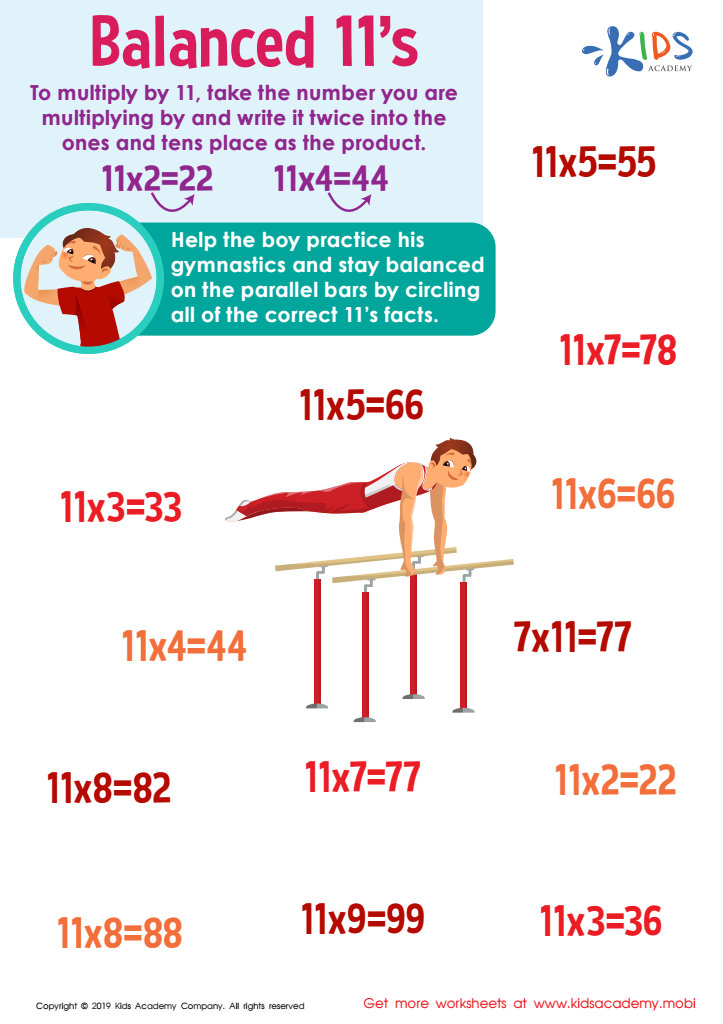
Balanced 11s Worksheet
 Assign to My Students
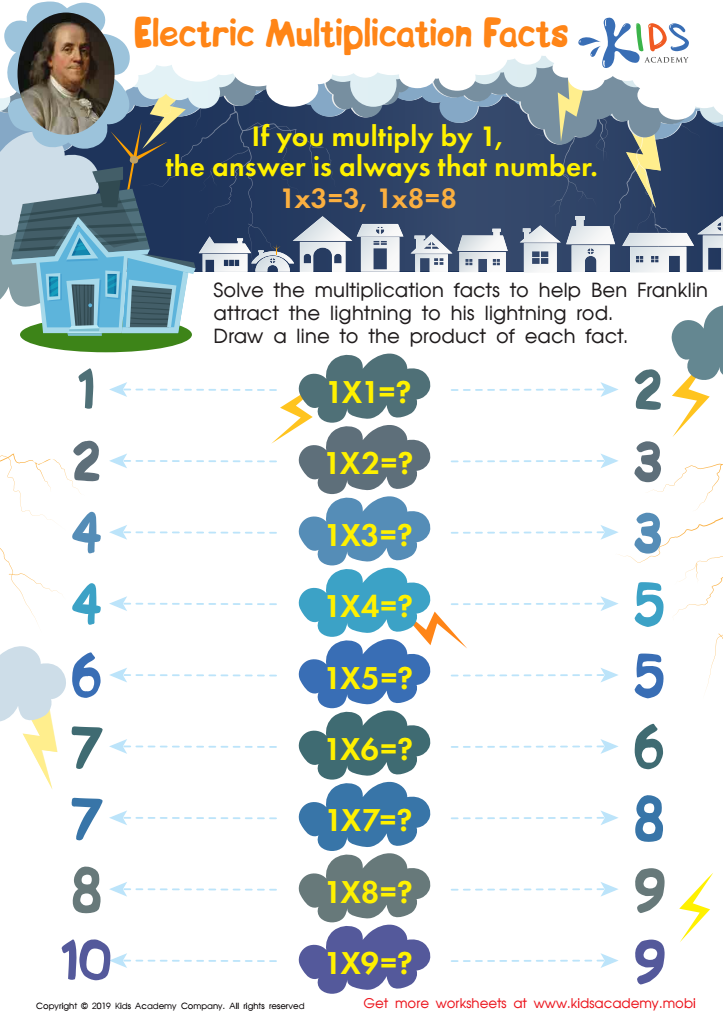
Electric Multiplication Facts Worksheet
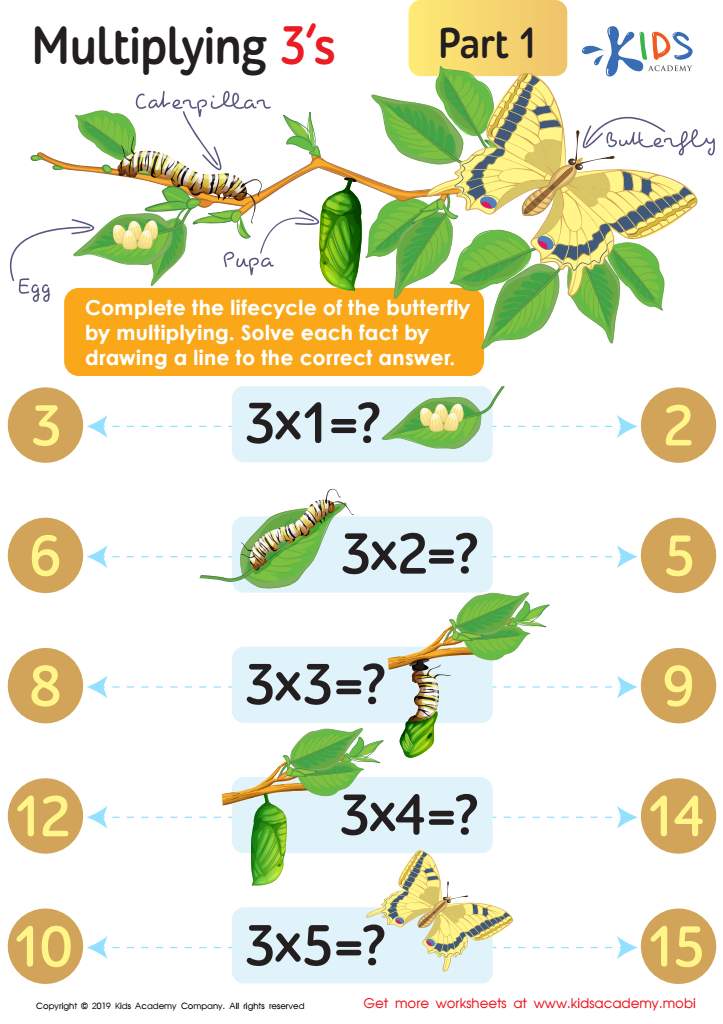
Multiplying 3’s Part 1 Worksheet
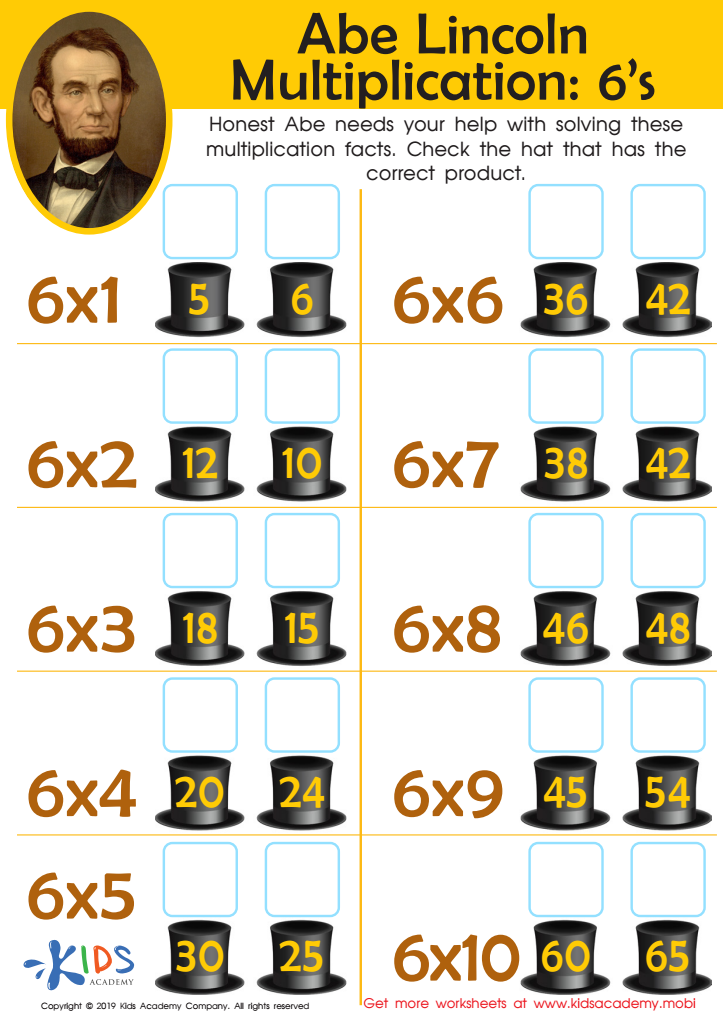
Abe Lincoln Multiplication: 6’s Worksheet
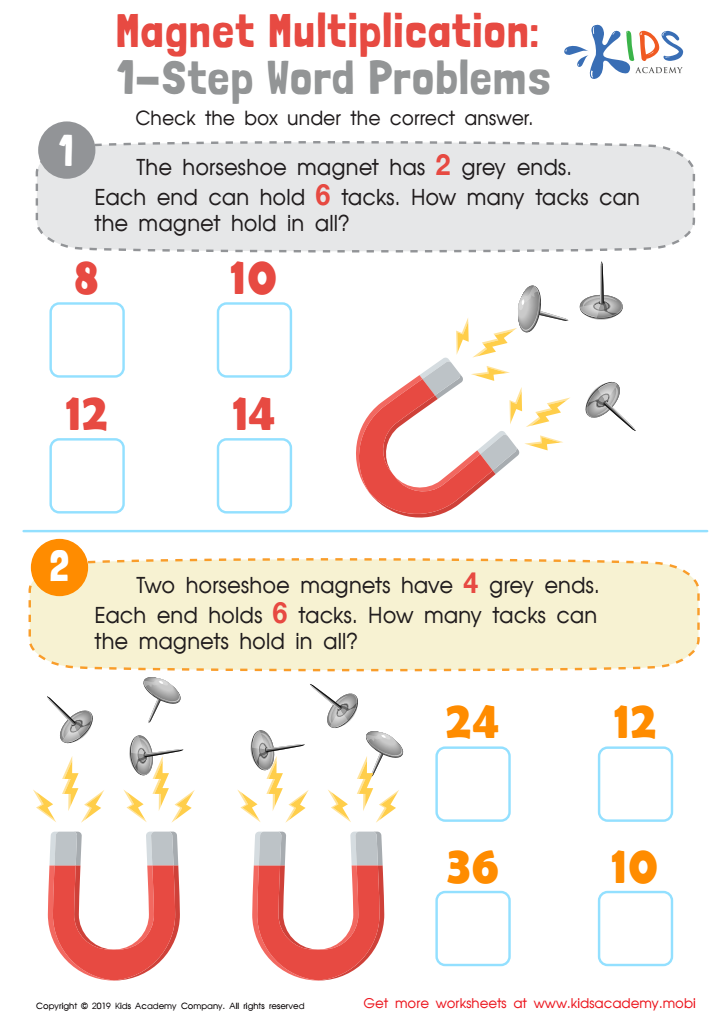
Magnet Multiplication: 1-Step Word Problems Worksheet
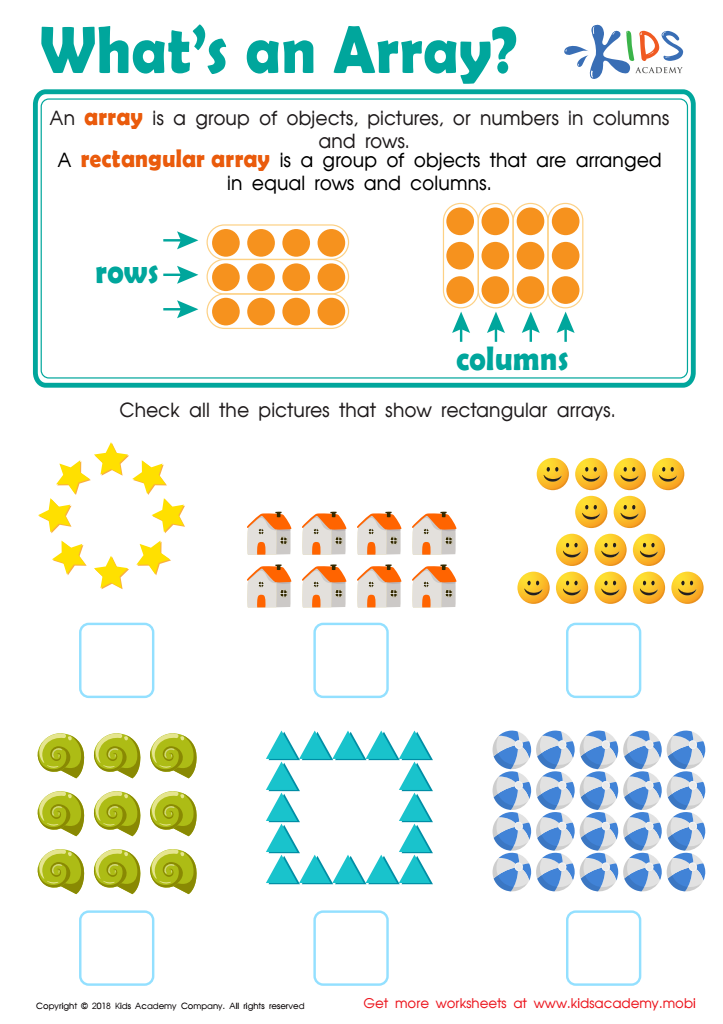
What's an Array? Worksheet
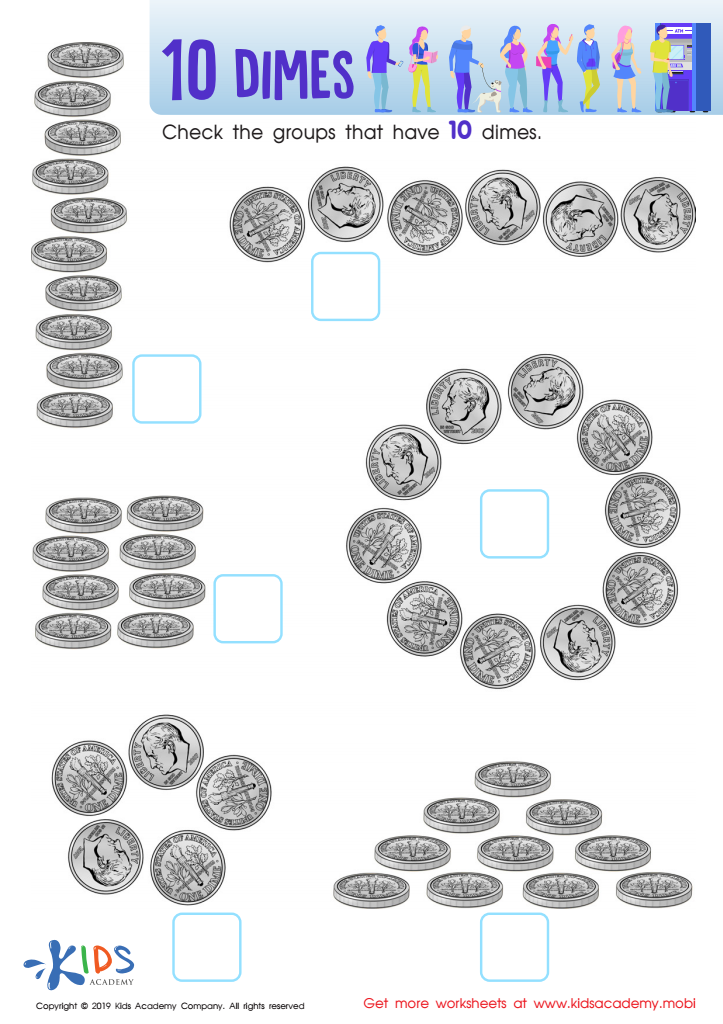
10 Dimes Worksheet
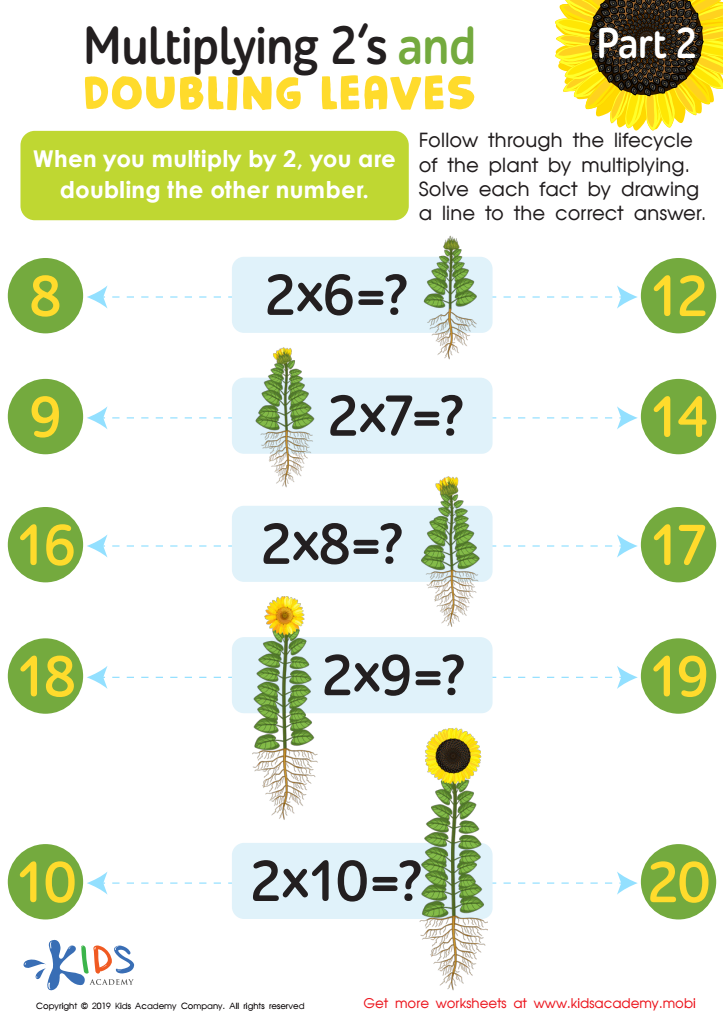
Multiplying 2’s and Doubling Leaves Part 2 Worksheet
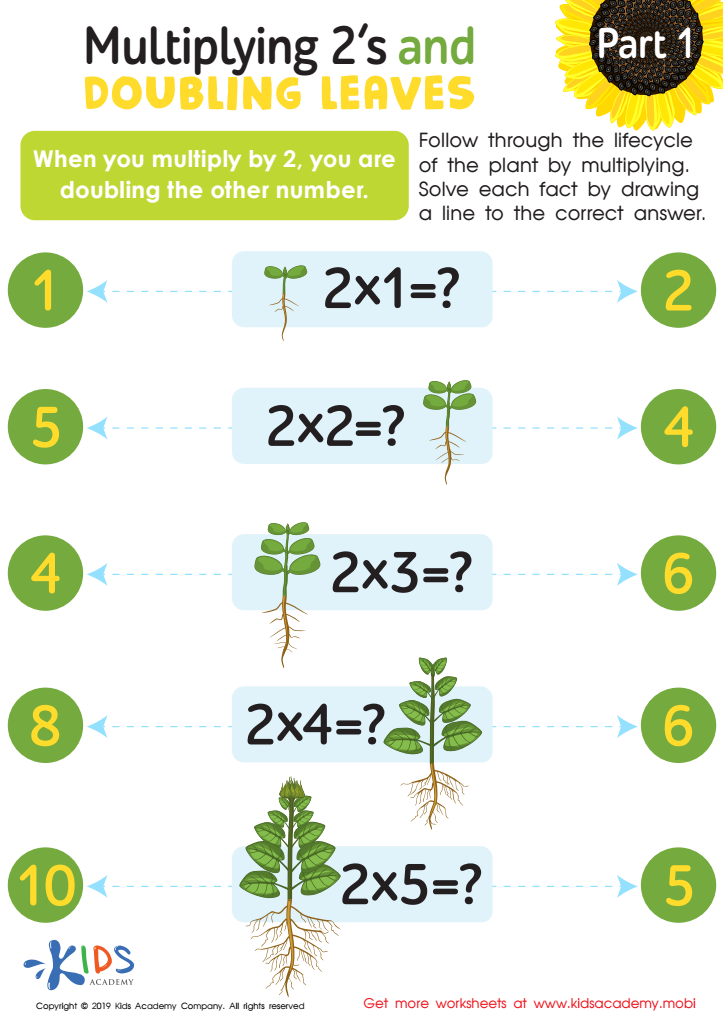
Multiplying 2’s and Doubling Leaves Part 1 Worksheet
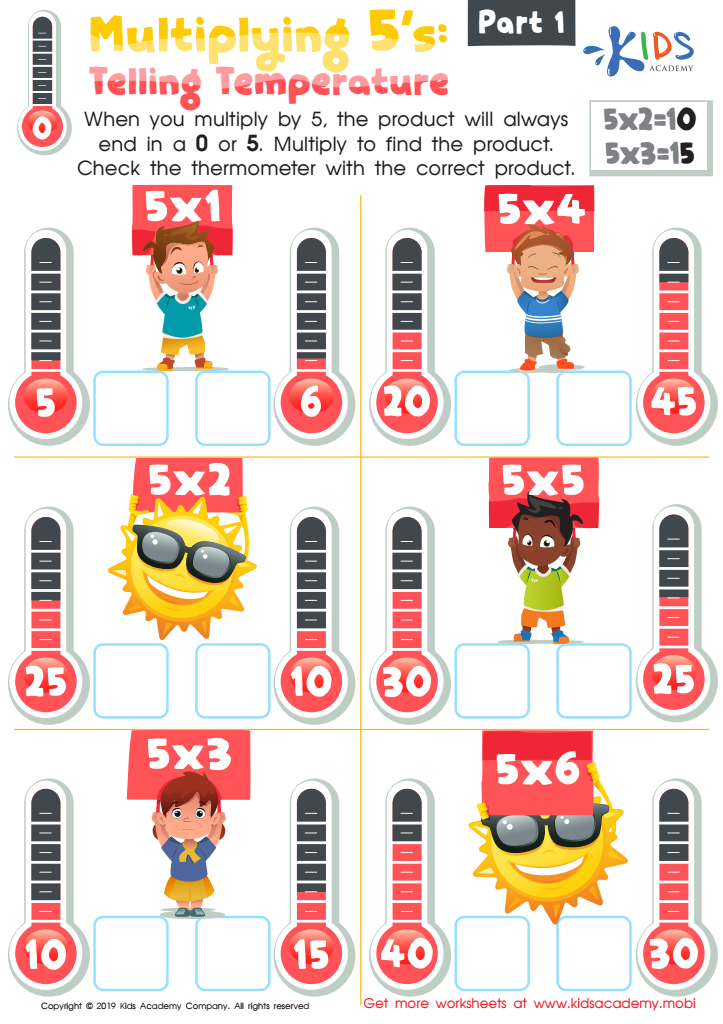
Multiplying 5’s: Telling Temperature Worksheet
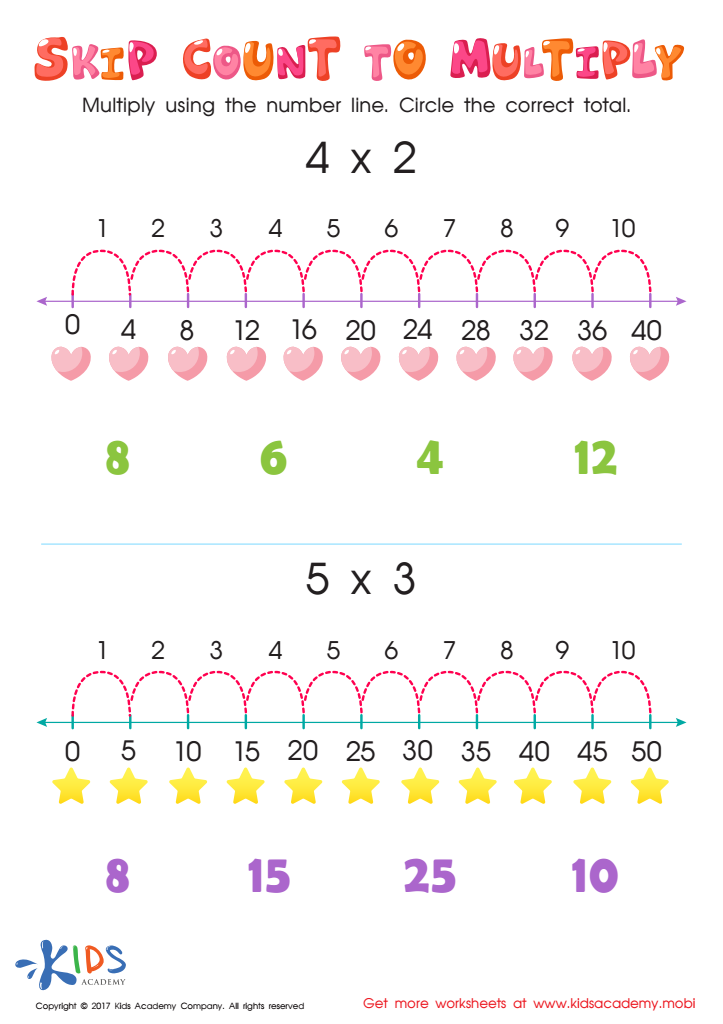
Skip Count Multiplication Worksheet
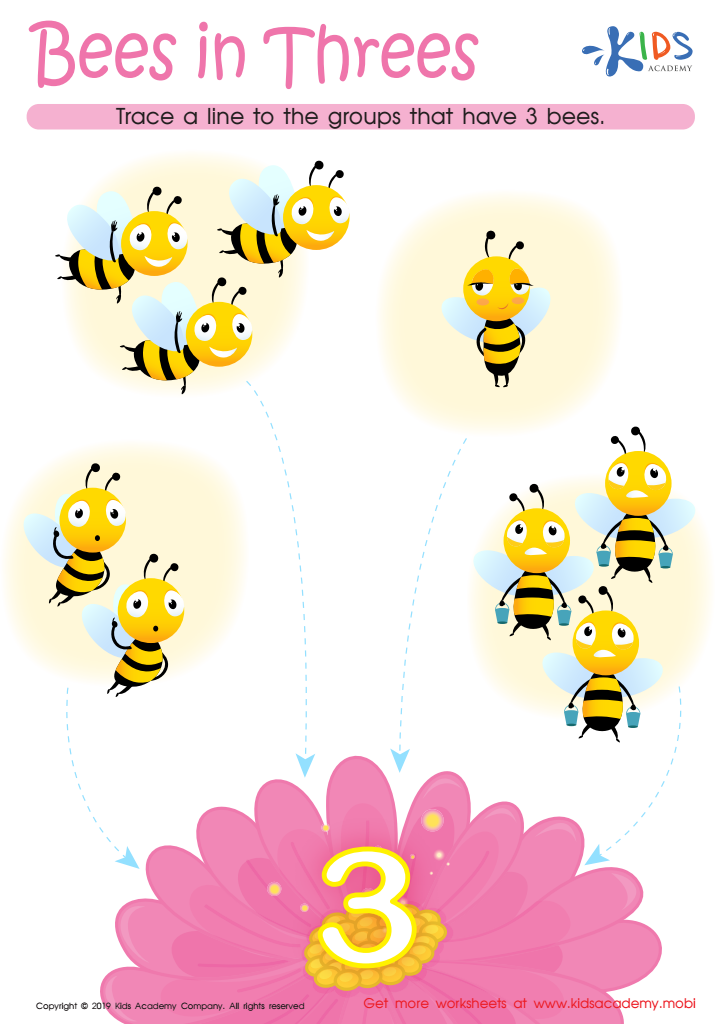
Bees in Threes Worksheet
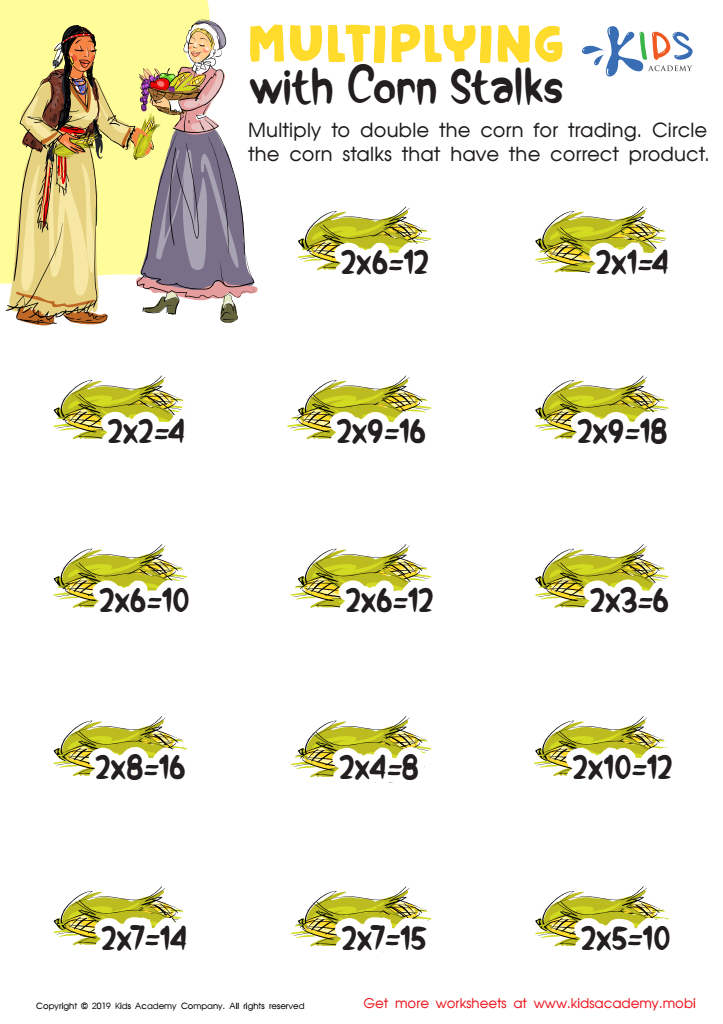
Multiplying With Corn Stalks Worksheet
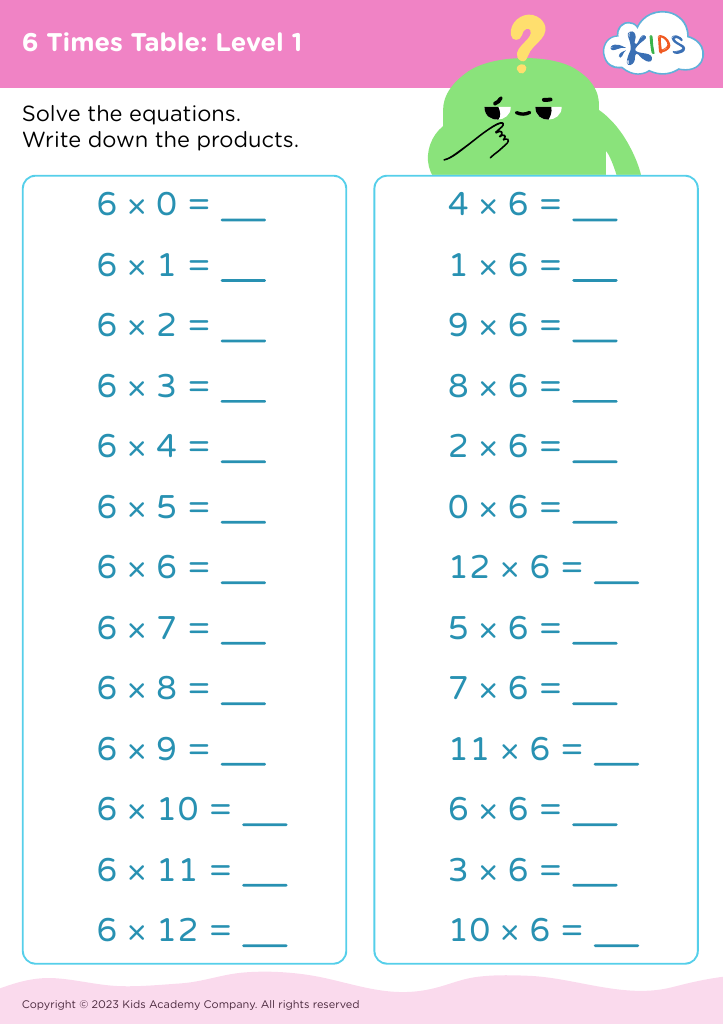
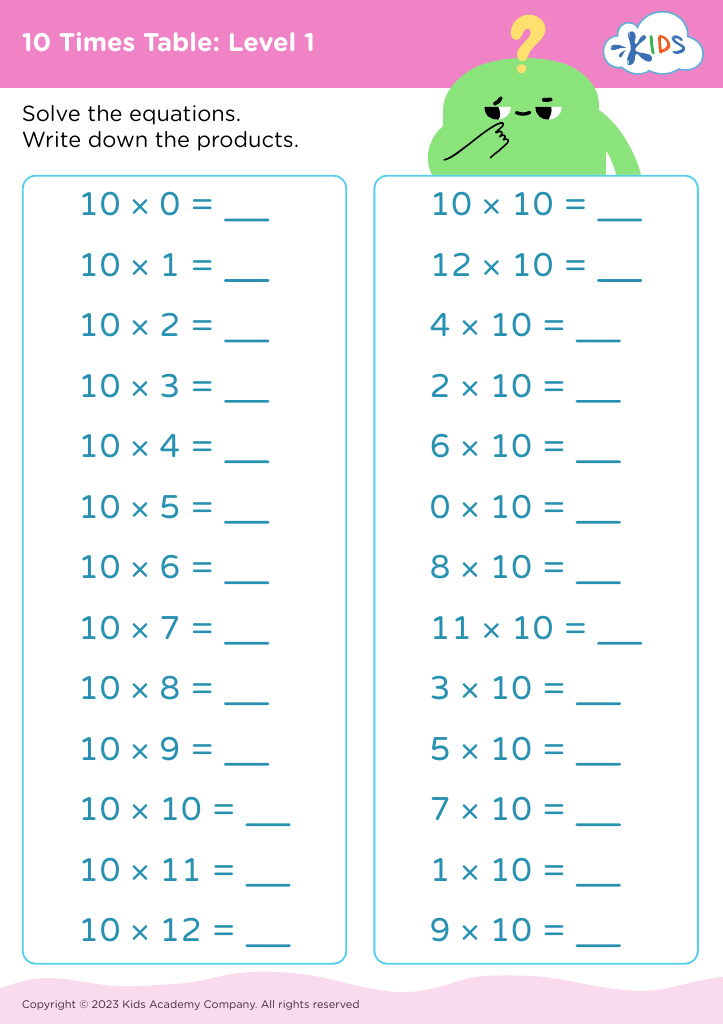
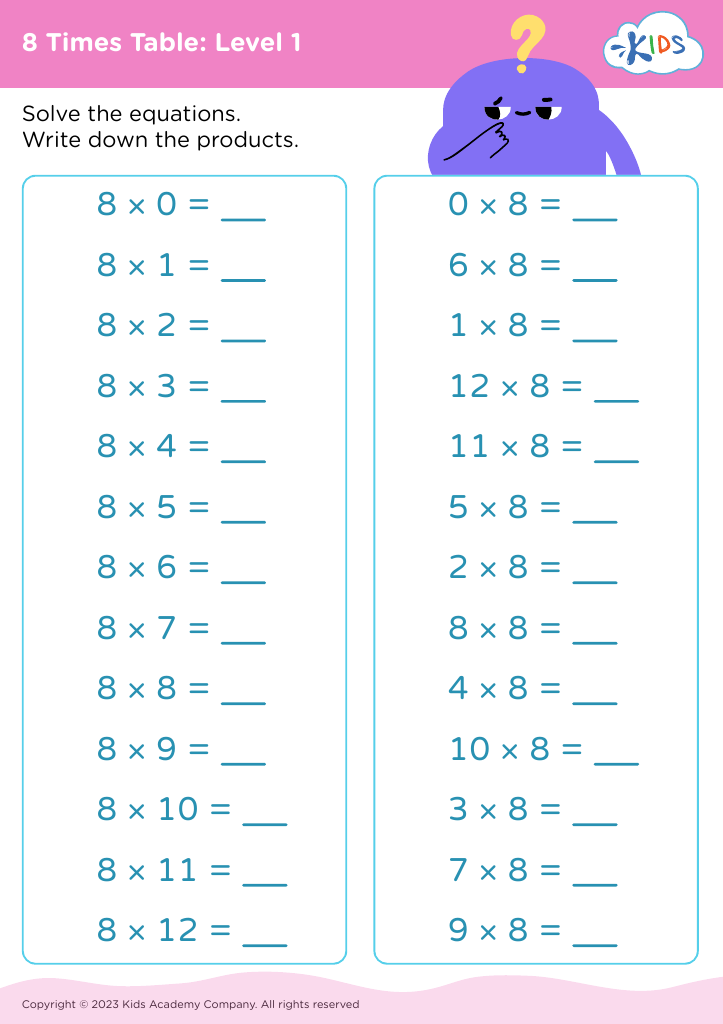
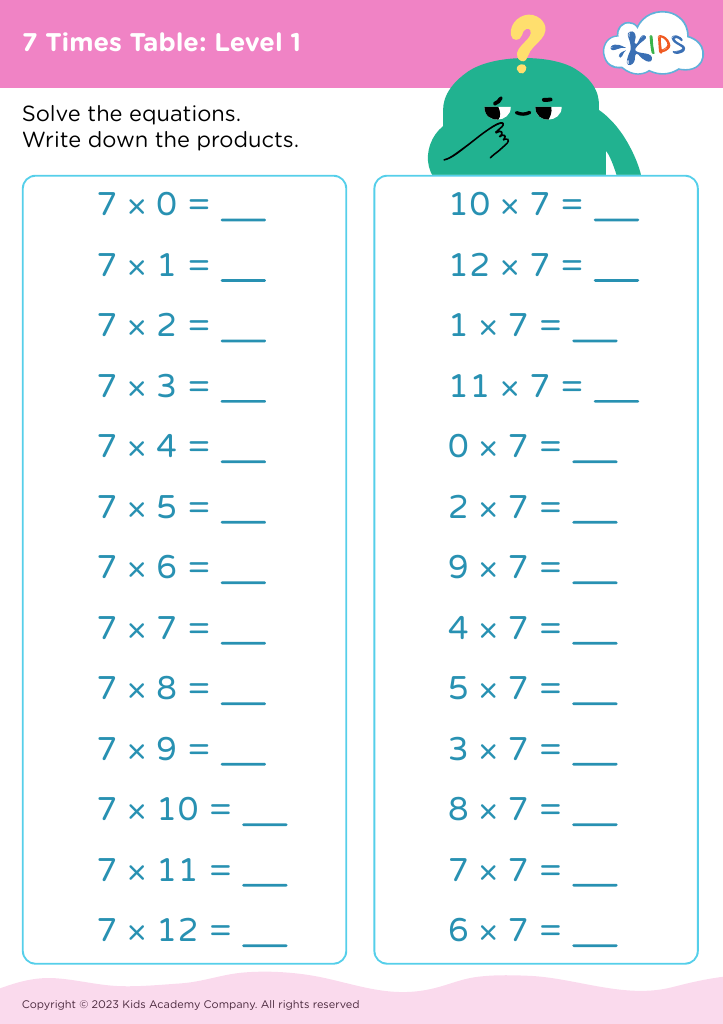
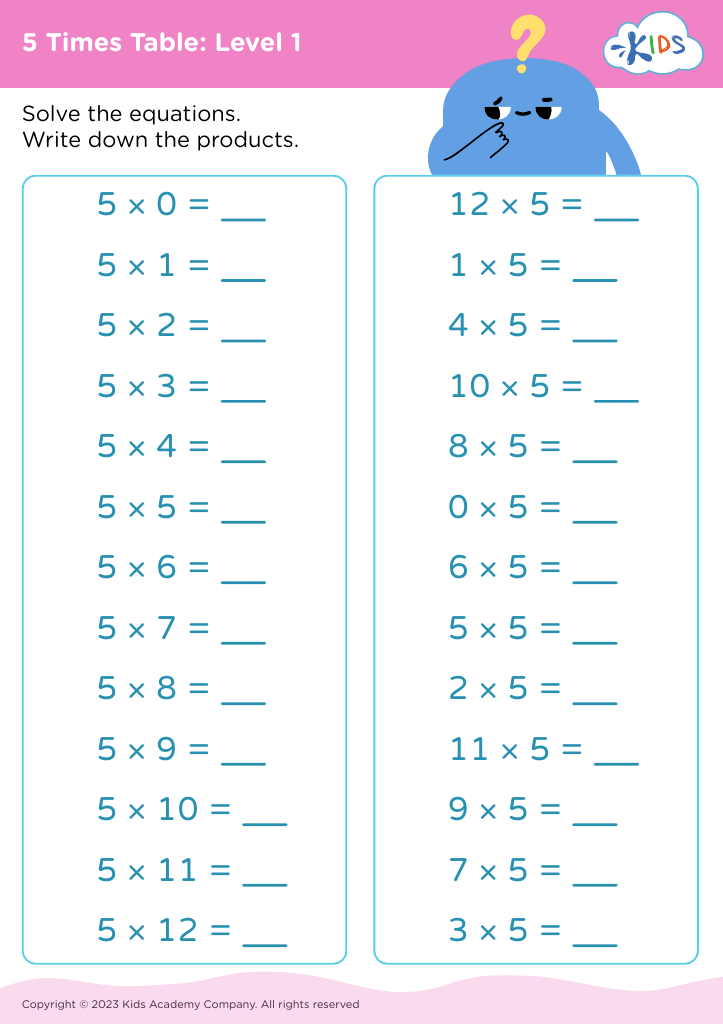
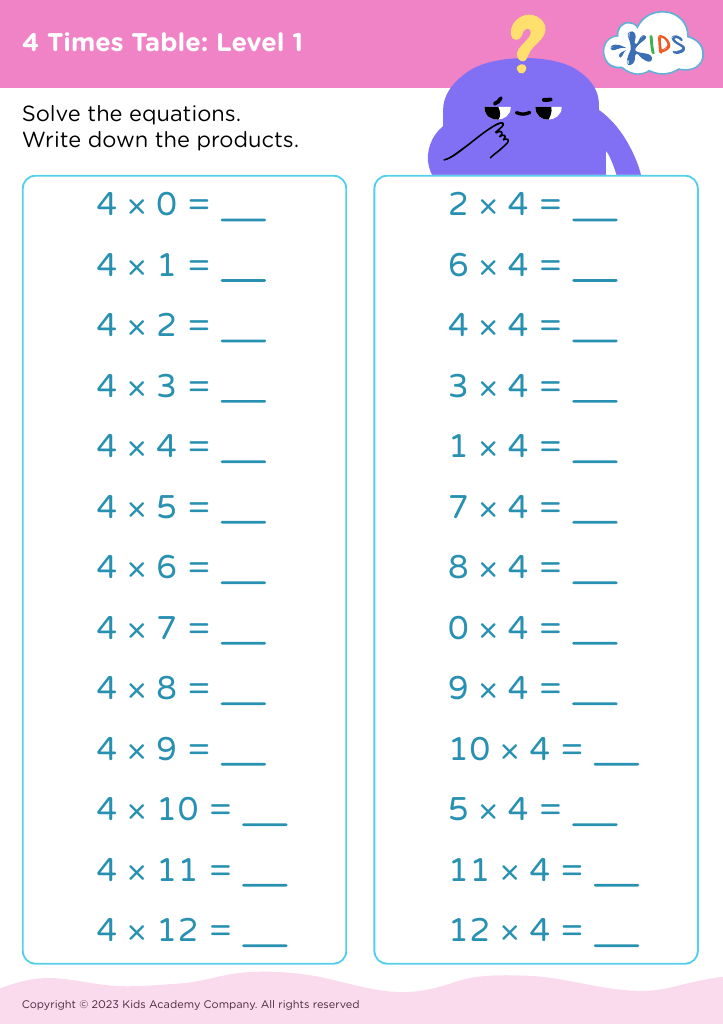
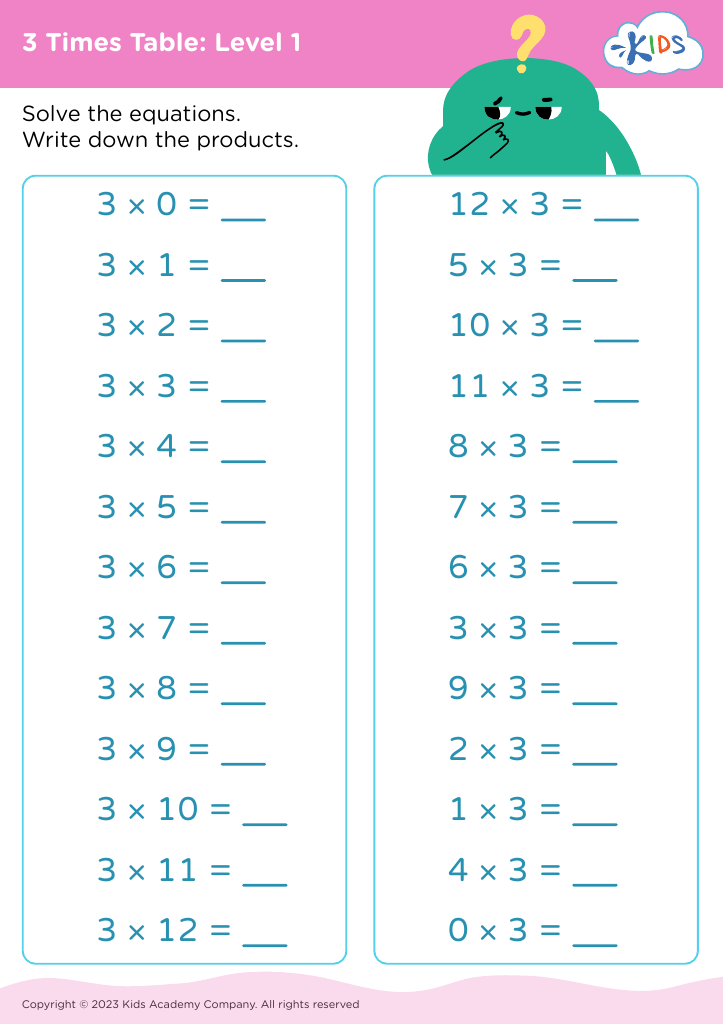
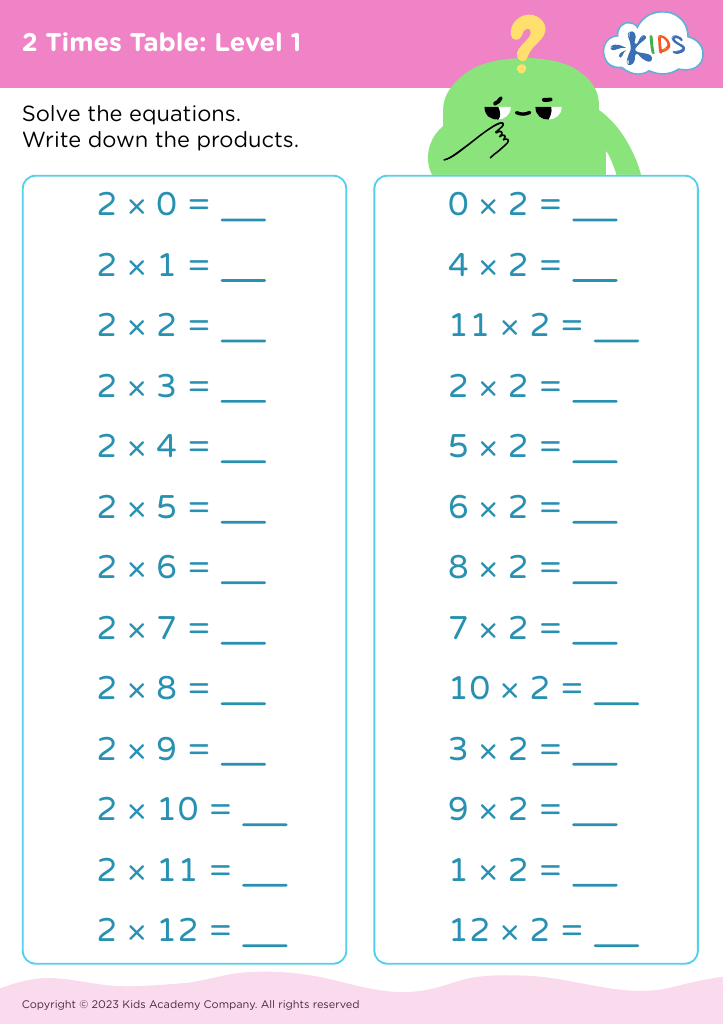
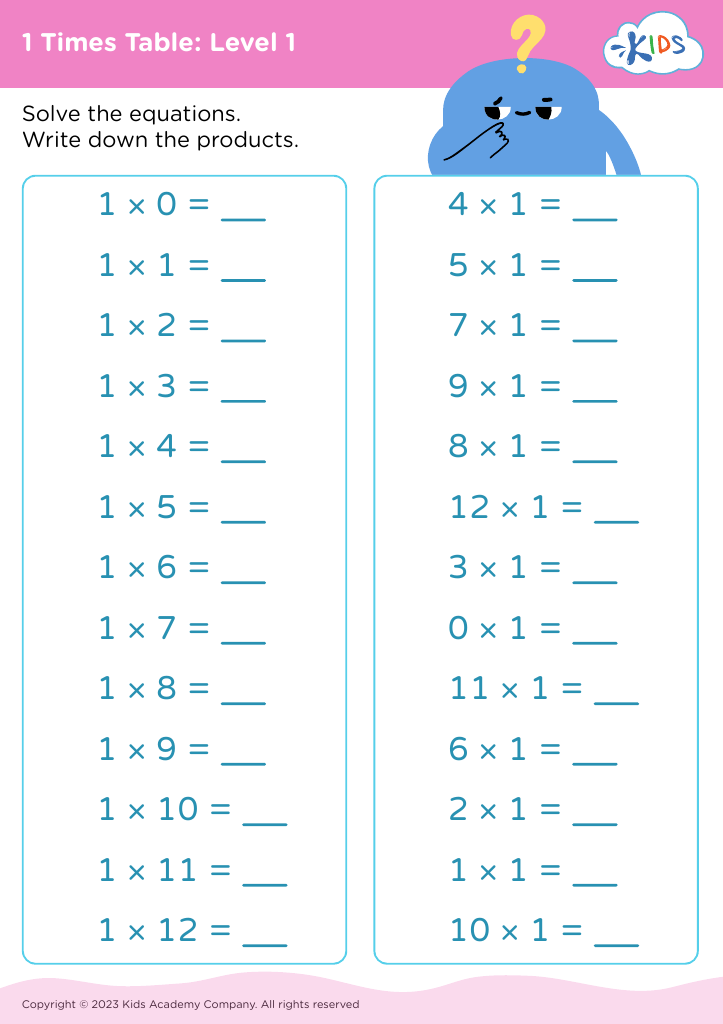
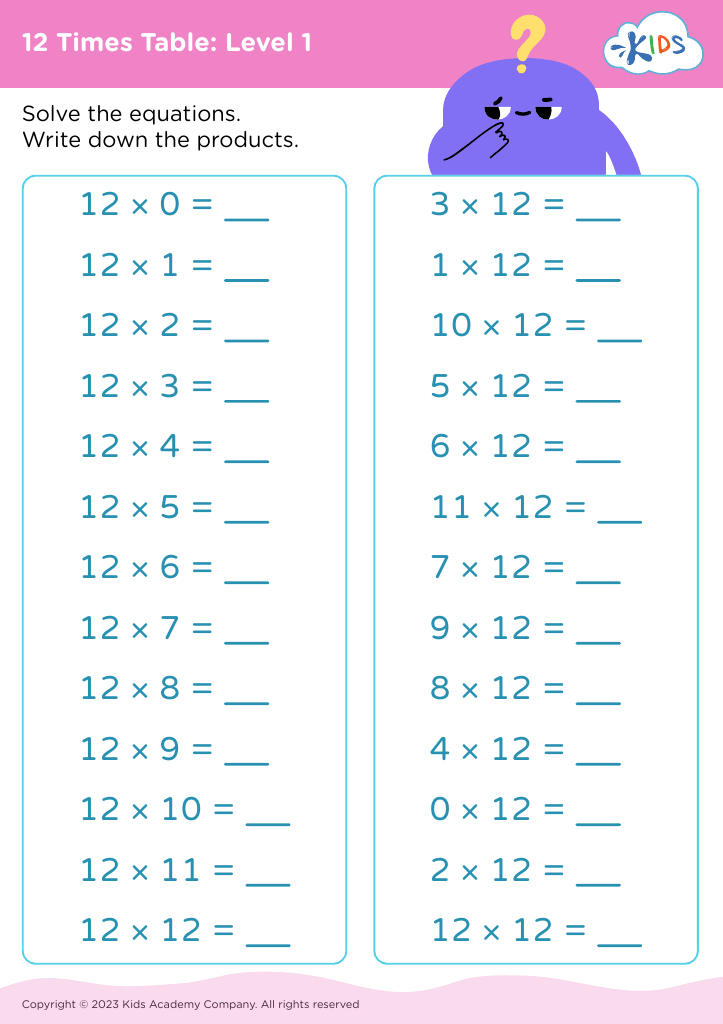
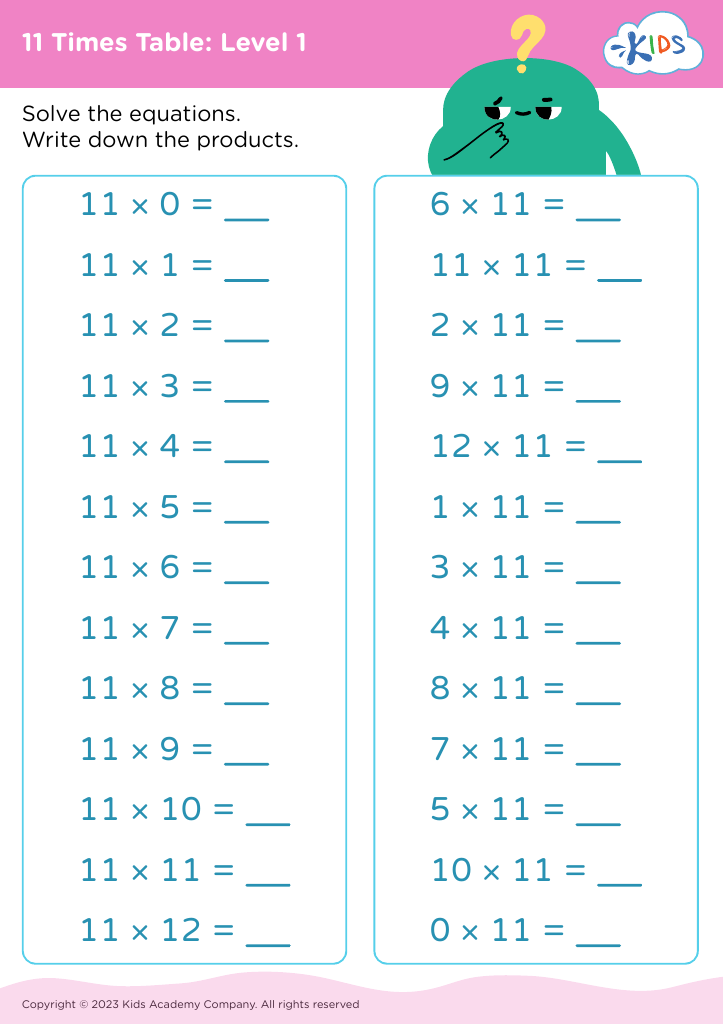








Multiplication practice is crucial for children aged 6-9 as it lays the foundation for their future mathematical understanding. At this developmental stage, young learners' brains are highly receptive to absorbing basic arithmetic concepts. By mastering multiplication early on, children can build confidence in their math skills, which is essential for tackling more complex operations later, such as division, fractions, and algebra.
Moreover, proficiency in multiplication fosters critical thinking and problem-solving abilities. When children understand how to manipulate numbers through multiplication, they develop cognitive skills that are transferable to other academic disciplines and everyday life scenarios. For instance, they become better equipped to handle practical tasks such as budgeting their allowance or understanding time management.
Consistent multiplication practice also enhances memory and recall. Repetition helps cement these mathematical facts in long-term memory, making them easily retrievable. This fluency reduces cognitive load during more challenging mathematical tasks, allowing children to focus on understanding concepts rather than remembering basic facts.
Parents and teachers who prioritize multiplication practice for their children are investing in their academic success and overall intellectual growth. This early reinforcement creates a positive mathematical foundation that encourages lifelong learning and a greater aptitude for STEM (Science, Technology, Engineering, and Mathematics) subjects, which are increasingly important in today’s world.








