
Easy Sorting Worksheets for Ages 6-9
3 filtered results
Difficulty Level
Grade
Age
-
From - To
Subject
Activity
Standards
Discover our "Easy Sorting Worksheets for Ages 6-9," designed to make learning fun and engaging! These worksheets introduce young learners to essential sorting skills through colorful visuals and interactive activities suitable for early elementary students. Encourage critical thinking as kids practice sorting objects by size, shape, color, and more. Our worksheets promote cognitive development while aligning with educational standards, ensuring a seamless integration into classroom or home learning settings. Perfect for educators and parents alike, these resources provide a valuable foundation in math concepts and problem-solving skills. Explore our collection today and watch your child's confidence soar in sorting!
Favorites
With answer key
Interactive
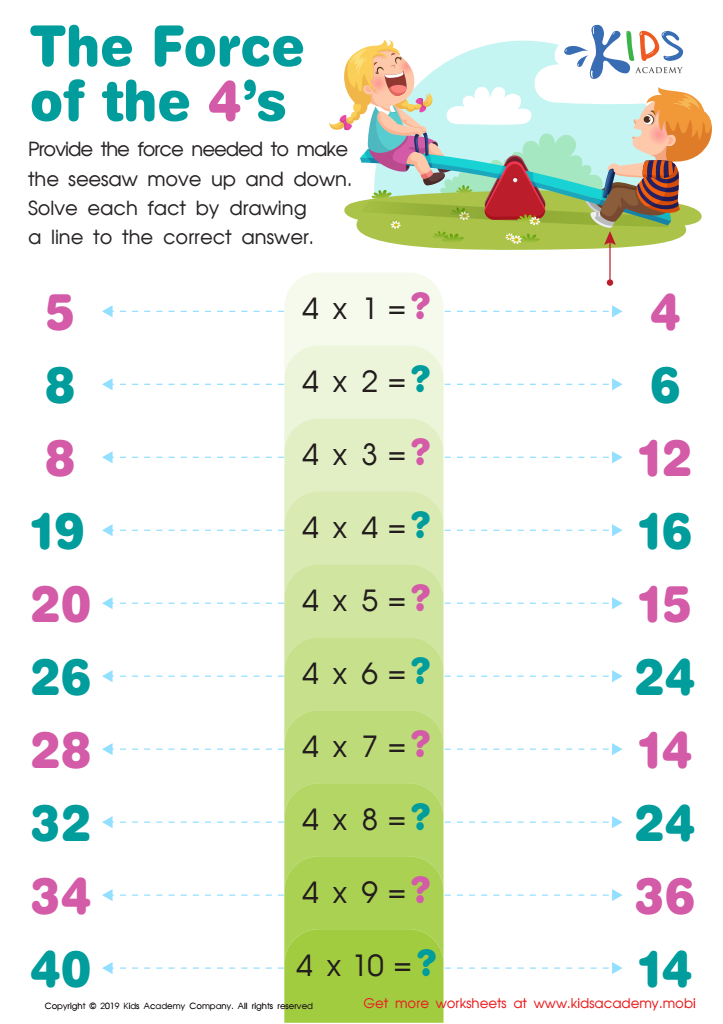
The Force of the 4's Worksheet
Ride a seesaw with your child and explore the physics behind it! Explain how it needs two people and how force makes it go up and down. Use the memories of the pleasurable experience to teach your kid a lesson in force. Show them how to solve the worksheet by drawing a line to the correct answer. This way, they'll learn the force needed for the seesaw to move.
 Assign to My Students
The Force of the 4's Worksheet
Worksheet
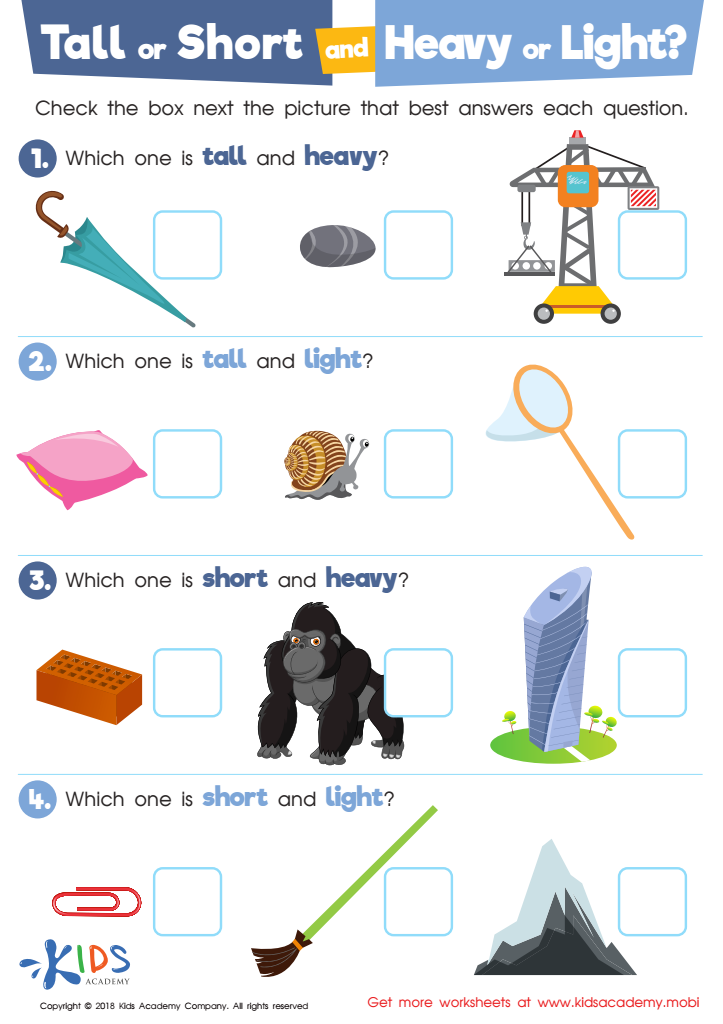
Tall or Short and Heavy or Light? Worksheet
Young children can find basic measurement concepts tricky. This PDF introduces them to the appropriate vocabulary for describing heavy, light, tall and short items, by using familiar pictures. It helps them accurately select which items fit each category.
Tall or Short and Heavy or Light? Worksheet
Worksheet
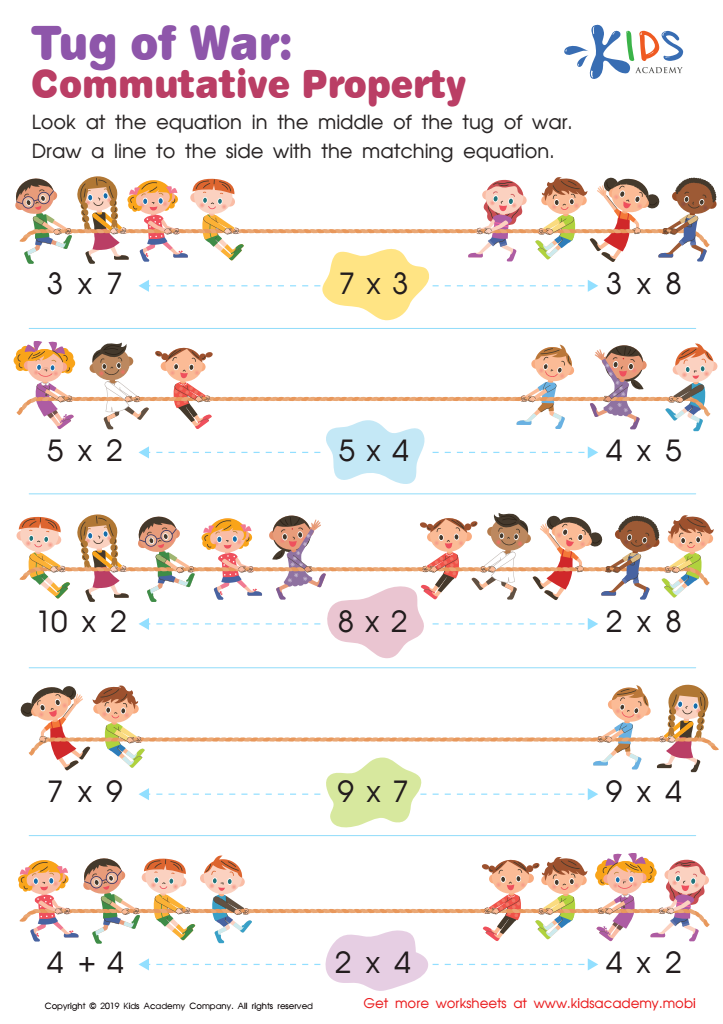
Tug of War: Commutative Property Worksheet
Tug of war is a great game to teach your child simple math. Explain the commutative property--it states that the product remains the same regardless of the order of factors. Use the equations in the middle of the worksheet and have your child draw a line to the corresponding equation. It's a fun and easy way to learn math.
Tug of War: Commutative Property Worksheet
Worksheet
Join Kids Academy for Free
Who is primarily going to use this learning content?








Easy Sorting is an essential activity for children aged 6-9, as it lays the foundation for crucial cognitive and social skills. During this stage of development, children are naturally drawn to categorizing and organizing their environment, making sorting exercises both engaging and educational. Parents and teachers should care because these activities enhance critical thinking, problem-solving, and decision-making abilities, key components of a child's intellectual growth.
Sorting helps children understand differences and similarities, fostering analytical skills as they organize objects by size, color, shape, or function. This not only supports their mathematical understanding, such as basic addition and subtraction through grouping but also develops their language skills as they articulate their reasoning for sorting choices.
Moreover, Easy Sorting encourages teamwork when done in groups, teaching children to cooperate and share responsibilities, essential social skills they will use throughout their lives. The engagement in sorting activities also aids in boosting a child's attention span, focus, and perseverance.
Overall, integrating Easy Sorting into daily routines supports holistic development, as learners gain valuable skills that contribute to their academic success and interpersonal relationships. Parents and teachers can play a vital role in fostering this important aspect of early education.








