Easy Time Worksheets for Ages 6-9
8 filtered results
-
From - To
Discover our engaging "Easy Time Worksheets for Ages 6-9," perfectly designed to make learning to read clocks a fun experience! These printable worksheets help children develop essential time-telling skills, ensuring they can confidently read both analog and digital clocks. Featuring a variety of vibrant activities, from matching times to completing clock faces, each worksheet captivates young minds. Tailored for kids aged 6 to 9, our resources cater to different learning speeds, making it ideal for classroom use or at-home practice. Explore "Easy Time Worksheets" today and set your child on the path to mastering time in an enjoyable way.
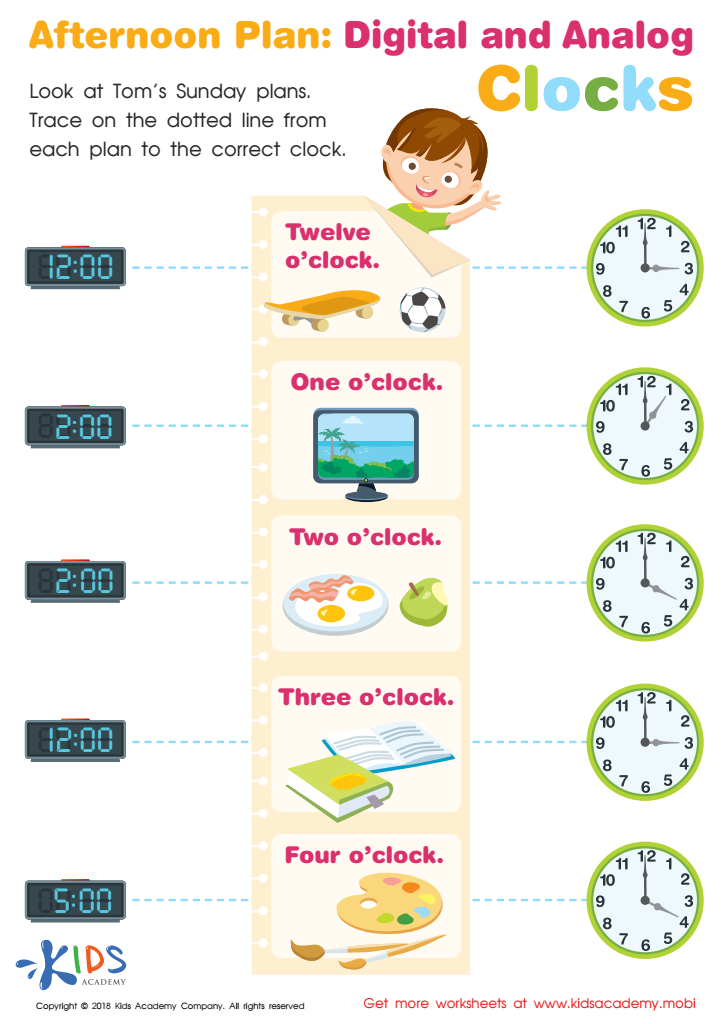
Afternoon Plan: Digital and Analog Clocks Worksheet
 Assign to My Students
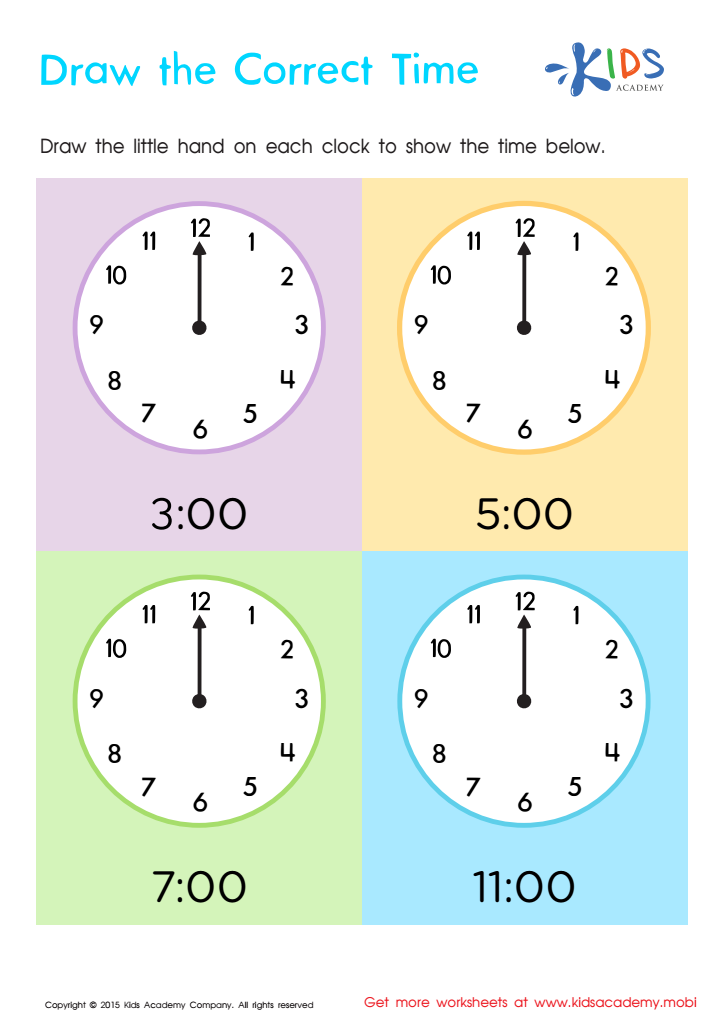
Telling The Time Worksheet: Part 1
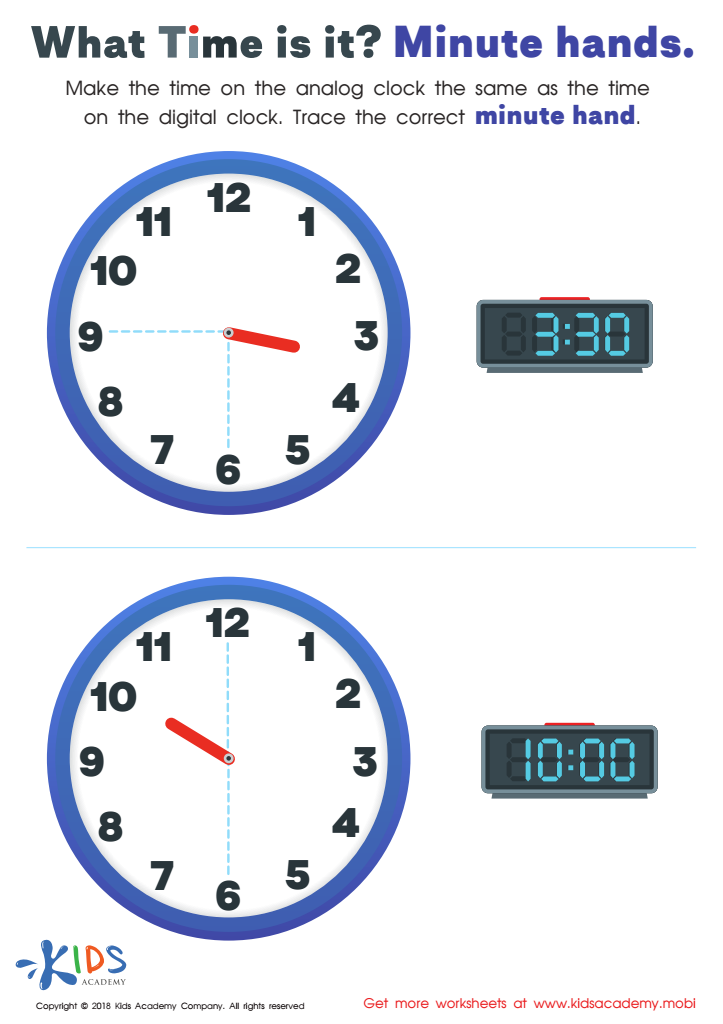
What Time Is it? Minute Hands Worksheet
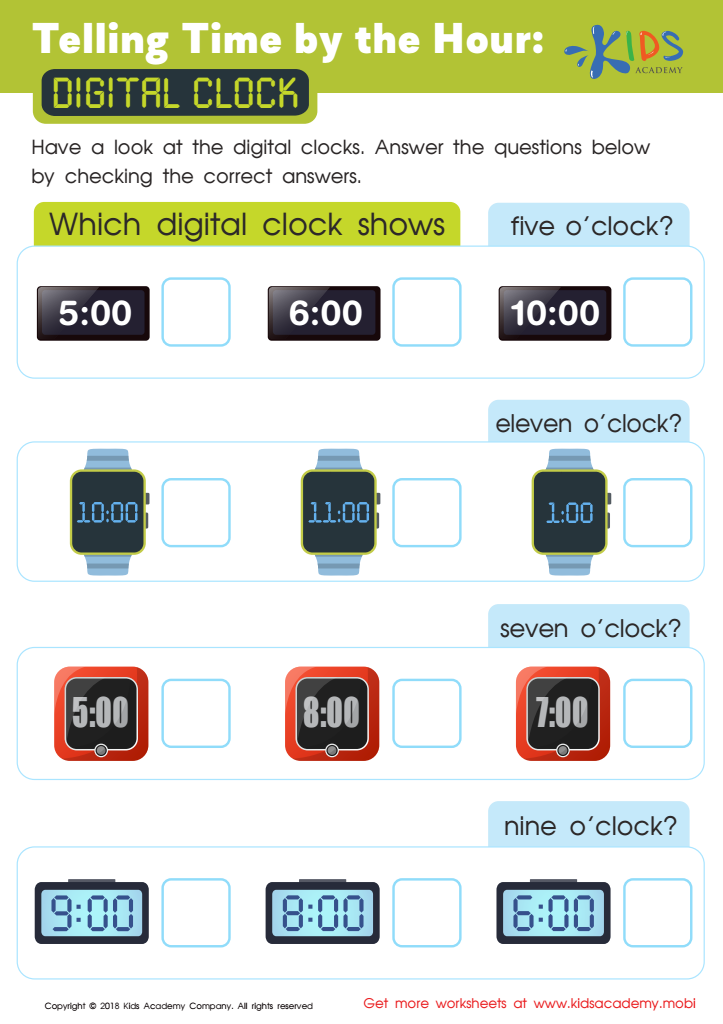
Telling Time by the Hour: Digital Clock Worksheet
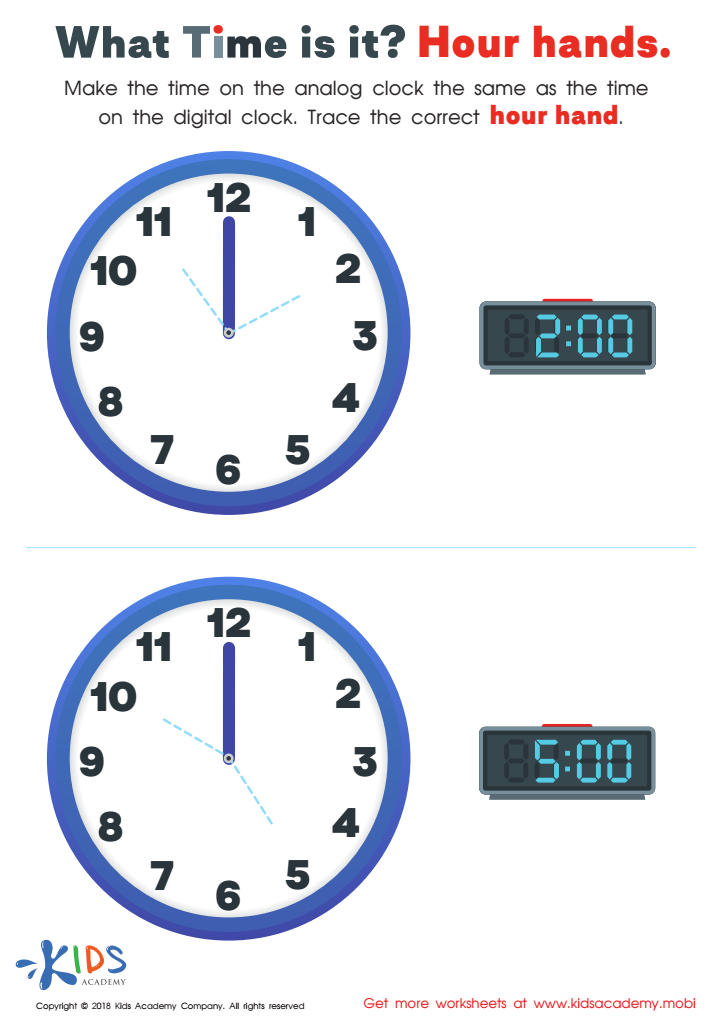
What Time Is it? Hour Hands Worksheet
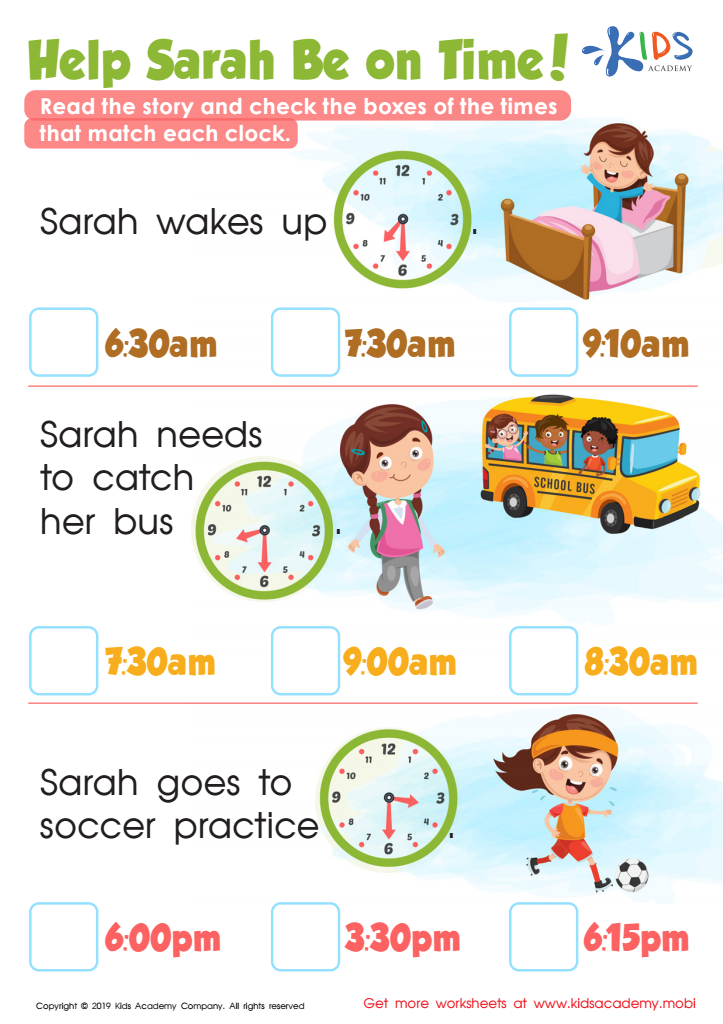
Help Sarah Be on Time! Worksheet
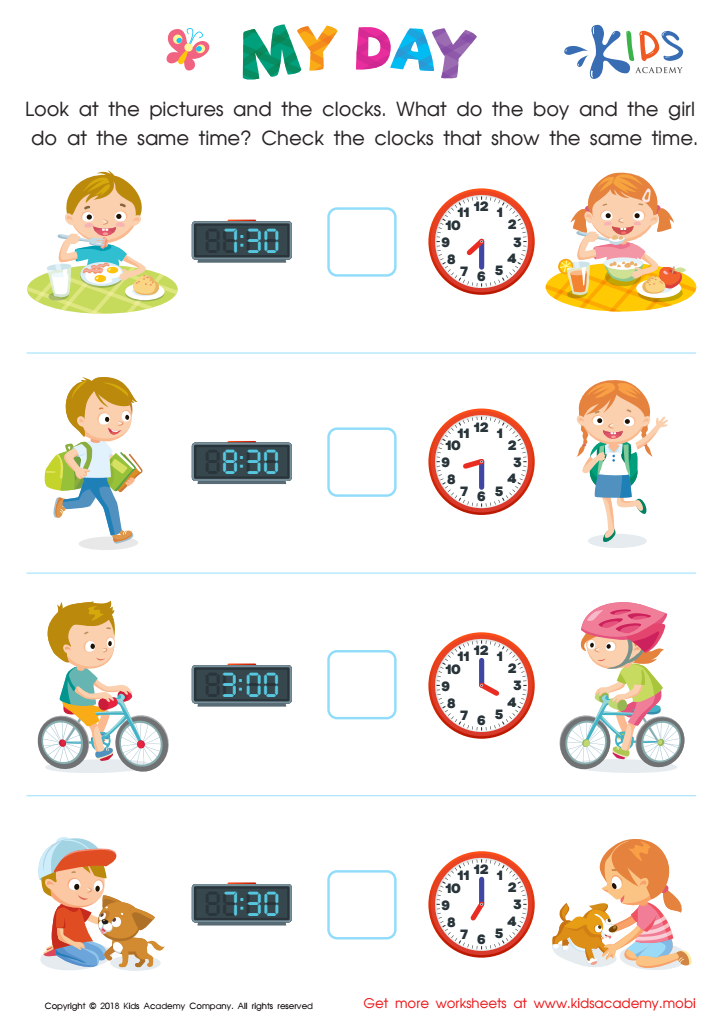
My Day Worksheet
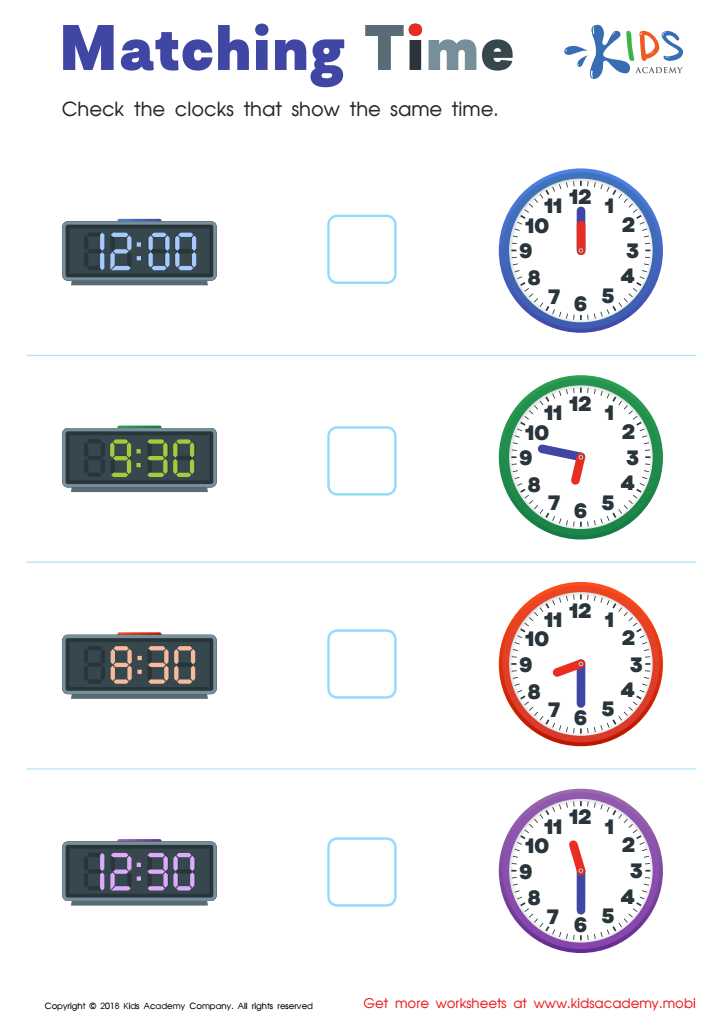
Matching Time Worksheet





Easy Time for children ages 6-9 is an important concept for both parents and teachers to understand and prioritize. This age range marks a foundational period for young learners, where they develop critical cognitive, emotional, and social skills. Ensuring that children have unstructured, leisurely periods—what we call "Easy Time"—is essential for several reasons.
Firstly, Easy Time allows children to engage their imagination and creativity. Without structured activities or preset goals, kids can explore their interests spontaneously, which fosters innovative thinking and problem-solving skills. This kind of free play is essential for cognitive growth and helps develop a child's concentration and intrinsic motivation for learning.
Secondly, Easy Time is crucial for emotional well-being. During these periods, children can decompress and enjoy the absence of pressure, leading to reduced anxiety and stress. When children are consistently busy or involved in structured tasks, they can become overwhelmed, which negatively affects their happiness and overall mental health.
Finally, Easy Time aids in social development. Interacting with peers in a less structured environment helps children develop important social skills such as sharing, empathy, and communication. These natural interactions are instrumental in forming healthy relationships and learning conflict-resolution skills.
In essence, prioritizing Easy Time can support balanced, well-rounded development, laying a solid foundation for future learning and emotional resilience.








