Visual Perception Skills Easy Worksheets for 6-Year-Olds
5 filtered results
-
From - To
Enhance your 6-year-old's visual perception skills with our easy, engaging worksheets! Designed to promote spatial awareness, pattern recognition, and visual discrimination, these worksheets help young learners acquire essential cognitive skills. Each activity is age-appropriate and encourages critical thinking through fun exercises tailored to capture children's interest. From matching and sorting to identifying differences, these visually stimulating worksheets support comprehensive skill development while keeping learning enjoyable. Parents and teachers alike will appreciate the convenience and effectiveness of these resources. Empower your child’s learning journey and foster creativity with our visual perception worksheets today! Perfect for use at home or in the classroom.
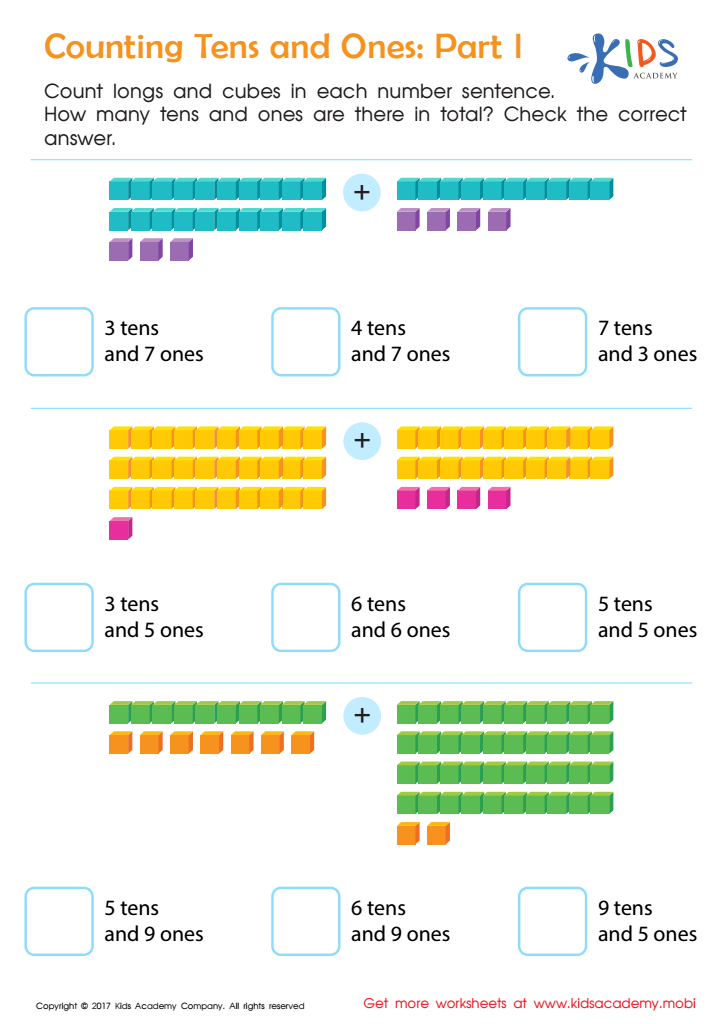
Counting Tens and Ones: Part 1 Worksheet
 Assign to My Students
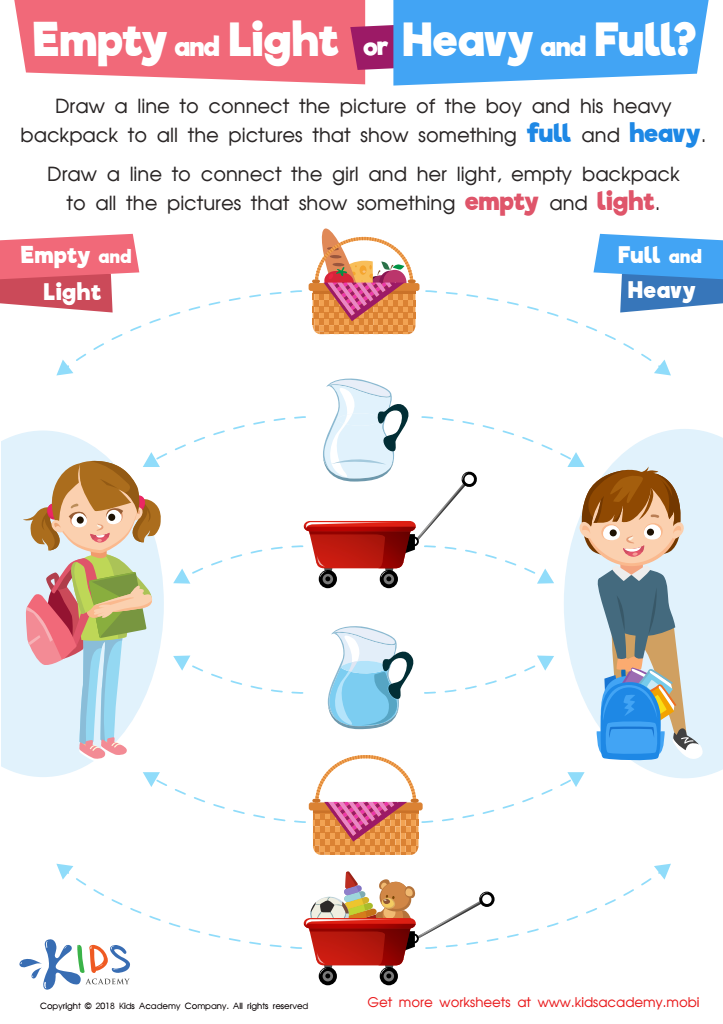
Empty and Light or Heavy and Full? Worksheet
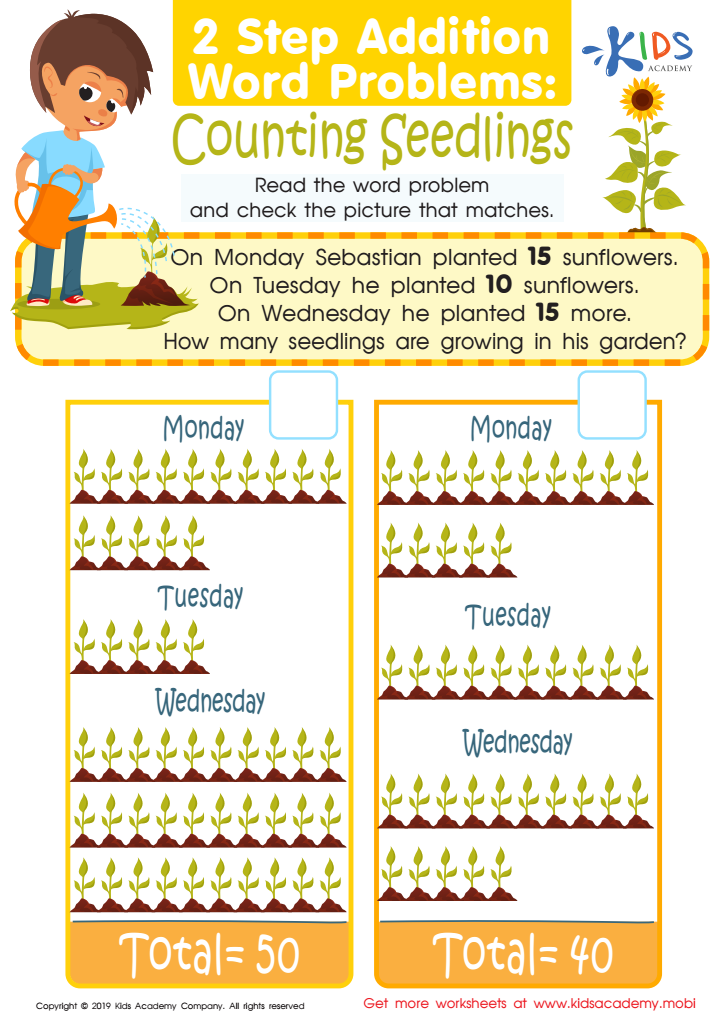
Counting Seedlings Worksheet
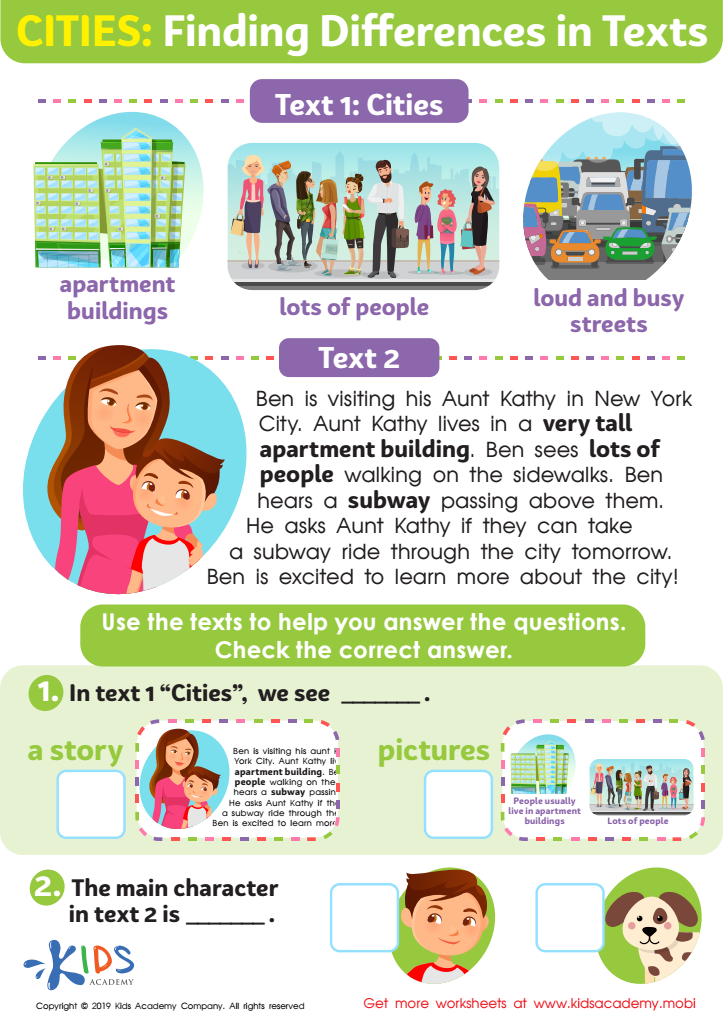
Cities: Finding Differences Worksheet
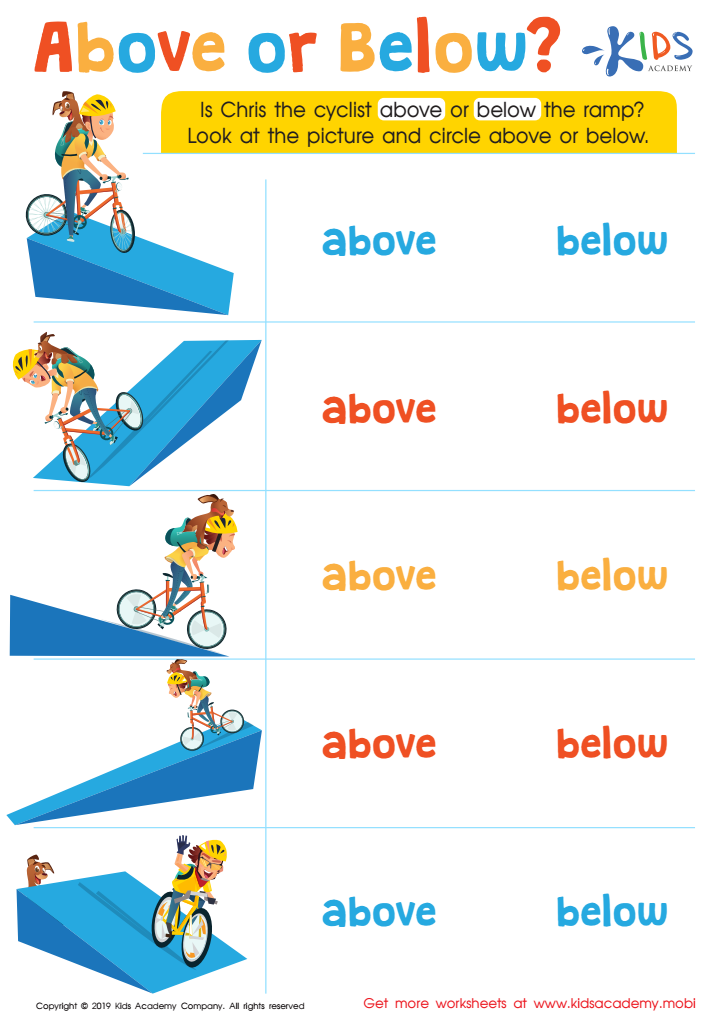
Above or Below? Worksheet








Parents and teachers should care about visual perception skills for 6-year-olds because these skills are fundamental for a child's successful learning and development. Visual perception refers to the ability to interpret and make sense of visual information, which is crucial for a variety of tasks, including reading, writing, problem-solving, and even participating in everyday activities.
At this age, children are typically developing foundational skills that will be used throughout their schooling and life. Strong visual perception skills allow children to recognize letters and numbers, identify shapes and patterns, and understand spatial relationships. These abilities contribute to their confidence and effectiveness in school, setting the stage for future academic success.
Additionally, children with well-developed visual perception skills may find it easier to focus and engage in learning activities, leading to a more positive attitude towards school. Conversely, difficulties in this area can lead to frustration and a lack of confidence, impacting a child's overall development.
By fostering visual perception skills through engaging activities and assessments, parents and teachers can help children build a strong foundation for their educational journey, enhancing their physical, cognitive, and social competencies. Overall, investing in these skills is essential for nurturing well-rounded, capable individuals.








