
Basic Addition Skills Easy Math Worksheets for 6-Year-Olds
5 filtered results
Difficulty Level
Grade
Age
-
From - To
Subject
Activity
Standards
Welcome to our Basic Addition Skills Easy Math Worksheets designed specifically for 6-year-olds! Enhancing your child's math abilities has never been easier with these engaging and colorful worksheets. Each activity focuses on fundamental addition concepts, helping young learners comprehend basic math through playful exercises. Our interactive worksheets encourage practice and build confidence in addition, making learning fun and effective. Designed to match early grade curriculum standards, these resources support your child's growth and mastery of essential skills. Browse our collection to find the perfect worksheets and watch your child's math skills blossom! Let’s pave the way for a strong mathematical foundation together!
Favorites
With answer key
Interactive
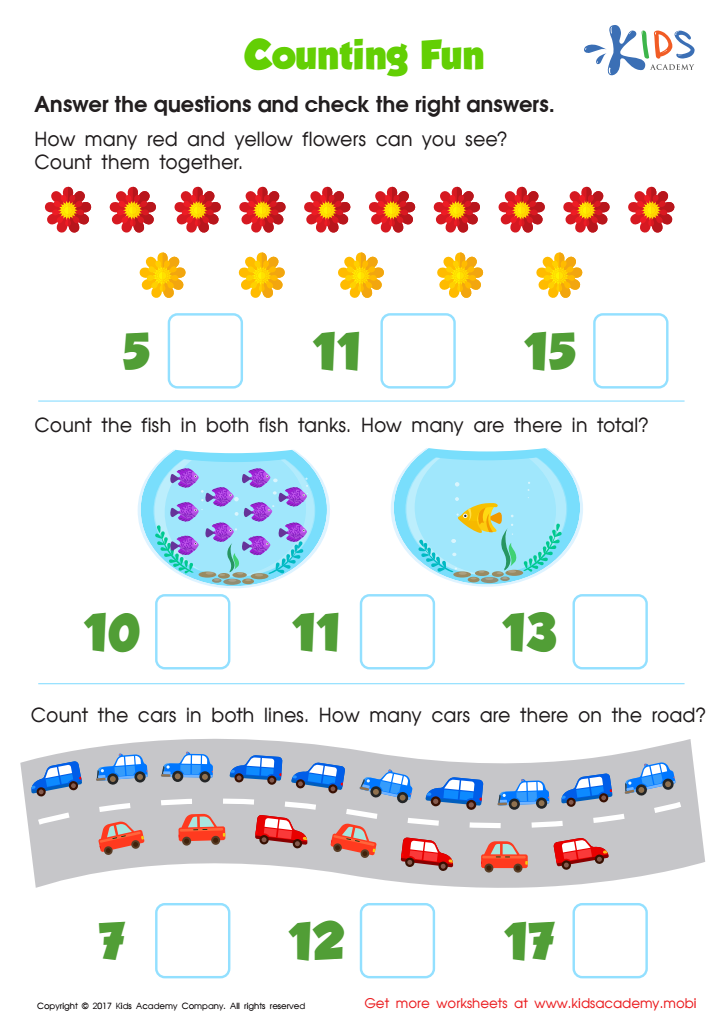
Counting Fun Worksheet
Math and fun can go hand-in-hand with this free PDF worksheet! Bright, colourful illustrations will activate your child's brain, as they count the red and yellow flowers. How many can you see? Count together and write down the total. Make learning and counting fun for your little ones!
 Assign to My Students
Counting Fun Worksheet
Worksheet
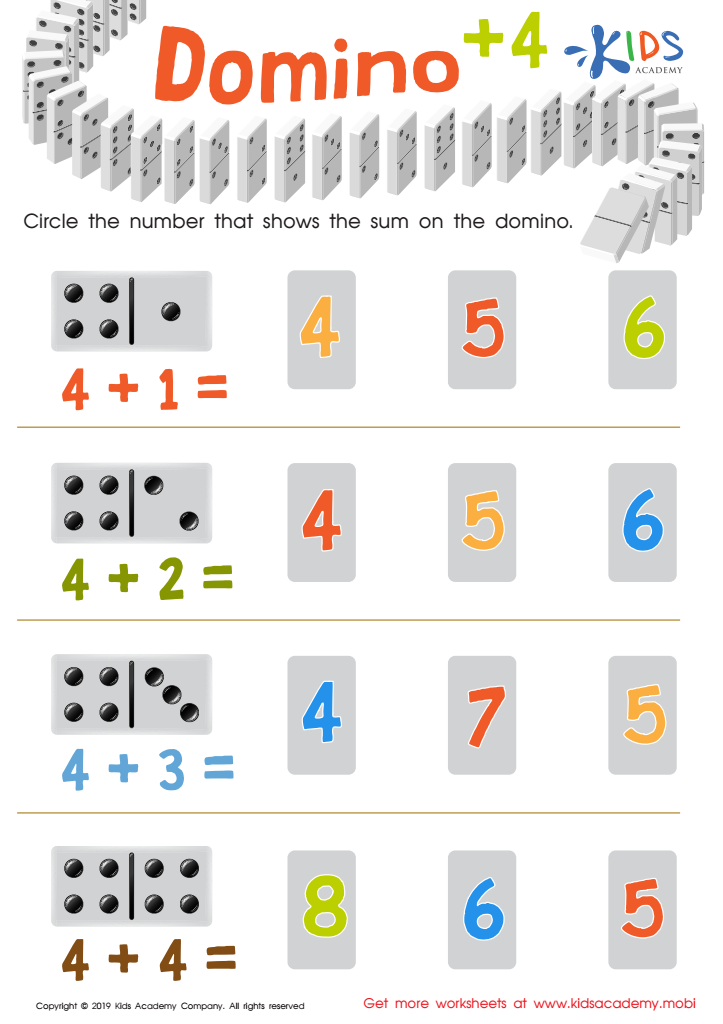
Domino +4 Worksheet
Ask your kids if they know what a domino is. Explain, then move on to solving the four simple equations on this printout, adding a number to 4. Help them find the sum and circle the number.
Domino +4 Worksheet
Worksheet
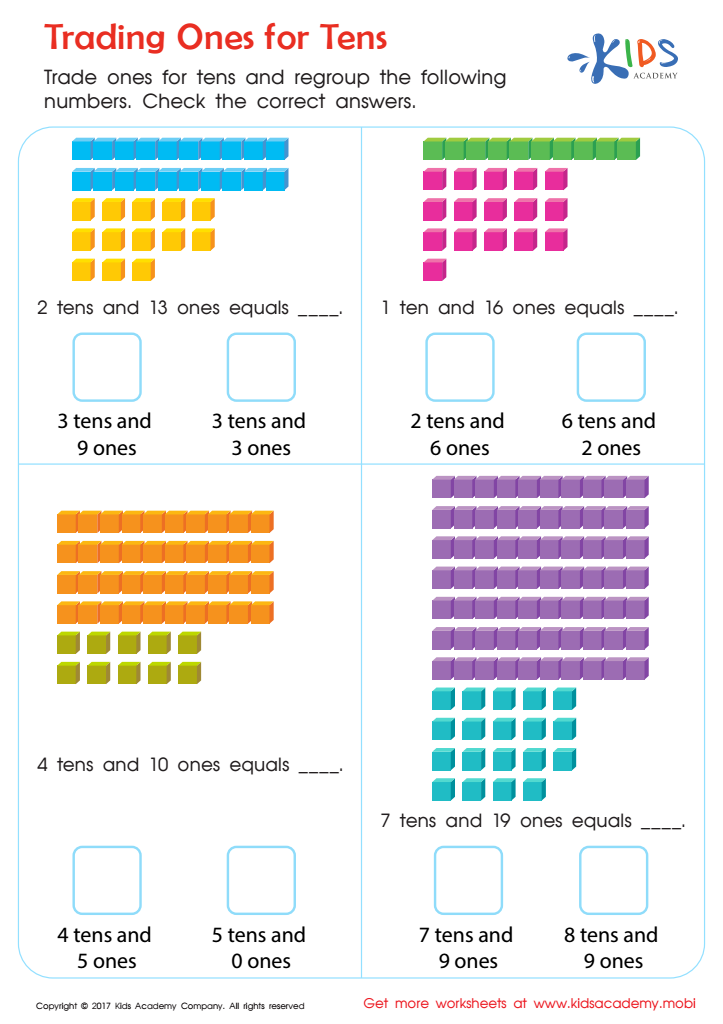
Trading Ones for Tens Worksheet
Kids Academy asserts that mastering place value is essential for developing math capabilities, like addition and subtraction. Using base ten blocks to regroup numbers aids kids in becoming numerate, plus it prepares them for further math operations. We have an illustrative worksheet that plus provides the cubes needed to understand the process of trading ones for tens.
Trading Ones for Tens Worksheet
Worksheet
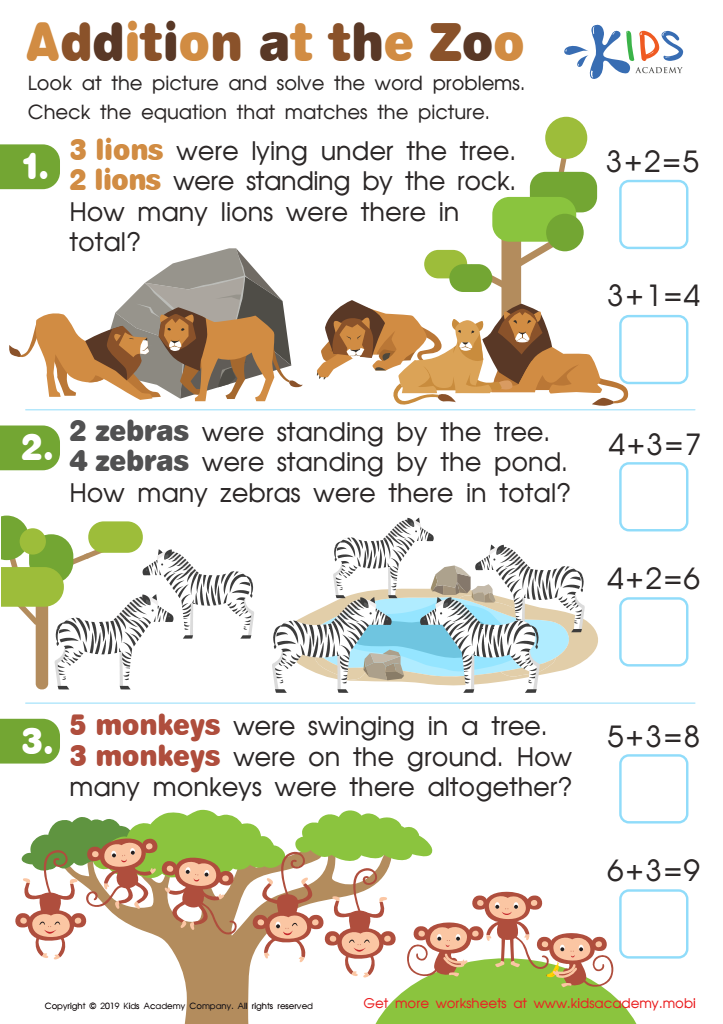
Addition at the Zoo Worksheet
Visit the zoo with your kids and point out all the different animals. Ask them to name their favorites and identify animals on a worksheet. Challenge them to solve word problems related to the pictures. Ask them for the equation that fits the picture and check the answer.
Addition at the Zoo Worksheet
Worksheet
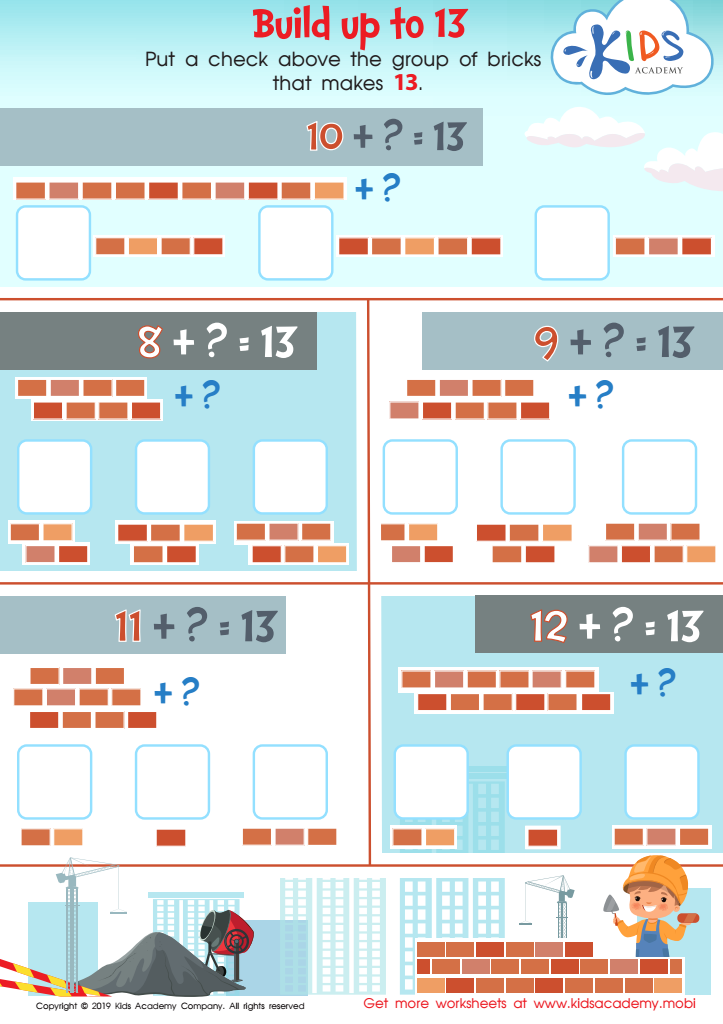
Build up to 13 Worksheet
Help your kids master addition and subtraction with this worksheet! It'll help clear up any confusion they may have with adding different numbers. Have them add up the simple equations and mark the group of bricks that makes 13. It's a great way for them to get familiar with the basics.
Build up to 13 Worksheet
Worksheet
Join Kids Academy for Free
Who is primarily going to use this learning content?






Basic addition skills are foundational for a child's mathematical understanding and overall academic success. At the age of 6, children are typically at a crucial stage in their cognitive development, where they are beginning to grasp numbers, quantities, and relationships. Teaching basic addition not only helps them learn how to add but also fosters critical thinking and problem-solving abilities.
Parents and teachers should care about these skills because they create a strong base for future mathematical learning. Mastering addition empowers children with confidence, enabling them to tackle more complex concepts, such as subtraction, multiplication, and division, later on. Moreover, math skills are integral in everyday life, from handling finances to measuring ingredients in a recipe, so developing a solid understanding of basic addition equips children with practical skills they will use throughout their lives.
Additionally, learning basic addition can be made fun through games and interactive activities, which can reinforce engagement and motivation. When parents and teachers actively support their child's math journey, they help cultivate a positive attitude toward learning and emphasize the importance of education in a child's development. By prioritizing basic addition, caregivers contribute to a child's lifelong love of learning and academic success.








