Filters

6 filtered results

Clear all filters
Favorites
With answer key
Interactive

6 filtered results

Difficulty Level

Grade


Discover our engaging "Easy Chess Worksheets for Ages 7-9" designed to introduce young learners to the exciting world of chess! These worksheets provide a fun and educational way for children to grasp essential chess concepts, including piece movements, basic strategies, and game etiquette. Each printable activity is tailored to foster critical thinking and problem-solving skills while igniting a passion for the game. With vibrant illustrations and age-appropriate language, these resources make learning chess enjoyable. Perfect for classroom use or at-home learning, our worksheets will help kids develop their cognitive abilities while having a blast. Start your chess journey today!

Check out this FREE Trial Lesson on Chess for age 7-9!

Checkmating Patterns: Two Rook Mate

Favorites
With answer key
Interactive
  • 7-9
  • Chess
  • Easy
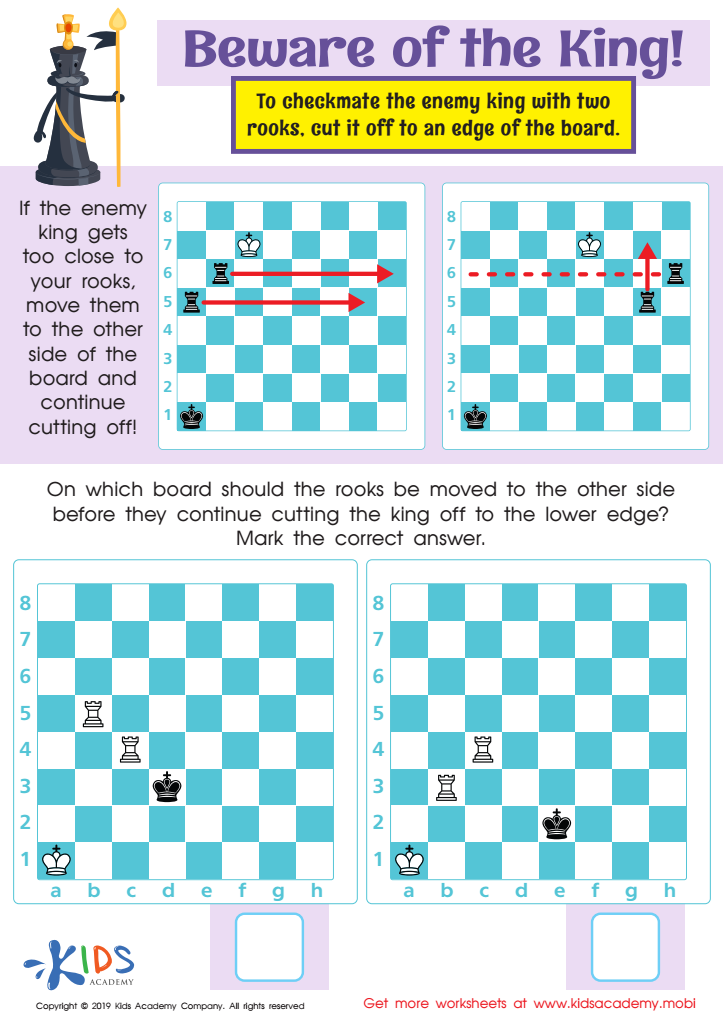
Beware of the King! Worksheet

Beware of the King! Worksheet

Teach your child to play chess and gift them valuable skills like critical thinking, logic, and reasoning! This free PDF worksheet will teach them the Two Rook Mate strategy to checkmate an enemy king with two rooks. They'll learn how to keep the king away and move the rooks for checkmate. Have screen-free fun together!
Beware of the King! Worksheet
Worksheet
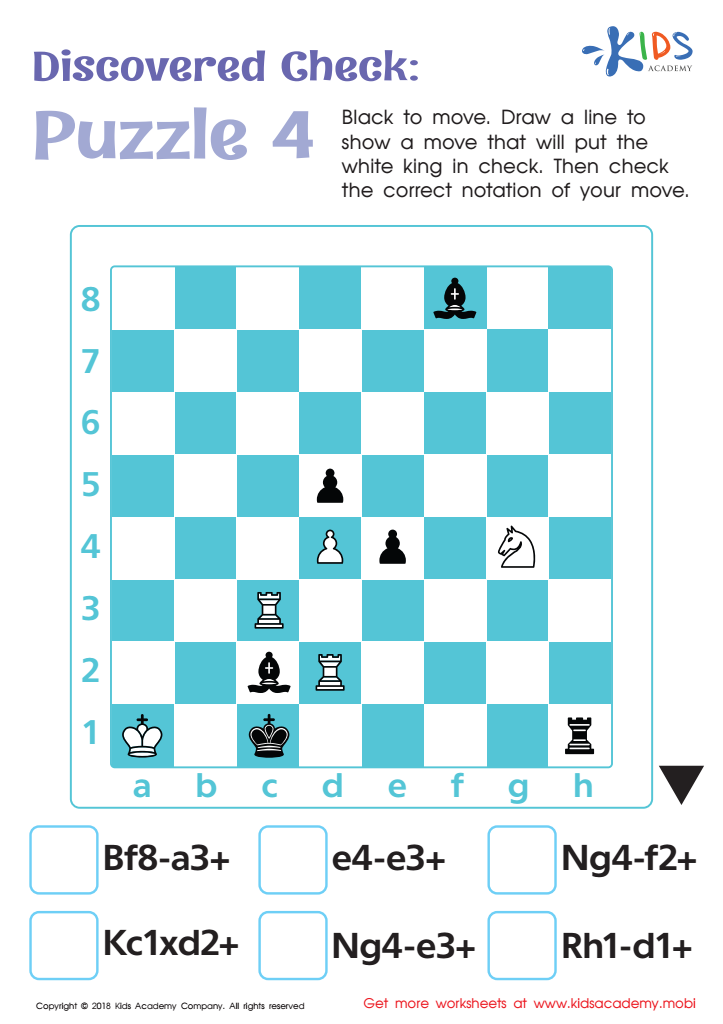
Discovered Check: Puzzle 4 Worksheet

Discovered Check: Puzzle 4 Worksheet

Let your child test their chess skills with this easy worksheet. Have them take control of the black pieces and try to put the white king in checkmate. Ask them to draw a line from their chess piece to the white king, showing the move they'll make, then check the correct answer.
Discovered Check: Puzzle 4 Worksheet
Worksheet
Discovered Check: Puzzle 2 Worksheet

Discovered Check: Puzzle 2 Worksheet

This worksheet exercise will stimulate your child's thinking and let them show off their chess skills. Ask them to use the white pieces and draw a line, pointing to the move that will put the black king in checkmate. Then they should check the correct option. Challenge your child and help them learn more about chess with this fun and educative activity.
Discovered Check: Puzzle 2 Worksheet
Worksheet
Discovered Check: Puzzle 3 Worksheet

Discovered Check: Puzzle 3 Worksheet

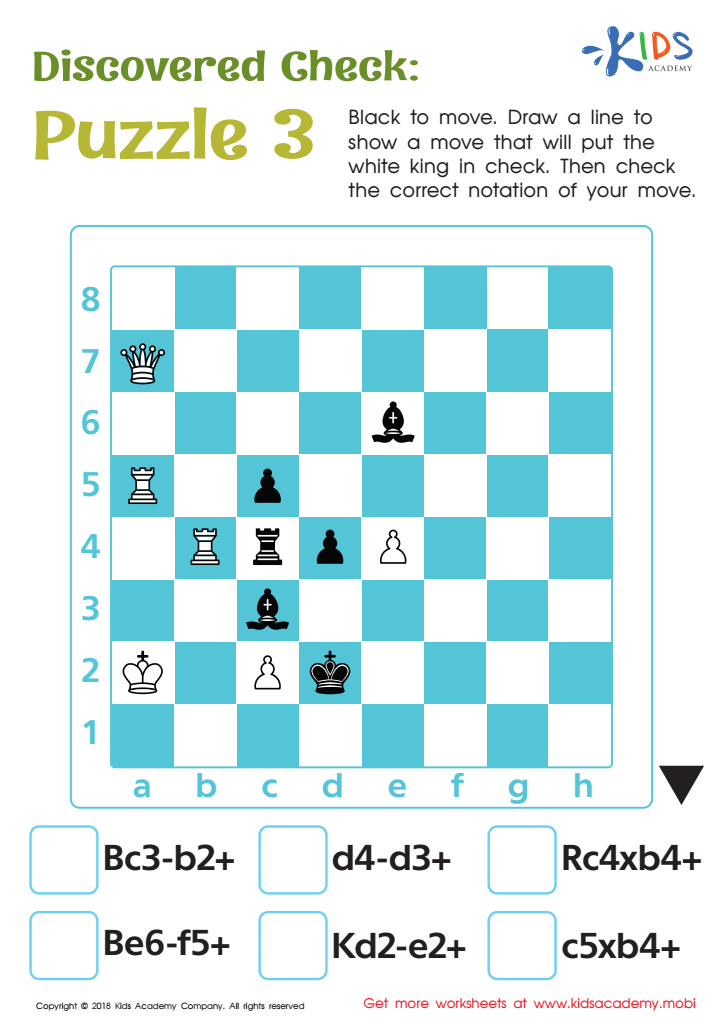
Parents often encourage their children to play chess to sharpen their thinking skills. Using the black pieces, your child must strategically move the piece to place the white king in check. Draw the line, examine the options and check the correct move.
Discovered Check: Puzzle 3 Worksheet
Worksheet
Discovered Check: Puzzle 1 Worksheet

Discovered Check: Puzzle 1 Worksheet

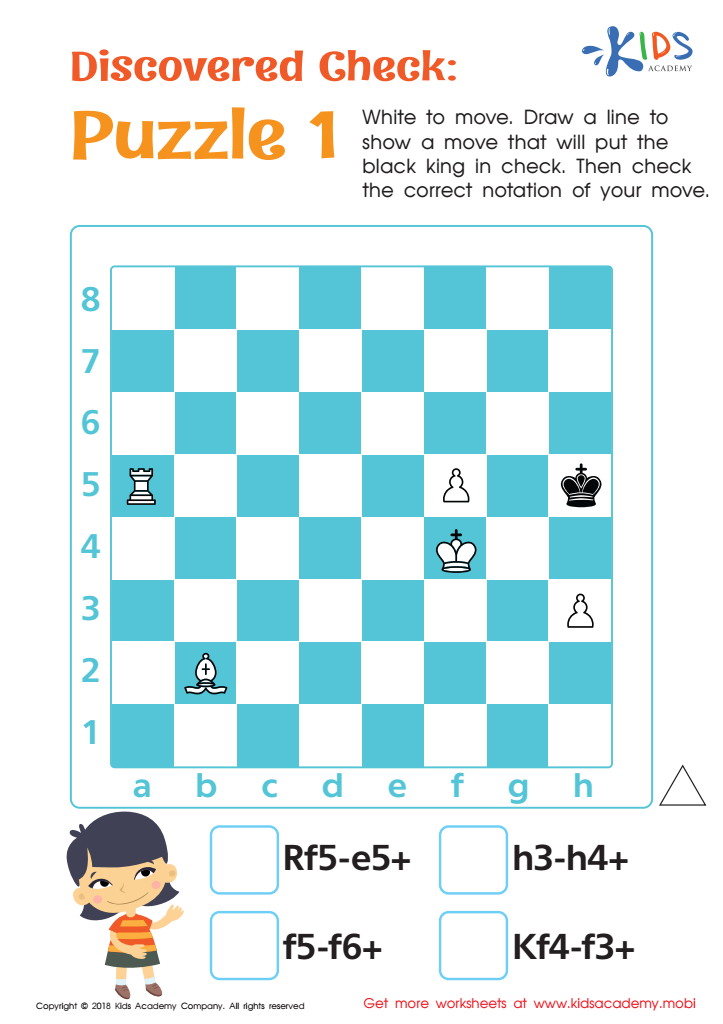
Chess is an excellent way to engage your kids' brains and strengthen thinking skills. This worksheet is ideal for inspiring and growing their interest in the game. Have your child take the white pieces and move them to checkmate the black king. Compare their move against the provided notations to check accuracy.
Discovered Check: Puzzle 1 Worksheet
Worksheet
What Is a Stalemate? Worksheet


What Is a Stalemate? Worksheet

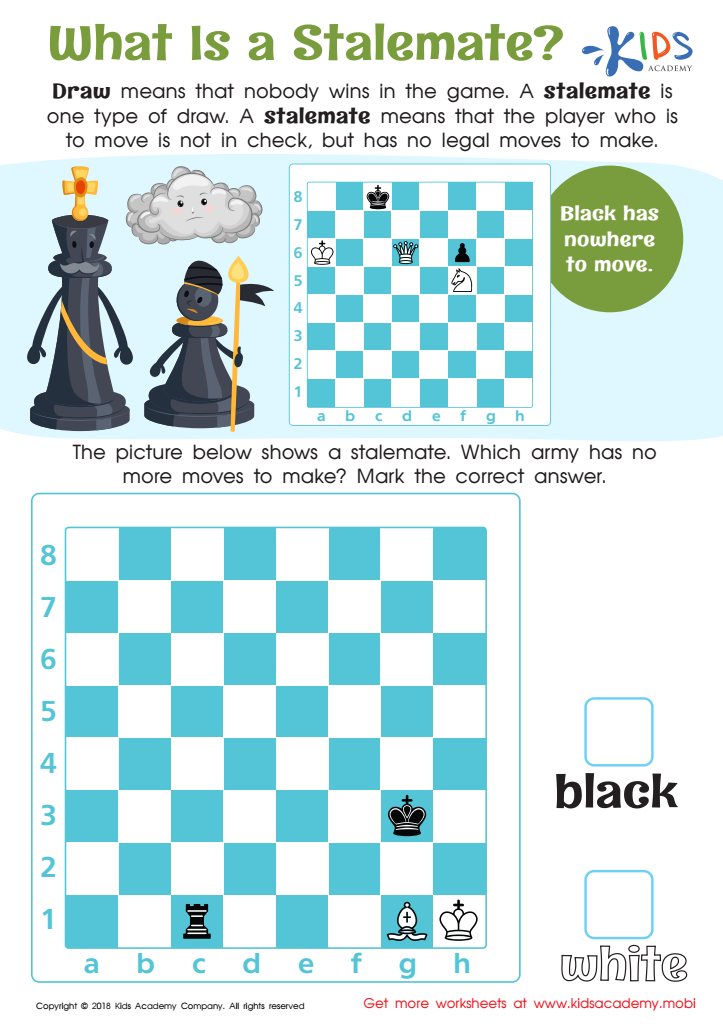
Chess is an ideal way to develop logic, strategizing, problem-solving and more! Even kids can learn it. With this worksheet, children can learn about draws and stalemates. Sample boards will help them decide which team, black or white, is at a stalemate.
What Is a Stalemate? Worksheet

Worksheet


Parents and teachers should care about Easy Chess for Ages 7-9 because it fosters critical cognitive skills essential for a child’s development. At this age, children are highly receptive to learning, and chess empowers them to enhance their problem-solving and strategic thinking abilities. The game encourages them to plan ahead, consider various possibilities, and make informed decisions, skills that are transferable to academics and daily life.

Moreover, Easy Chess introduces valuable social skills; children learn to take turns, respect opponents, and celebrate both wins and losses gracefully. It promotes patience, concentration, and discipline—all attributes that contribute to improved behavior and focus in the classroom setting. Further, chess can serve as a fun and engaging extracurricular activity, promoting camaraderie among peers as they connect over shared interests.

Additionally, incorporating chess into educational activities supports cognitive functions such as memory and visualization. Thus, as children strengthen these skills through gameplay, they simultaneously improve their academic performance, particularly in subjects like mathematics and reading comprehension. By investing time in Easy Chess, parents and educators not only cultivate a love for learning but also equip children with vital life skills that will serve them for years to come.