Sequencing Skills Easy Worksheets for Ages 7-9
4 filtered results
-
From - To
Enhance your child's sequencing skills with our engaging and easy worksheets designed specifically for ages 7-9! These printable activities are perfect for helping young learners understand the order of events, narratives, and instructional processes. With a variety of fun and interactive exercises, students can practice ordering sequences in stories and everyday tasks, boosting their comprehension and critical thinking abilities. These worksheets are not only educational but also enjoyable, making learning a delightful experience. Download our Sequencing Skills Easy Worksheets to support your child's growth and confidence in understanding sequences in daily life and literature! Start exploring today!
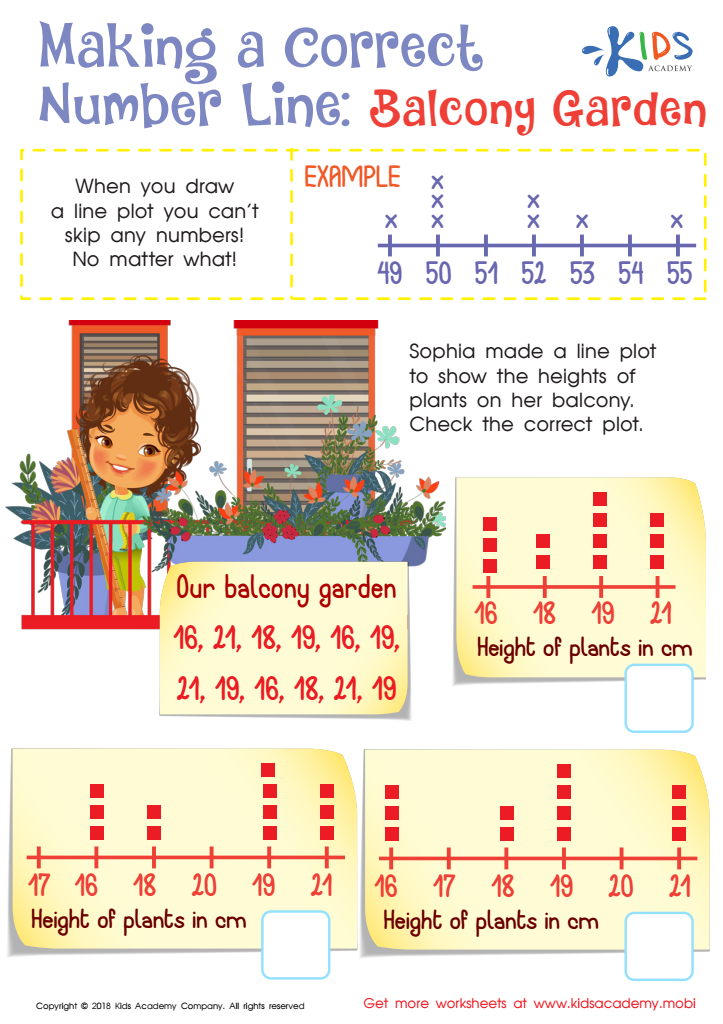
Making a Correct Number Line: Balcony Garden Worksheet
 Assign to My Students
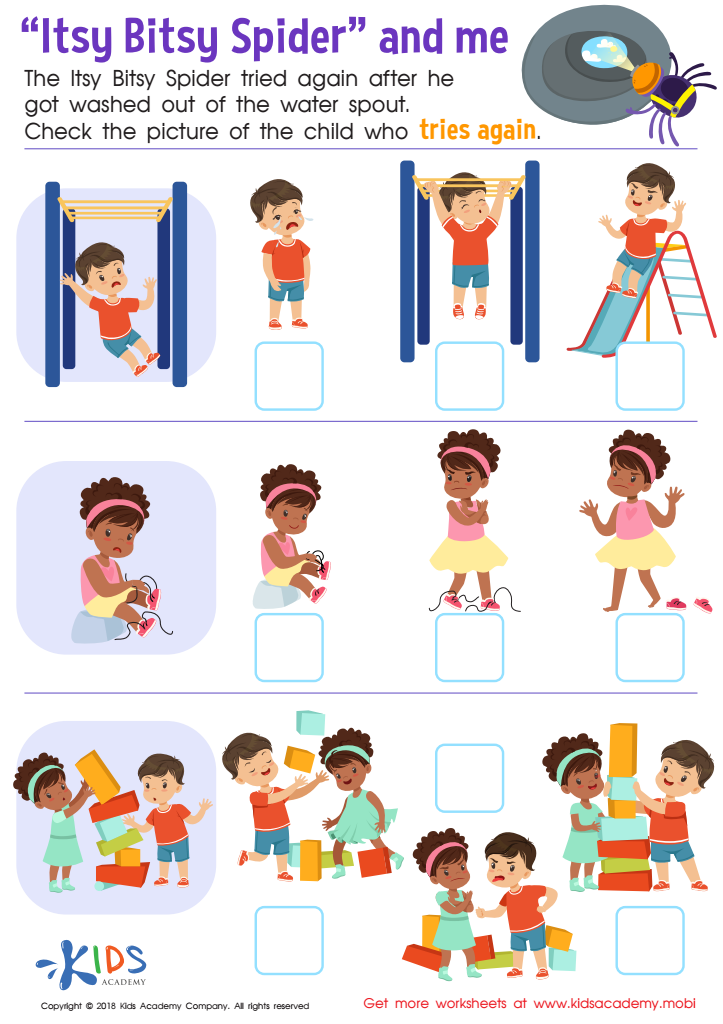
Itsy Bitsy Spider and Me Worksheet
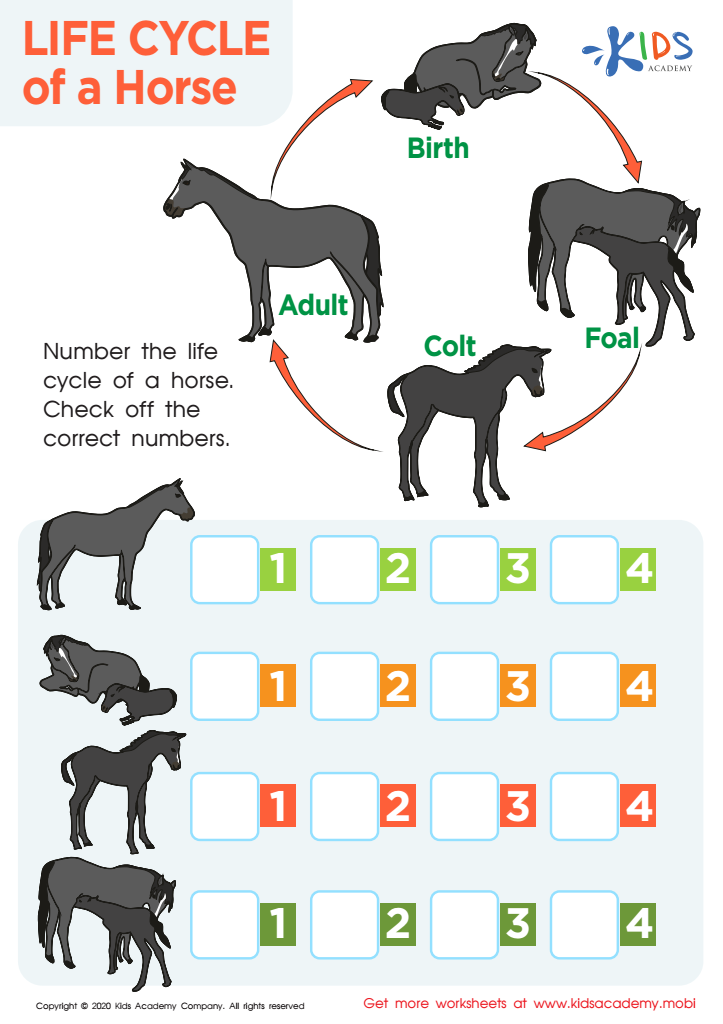
Life Cycle of a Horse Worksheet
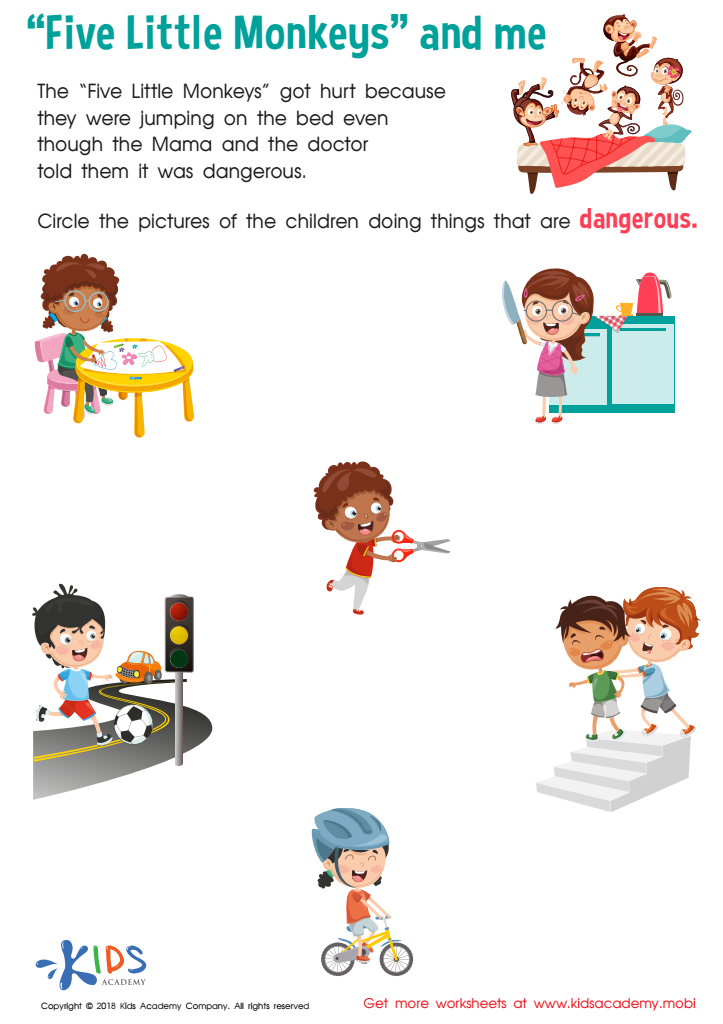
Five Little Monkeys and Me Worksheet








Sequencing skills are essential for children aged 7-9 because they lay the foundation for critical thinking and effective communication. At this developmental stage, children are increasingly expected to understand and convey ideas logically. Proficient sequencing helps them comprehend narratives, follow directions, and solve problems by understanding the order of events or steps.
For parents and teachers, nurturing these skills can significantly enhance a child's academic performance across subjects. In reading, children learn to identify plot structures, which improves their comprehension and retention. In math and science, they apply sequencing to solve equations or conduct experiments, fostering analytical abilities.
Additionally, developing strong sequencing skills promotes organizational techniques, as children learn to prioritize tasks. This builds their confidence and independence. Encouraging sequencing activities, such as storytelling or code-based games, also enhances creativity and cognitive flexibility.
Fostering these vital skills in young learners ensures they are not just passive recipients of information but engaged, thoughtful participants in their educational journeys. By prioritizing sequencing skills, parents and teachers help children become effective communicators and critical thinkers, ultimately preparing them for future academic and life challenges.








