Time reading skills Easy Worksheets for Ages 7-9
4 filtered results
-
From - To
Enhance your child's ability to read time with our engaging and easy-to-use worksheets! Specifically designed for ages 7-9, our carefully crafted resources make learning to tell time both fun and educational. By combining colorful illustrations and practical exercises, these worksheets foster accuracy and confidence in young learners. Ideal for both classroom and home use, they cover the fundamentals of time-telling, from reading clocks to understanding minutes and hours. Unlock your child's potential and set them up for success with our Time Reading Skills Easy Worksheets. Explore now and make mastering time a joyous journey!
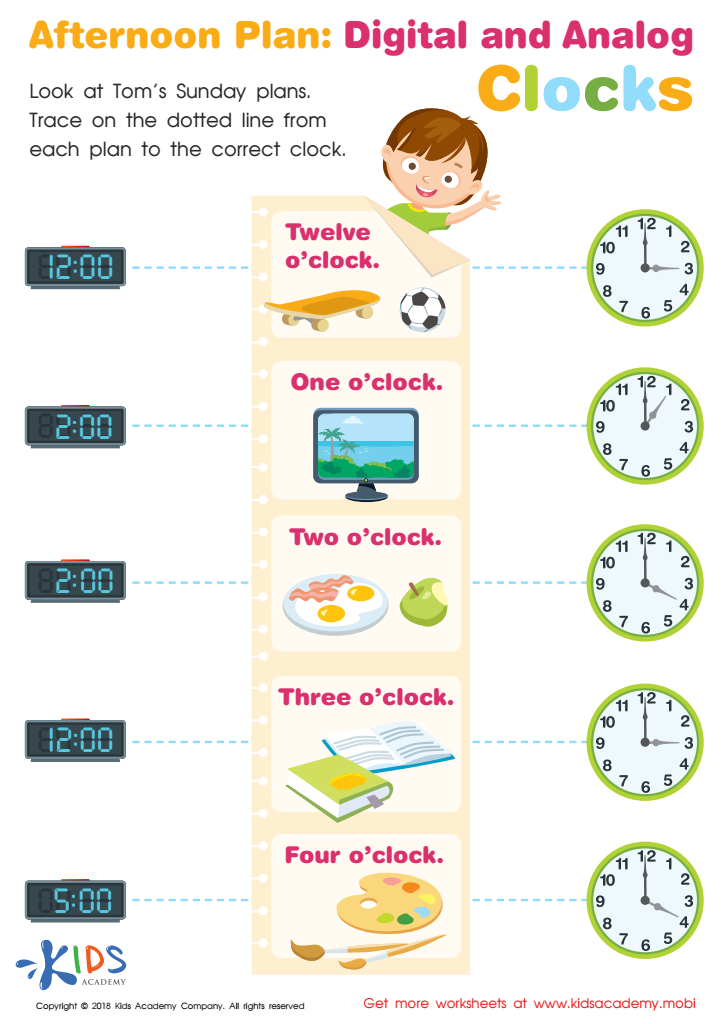
Afternoon Plan: Digital and Analog Clocks Worksheet
 Assign to My Students
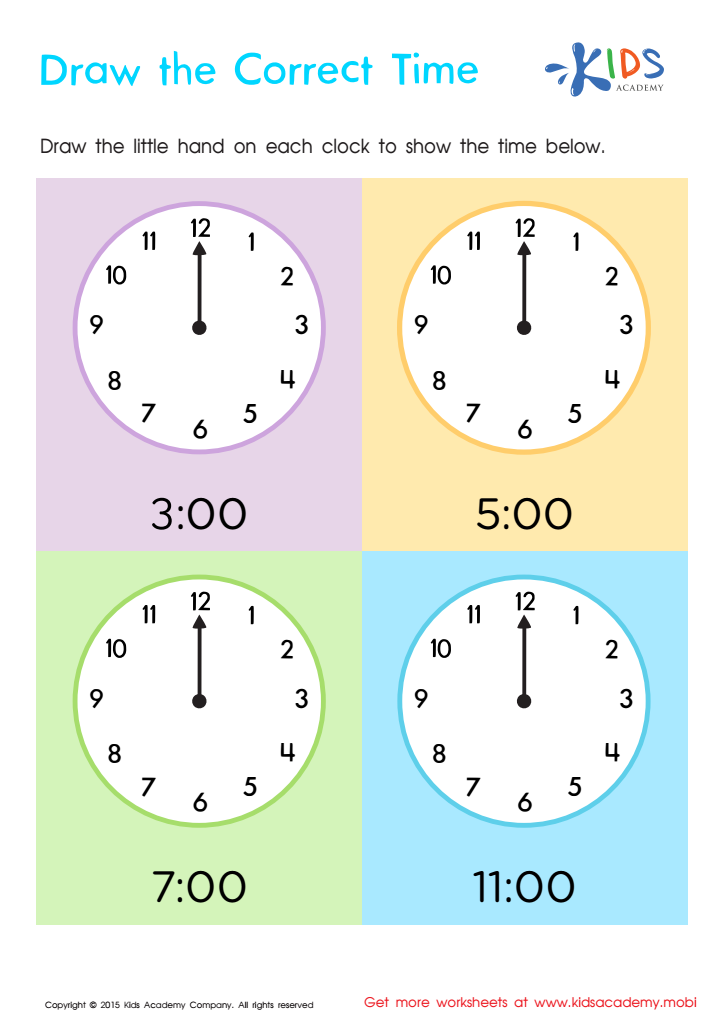
Telling The Time Worksheet: Part 1
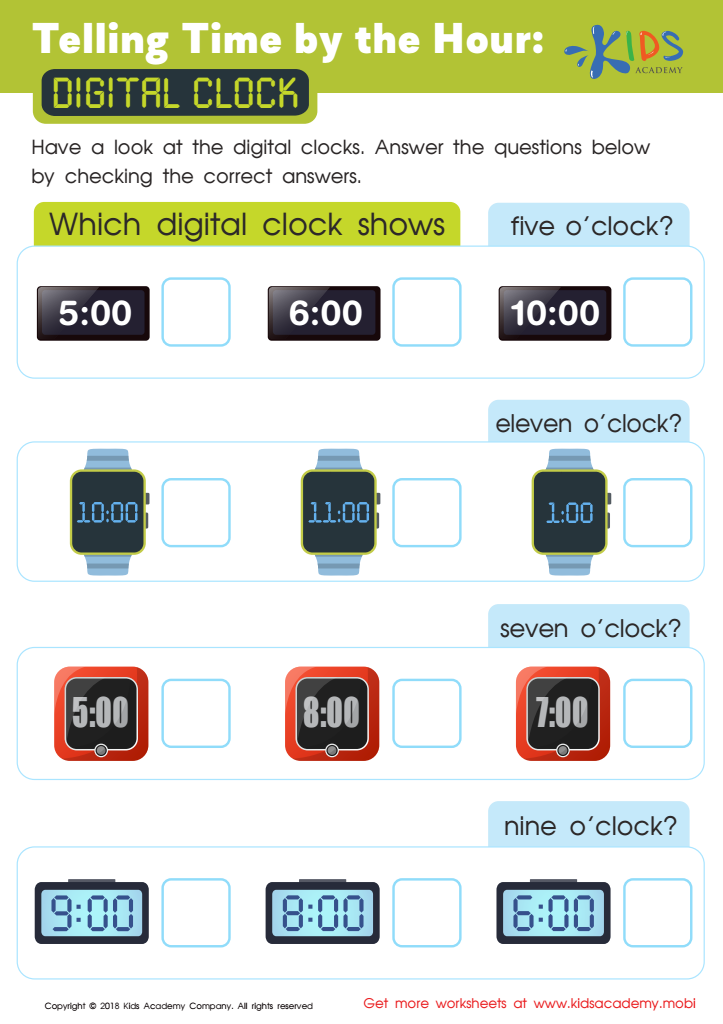
Telling Time by the Hour: Digital Clock Worksheet
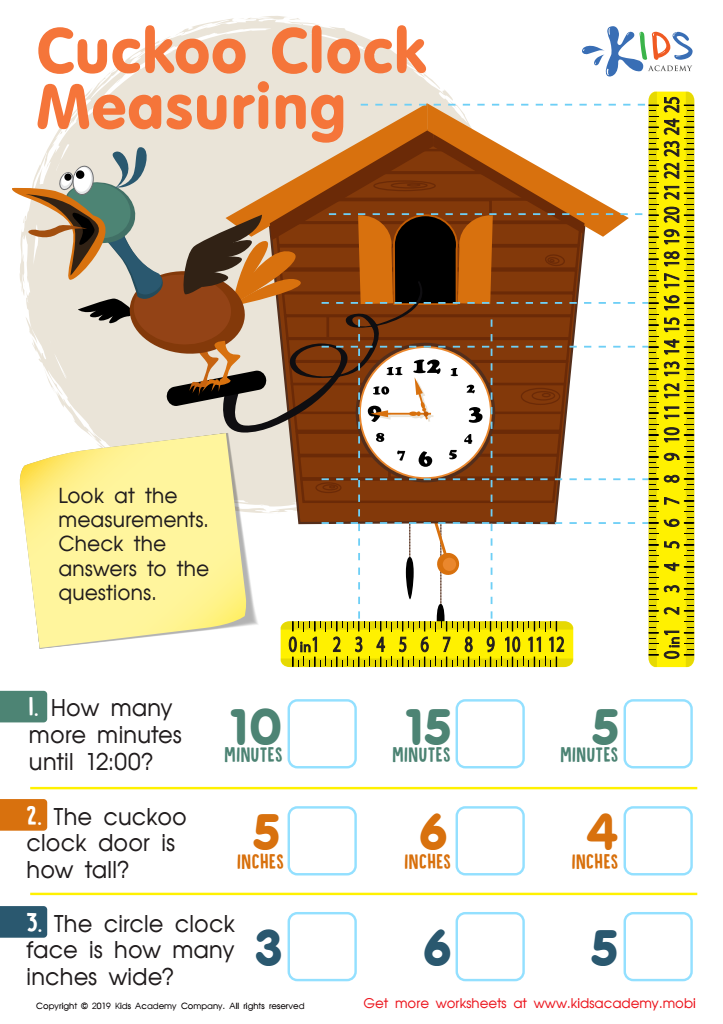
Cuckoo Clock Measuring Worksheet








Parents and teachers should prioritize developing strong reading skills in children aged 7-9 because it is a critical period for literacy development. At this age, children transition from learning to read to reading to learn. Strong reading abilities serve as a foundation for all other academic subjects, enhancing comprehension in science, social studies, and even math through word problems. Good readers are also more likely to develop strong writing skills, expand their vocabulary, and improve their ability to express thoughts clearly.
Furthermore, reading proficiency in early grades is a significant predictor of future educational success and academic performance. Children who struggle with reading at a young age often face increasing challenges in later grades, potentially leading to lower self-esteem and reduced motivation across all subjects. Investing in easy and enjoyable reading activities at this stage helps to foster a love for reading. By engaging children with age-appropriate text, parents and teachers can boost their confidence, encourage curiosity, and instill lifelong learning habits.
In summary, nurturing reading skills in children ages 7-9 sets the stage for their overall development and future success. It helps them achieve academic milestones, fosters cognitive growth, and cultivates an enduring passion for learning. Investing time in improving reading skills at this age can yield lifelong benefits.








