Understanding life cycles Easy Worksheets for Ages 7-9
4 filtered results
-
From - To
Discover "Understanding Life Cycles Easy Worksheets for Ages 7-9" designed to engage young learners in the fascinating world of nature's cycles. Tailored for children aged 7-9, these worksheets offer fun, educational activities that simplify complex concepts of animal and plant life cycles. Each worksheet encourages critical thinking and curiosity with colorful illustrations, interactive tasks, and age-appropriate content. Perfect for classroom use or at-home learning, our easy-to-follow worksheets help students grasp essential biology topics, fostering a lifelong interest in science. Enhance your teaching experience and support your child's educational journey with these delightful and informative resources.
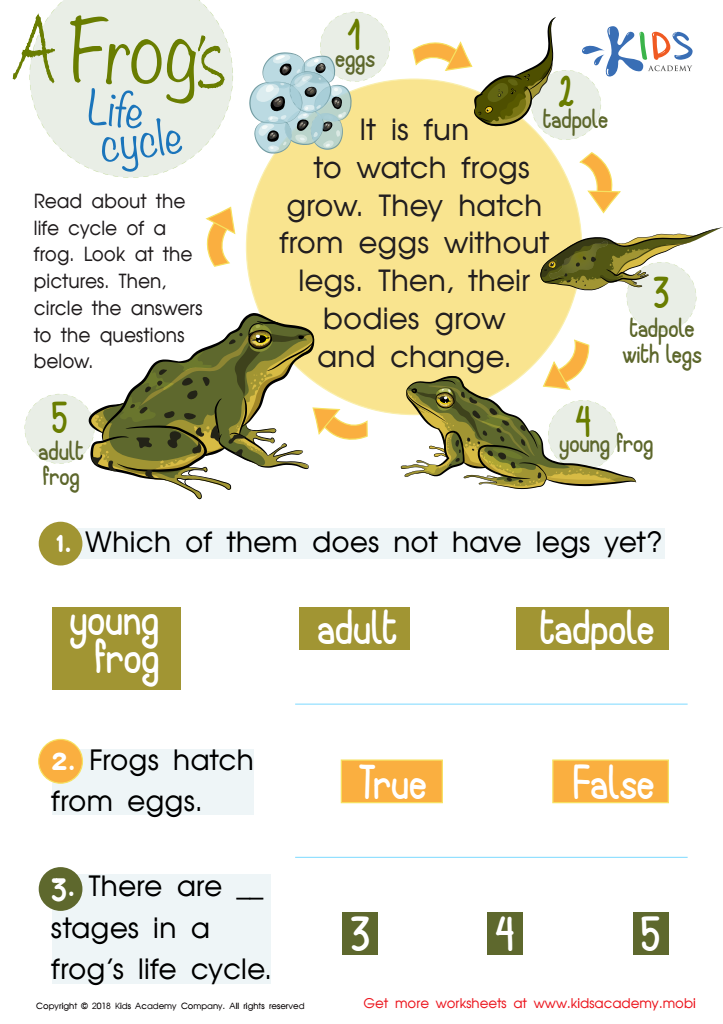
A Frog’s Life Cycle Worksheet
 Assign to My Students
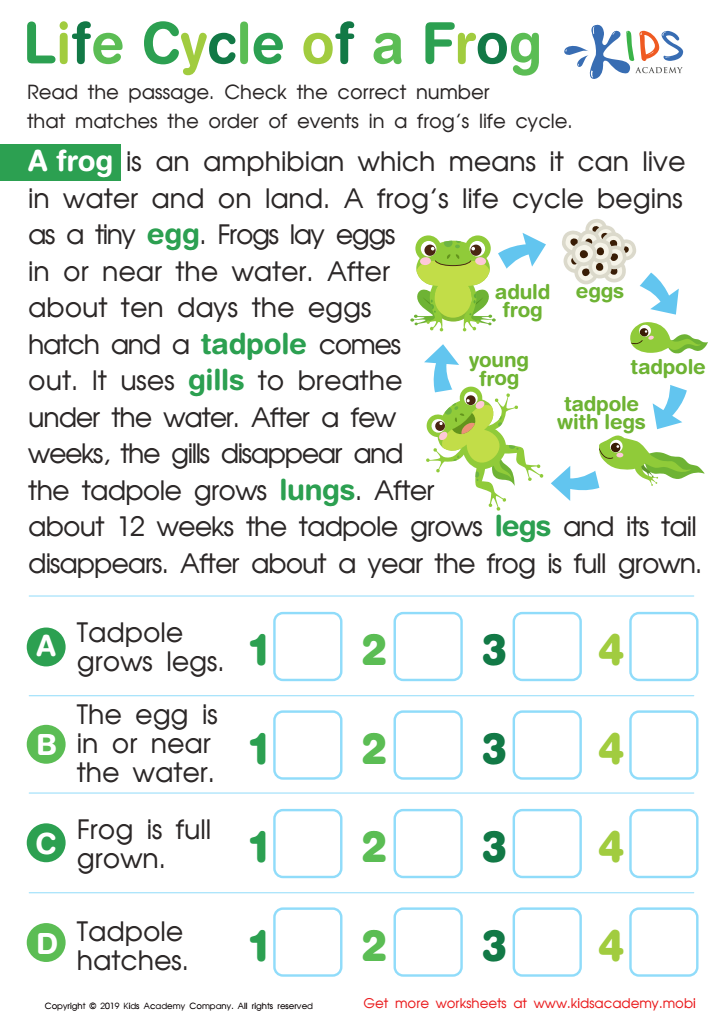
Life Cycle of a Frog Worksheet
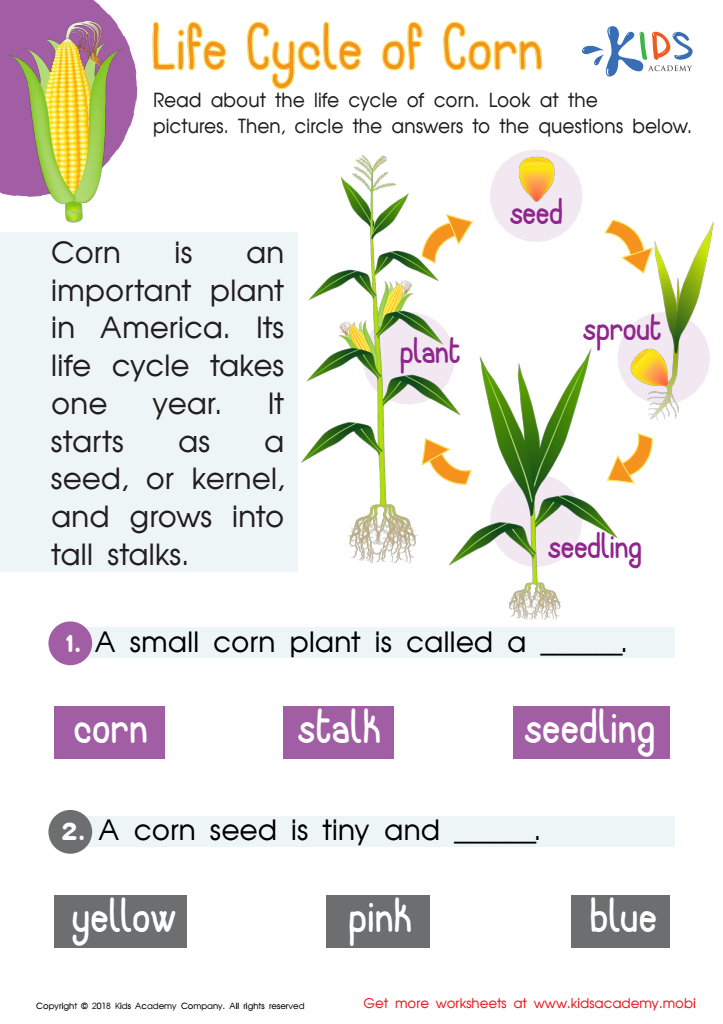
Life Cycle of Corn Worksheet
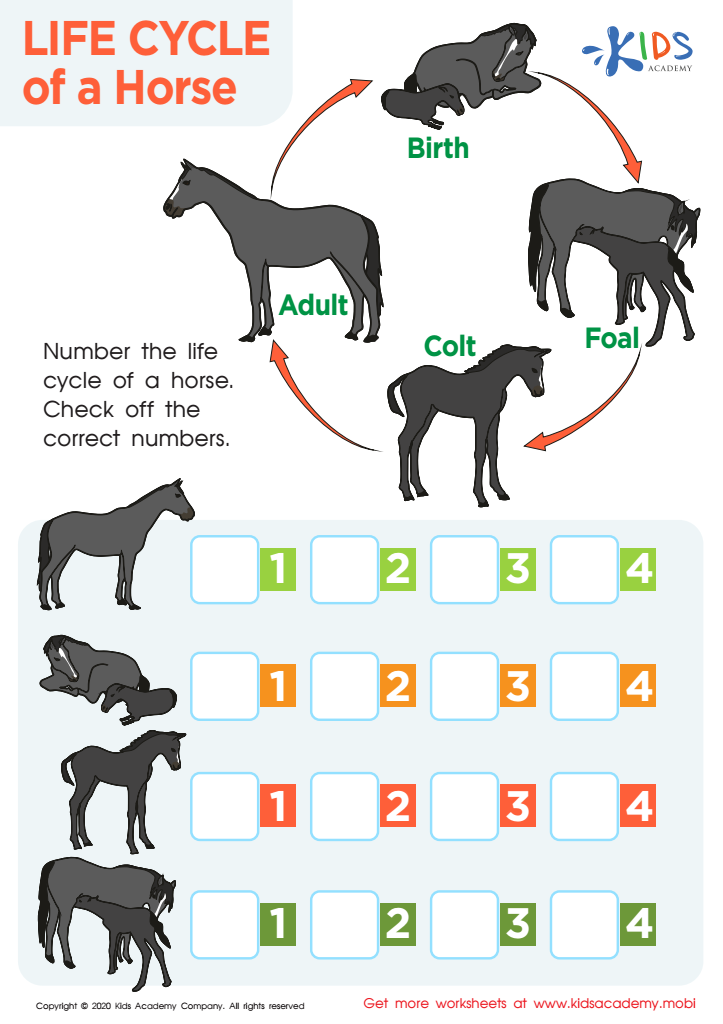
Life Cycle of a Horse Worksheet








Understanding life cycles is crucial for children aged 7-9, as it lays foundational knowledge for both scientific literacy and a broader understanding of the world. At this age, kids are naturally curious about nature and how living things grow, change, and interact. Studying life cycles, such as those of plants, animals, and insects, helps them grasp the concept of growth, development, and reproduction in a tangible way.
From an educational perspective, learning about life cycles supports curriculum goals in science. It helps children understand the interconnectedness of life and the environment. For example, they learn how a frog’s transformation from egg to tadpole to adult impacts its ecosystem. This knowledge encourages critical thinking and observational skills, as children learn to notice and question changes around them.
Emotionally and ethically, understanding life cycles fosters empathy and a sense of responsibility toward living things. When children realize that even the smallest creatures have significant roles, they are more likely to respect and take care of the environment.
Overall, making life cycles accessible and engaging for young learners nurtures their curiosity, compliance with educational standards, and instills lifelong values of respect, empathy, and environmental stewardship. This groundwork is paramount for developing informed, conscientious, and scientifically literate future citizens.








