Understanding time Easy Worksheets for Ages 7-9
3 filtered results
-
From - To
Discover our engaging "Understanding Time Easy Worksheets" designed specifically for children aged 7 to 9! These worksheets provide a fun and interactive way for young learners to master essential time concepts, including reading clocks, understanding hours and minutes, and grasping the difference between analog and digital time. With a variety of exercises that mix coloring, matching, and time-telling tasks, students will develop their skills while having fun. Perfect for home or classroom use, our worksheets encourage independent learning and foster a solid foundation in time comprehension. Explore the importance of time with these delightful resources tailored for early learners!
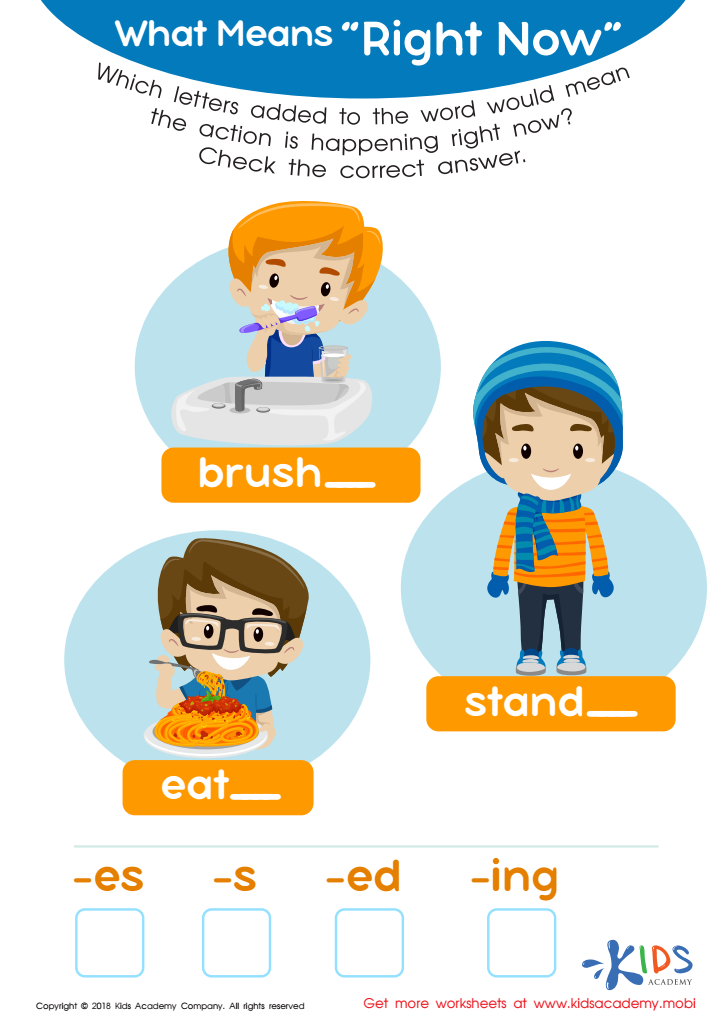
What Means "Right Now" Worksheet
 Assign to My Students
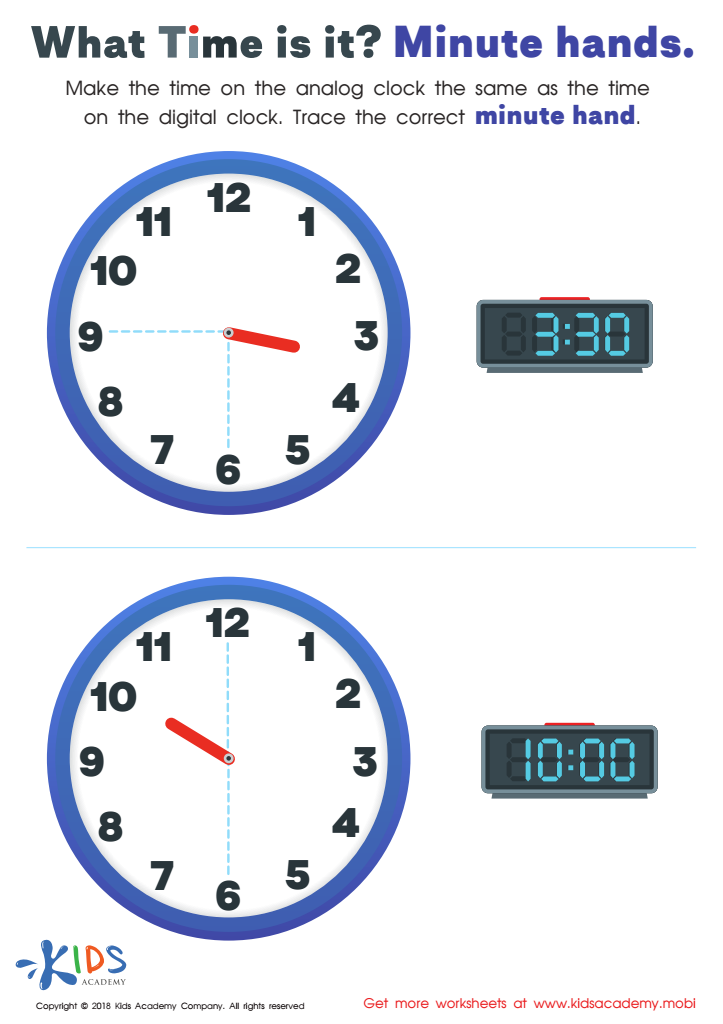
What Time Is it? Minute Hands Worksheet
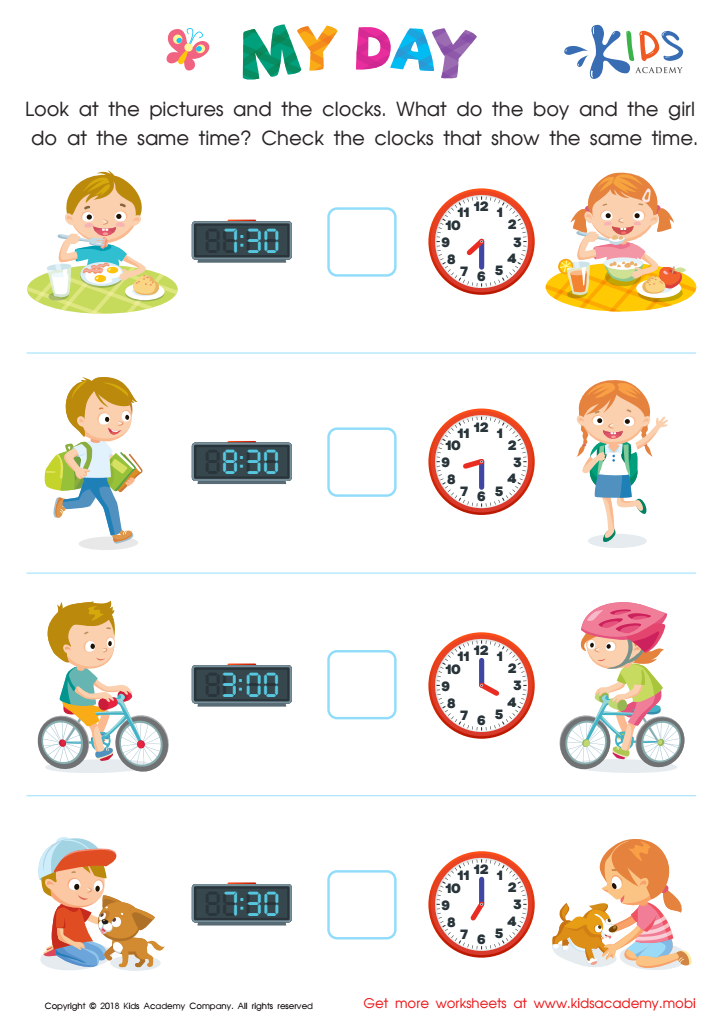
My Day Worksheet






.jpg)

Understanding time is a fundamental skill that significantly impacts a child's daily life and future. For children aged 7-9, grasping the concept of time helps them develop organizational skills, manage their schedules, and understand routine, which fosters a sense of responsibility. Parents and teachers should care about teaching this essential skill because it enhances academic performance, as children learn to allocate time effectively for homework, projects, and leisure activities.
Moreover, learning about time promotes independence and decision-making. Children confident in reading clocks and understanding calendars are better equipped to plan their day, prioritize tasks, and engage in meaningful conversations about time management with peers and adults. This understanding also supports their social development, as they learn to respect others’ time and commitments.
Engaging children with fun activities—like time-telling games or calendar planning—makes learning enjoyable while reinforcing these concepts. Additionally, as technology changes the way we interact with time, including digital time formats, familiarity with both analog and digital time is essential in today’s fast-paced world. Ultimately, nurturing a child's understanding of time provides them with tools that set a solid foundation for lifelong learning and successful, independent living.








