Number Recognition Easy Numbers up to 100 Worksheets for Ages 7-9
4 filtered results
-
From - To
Explore our "Number Recognition Easy Numbers up to 100 Worksheets" tailored for children ages 7-9. Designed to boost confidence in identifying and comprehending numbers, these worksheets help young learners master number sequences, patterns, and written form. With engaging exercises, your child will develop robust number recognition skills and a solid mathematical foundation. Whether practicing at home or supplementing schoolwork, these worksheets offer an enjoyable path to math proficiency. Visit Kids Academy and download now to make learning numbers both fun and effective. Unlock your child’s potential today with our thoughtfully curated educational resources!
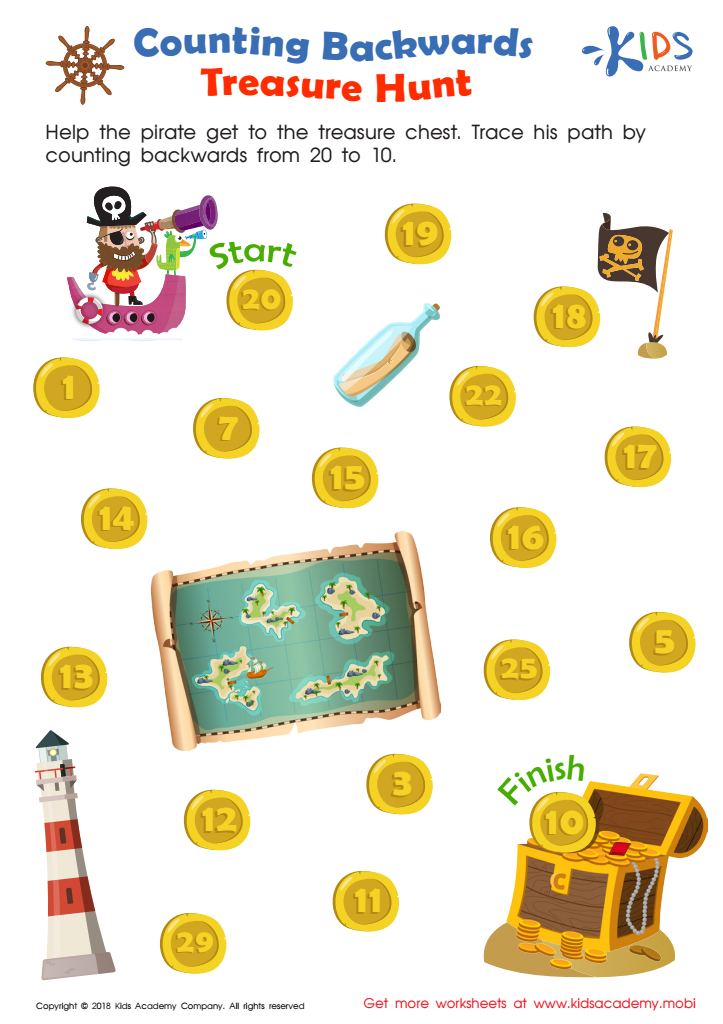
Counting Backwards: Treasure Hunt Worksheet
 Assign to My Students
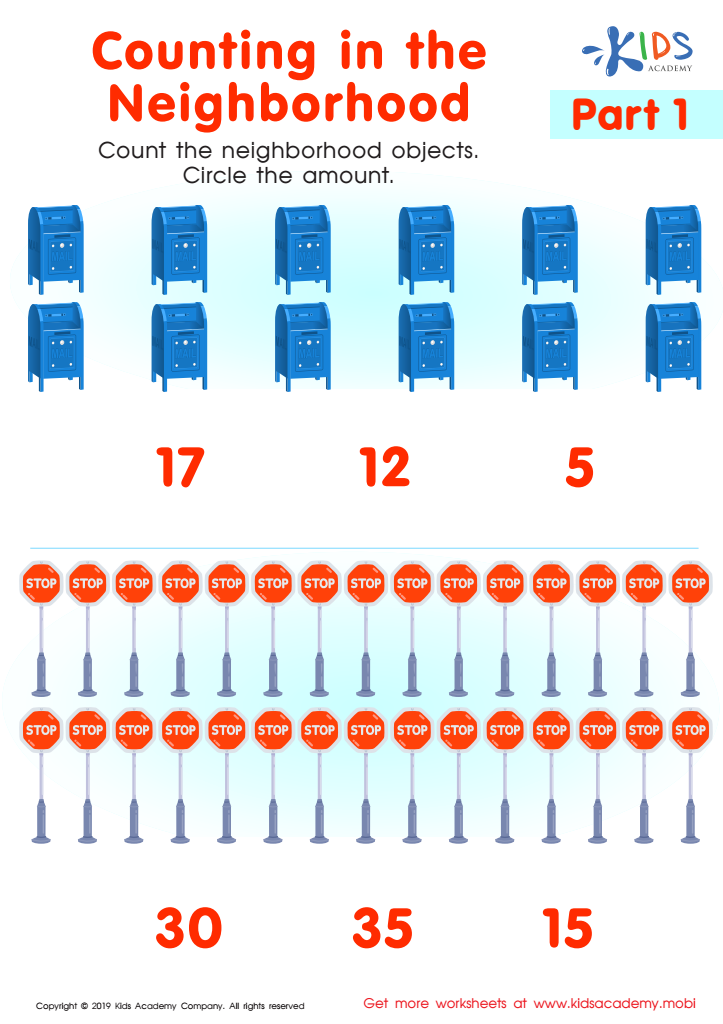
Counting in the Neighborhood Part1 Worksheet
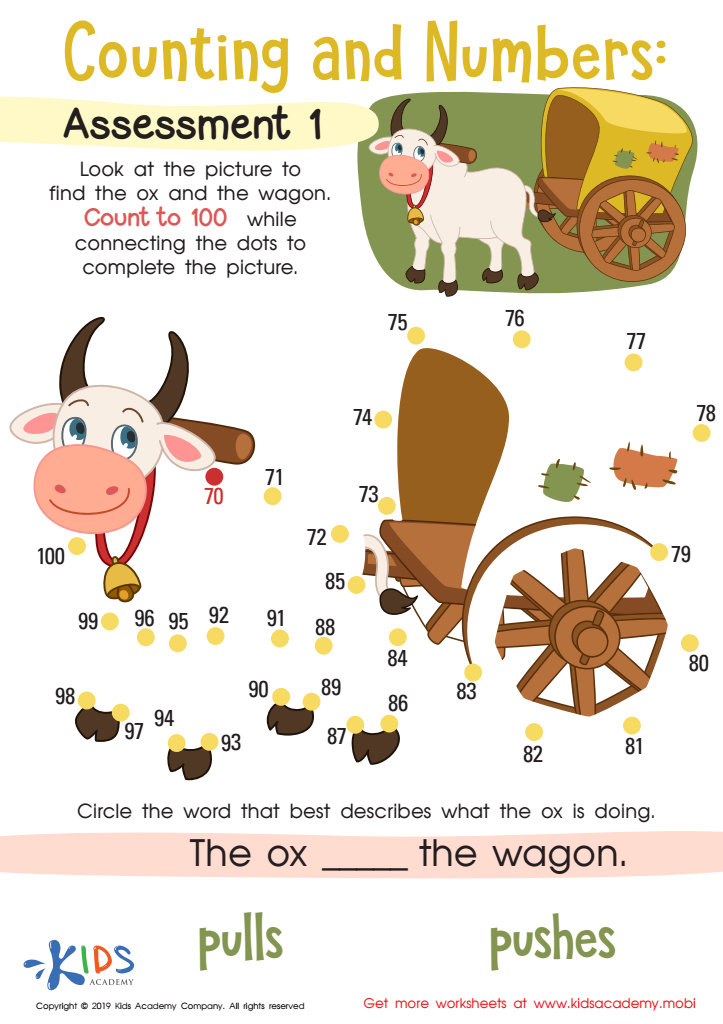
Counting and Numbers: Assessment 1 Worksheet

Counting on the City Skyline: Dot-to-Dot Worksheet







Number recognition up to 100 is a fundamental skill for children aged 7-9 as it lays the groundwork for more complex mathematical concepts. During these formative years, children are developing their cognitive abilities, and a solid understanding of numbers is crucial. Recognizing numbers easily allows children to make sense of the world mathematically and prepares them for operations such as addition, subtraction, multiplication, and division.
Parents and teachers should prioritize this skill because it enhances a child's confidence and ability to engage in everyday activities. For example, being able to recognize numbers helps children tell time, understand schedules, count money, and follow recipes. Furthermore, strong number recognition is linked to future success in academics, particularly in mathematics. Students who struggle with basic number recognition may find it difficult to keep up with peers, leading to frustration and a potential aversion to the subject.
Finally, incorporating number recognition activities into learning helps children develop critical thinking and problem-solving skills. It also encourages a positive attitude towards math by making it engaging and approachable. The support from both parents and teachers ensures that children receive the consistency and reinforcement needed to master this vital skill, setting a solid foundation for lifelong learning.