Easy Nursery Rhymes Worksheets for Ages 7-9
5 filtered results
-
From - To
Introduce young learners to the enchanting world of nursery rhymes with our Easy Nursery Rhymes Worksheets for Ages 7-9. Designed to blend fun and learning, these worksheets help children build foundational reading and comprehension skills. Each worksheet presents lively illustrations and engaging activities that reinforce language concepts and encourage creativity. Perfect for guided or independent learning, our resources make it simple for parents and educators to provide an educational boost. Watch as your child's confidence in reading grows while exploring timeless nursery rhymes. Discover the joy of learning through play with Kids Academy's expertly crafted worksheets!
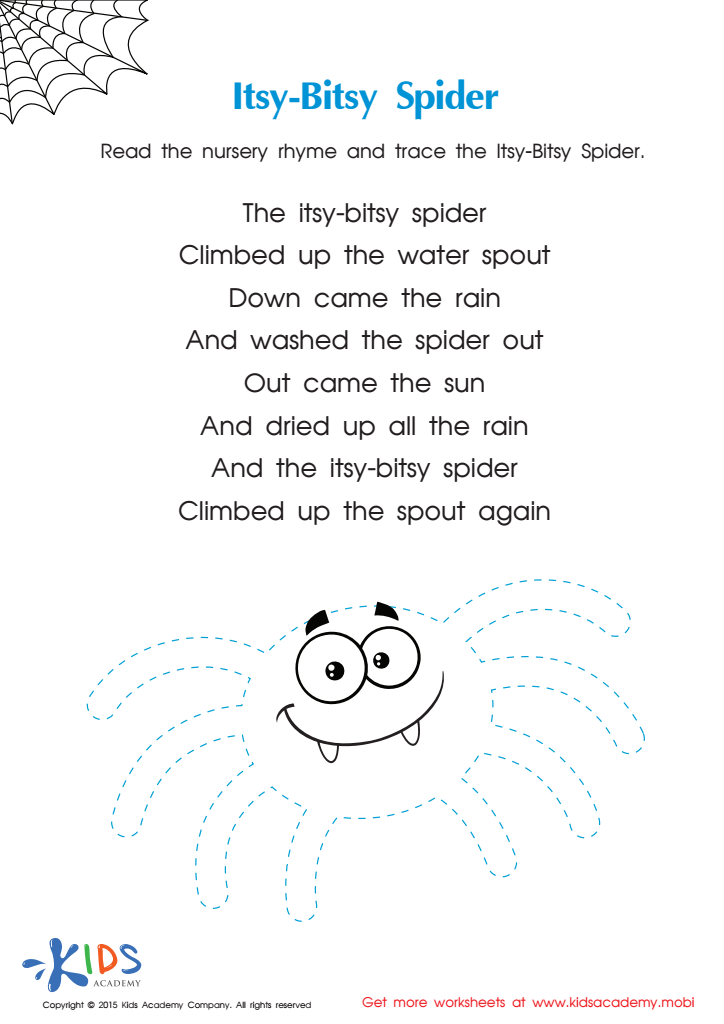
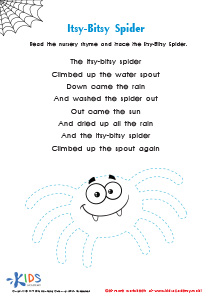
Itsy Bitsy Spider Nursery Rhyme PDF Worksheet
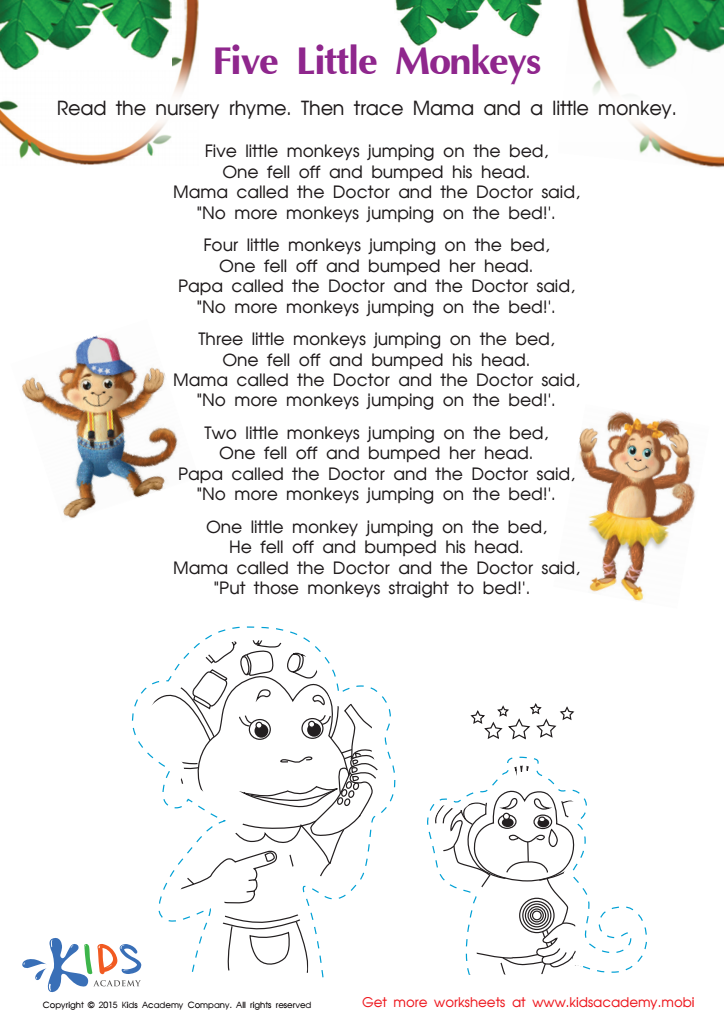
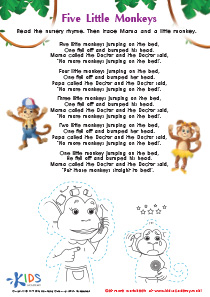
The Five Little Monkeys Nursery Rhyme Worksheet
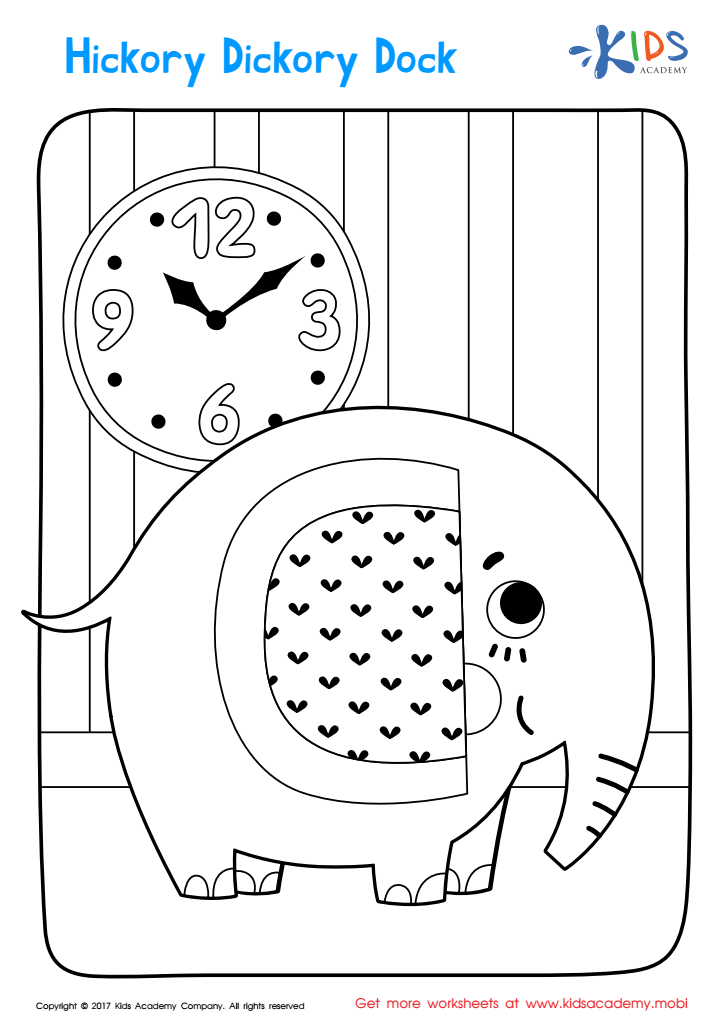
Hickory Dickory Dock Coloring Page
 Assign to My Students
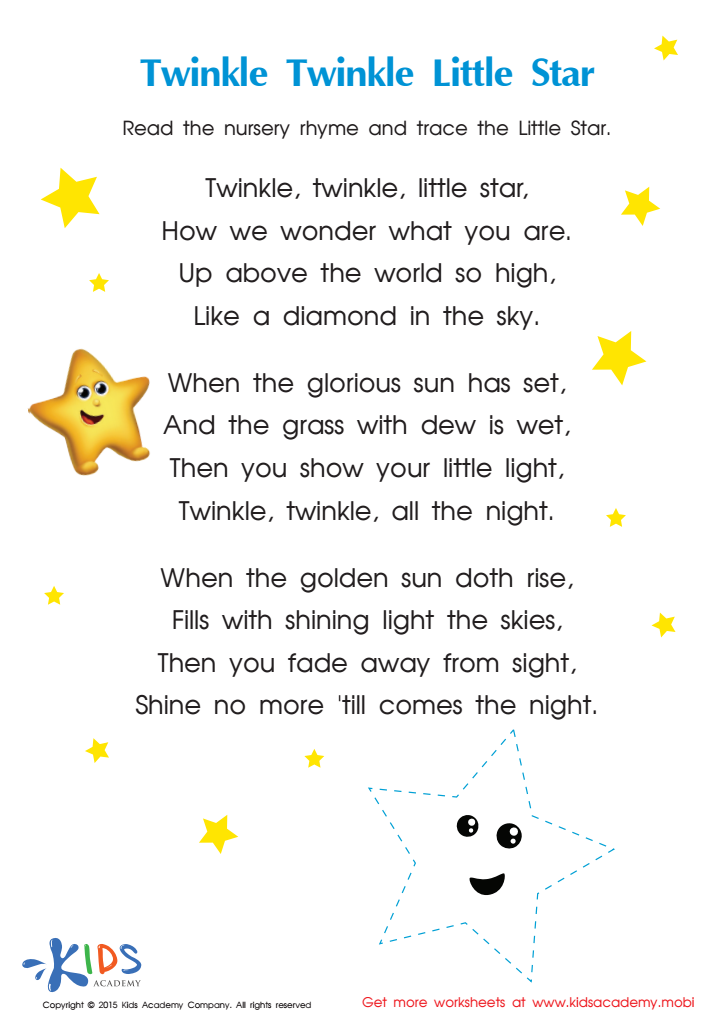
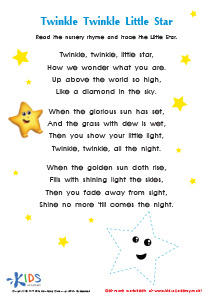
Nursery Rhymes: Twinkle Little Star Worksheet
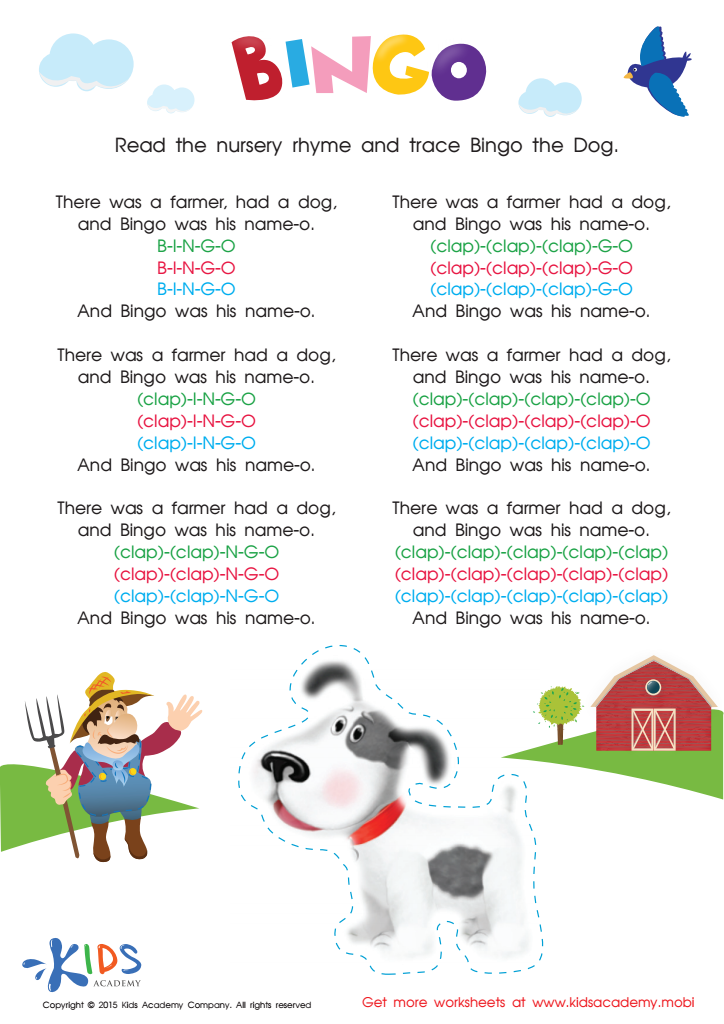
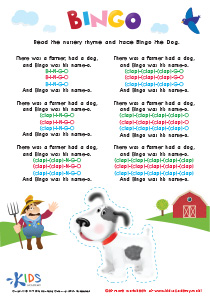
Nursery Rhymes: The Bingo Song Worksheet








Nursery rhymes for ages 7-9 play a crucial role in early childhood development and education, benefiting both parents and teachers. Although this age group typically transitions to more complex texts, revisiting nursery rhymes offers numerous advantages. Firstly, these rhymes enhance language development. The rhythmic and repetitive nature of nursery rhymes helps improve phonemic awareness, which is foundational for reading and spelling skills. This linguistic rhythm enables children to recognize and practice the sounds within words, aiding their reading fluency and comprehension.
Moreover, nursery rhymes cultivate a love for literature. Familiarizing children with these simple, engaging pieces of poetry creates positive early literary experiences. This enjoyment can foster a lifelong interest in reading, boosting academic success. Additionally, understanding the cultural significance of traditional tales and rhymes strengthens a child's cultural literacy and historical awareness.
Social development plays a key role too. Participating in group recitations or performances of nursery rhymes promotes cooperative behavior and confidence in public speaking. It provides a platform for children to express themselves creatively and verbally.
In summary, incorporating nursery rhymes into the learning experience of children aged 7-9 enriches their linguistic prowess, nurtures a budding love for reading and literature, and supports their social and cognitive growth.