Number Sequencing Easy Worksheets for Ages 8-9
3 filtered results
-
From - To
Boost your child's math skills with our engaging Number Sequencing Worksheets designed specifically for ages 8-9! These easy worksheets help students grasp essential sequencing concepts while making learning fun. Featuring colorful graphics and interactive exercises, your child will practice ordering numbers, enhancing their problem-solving skills in a playful manner. Our carefully curated activities cater to different learning styles, ensuring that every child can enjoy and excel in mastering number patterns. Perfect for classroom or at-home practice, these worksheets provide a solid foundation in mathematics, setting the stage for more advanced skills. Download now and embark on a fun-filled learning journey!
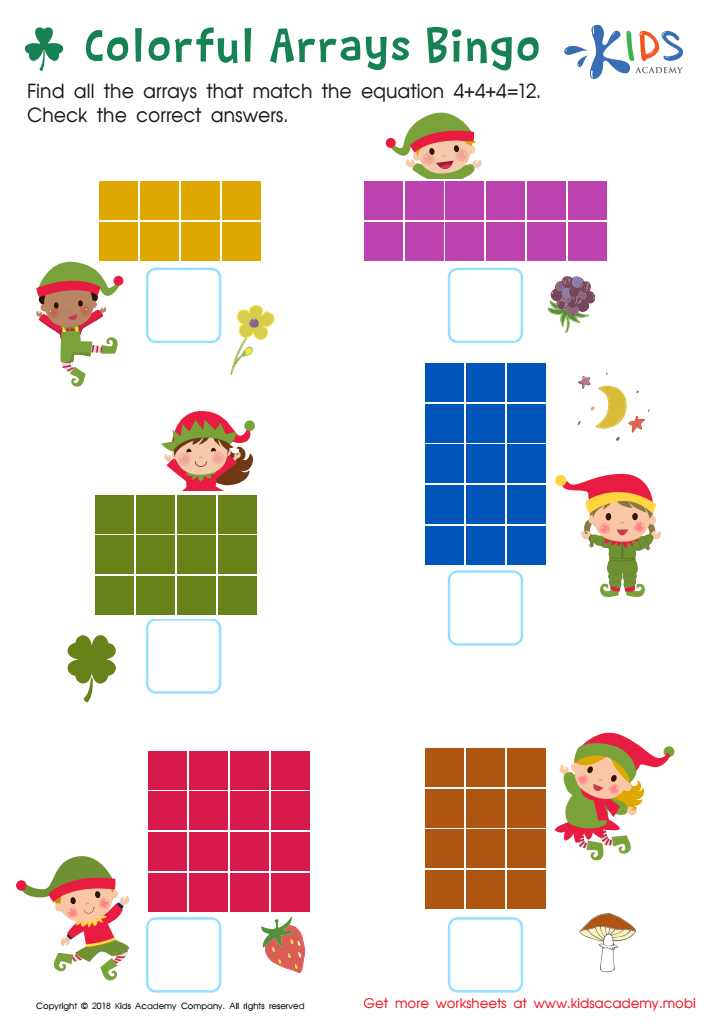
Colorful Arrays Bingo Worksheet
 Assign to My Students
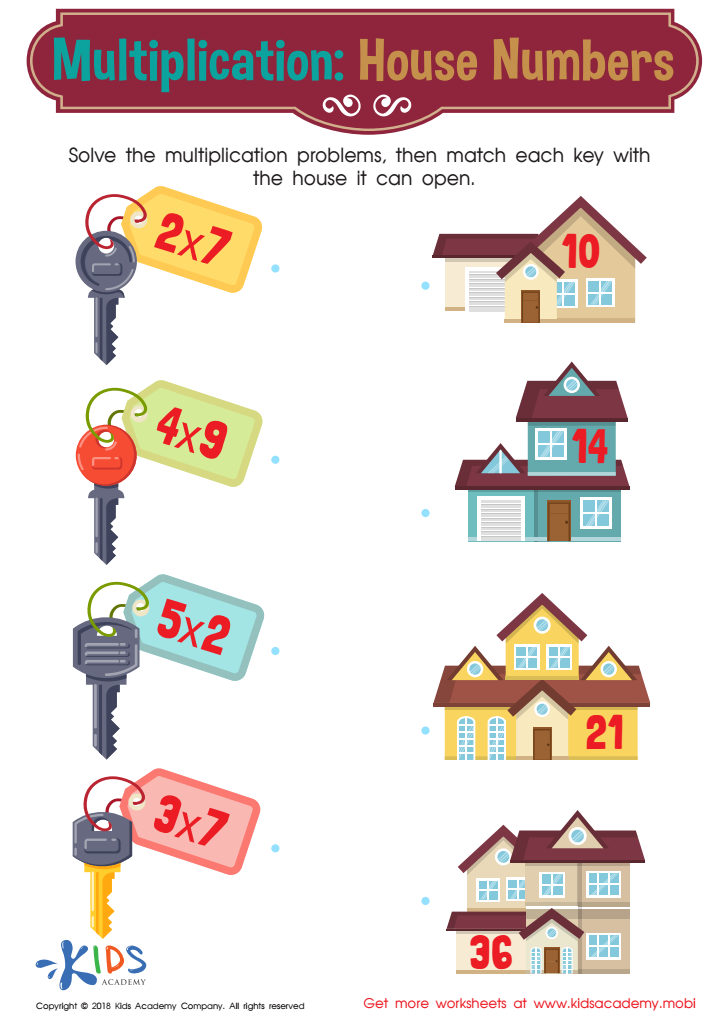
House Numbers Worksheet
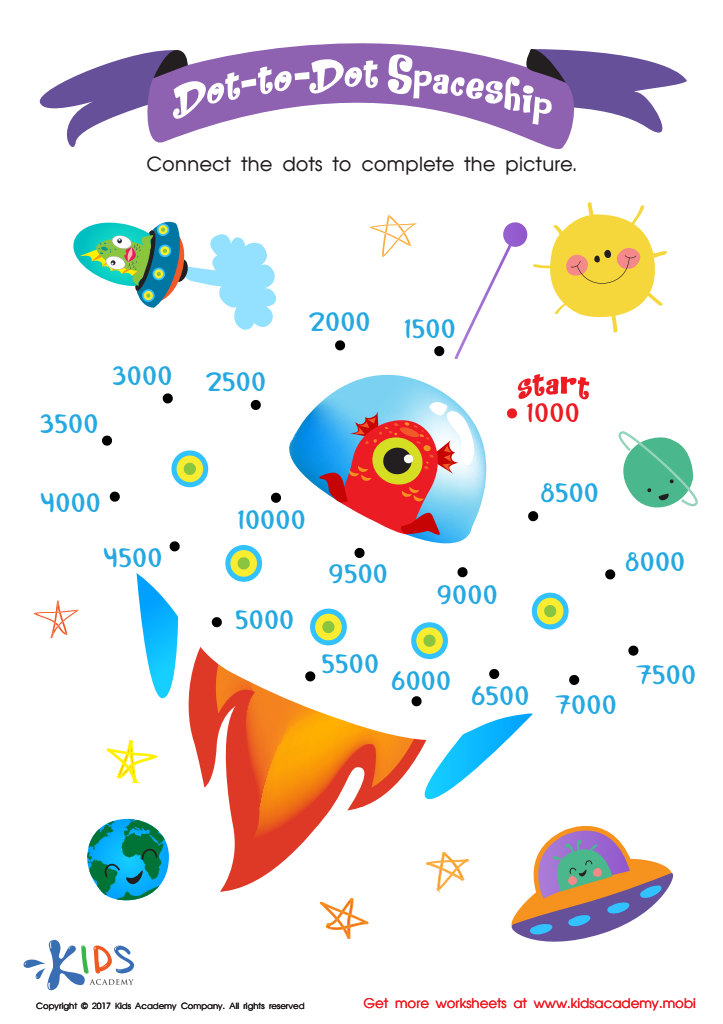
Dot to Dot Worksheet for 3rd Grade


.jpg)




Parents and teachers should care about number sequencing for children aged 8-9 because it lays a vital foundation for mathematical comprehension and problem-solving skills. At this age, students transition from basic arithmetic to more complex concepts, and understanding number sequencing enhances their ability to recognize patterns and relationships within numbers.
Number sequencing encourages critical thinking as students learn to arrange and manipulate numbers logically. This skill helps in mastering addition, subtraction, multiplication, and division. For example, being able to understand sequences can aid in solving word problems and performing calculations more efficiently.
Moreover, engaging in number sequencing activities can boost children's confidence, making math more enjoyable and less intimidating. It promotes perseverance and resilience in problem-solving, which are essential life skills beyond the classroom.
Finally, fostering an appreciation for numerical order prepares children for future math concepts, such as fractions, decimals, and algebra. By prioritizing number sequencing, parents and teachers can empower children with the skills they need to excel academically and develop a strong, positive relationship with mathematics.








