Addition skills Easy Worksheets for 8-Year-Olds
5 filtered results
-
From - To
Enhance your child's math abilities with our "Addition Skills Easy Worksheets for 8-Year-Olds." Designed specifically for young learners, these engaging worksheets provide a fun and interactive way for students to practice and master addition concepts. Featuring a variety of exercises that cater to different skill levels, kids will build their confidence while strengthening their addition skills. The colorful and attractive layout keeps children motivated, ensuring they enjoy the learning process. Perfect for homework, supplementing classroom lessons, or independent practice at home, these worksheets are an excellent resource to develop essential math foundations and inspire a love for learning in your child.
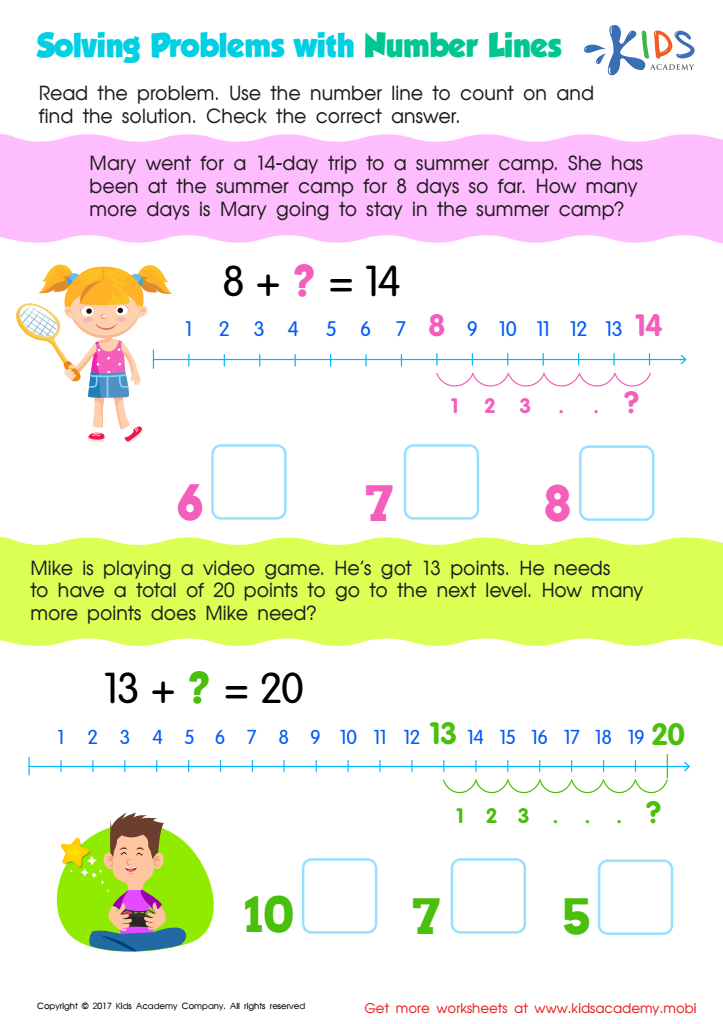
Solving Problems: Number Lines Worksheet
 Assign to My Students
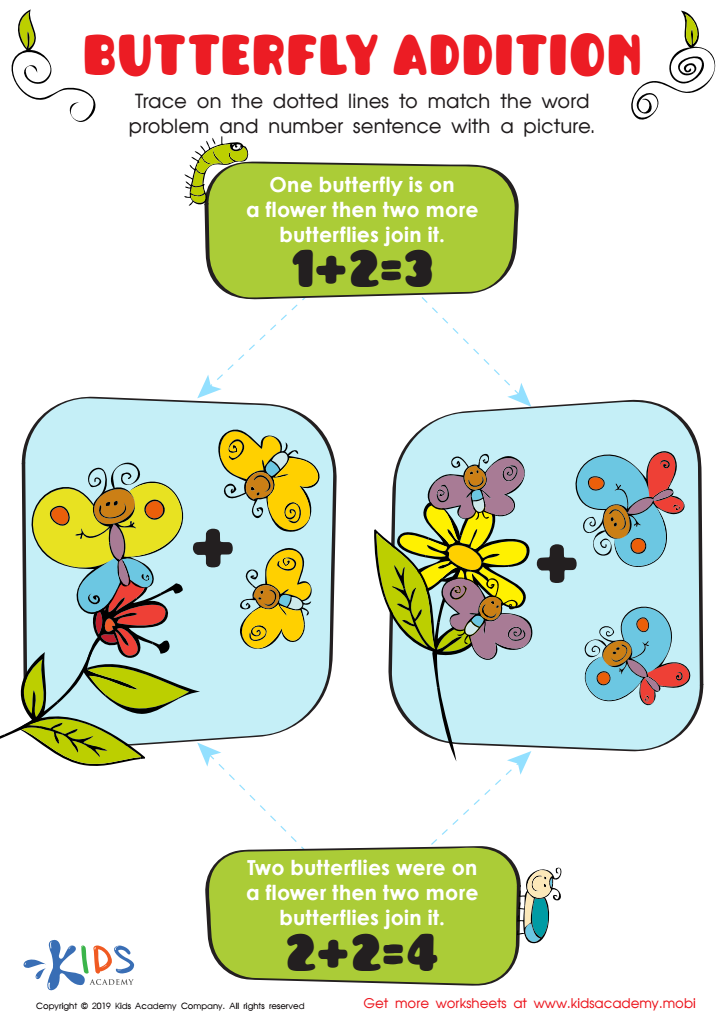
Butterfly Addition Worksheet
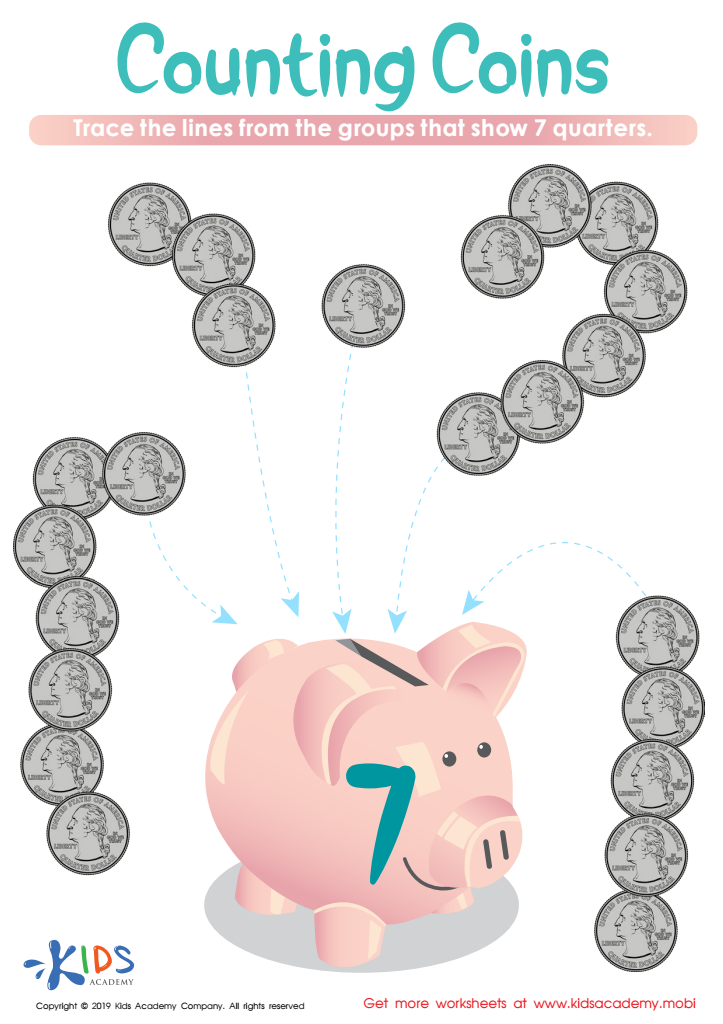
Counting Coins Worksheet
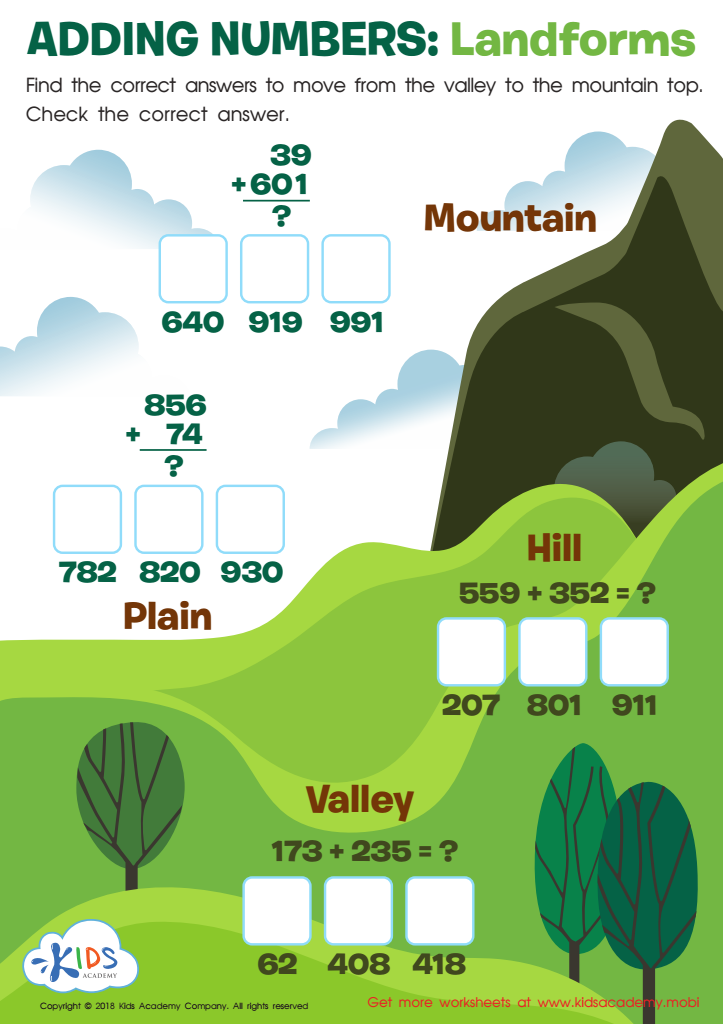
Adding Numbers: Landforms Worksheet
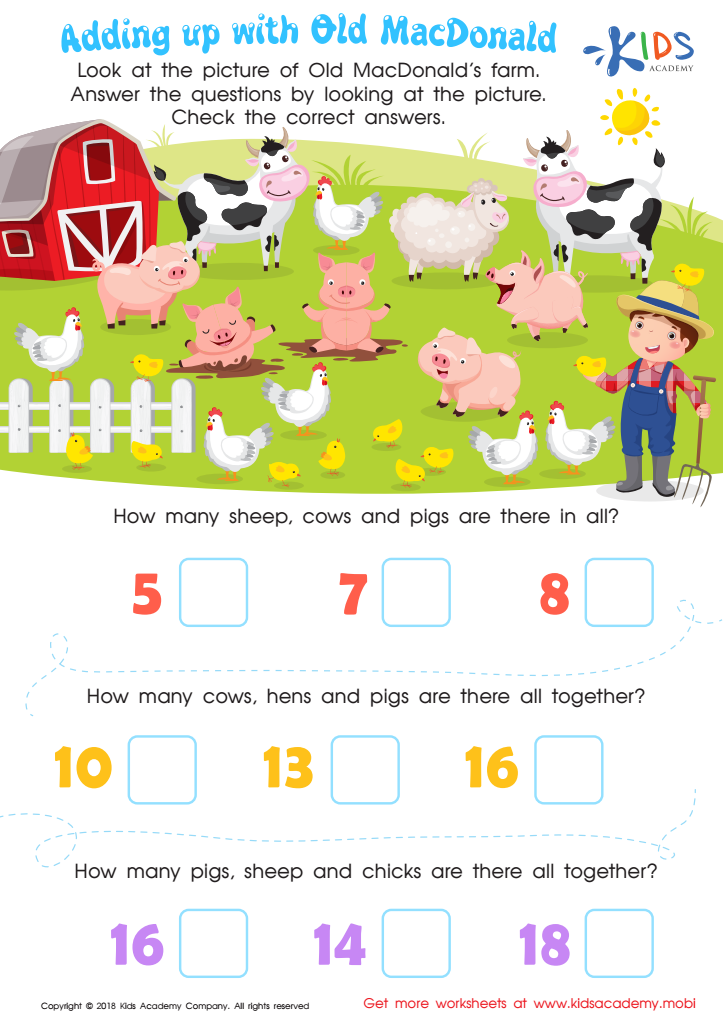
Adding Up with Old MacDonald Worksheet







.jpg)
Parents and teachers should prioritize teaching addition skills to 8-year-olds because these foundational math abilities are crucial for a child’s overall academic success and confidence. Mastering addition not only helps children perform well in mathematics but also enhances their problem-solving skills. As they progress to higher-grade math concepts, addition serves as a building block for more complex operations, such as subtraction, multiplication, and division.
Furthermore, strong addition skills promote cognitive development. At this age, children develop critical thinking abilities, and math plays a pivotal role in fostering analytical thinking. Additionally, proficiency in addition helps children in real-life scenarios, like managing money, telling time, or measuring distances. These skills empower children to navigate everyday situations with confidence and independence.
Moreover, learning addition through engaging activities strengthens parent-child or teacher-student bonds. Fun games, interactive lessons, or group activities can make the learning process enjoyable, leading to a deeper understanding. By investing time in these basic skills, parents and teachers lay a solid mathematical foundation that will serve to support children's education for years to come, helping them develop not just academically, but also socially and emotionally as they grow.








