
Contextual understanding Easy Worksheets
5 filtered results
Difficulty Level
Grade
Age
-
From - To
Subject
Activity
Standards
Enhance your child’s learning experience with our "Contextual Understanding Easy Worksheets"! Designed specifically for young learners, these engaging worksheets help children develop essential skills in grasping meaning from context. Through a variety of fun activities, students will strengthen their comprehension, critical thinking, and reasoning abilities. Each worksheet focuses on relatable scenarios, promoting a deeper understanding of words and expressions within their specific contexts. Perfect for classrooms or at-home learning, these easy-to-use resources ensure children not only improve their language skills but also build confidence in their reading and communication abilities. Explore our collection and make learning enjoyable today!
Favorites
With answer key
Interactive
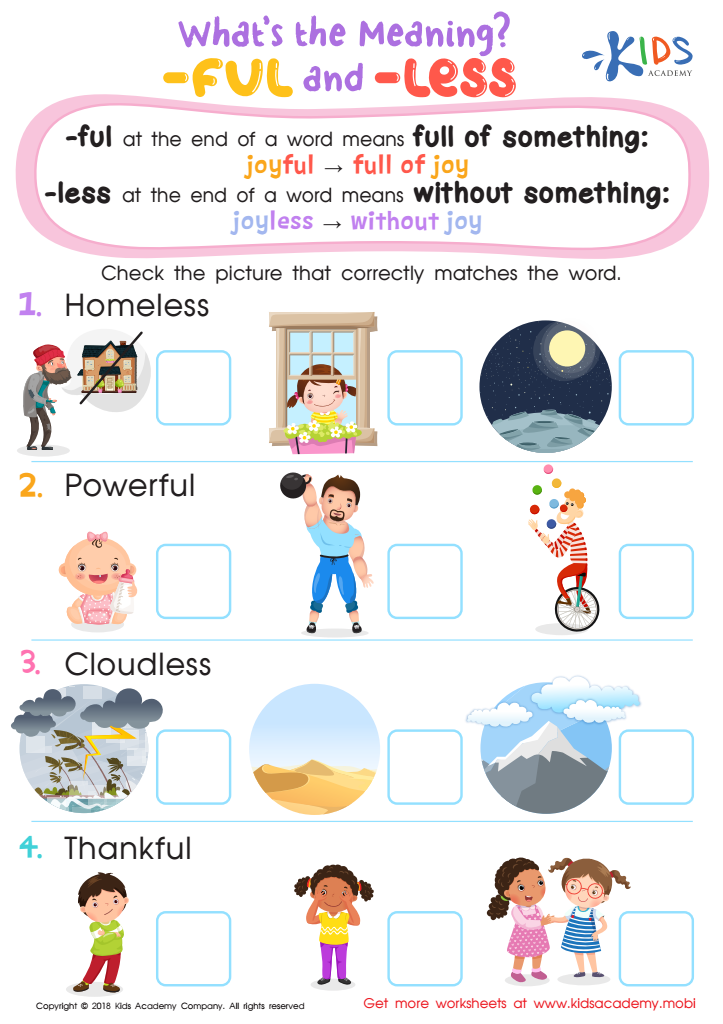
What's the Meaning? Worksheet
Look with your youngster through this colorful worksheet and match the pictures to the words at the top. These words have different meanings due to either a prefix or suffix being added, such as "ful" or "less".
 Assign to My Students
What's the Meaning? Worksheet
Worksheet
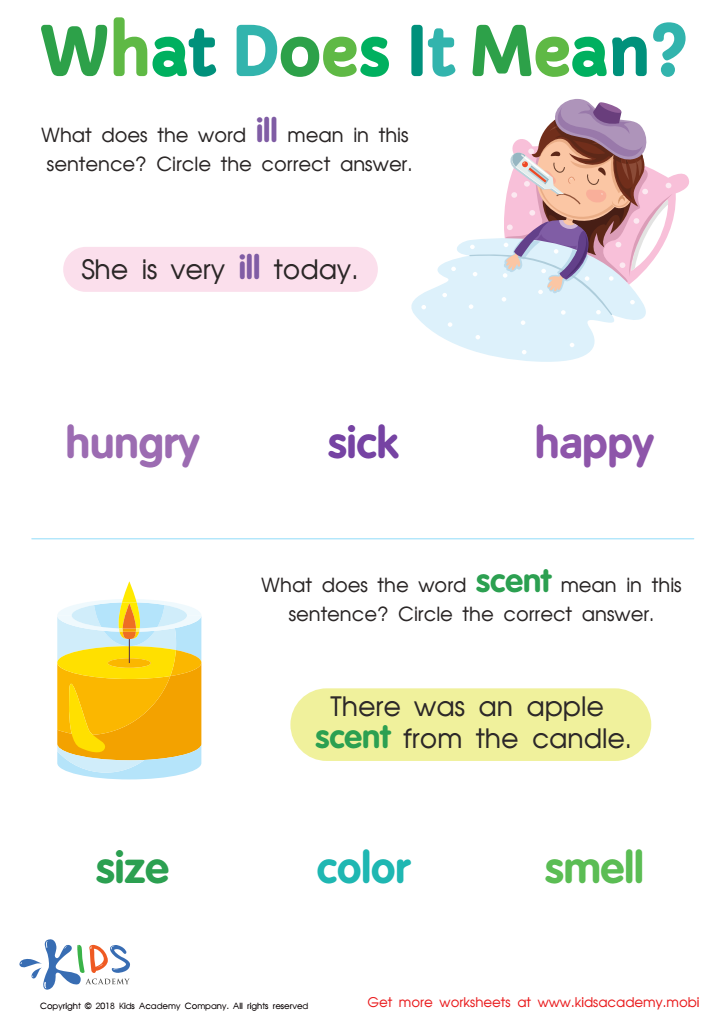
What Does It Mean? Worksheet
Students should know the meaning of words, even when used in different contexts. This worksheet has two sections. In the first, there's a picture on the right side. Ask students the meaning of 'ill' in "she is very ill today". Help them circle the correct answer from the options. The second section follows the same pattern. Make sure students circle the right answer.
What Does It Mean? Worksheet
Worksheet
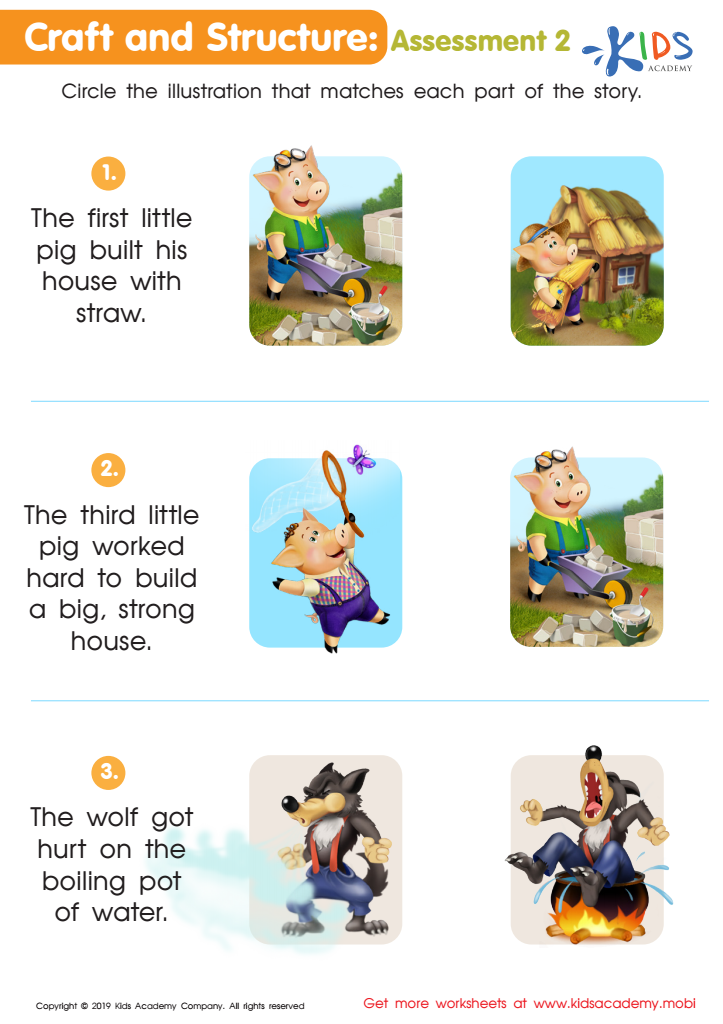
Craft and Structure: Assessment 2 Worksheet 2
This fun printout with colorful illustrations will assess how much your kids pay attention to story time. Go through the pictures and help them circle the ones that match each part of the story. Stimulate their brains and have fun in the process!
Craft and Structure: Assessment 2 Worksheet 2
Worksheet
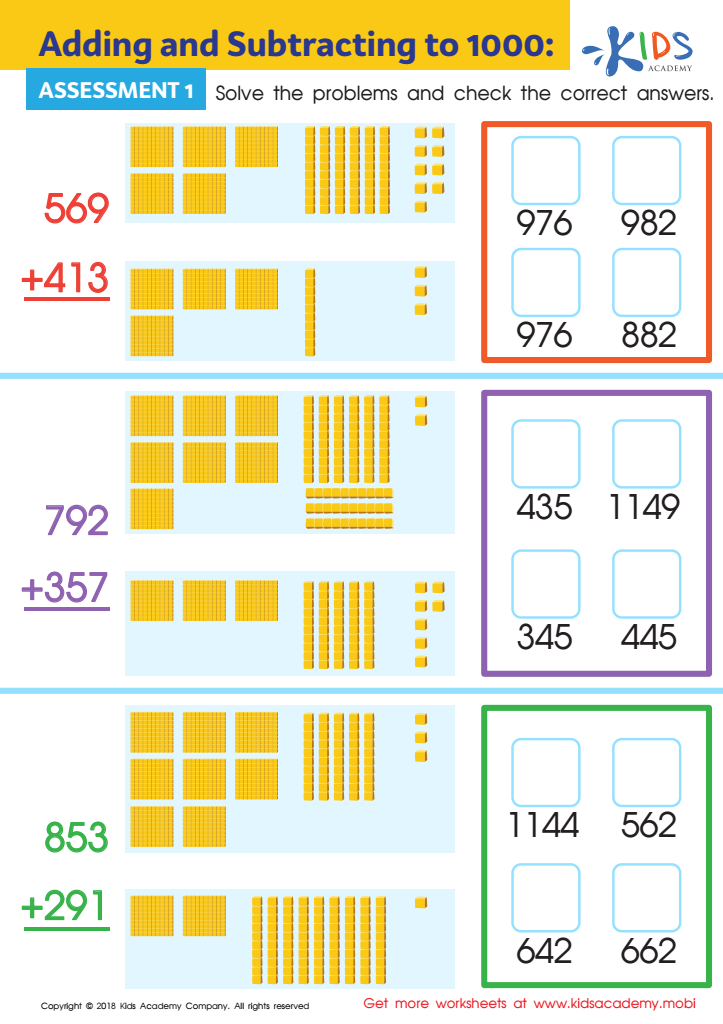
Adding and Subtracting to 1 Worksheet: Assessment 1
This assessment worksheet tests your child's addition skills. It has 3 3-digit problems with base ten blocks for visual aid. Encourage learners to use these visuals for better understanding. When they have solved the problems, they can check the box with the right answer. It's a quick and easy way to gauge numeracy development.
Adding and Subtracting to 1 Worksheet: Assessment 1
Worksheet
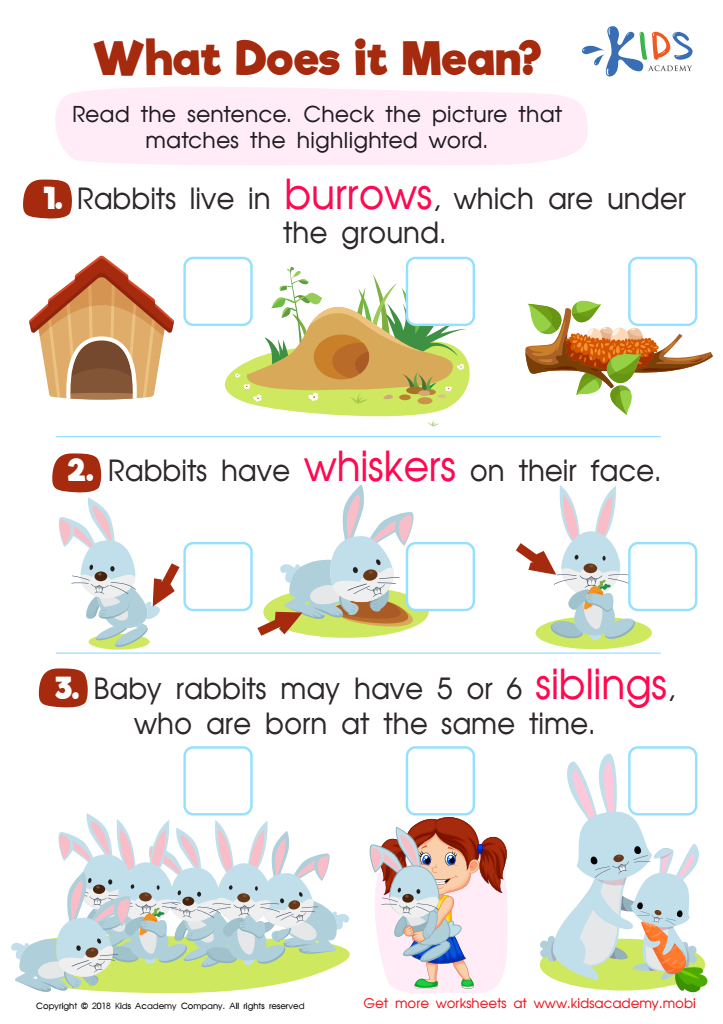
What Does It Mean? Worksheet
Teach your child to use context clues with this engaging Kids Academy worksheet. Read the sentences and find the pink-highlighted word. Use the other words in the sentence to figure out the meaning, then check the box next to the picture that represents it.
What Does It Mean? Worksheet
Worksheet
Join Kids Academy for Free
Who is primarily going to use this learning content?








Contextual understanding is essential for both parents and teachers because it plays a vital role in a child’s learning and development. When children grasp the context surrounding a subject, they can connect new information to their own experiences and the world around them, making learning more meaningful and memorable. For example, when teaching a lesson on nature, discussing local ecosystems helps kids relate it to what they observe daily, enhancing retention.
Moreover, contextual understanding supports critical thinking and problem-solving skills. Children learn to analyze situations more deeply when they see how concepts apply in real life, fostering independent thinking. This skill is crucial for their future, as it prepares them to navigate complex situations in school and beyond.
Parents and teachers should also recognize that each child has unique backgrounds and experiences. By being aware of these contexts, they can tailor their teaching and support to meet individual needs, helping all children succeed.
In summary, by valuing contextual understanding, parents and teachers not only improve educational outcomes but also encourage a love of learning, making the education process engaging and relevant for every child.








