Counting proficiency Easy Worksheets
3 filtered results
-
From - To
"Counting proficiency Easy Worksheets" from Kids Academy offer engaging and fun activities designed to build strong counting skills in young learners. Perfectly suited for early graders, these worksheets provide various exercises to help children become proficient in counting sequentially, identifying numbers, and understanding one-to-one correspondence. Each worksheet is crafted to make learning intuitive and enjoyable, ensuring children develop confidence and accuracy in their counting abilities. With colorful illustrations and interactive tasks, counting proficiency becomes an exciting adventure, sparking a love for math right from the start. Equip your child with essential counting skills through our carefully curated worksheets!
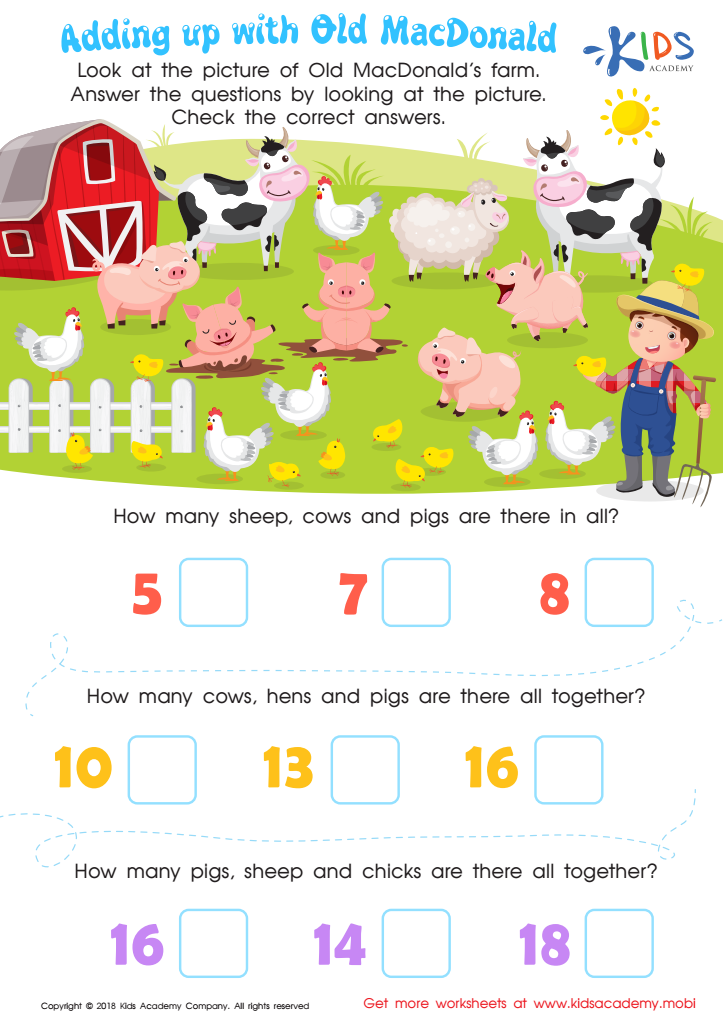
Adding Up with Old MacDonald Worksheet
 Assign to My Students
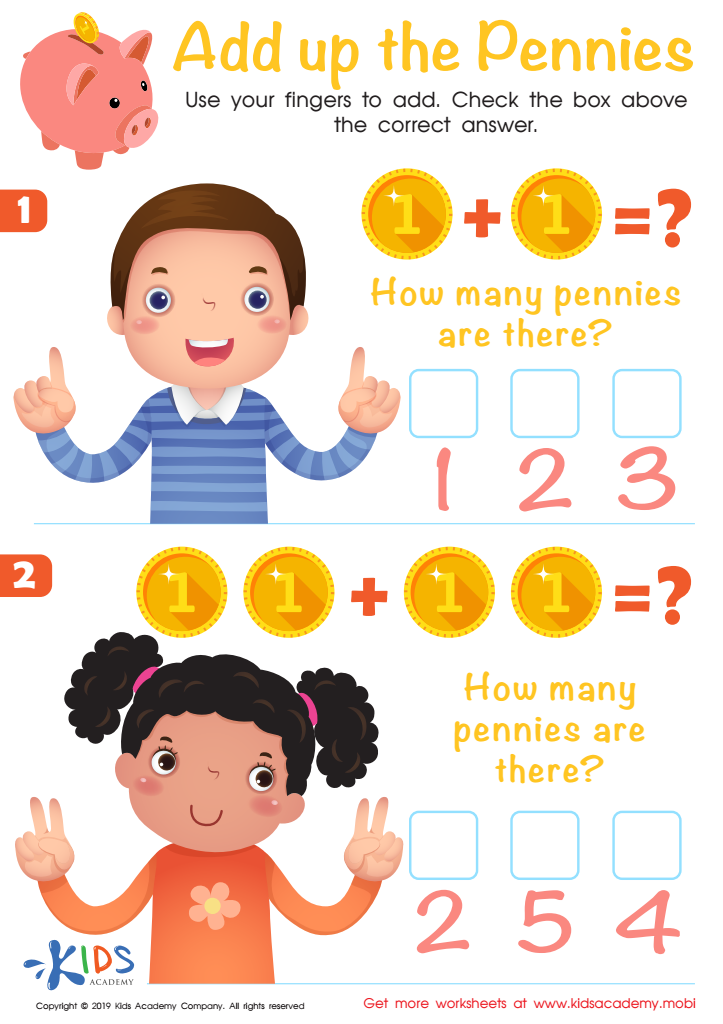
Add up the Pennies Worksheet
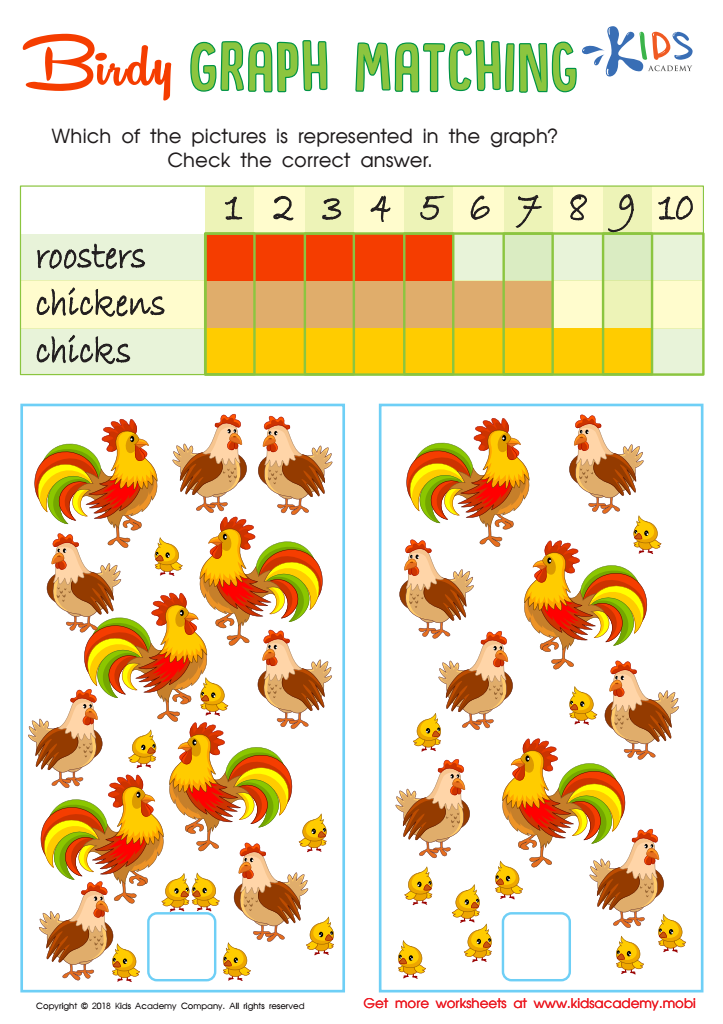
Birdy Graph Matching Worksheet


.jpg)




Counting proficiency is fundamental for young children as it lays the foundation for future mathematical understanding and overall cognitive development. Parents and teachers should prioritize counting skills because they are the basis upon which more complex mathematical concepts are built, such as addition, subtraction, multiplication, and division. By mastering counting, children develop number sense, an essential skill that helps them understand and manipulate numbers in various ways.
Counting proficiency promotes problem-solving abilities and logical reasoning. As children learn to count, they begin to recognize patterns, sequences, and the concept of quantity, which are crucial skills not just for mathematics but for everyday decision-making and critical thinking. Moreover, children who are proficient in counting tend to have better self-confidence and are more engaged in learning activities because they feel equipped to tackle new challenges.
Lastly, early counting proficiency is often correlated with academic success in other subjects. It helps improve focus, attention to detail, and fine motor skills when children point to or move objects as they count. Thus, fostering strong counting skills in early childhood ensures a smoother transition to more advanced academic tasks and sets the stage for lifelong learning. Teachers and parents play a key role in creating a supportive environment that encourages and celebrates early counting achievements.








