Extra Challenge Tracing Shapes Worksheets for Ages 3-5
4 filtered results
-
From - To
Enhance your child's fine motor skills and geometric understanding with our "Extra Challenge Tracing Shapes Worksheets for Ages 3-5." Designed for young learners, these engaging worksheets present shapes like circles, squares, and triangles in fun, challenging patterns that keep little minds active. Perfectly suited for preschool through kindergarten, our printables are more advanced, helping children to refine their tracing abilities while recognizing different shapes. Simple instructions and appealing designs provide the ideal addition to at-home practice or classroom activities. Give your child a head start on essential math skills today with our expertly crafted tracing worksheets!
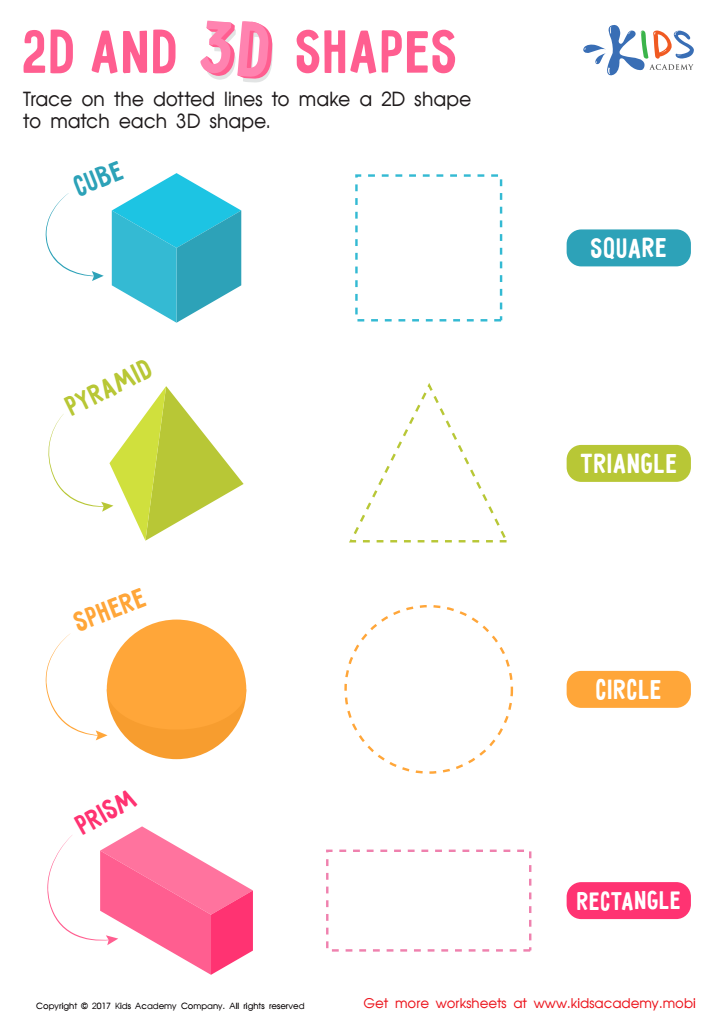
2D and 3D Shapes Worksheet
 Assign to My Students
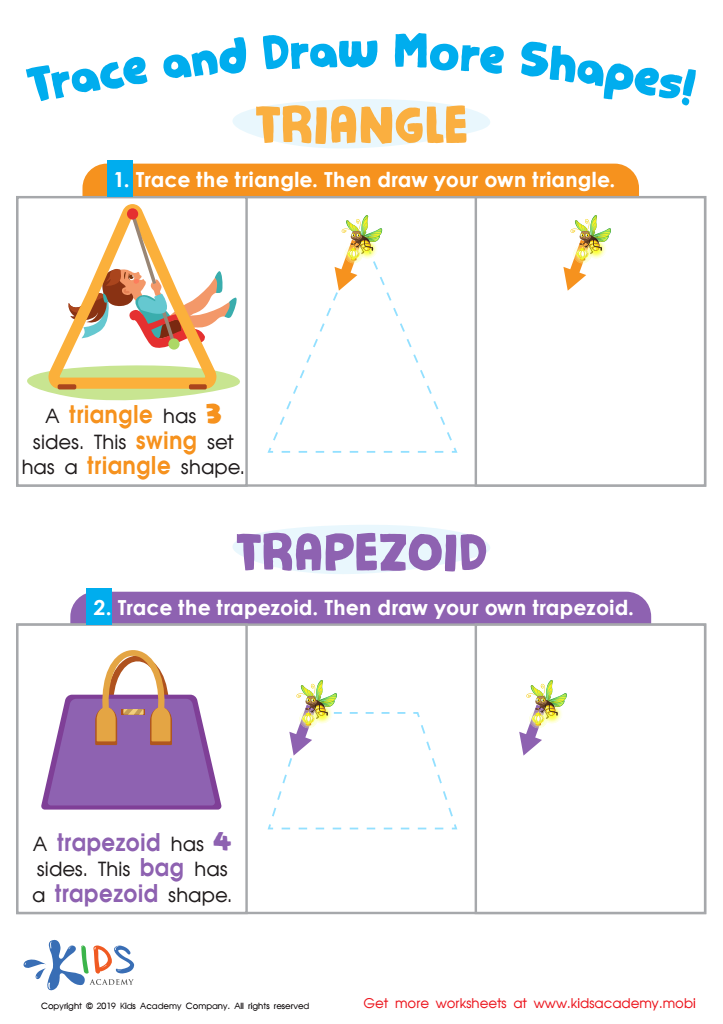
Trace and Draw More Shapes Worksheet
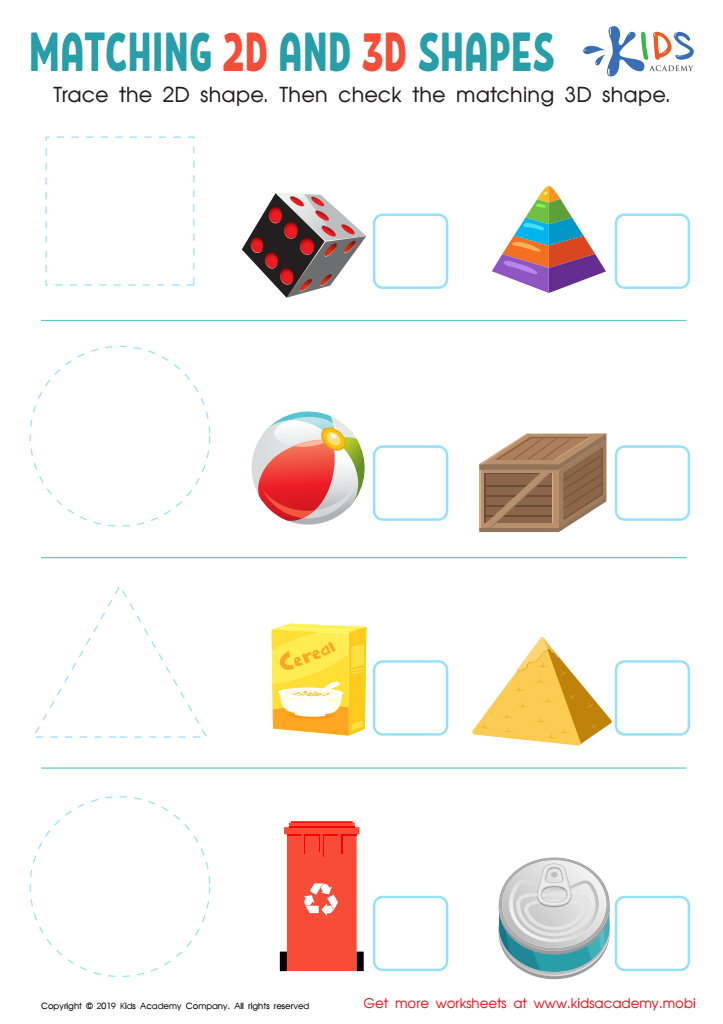
Matching 2D and 3D Shapes Worksheet
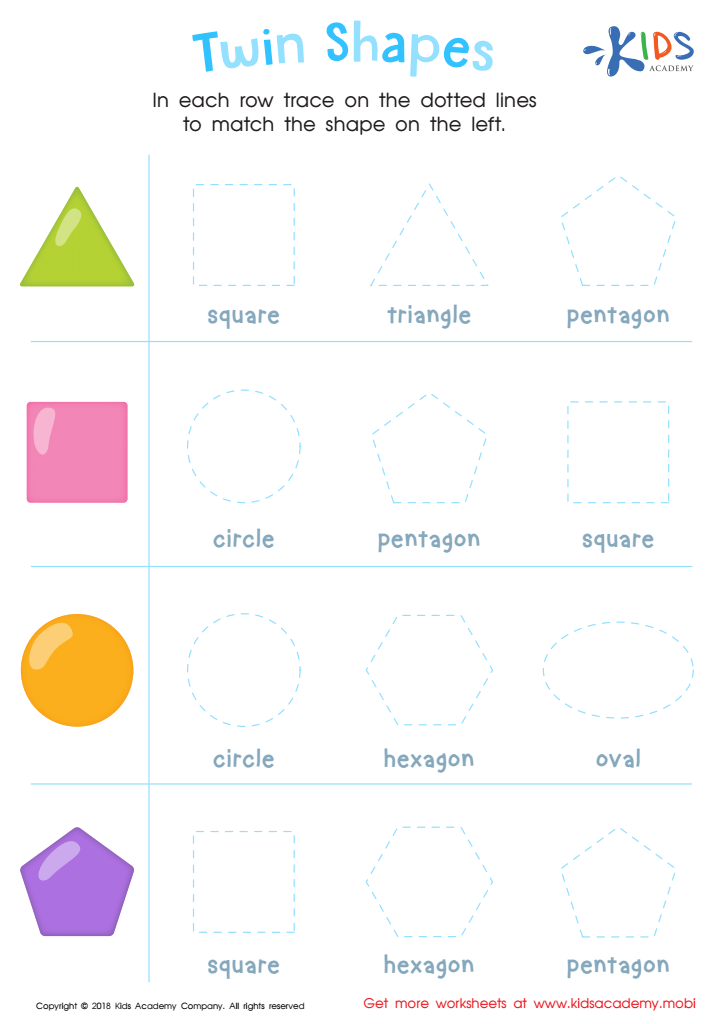
Twin Shapes Dot-to-Dot Worksheet








Extra Challenge Tracing Shapes activities are incredibly beneficial for children ages 3-5 as they support early development in several key areas. At this formative stage, young learners develop foundational skills that pave the way for future academic success. By encouraging children to trace various shapes, parents and teachers can significantly enhance fine motor skills, such as hand-eye coordination and precise muscle control, which are crucial for writing.
Additionally, shape tracing activities develop visual-spatial awareness and cognitive skills. Recognizing and distinguishing shapes aids in understanding letters and numbers, which are constructed from basic geometric figures. This early exposure can lead to improvements in early reading and mathematical problem-solving abilities.
Moreover, tracing shapes introduces children to basic concepts of geometry and spatial relationships, which form the building blocks of more complex mathematical thinking. It also fosters a sense of accomplishment and boosts confidence as children complete tasks successfully.
Furthermore, these exercises provide an engaging and enjoyable way for children to practice patience and concentration. The discipline required to follow the lines carefully bolsters their overall focus and attention span.
Overall, Extra Challenge Tracing Shapes is a valuable, multi-faceted tool that nurtures essential skills, making learning enjoyable while preparing children for the broader academic challenges ahead.