Shape Recognition Extra Challenge Geometry Worksheets for Ages 3-6
10 filtered results
-
From - To
Enhance your child's learning journey with our "Shape Recognition Extra Challenge Geometry Worksheets" designed for ages 3-6. These engaging worksheets provide an array of creative exercises that foster shape recognition skills in a fun and interactive way. Ideal for both classroom and home environments, the extra challenges help young learners develop critical thinking and problem-solving abilities while reinforcing their geometric understanding. Each worksheet features vibrant illustrations and captivating activities that make learning shapes a delightful experience. Perfect for curious minds, our resources serve to enhance cognitive skills and prepare children for future math success. Embrace the joy of learning shapes today!
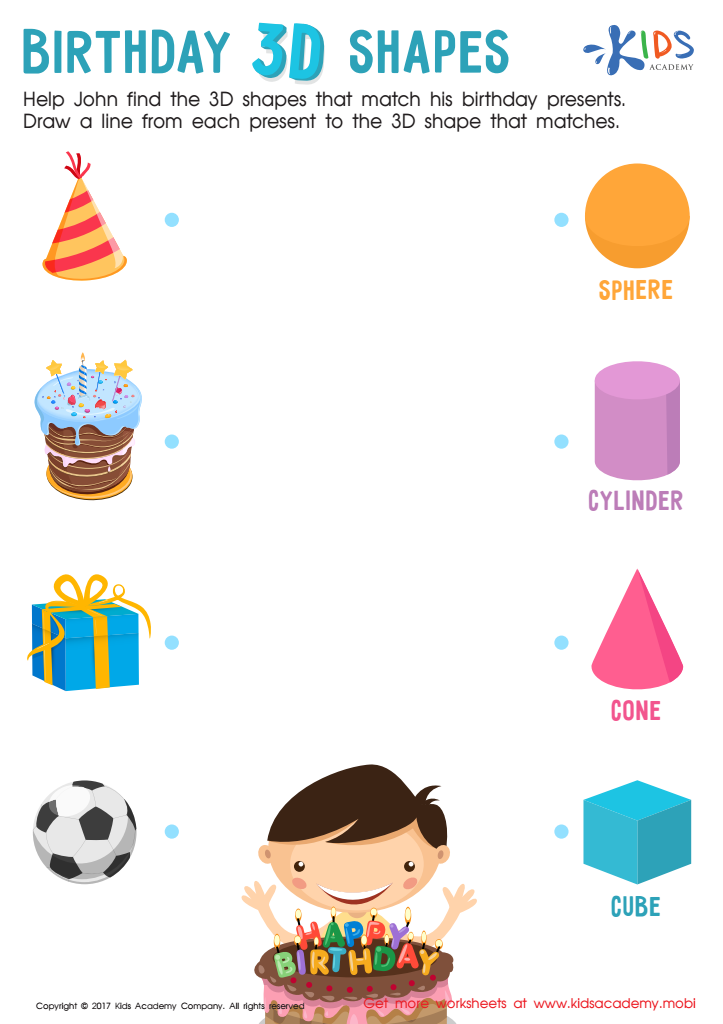
Birthday 3D Shapes Worksheet
 Assign to My Students











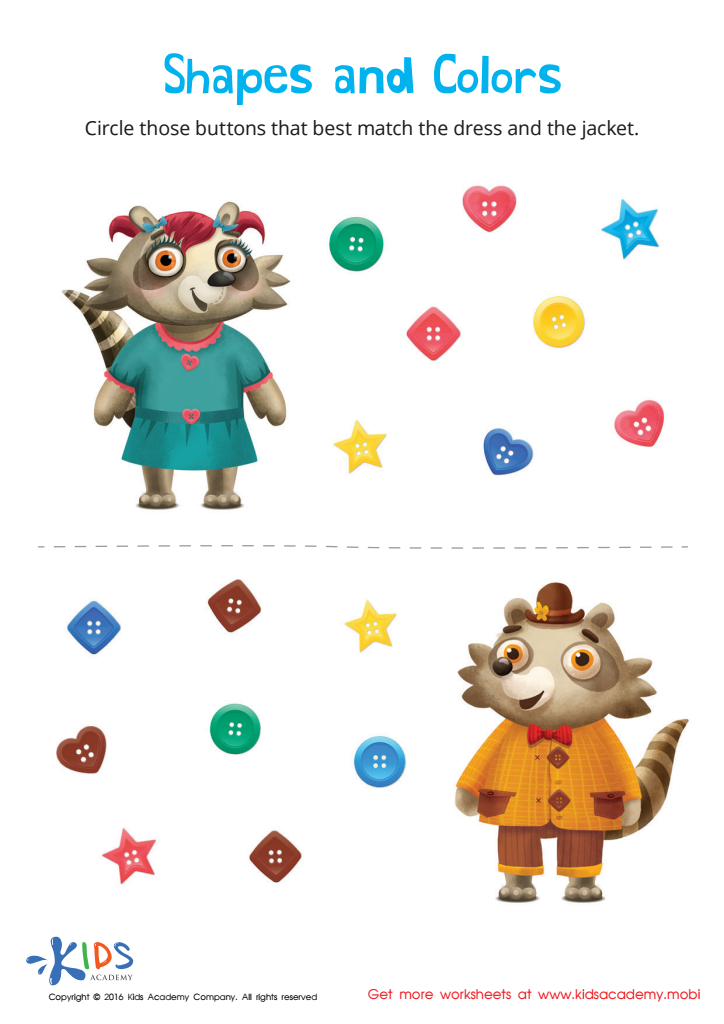
Matching: Shapes and Colors Worksheet
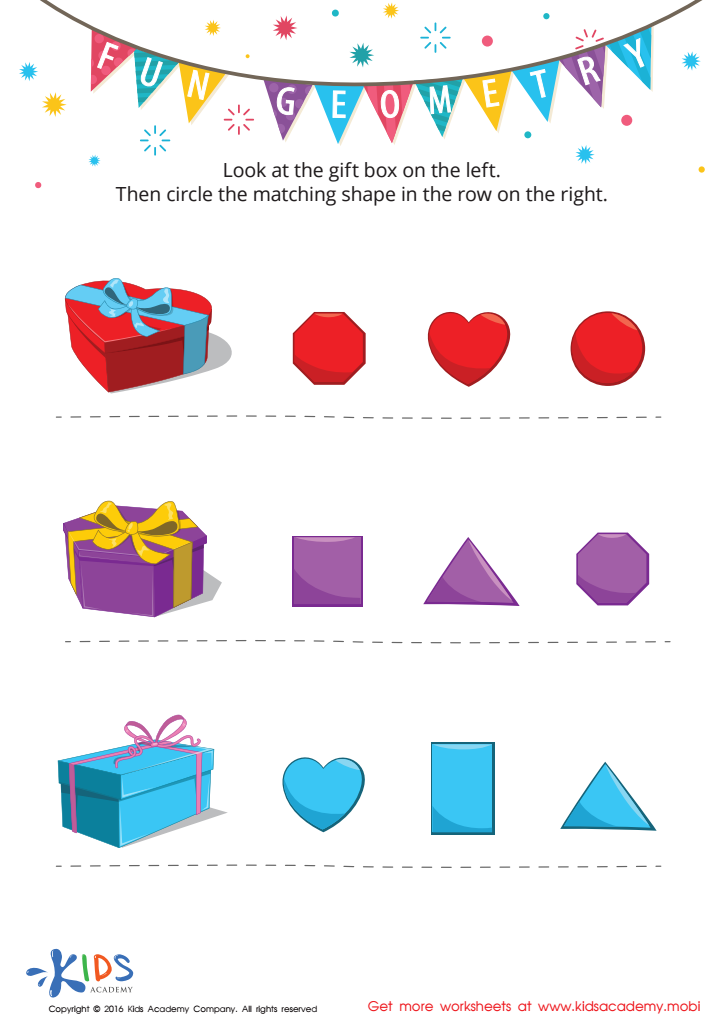
Fun Geometry Worksheet
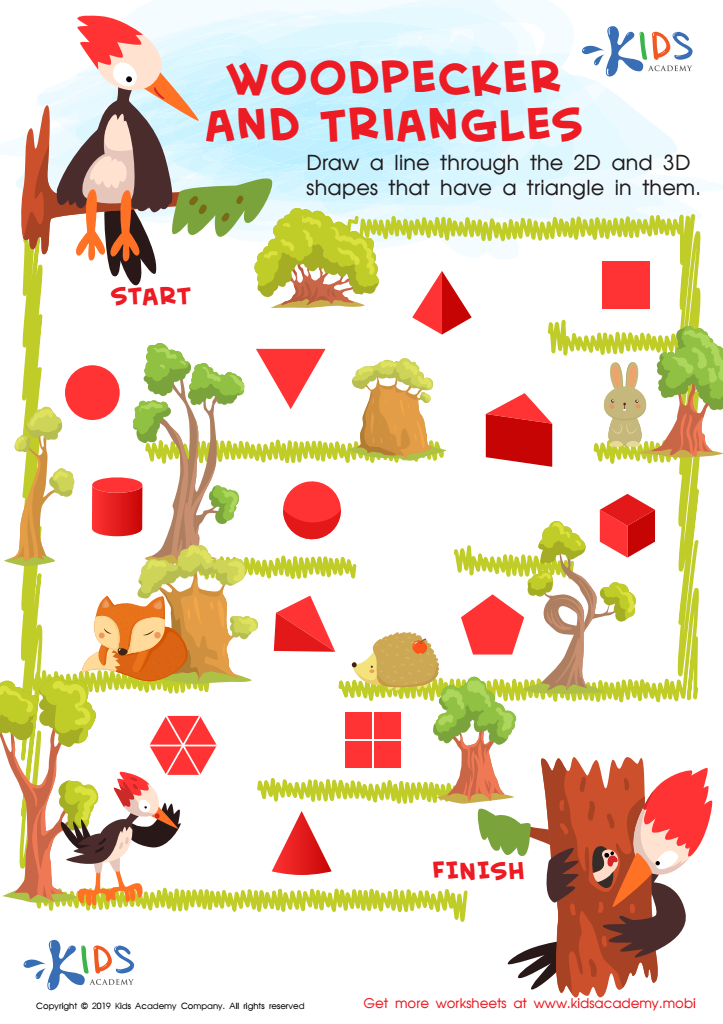
Woodpecker and Triangles Worksheet
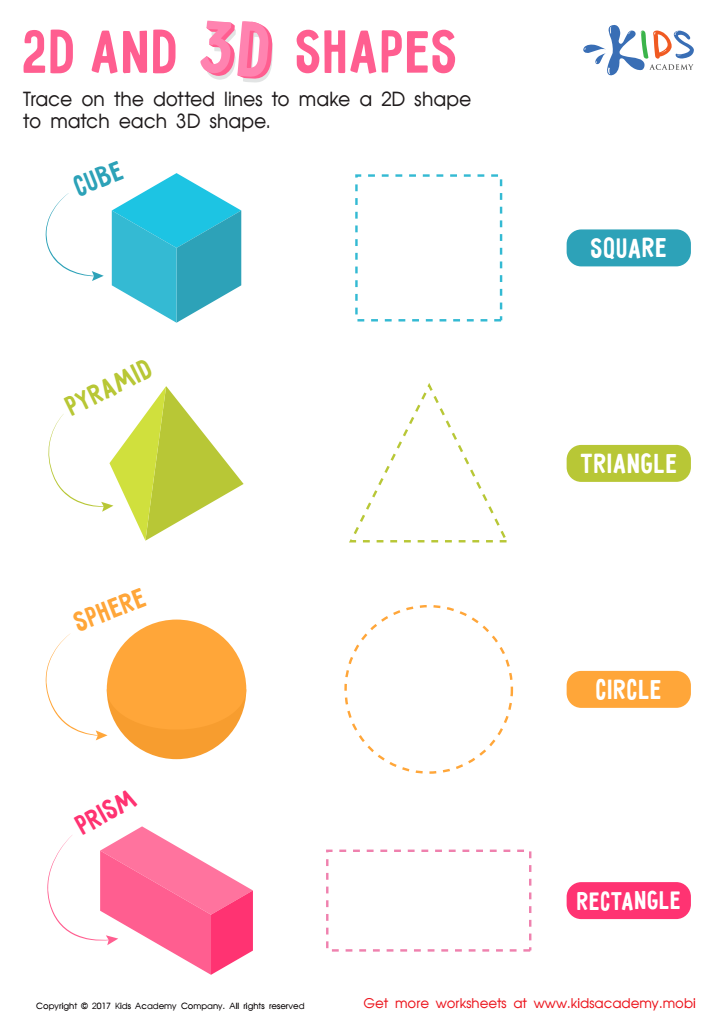
2D and 3D Shapes Worksheet
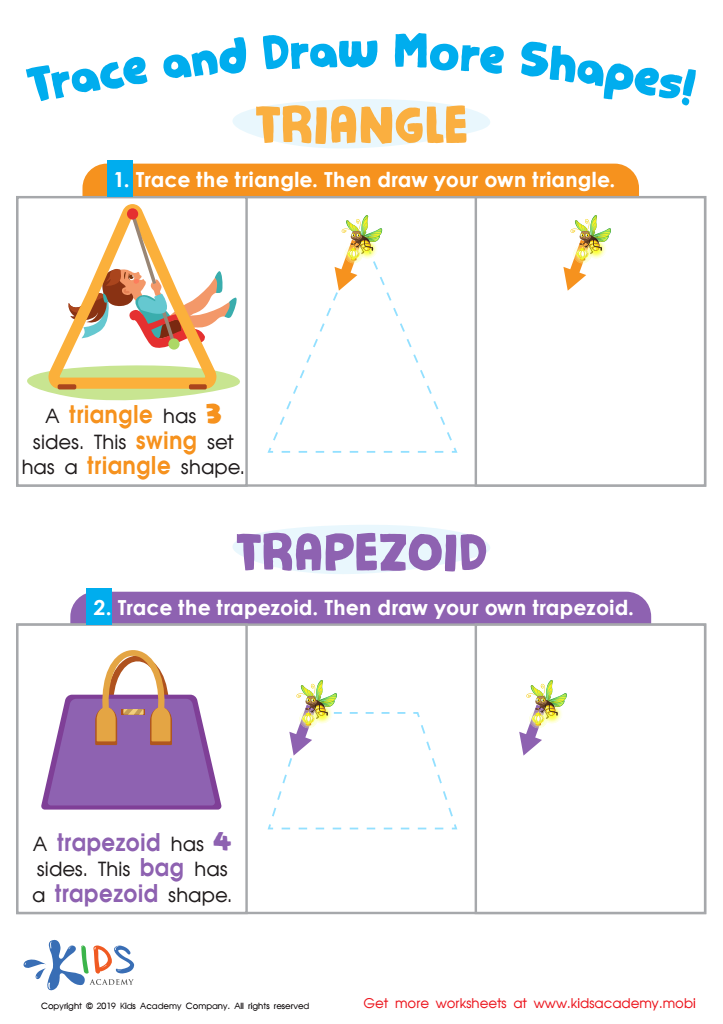
Trace and Draw More Shapes Worksheet
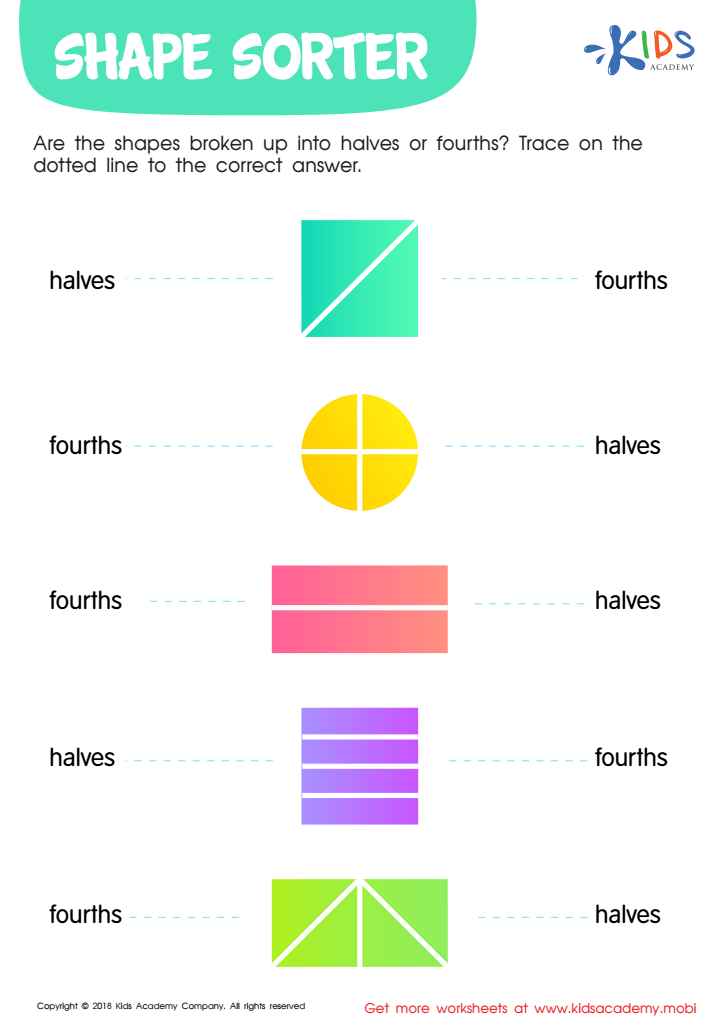
Shape Sorter Worksheet
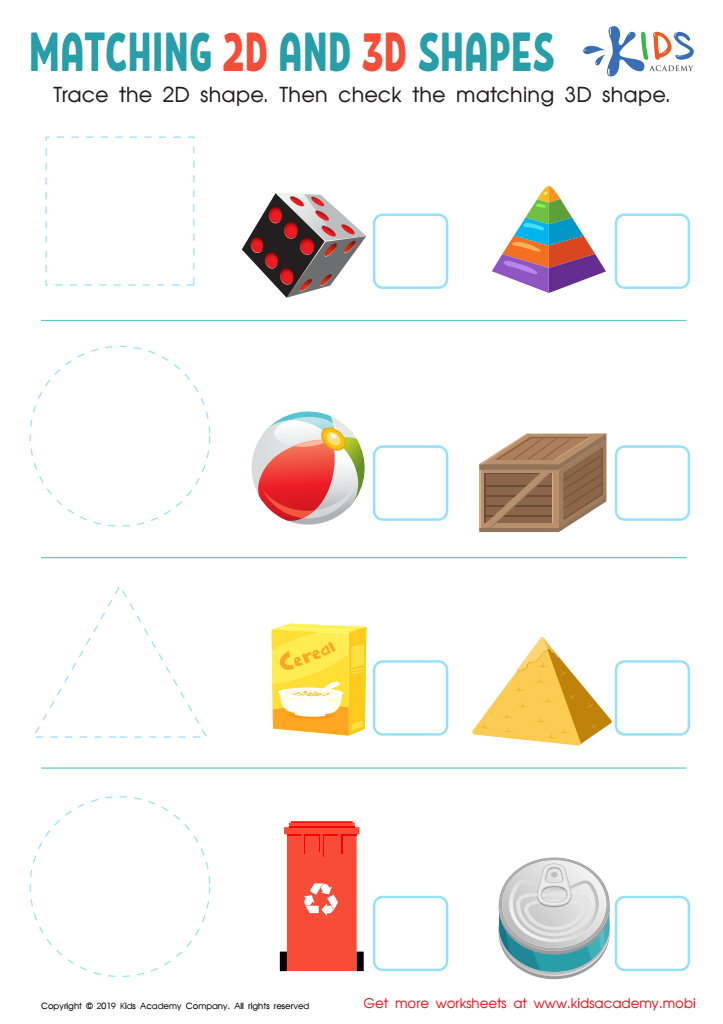
Matching 2D and 3D Shapes Worksheet
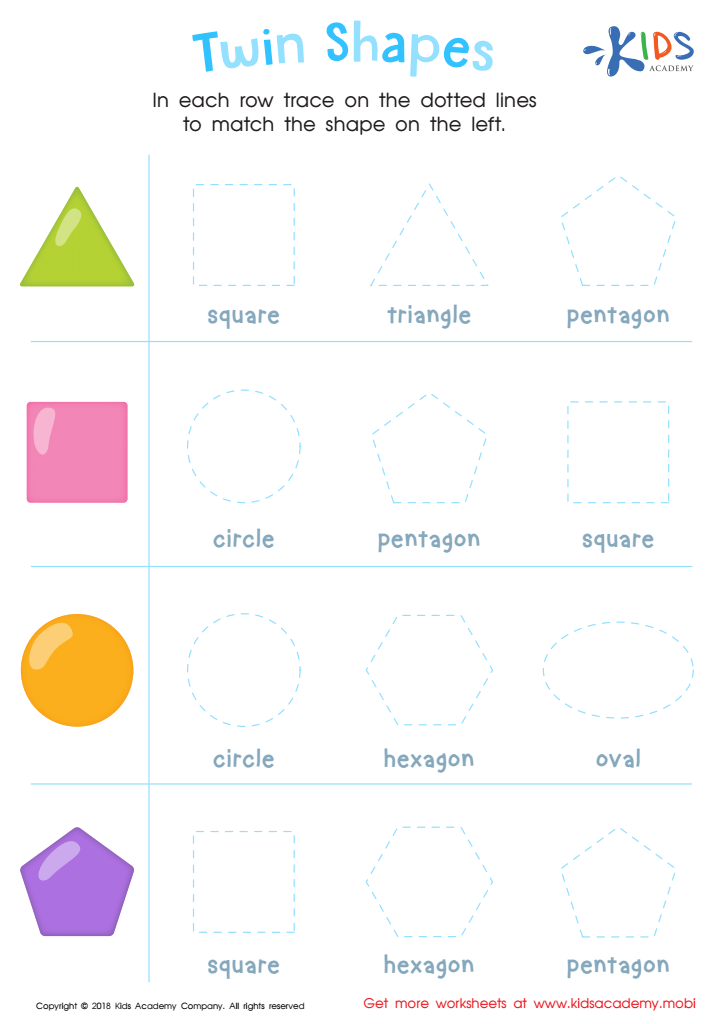
Twin Shapes Dot-to-Dot Worksheet
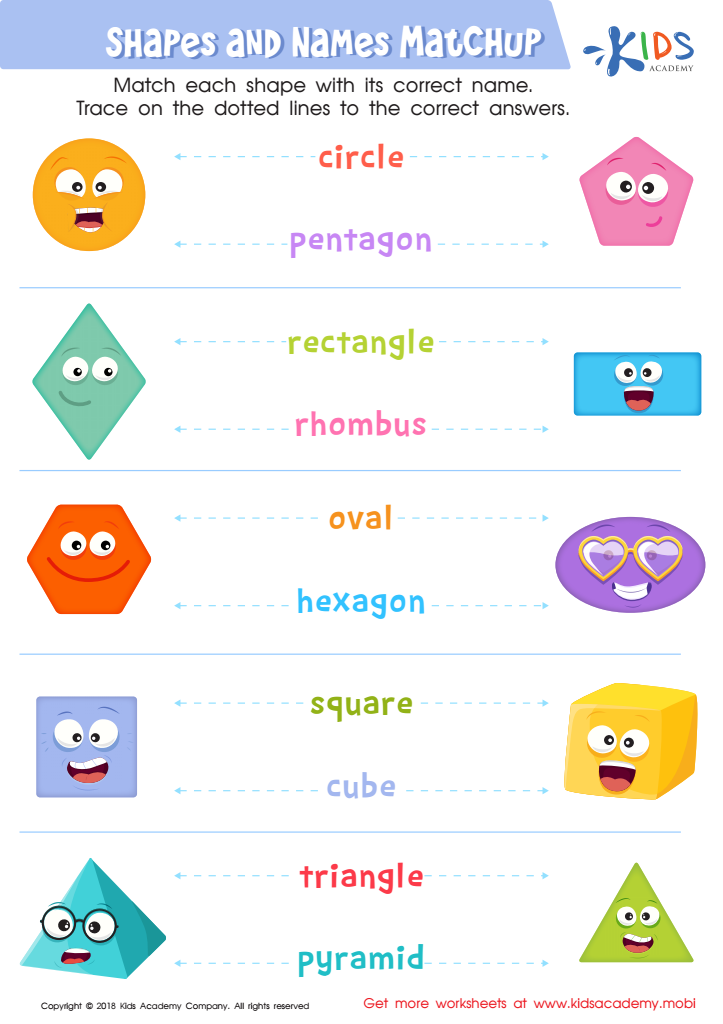
Shapes and Names Matchup Worksheet








Shape Recognition Extra Challenge Geometry activities for children aged 3 to 6 are incredibly important for early cognitive and developmental growth. At this age, children are naturally curious and eager to explore their surroundings, making it the perfect opportunity to engage them in shape recognition. Understanding shapes is a foundational skill that aids in the development of mathematical reasoning, spatial awareness, and problem-solving abilities.
When parents or teachers incorporate extra challenges in shape recognition, they stimulate critical thinking and encourage independent learning. These activities can help children learn to identify, classify, and differentiate between various shapes, building their vocabulary and enhancing their communication skills.
Furthermore, engaging in shape recognition activities fosters fine motor skills through hands-on activities such as drawing, cutting out shapes, and constructing objects. These experiences contribute to a child’s confidence and creativity, important components of their overall development.
By prioritizing shape recognition and introducing additional challenges, caregivers can equip children with essential skills that will serve as a solid foundation for future academic success, particularly in math and science. In essence, embracing these activities cultivates lifelong learners who are adept at understanding and interacting with the world around them.








