Understanding fractions Extra Challenge Worksheets for Ages 3-7
10 filtered results
-
From - To
Explore our "Understanding Fractions Extra Challenge Worksheets" designed for children aged 3-7! These engaging and colorful worksheets provide young learners with a fun and interactive way to grasp the concept of fractions. From identifying halves and quarters to visual fraction matching, our activities encourage critical thinking and problem-solving skills. Perfect for enhancing classroom lessons or homeschooling, these challenges will motivate students as they work independently or collaboratively. Designed by educators, our worksheets cater to various learning styles, ensuring every child finds a way to succeed. Download your set today and make learning fractions an exciting adventure for your little ones!
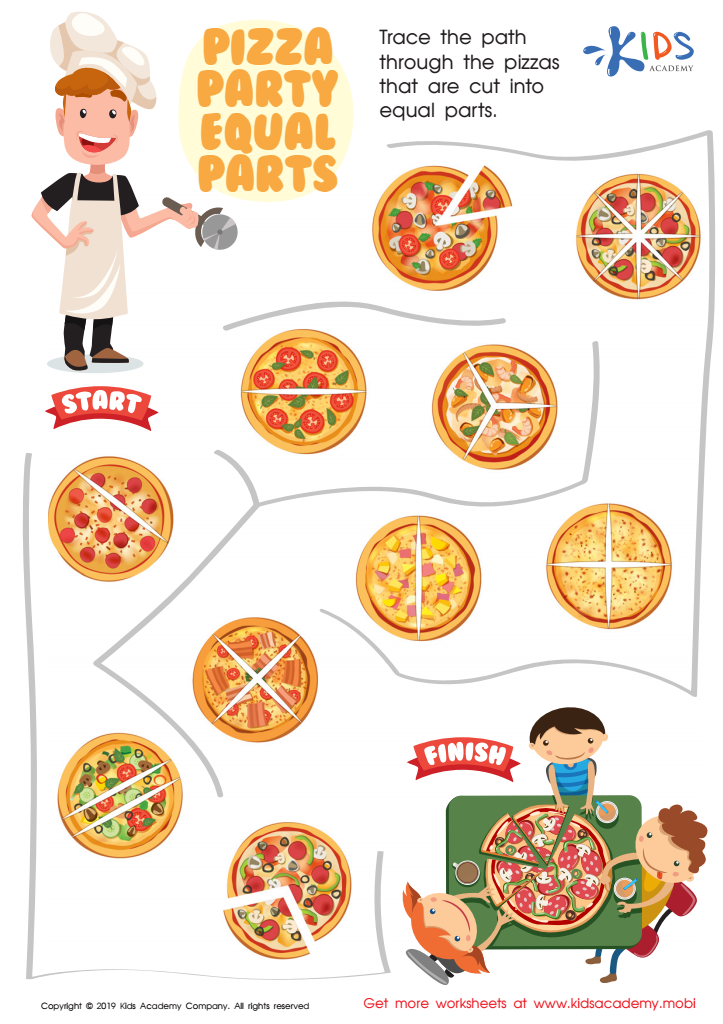
Pizza Party Equal Parts Worksheet
 Assign to My Students
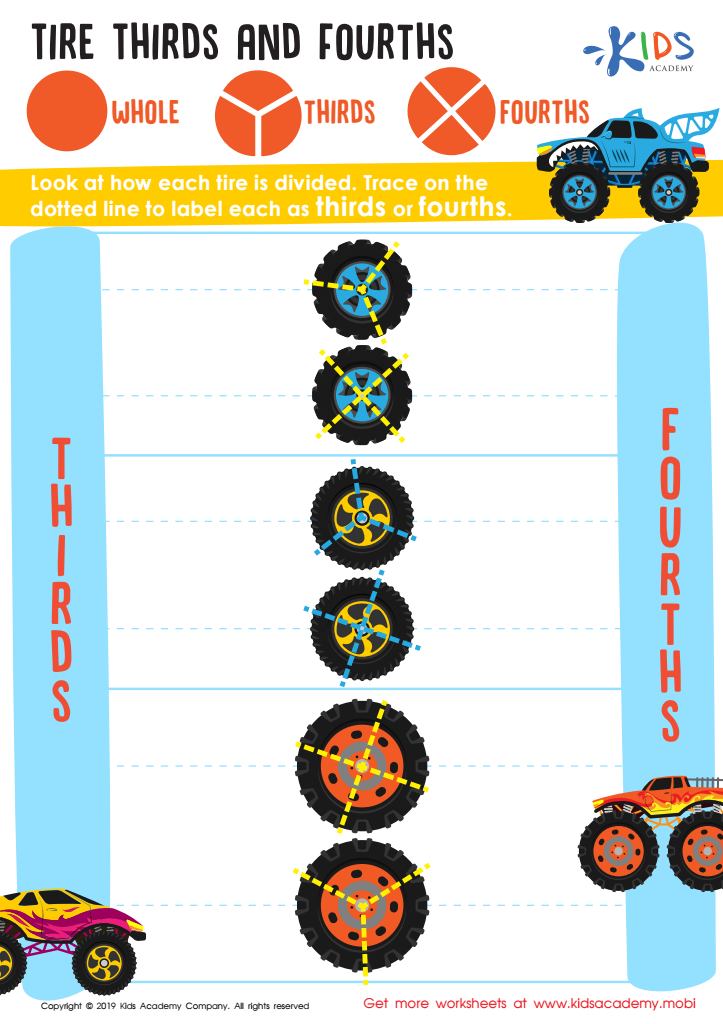
Tire Thirds and Fourths Worksheet
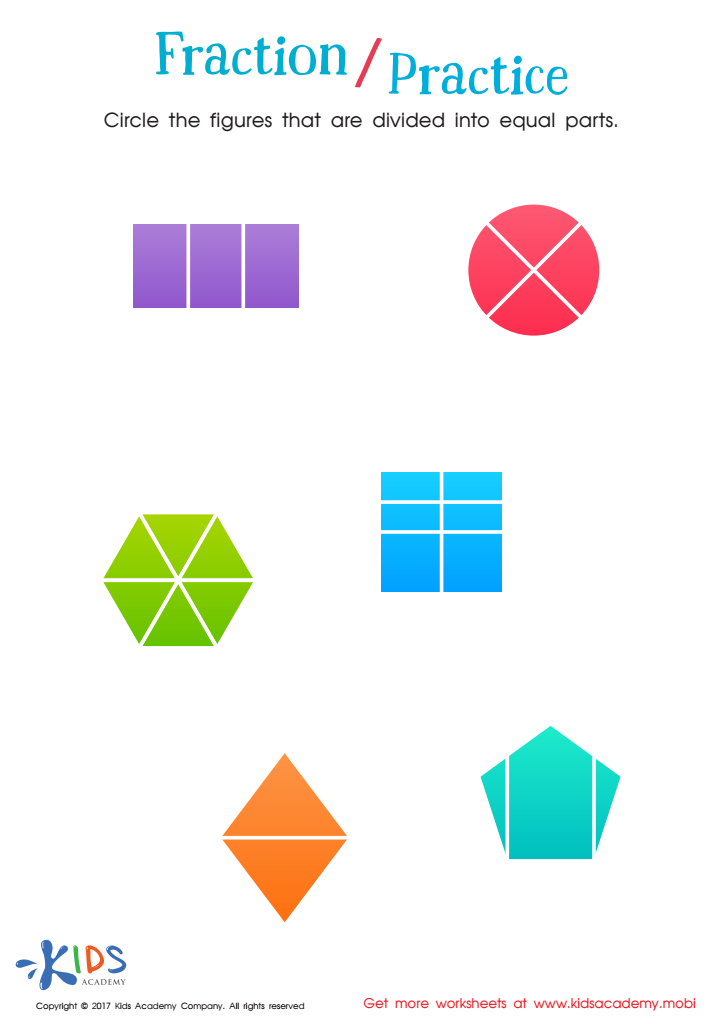
Fractions: Shapes Worksheet
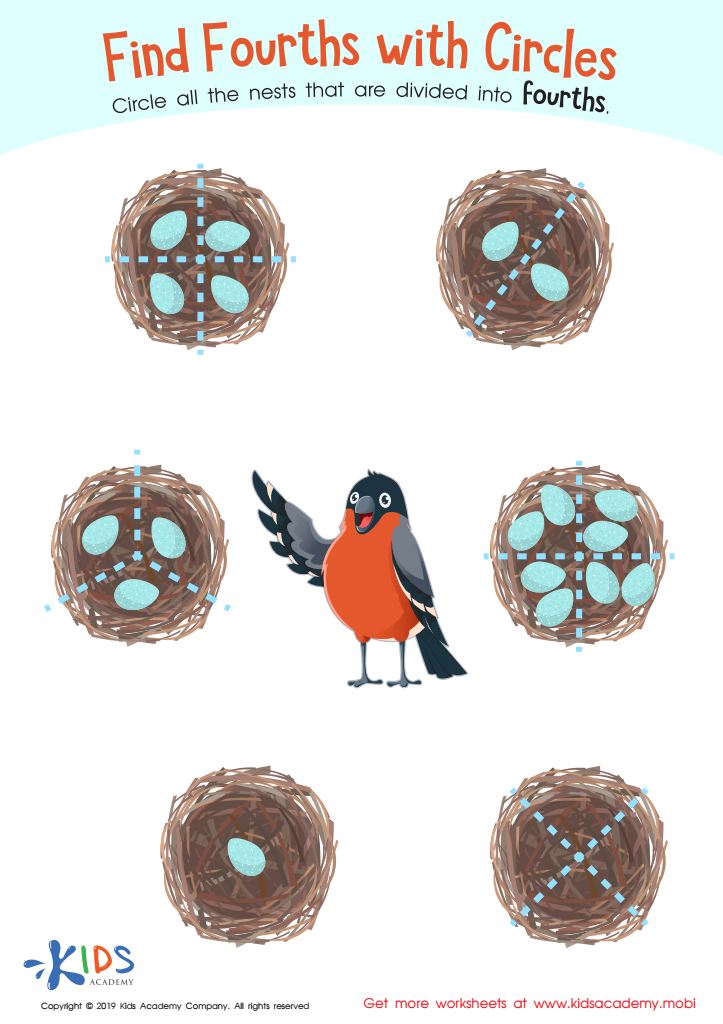
Find Fourths Circles Worksheet
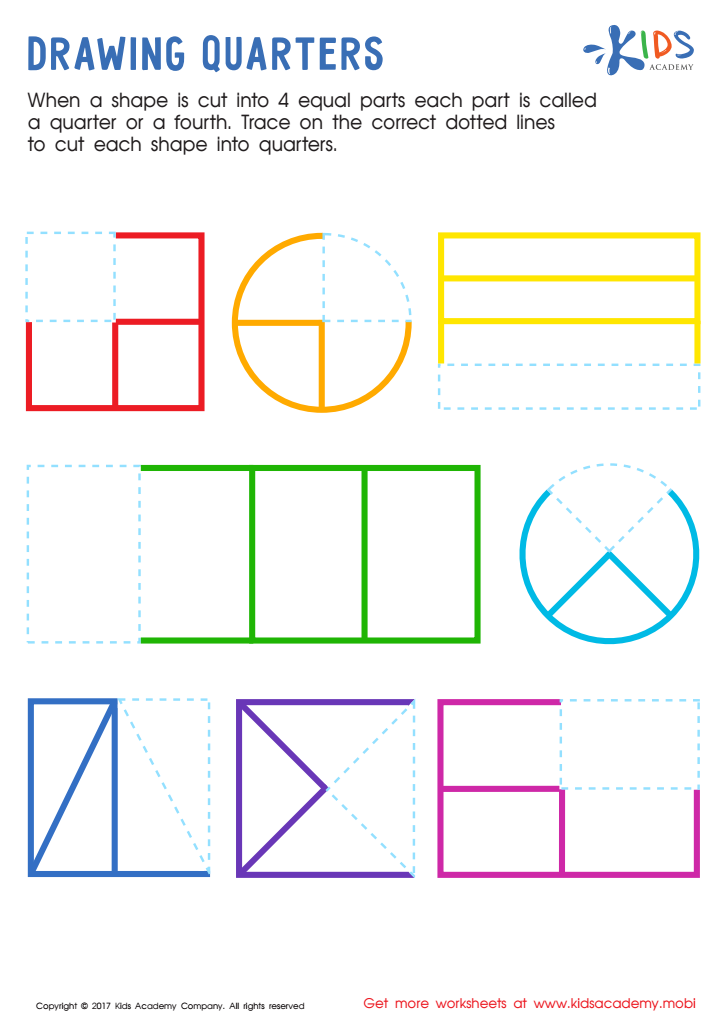
Drawing Quarters Worksheet
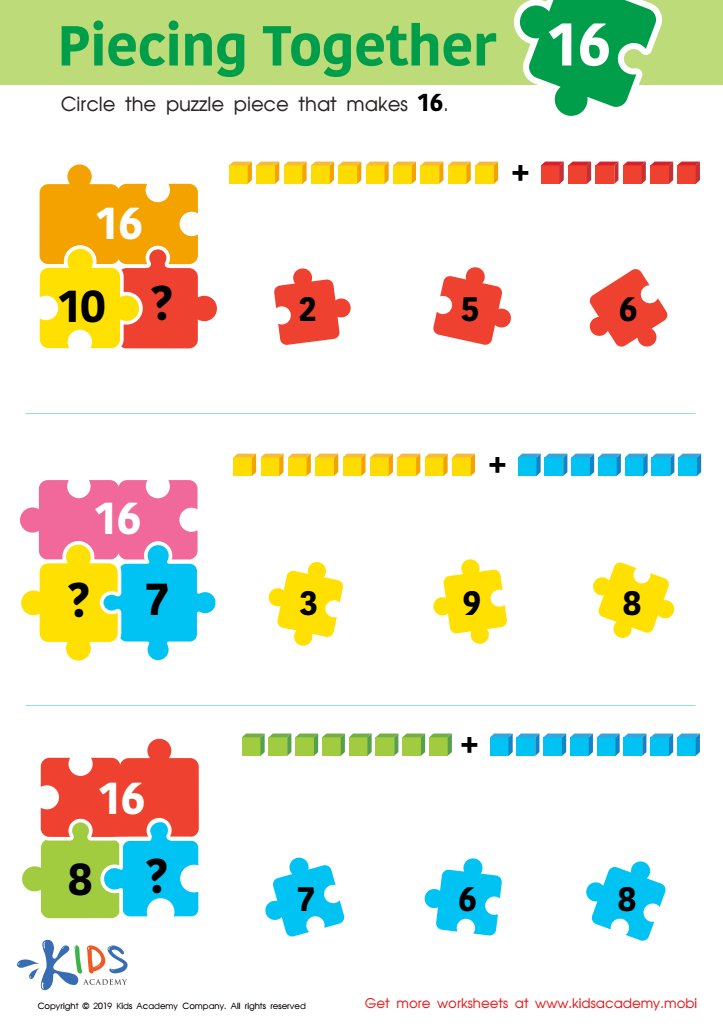
Piecing Together 16 Worksheet
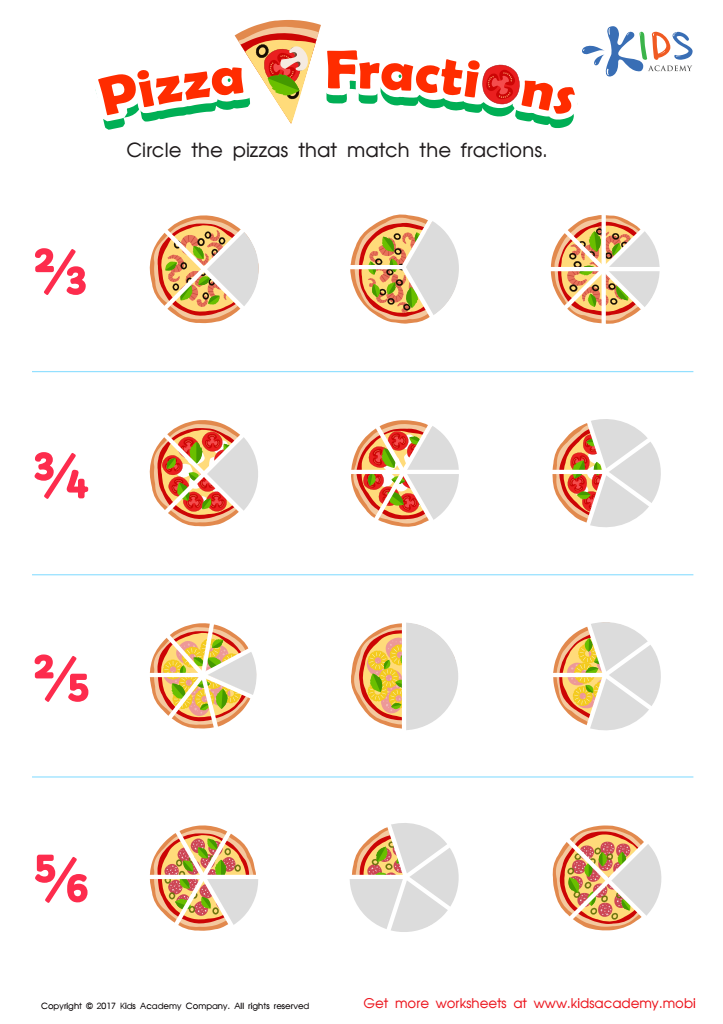
Fractions: Pizza Printable
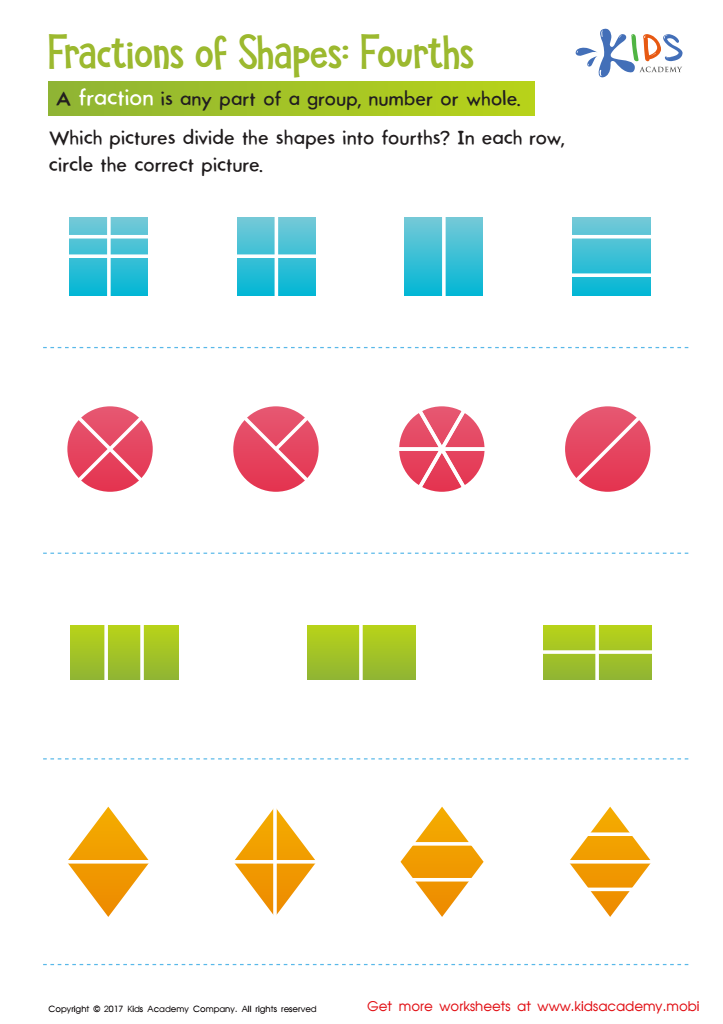
Fractions of Shapes Worksheet
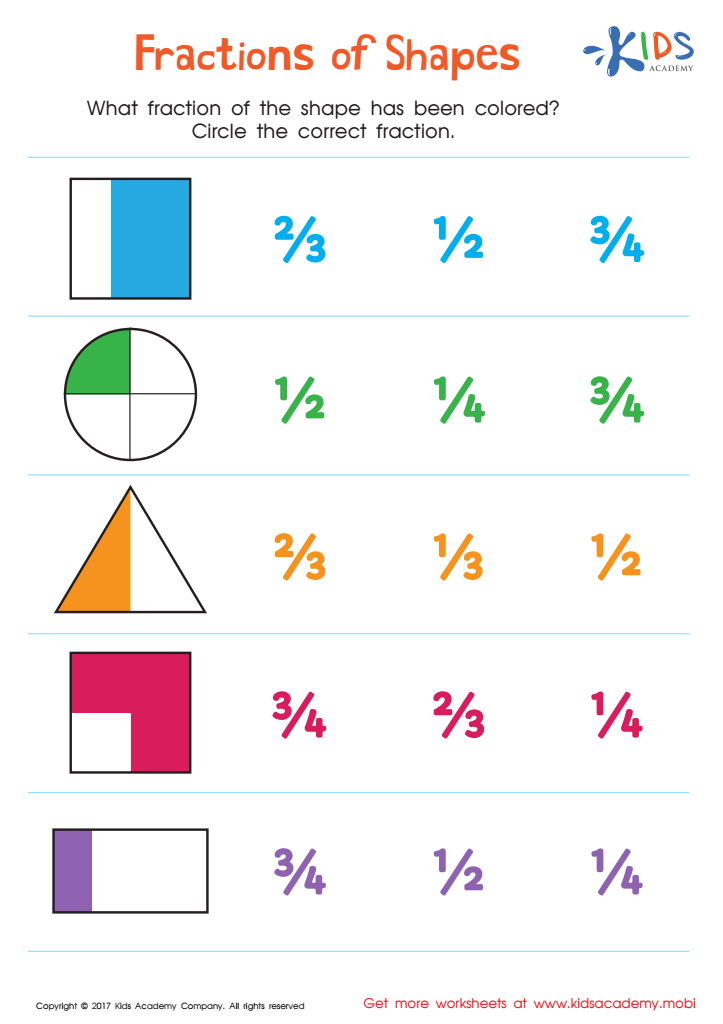
Fractions of Shapes: Math Concept Worksheet
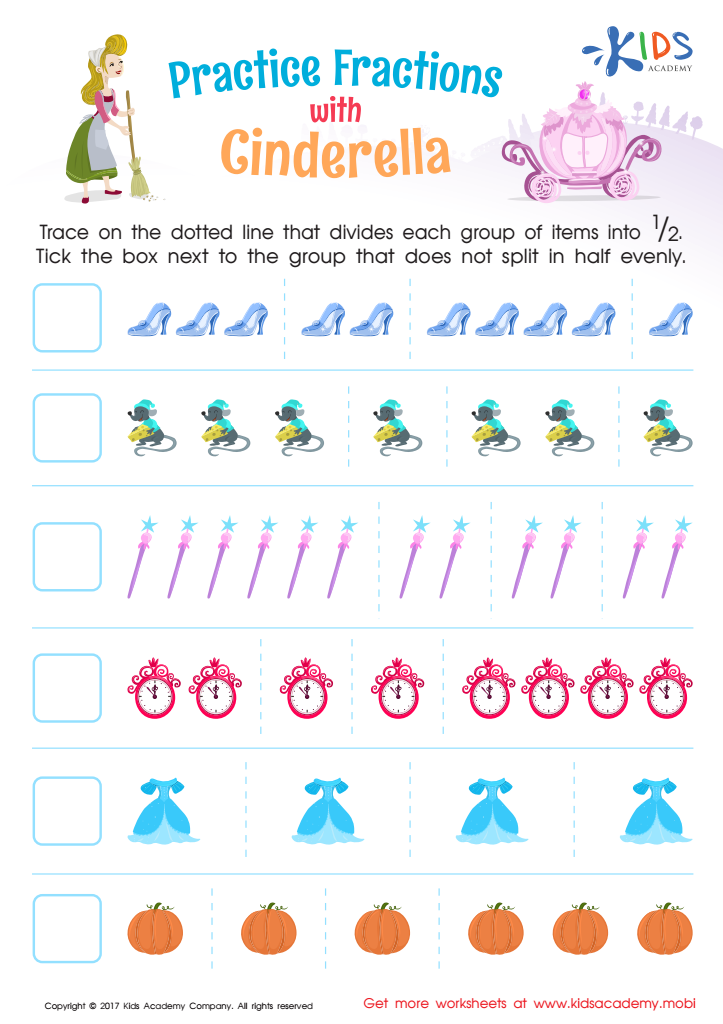
Fractions: Cinderella Printable







Understanding fractions is a foundational skill that can significantly impact a child's mathematical development. For children aged 3-7, grasping the basics of fractions lays the groundwork for more complex mathematical concepts in the future. Early exposure to fractions helps children develop critical thinking and problem-solving skills as they learn to recognize parts of a whole.
Parents and teachers should prioritize understanding fractions since it enhances children's ability to understand sharing and division, which are essential life skills. Engaging in playful activities involving fractions—like sharing pizza slices or dividing toys—makes learning interactive and enjoyable. This practical application helps solidify abstract concepts, making it easier for young learners to comprehend size, quantity, and relationships between numbers.
Moreover, a strong foundation in fractions can boost children's confidence in math, encouraging them to embrace challenges and view math as a fun subject rather than a daunting one. For teachers, incorporating fractions into their curriculum not only meets educational standards but also nurtures curiosity and a love for learning.
Ultimately, fostering an understanding of fractions in early childhood cultivates foundational numerical literacy that supports ongoing academic achievement and everyday decision-making skills. It's an investment in a child's future success in mathematics and other areas of learning.








