Basic geometry understanding Extra Challenge Worksheets for Ages 3-8
4 filtered results
-
From - To
Discover our "Basic Geometry Understanding Extra Challenge Worksheets" designed for children aged 3-8! These engaging worksheets provide an excellent opportunity for young learners to enhance their geometric knowledge through fun and creative activities. Ideal for reinforcing shapes, spatial awareness, and problem-solving skills, these extra challenges serve as a supplement to standard lessons, encouraging critical thinking and exploration. Each worksheet is tailored to accommodate different learning styles, ensuring every child can thrive. Perfect for home or classroom use, our worksheets promote independent learning while keeping children entertained. Unlock the world of geometry and watch your child's confidence soar!
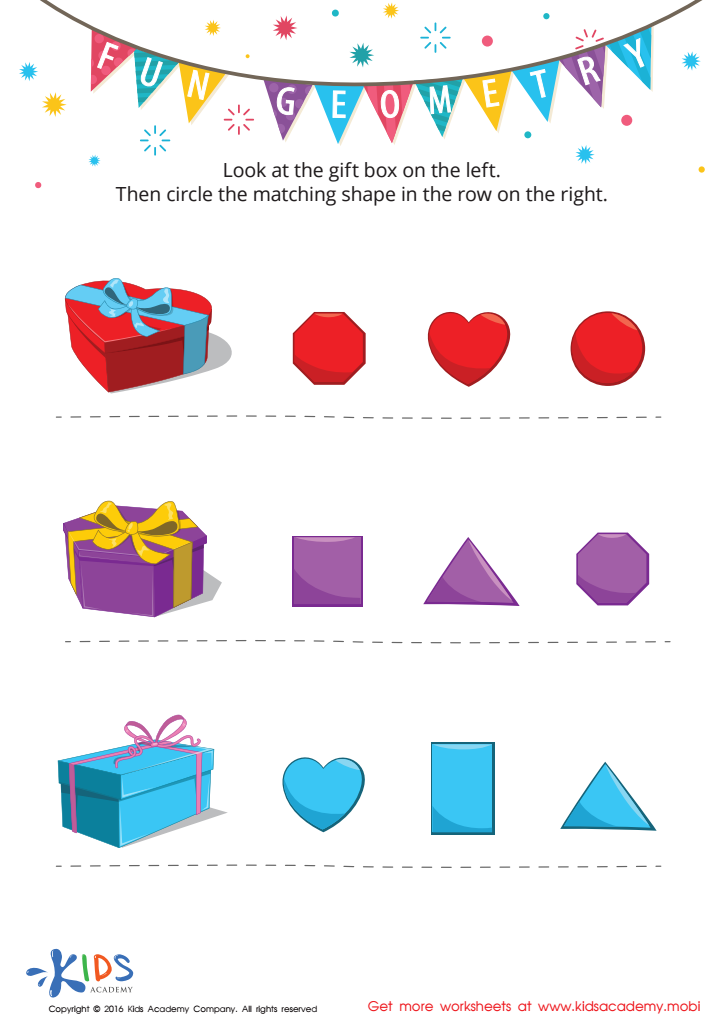
Fun Geometry Worksheet
 Assign to My Students
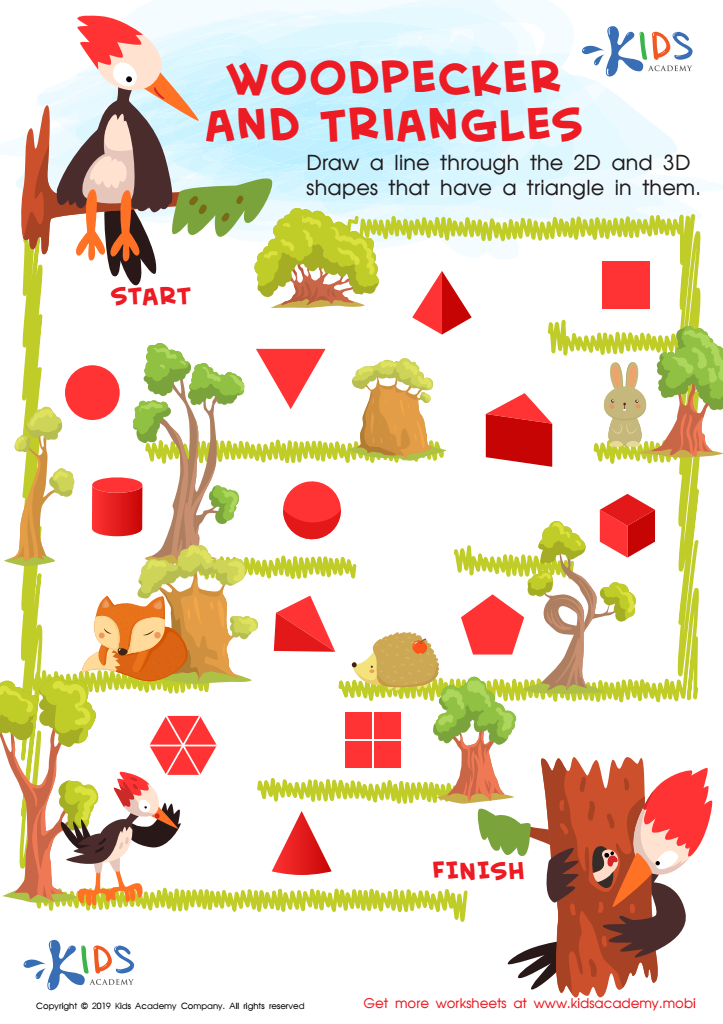
Woodpecker and Triangles Worksheet
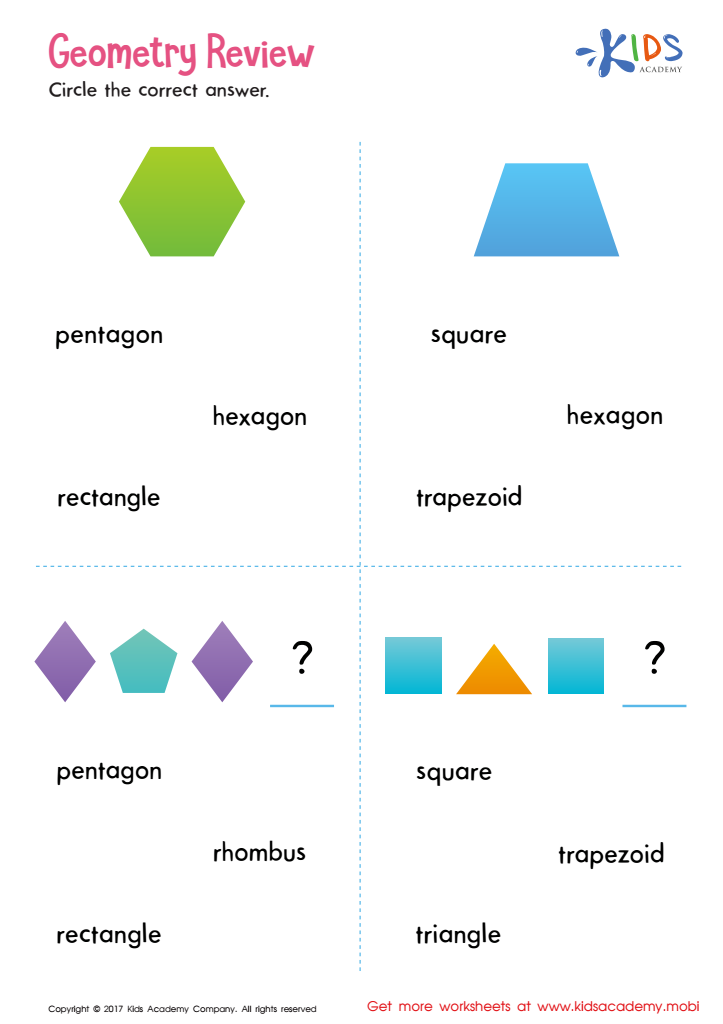
Geometry Review Printable
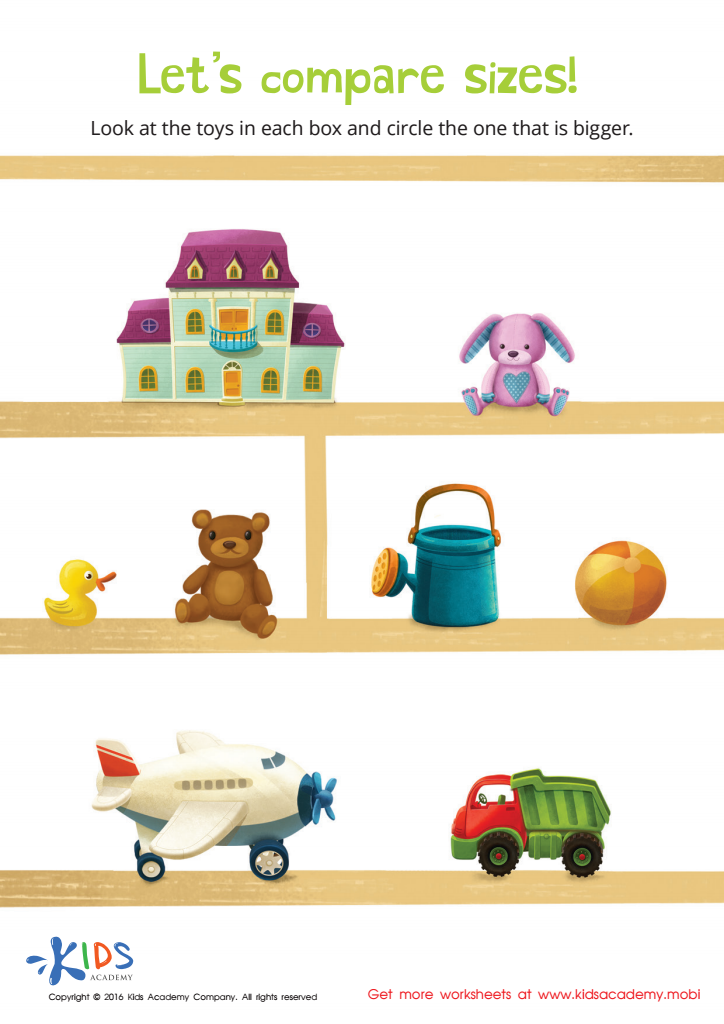
Classifying by Size Sorting Worksheet





Understanding basic geometry is fundamental for young children's cognitive development and offers numerous benefits that both parents and teachers should prioritize. At ages 3-8, children's brains are particularly receptive to new information, and integrating geometry into their learning fosters spatial awareness, critical thinking, and problem-solving skills.
By engaging with shapes, patterns, and simple measurements, children develop skills that are vital for later subjects like mathematics and science. Geometry helps them make sense of the world around them, enabling them to recognize shapes in their environment, understand how things fit together, and enhance their logical reasoning.
Moreover, the physical act of manipulation through cut-outs, building blocks, or drawing shapes provides tactile learning experiences that promote active engagement and creativity. These activities not only make learning enjoyable but also boost fine motor skills.
Moreover, a focus on basic geometry lays a strong foundation for higher-level concepts they will encounter in later education. In a world increasingly influenced by technology, understanding space and form can lead to future opportunities in fields such as engineering, architecture, and design.
Thus, investing time in geometry education fosters essential life skills, preparing children for academic success and everyday tasks, making it critical for parents and teachers to prioritize this learning area.








