Shape identification Extra Challenge 2D Shapes Worksheets for Ages 3-8
3 filtered results
-
From - To
Welcome to our "Shape Identification Extra Challenge 2D Shapes Worksheets" designed for ages 3-8! These engaging and interactive worksheets are perfect for young learners eager to enhance their shape recognition skills. Each worksheet challenges children to identify, sort, and categorize a variety of 2D shapes, fostering critical thinking and creativity. Our colorful designs make learning fun and capture children's attention, while the varied difficulty levels ensure every child can participate. Whether in the classroom or at home, these worksheets are an excellent resource for developing foundational math skills. Start the shape discovery journey today and watch your child's confidence grow!
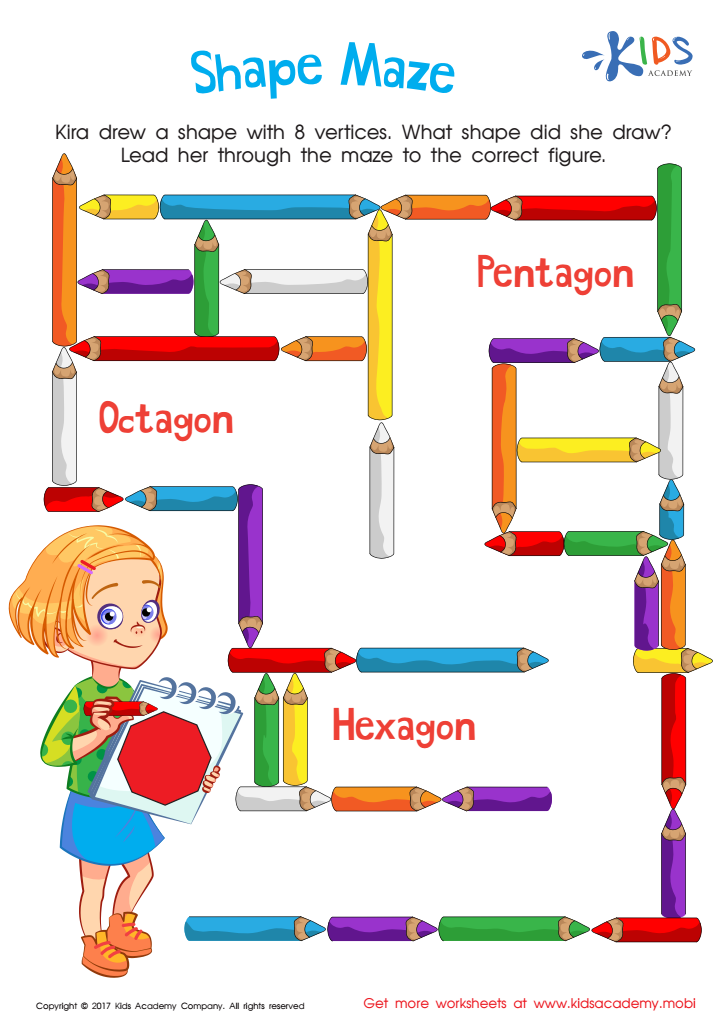
Shape Maze Worksheet
 Assign to My Students











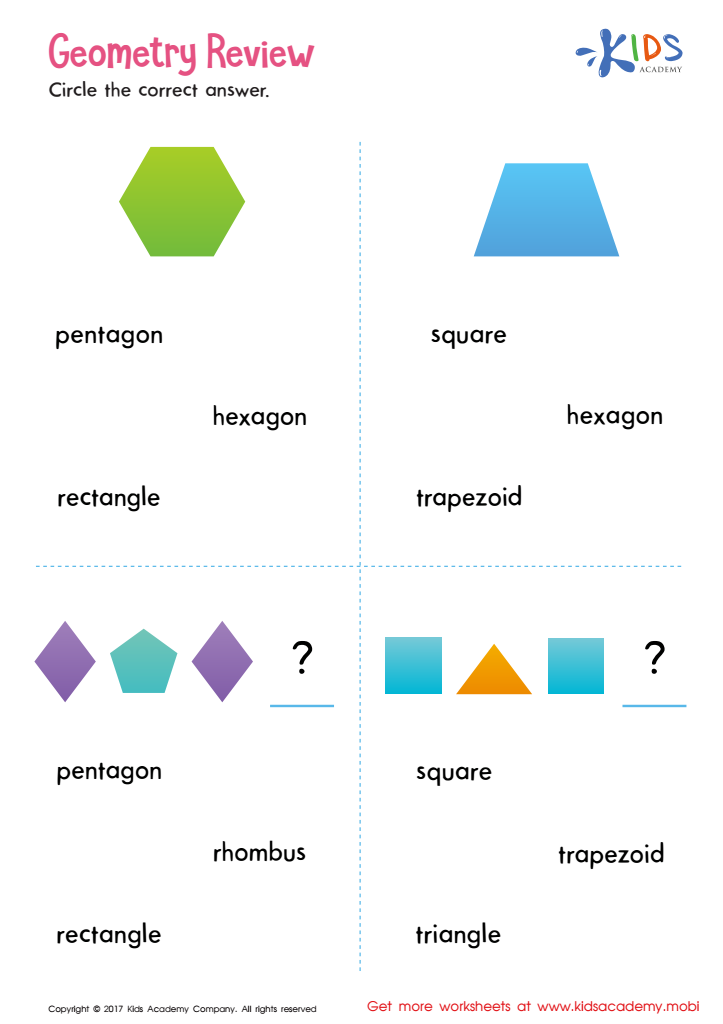
Geometry Review Printable
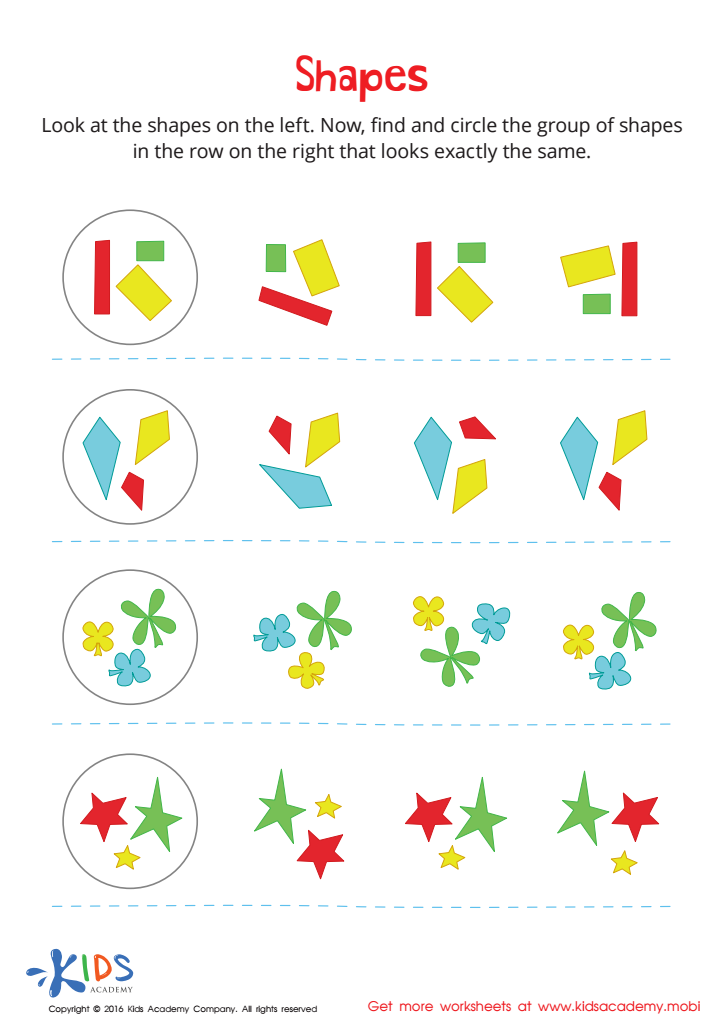
Shapes Worksheet








Shape identification is a fundamental skill that serves as a building block for various cognitive and academic abilities in young children ages 3-8. Understanding 2D shapes helps children develop their spatial awareness, critical thinking, and problem-solving skills. Parents and teachers should prioritize this extra challenge because it not only enhances shape recognition but also fosters skills in categorization and classification—essentially teaching children how to make connections between different concepts.
Incorporating shape identification activities promotes active learning through play, encouraging creativity and engagement. This developmental stage is crucial; children begin to link shapes to everyday objects, strengthening their reasoning abilities. As they become proficient in recognizing shapes, they can move on to more complex concepts such as symmetry, patterns, and basic geometry, providing a foundation for later math skills.
Moreover, involving parents in these activities enhances parent-child bonding and reinforces learning at home. By caring about shape identification, both parents and teachers can support children's overall development, confidence, and readiness for school, leading to a lifelong love for learning. Thus, this extra challenge is not merely an educational task but an investment in a child’s cognitive, emotional, and social growth.