Interpreting data Extra Challenge Math Worksheets for Ages 3-8
3 filtered results
-
From - To
Explore our "Interpreting Data Extra Challenge Math Worksheets" tailored for ages 3-8 at Kids Academy. These fun, engaging worksheets emphasize critical thinking, data interpretation, and problem-solving skills for early learners. Featuring colorful graphs, charts, and tables, each activity is designed to captivate young minds while enhancing their understanding of essential math concepts. Perfect for at-home practice or classroom use, these worksheets provide a solid foundation in data handling, preparing children for more advanced math challenges ahead. Equip your child with the tools to succeed and make learning data interpretation enjoyable with Kids Academy!
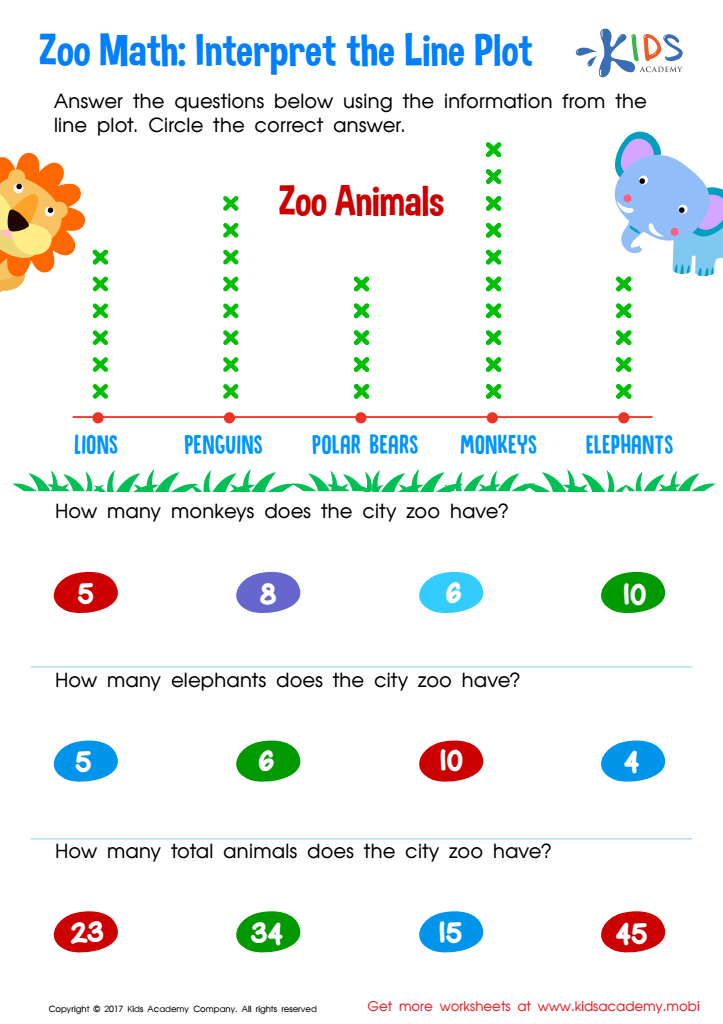
Interpret Line Plot Worksheet
 Assign to My Students
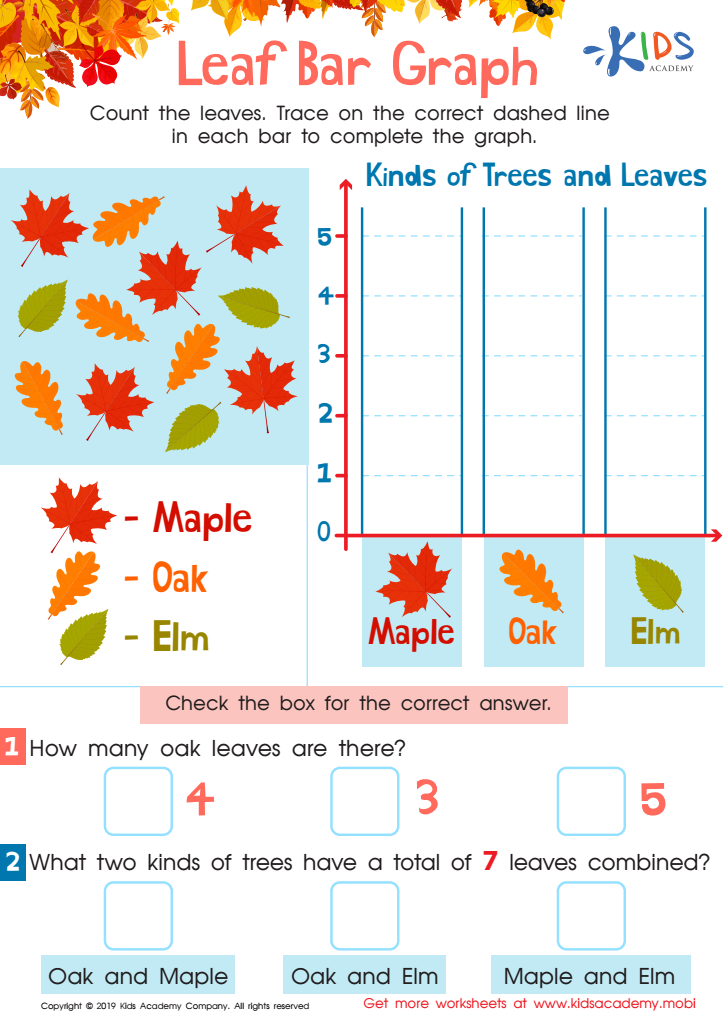
Leaf Bar Graph Worksheet
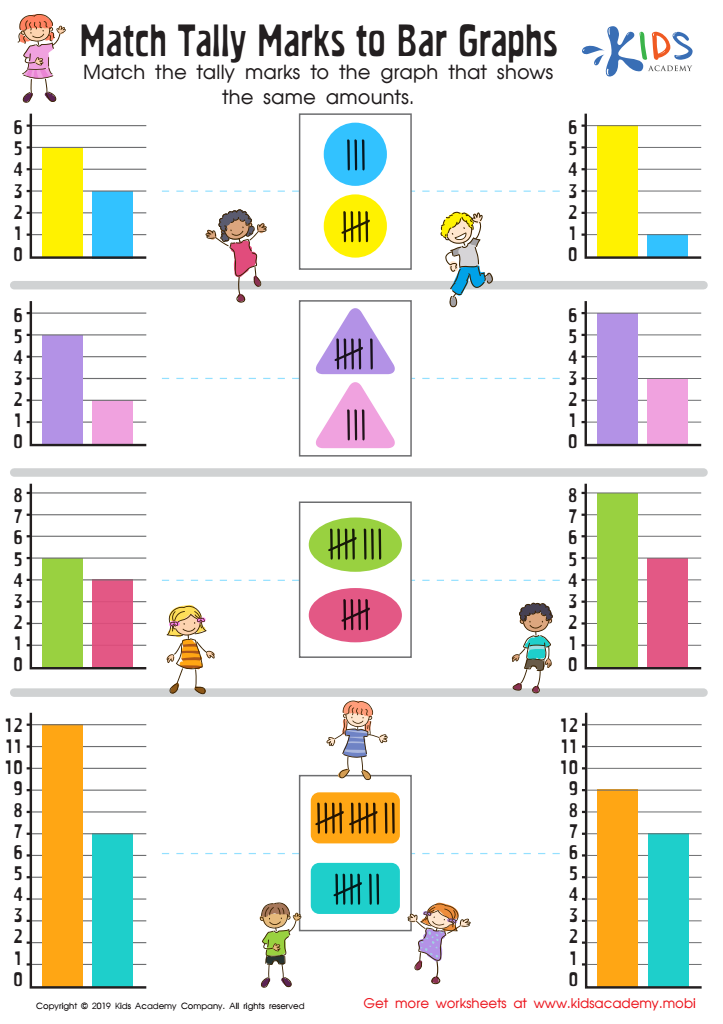
Match Tally Marks to Bar Graphs Worksheet








Interpreting data is a fundamental skill that can significantly benefit young children's cognitive and academic growth. For parents and educators of children aged 3-8, emphasizing this skill through extra challenge math activities promotes critical thinking, problem-solving, and analytical abilities.
At a young age, children are naturally curious and eager to make sense of the world around them. Introducing data interpretation early taps into this curiosity and provides practical, hands-on opportunities to apply mathematical concepts in real-life scenarios. For instance, interpreting simple graphs or comparing quantities fosters an understanding of numbers, patterns, and relationships. Through such activities, children learn to observe carefully, make predictions, analyze outcomes, and draw conclusions—a foundation for more advanced mathematics and everyday decision-making.
Moreover, early exposure to interpreting data strengthens foundational skills like counting, sorting, classifying, and sequencing. The visual and interactive nature of data interpretation activities keeps young learners engaged and motivated. Additionally, it nurtures a growth mindset by encouraging persistence and boosting confidence as children successfully tackle challenges.
For parents, supporting these learning experiences at home fosters a collaborative relationship between home and school, enhancing the overall educational experience. For teachers, integrating data interpretation into the curriculum meets educational standards and equips students with essential skills for future success. This critical early investment in mathematical thinking pays dividends in academic achievement and life skills.








