Matching skills Extra Challenge Math Worksheets for Ages 3-8
4 filtered results
-
From - To
Boost early math proficiency with our Matching Skills Extra Challenge Math Worksheets for Ages 3-8! Designed to captivate young learners, these engaging activities enhance essential matching skills necessary for foundational math learning. Our expertly crafted worksheets cover various topics, including shapes, numbers, and patterns, ensuring comprehensive skill development. Perfect for initiating complex problem-solving abilities and logical thinking, each worksheet transforms learning into a fun and interactive experience. Tailored to suit individual learning paces, these challenges help solidify critical concepts, fostering confidence and a strong academic foundation. Elevate your child’s math journey today with our top-tier educational resources!
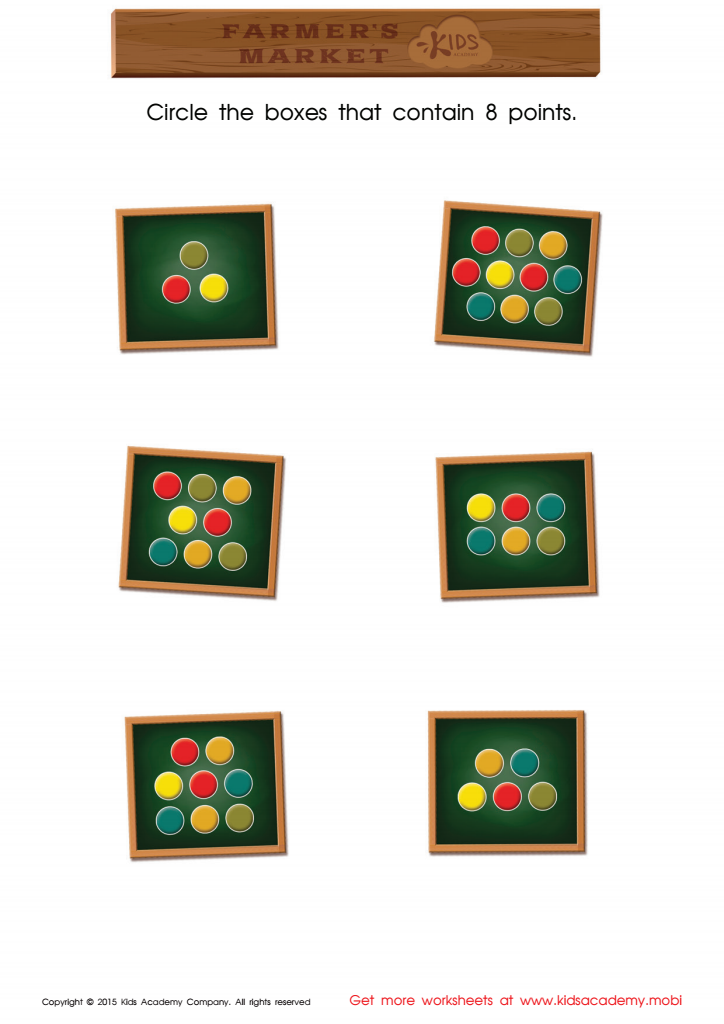
Count and Match Points 8 Math Worksheet
 Assign to My Students
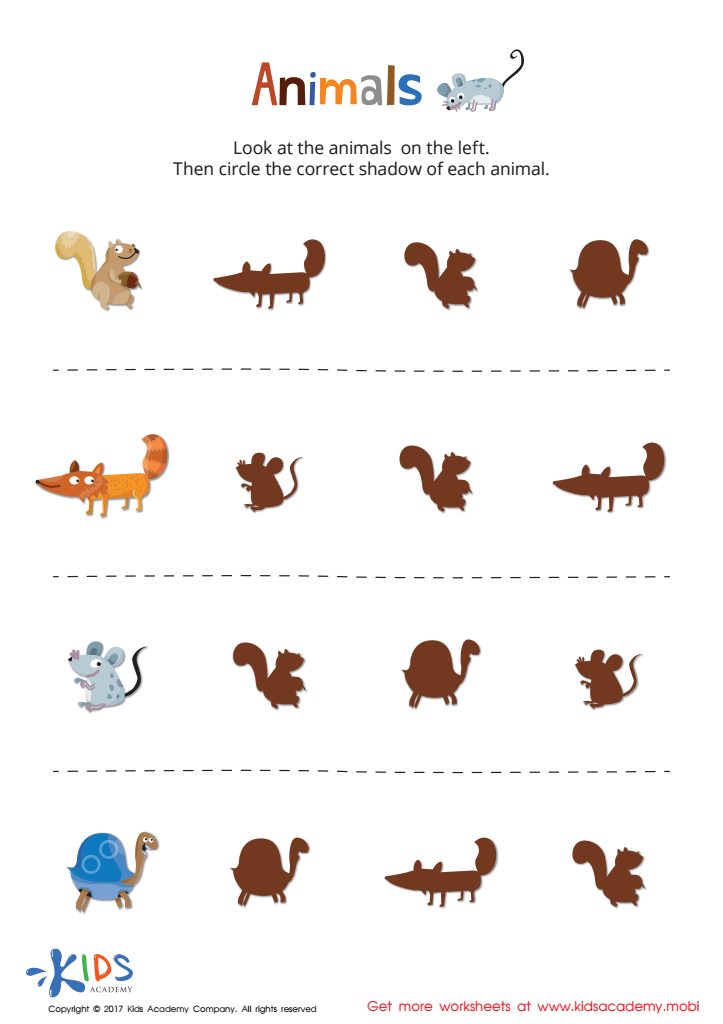
Animal Shadows Sorting Worksheet
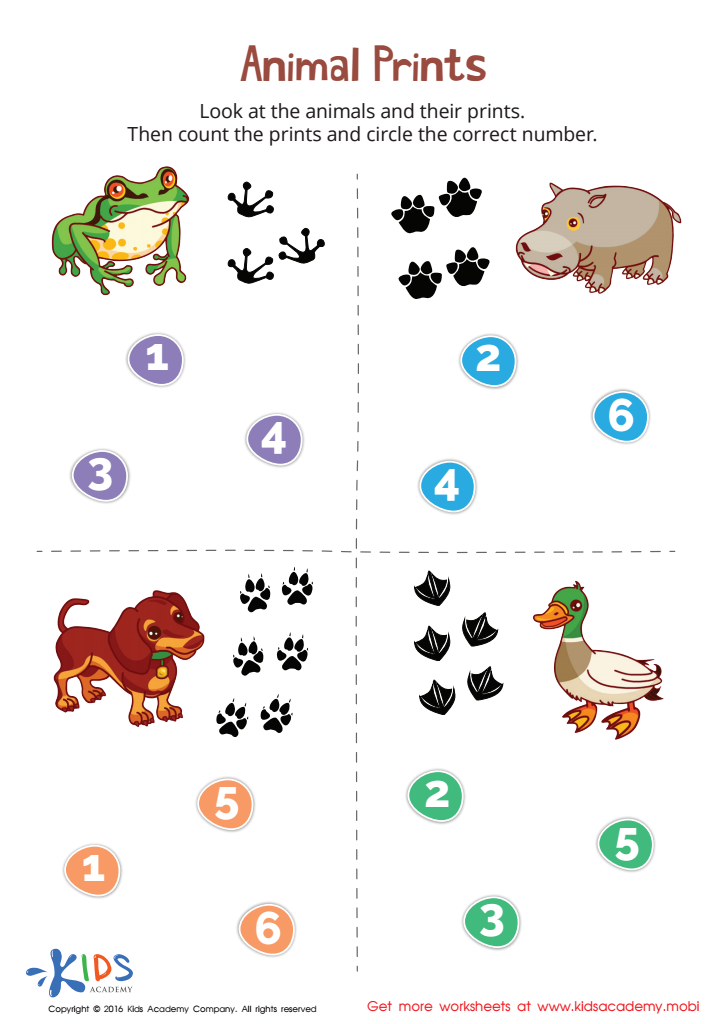
Animal Prints Match-Up Worksheet
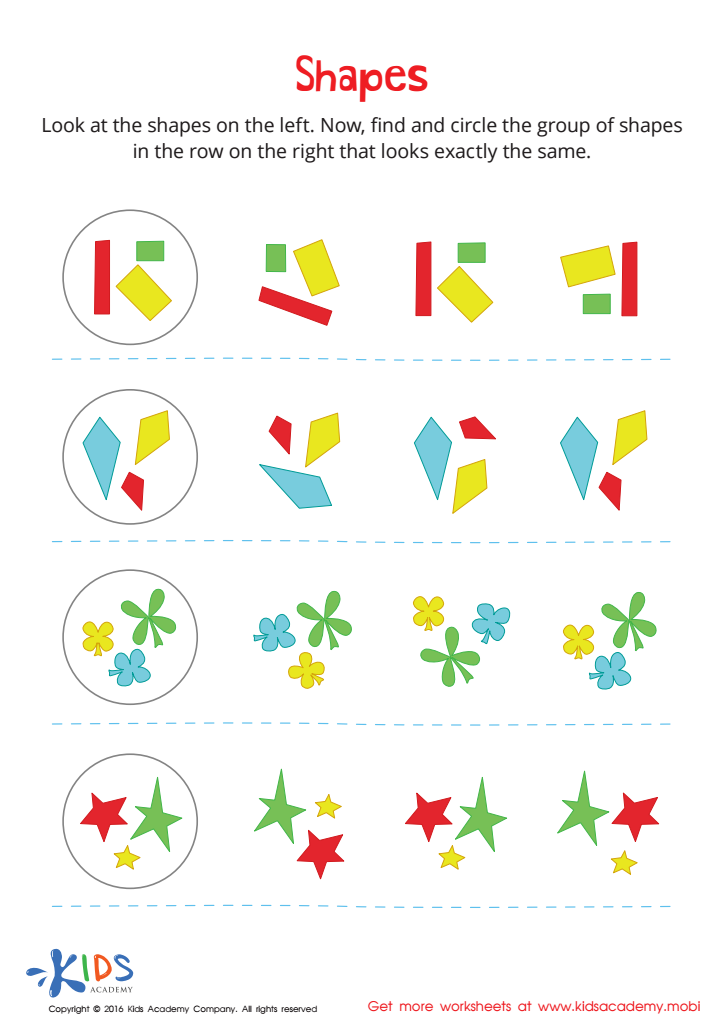
Shapes Worksheet







.jpg)
Parents and teachers should prioritize matching skills in early math education for children aged 3-8 due to their pivotal role in cognitive and developmental growth. Matching activities serve as fundamental building blocks for more advanced mathematical concepts. By engaging in these activities, children enhance their observational skills, attention to detail, and ability to identify relationships between objects, which are crucial for problem-solving.
Matching tasks bolster cognitive abilities such as memory, concentration, and logical thinking. For instance, when kids match shapes, colors, or numbers, they are learning to categorize and compare, essential skills for abstract thinking and pattern recognition. These abilities directly relate to their capacity to understand and solve mathematical problems, laying a strong foundation for future learning.
Furthermore, matching activities encourage language development and social interaction. When children describe what they are matching, they practice use of descriptive language and conversational skills, bolstering their overall communication competence.
Finally, engaging in matching activities with parents or teachers fosters a positive learning environment. It allows for quality interaction, personalized feedback, and support, which are invaluable for building confidence and a love for learning. Hence, prioritizing matching skills offers a comprehensive approach to nurturing intellectual and social growth in young learners.








