
Basic Math Skills Extra Challenge Addition & Subtraction Worksheets for Ages 3-9
11 filtered results
Difficulty Level
Grade
Age
-
From - To
Subject
Activity
Standards
Enhance your child's math journey with our "Basic Math Skills Extra Challenge: Addition & Subtraction Worksheets," specifically designed for ages 3-9. These engaging worksheets offer a fun and effective way to strengthen essential math skills through captivating exercises that blend learning with play. Tailored to cater to various skill levels, our worksheets encourage critical thinking and problem-solving while reinforcing foundational concepts in addition and subtraction. Perfect for home or classroom use, our extra challenge worksheets inspire young learners to excel in math. Equip your child with the confidence and skills they need for future success—start downloading today!
Favorites
With answer key
Interactive
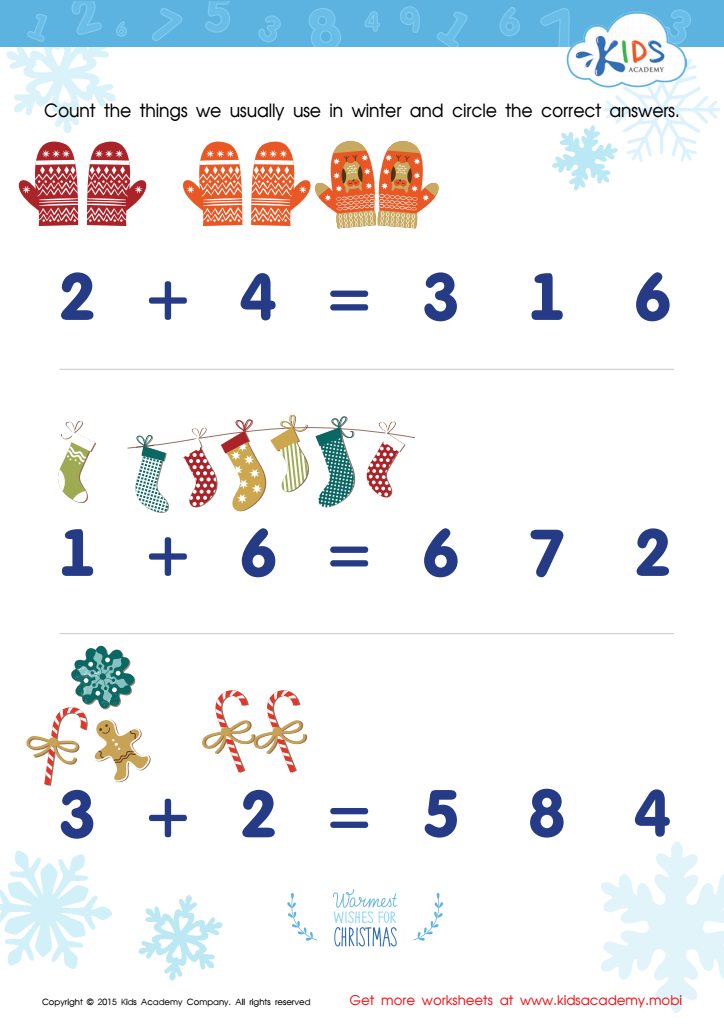
Count Winter Things Worksheet
This chilly winter afternoon, help your kid warm up with Kids Academy's free math worksheet - full of bright pictures and addition practice. Let them count the things and write in the numbers for a great brain training and math head start. Get more free math worksheets here. (80 words)
 Assign to My Students
Count Winter Things Worksheet
Worksheet
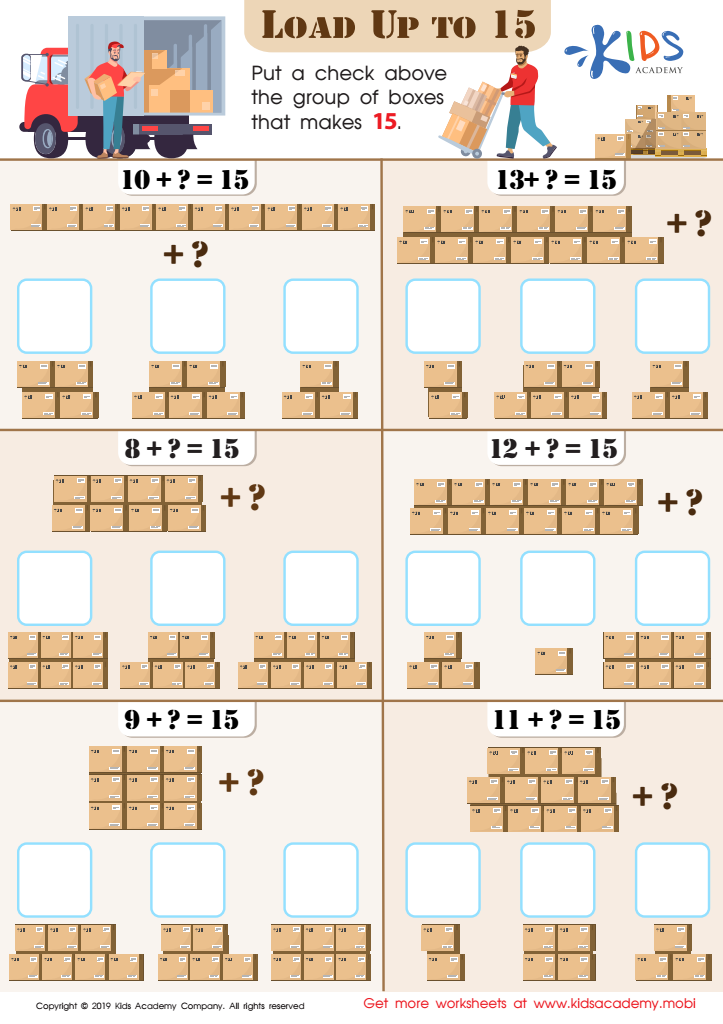
Load up to 15 Worksheet
Your students can practice addition and counting skills with this worksheet. Each equation has 6 boxes to count. Check the group that equals 15 to complete the exercise. Help your kindergartners if they need it.
Load up to 15 Worksheet
Worksheet
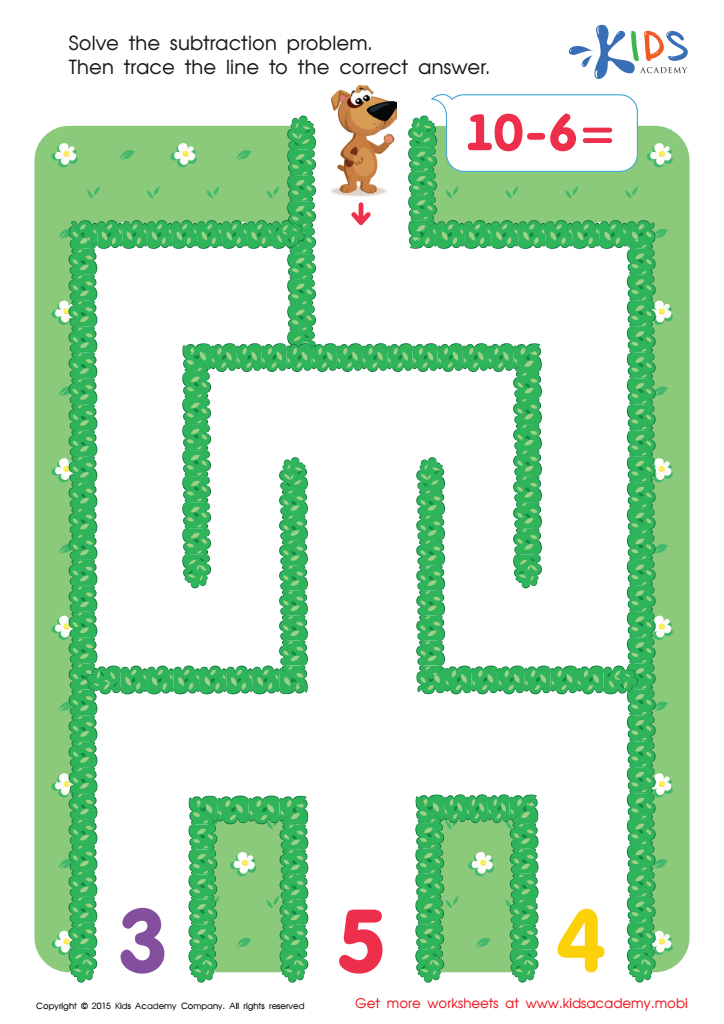
Subtraction Ten And Six Worksheet
Worksheet
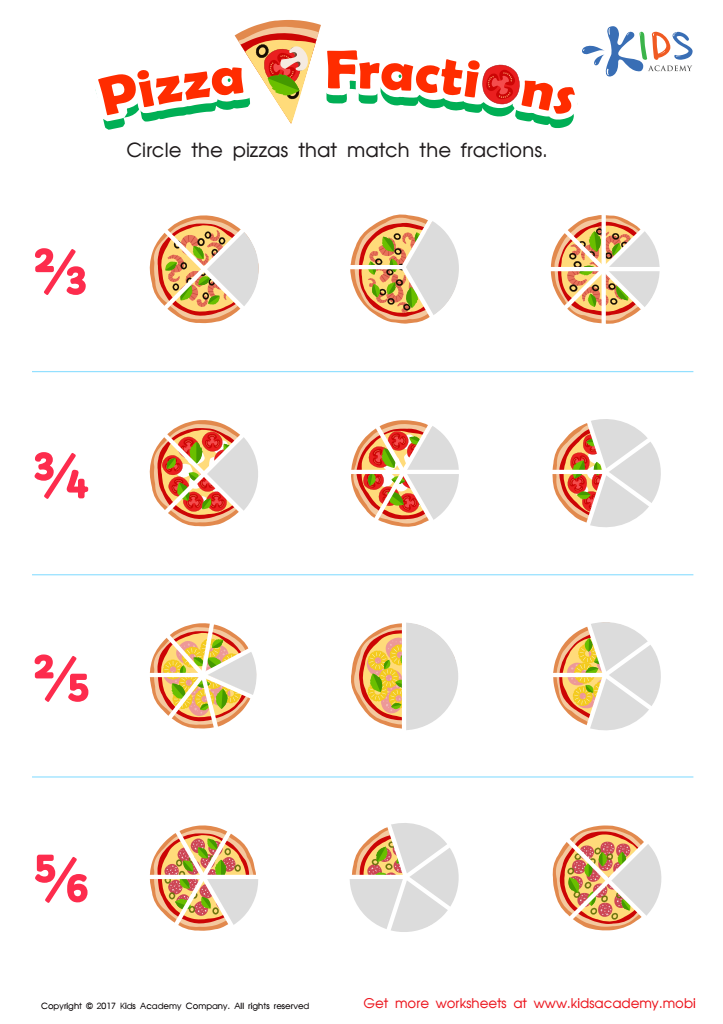
Fractions: Pizza Printable
Fractions can be tricky for kids, but this pizza fractions printable can help! Kids can understand fractions by seeing them, as they use one of their favorite foods. It helps them grasp the concept and gain a deeper understanding of what fractions represent. Extend their learning by quizzing them when you order pizza next time.
Fractions: Pizza Printable
Worksheet
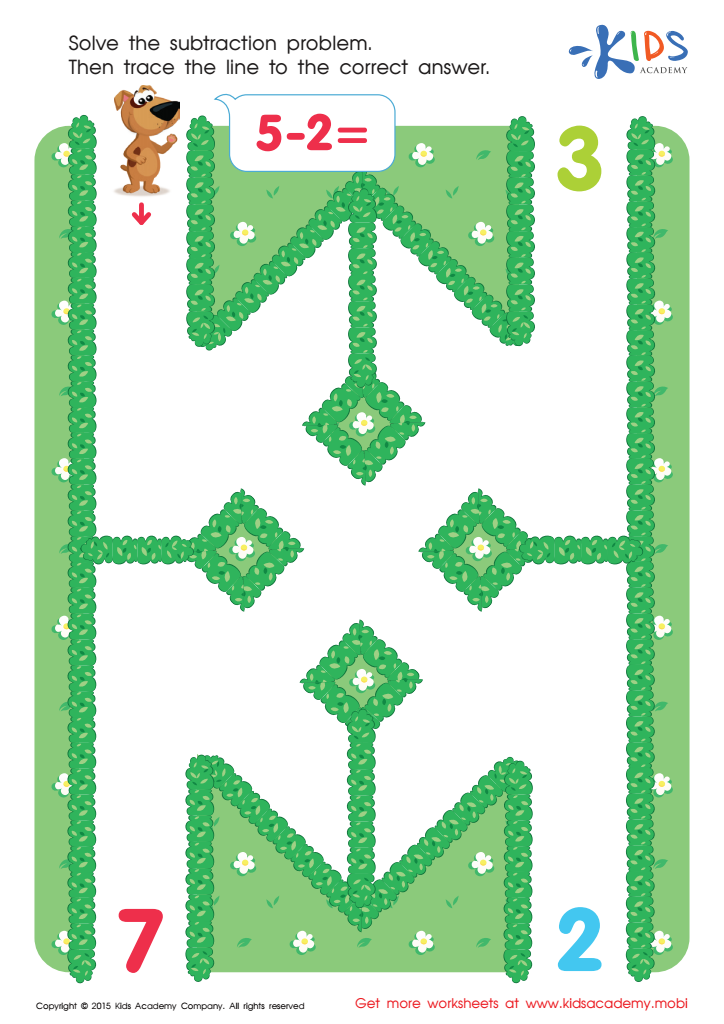
Five Minus Two Worksheet
Help the dog find its way by practising subtraction - trace the path and make sure to have fun!
Five Minus Two Worksheet
Worksheet
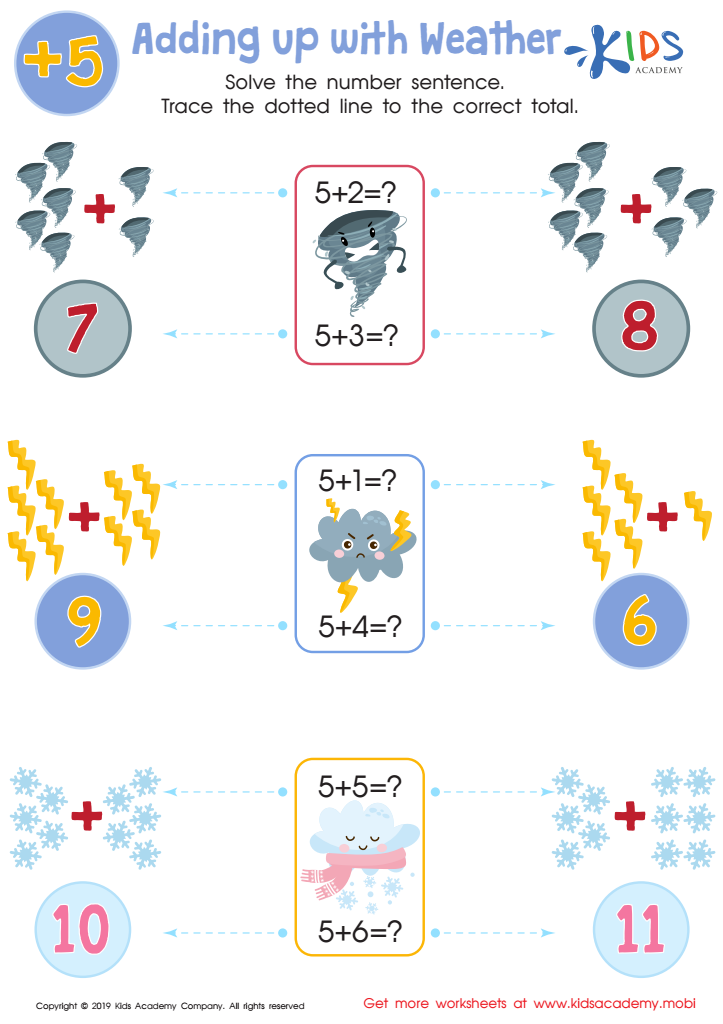
Adding up With Water Worksheet
Ask your kids to name different kinds of weather and what it's like outside now. Then, help them solve the number sentences on the worksheet by tracing the dotted line to the correct total.
Adding up With Water Worksheet
Worksheet
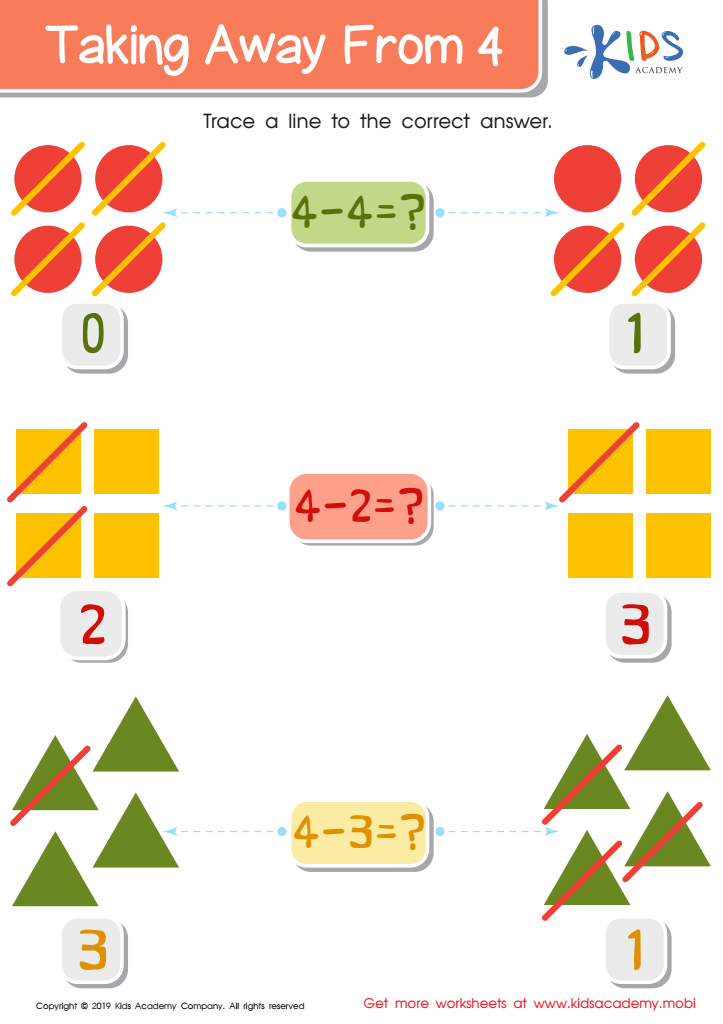
Taking Away from 4 Worksheet
Patience and help will help your kids master addition and subtraction. Coaching and making math fun is key. Try these three equations: help your kids solve them and trace a line to the correct answer. Don't give up - with your guidance, success is near!
Taking Away from 4 Worksheet
Worksheet
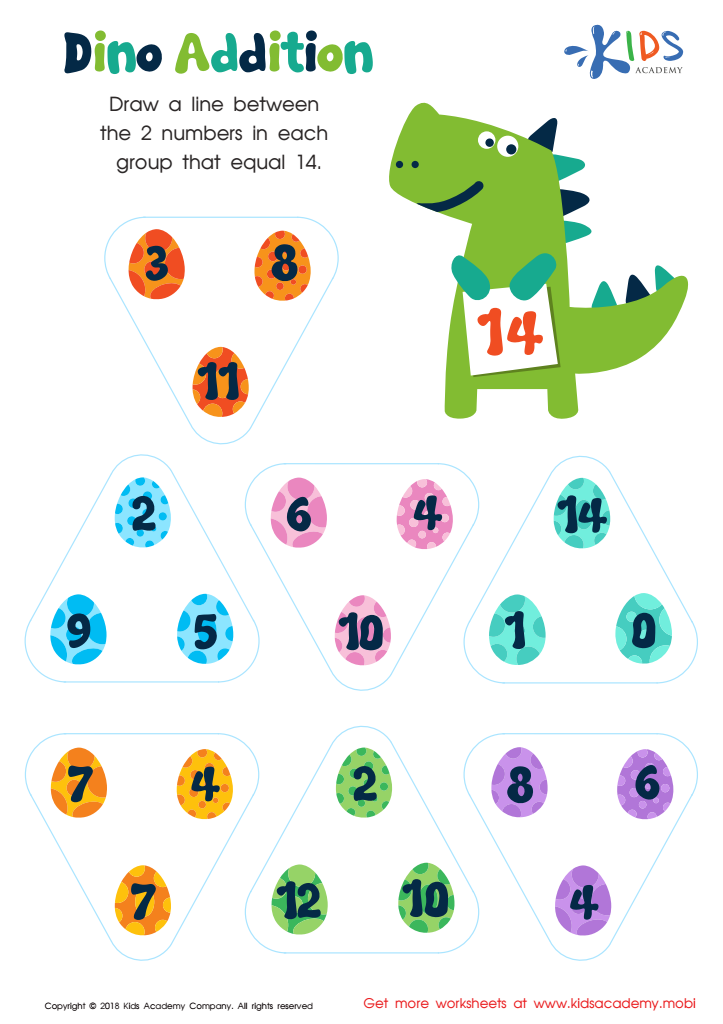
Dino Addition Worksheet
Kids can have fun with math with this cute PDF worksheet! Each triangle contains three eggs; by adding pairs of eggs together, kids can find the right combination that equals 14 and draw a line linking them. The goal is to help our playful dinosaur find the right eggs to make 14! It's a great way to practice addition and have a motivating purpose.
Dino Addition Worksheet
Worksheet
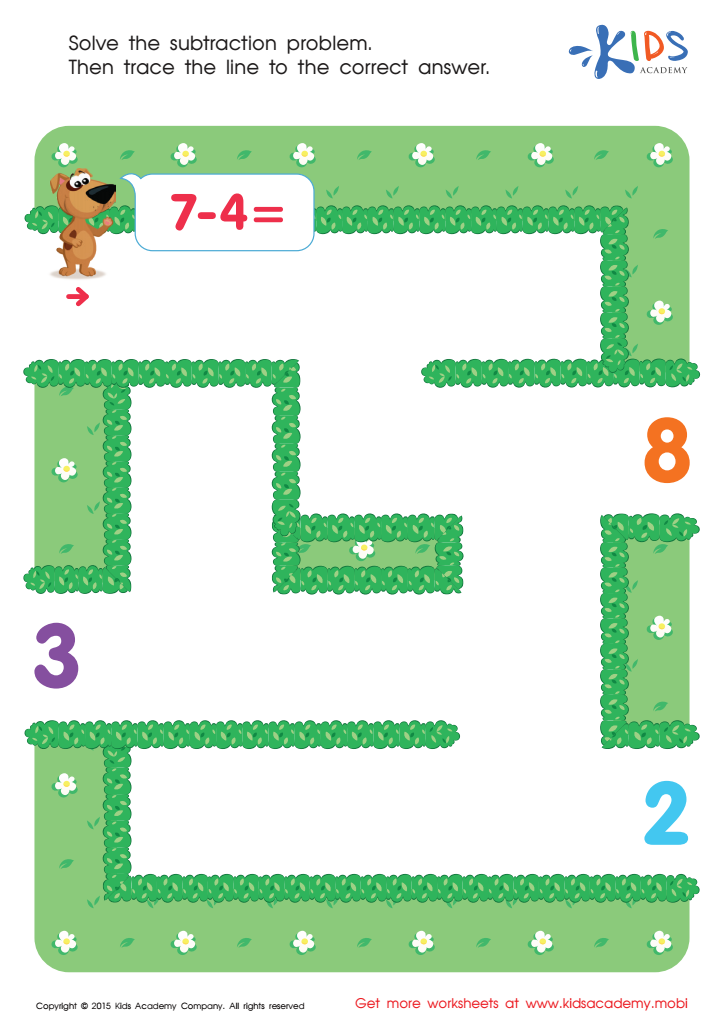
Subtraction Seven Minus Four Worksheet
Make learning math fun!
Make math fun for kids with Kids Academy's free worksheets! Addition, subtraction, tracing paths and mazes help kids practice and learn while exploring. Download our worksheets and start having fun!
Subtraction Seven Minus Four Worksheet
Worksheet
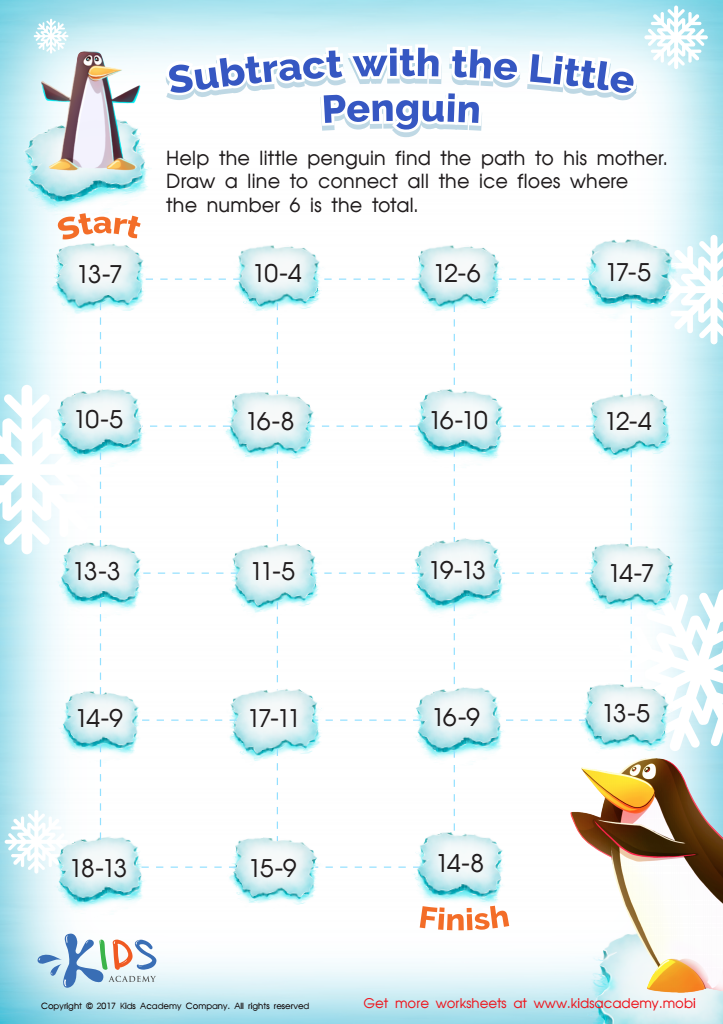
Subtract With The Little Penguin Substraction Worksheet
Uh oh! Little penguin needs help finding mommy! Delight your child with a fun subtraction puzzle. Complete each problem and guide little penguin home with this charming worksheet! Challenge and capture their hearts with this adorable game!
Subtract With The Little Penguin Substraction Worksheet
Worksheet
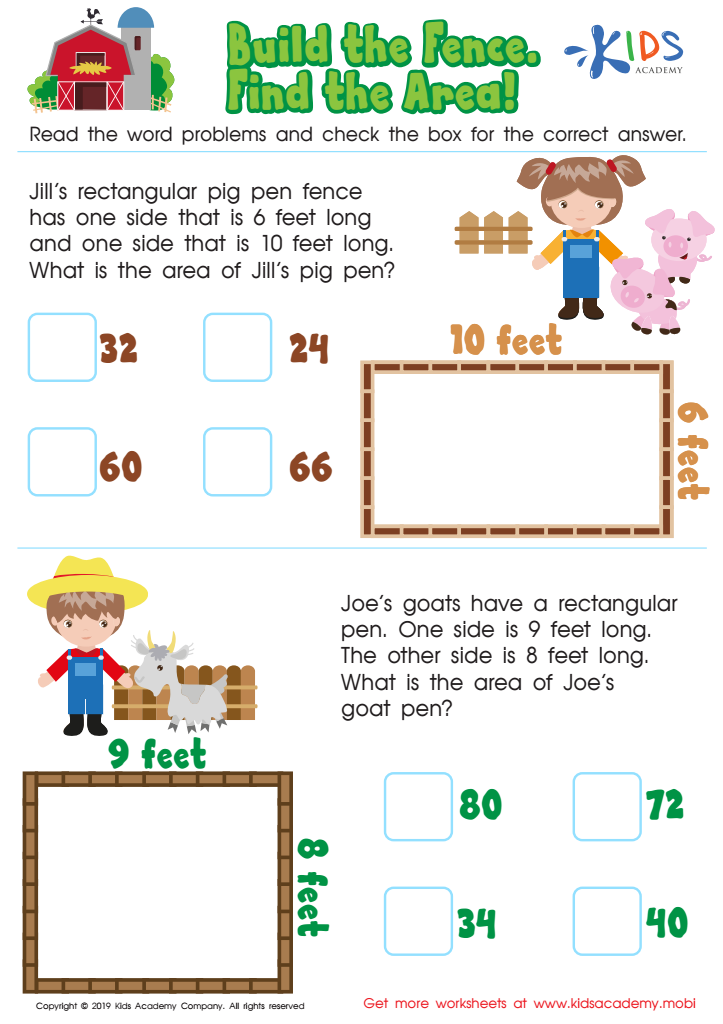
Build the Fence, Find the Area Worksheet
Help your kids gain skills in mathematics with this simple worksheet. Kids can refresh their addition and subtraction to solve geometry problems. Read the word problems and then help them check the box for the correct answer if they need extra help. This worksheet is great for improving kids' familiarity with basic equations.
Build the Fence, Find the Area Worksheet
Worksheet
Join Kids Academy for Free
Who is primarily going to use this learning content?








Basic math skills, especially addition and subtraction, are foundational to a child's educational journey and future success. For children aged 3-9, this is a critical developmental period where they grasp essential concepts that influence their cognitive growth. Engaging in activities like Basic Math Skills Extra Challenge helps to build a robust understanding of numbers, enhance problem-solving abilities, and foster logical thinking.
Parents and teachers should care because mastering these skills not only prepares children for more advanced math but also bolsters their confidence and interest in learning. Challenging their mathematical abilities can stimulate curiosity and encourage a growth mindset, making them more resilient learners.
Additionally, strong math skills correlate with improved academic performance across various subjects, as math promotes analytical thinking necessary in reading, science, and everyday life. By introducing fun and engaging challenges in a supportive environment, adults can nurture a positive attitude toward mathematics, lessening potential math anxiety later on.
Involving children in exercises that challenge their addition and subtraction skills not only aids cognitive development but also strengthens parent-child or teacher-student relationships through interactive learning experiences. Thus, prioritizing these activities is crucial for holistic educational development.








