Enhance your child's numerical understanding with our "Number Sequencing Extra Challenge Worksheets for Ages 4-5." Tailored for young learners, these engaging worksheets make number sequencing fun and interactive. Designed to develop critical early math skills, children will practice ordering numbers, identifying patterns, and improving cognitive abilities through exciting visual activities. Our extra challenge options provide the perfect opportunity for kids to expand their knowledge and boost their confidence in math. With vibrant illustrations and age-appropriate exercises, these worksheets align perfectly with early education standards. Download today and watch your child excel in number sequencing while having a blast!

Check out this FREE "Number Sequencing" Trial Lesson for age 4-5!

Making 18

Favorites
With answer key
Interactive
  • 4-5
  • Number Sequencing
  • Extra Challenge
Kindergarten Counting by Tens Worksheet

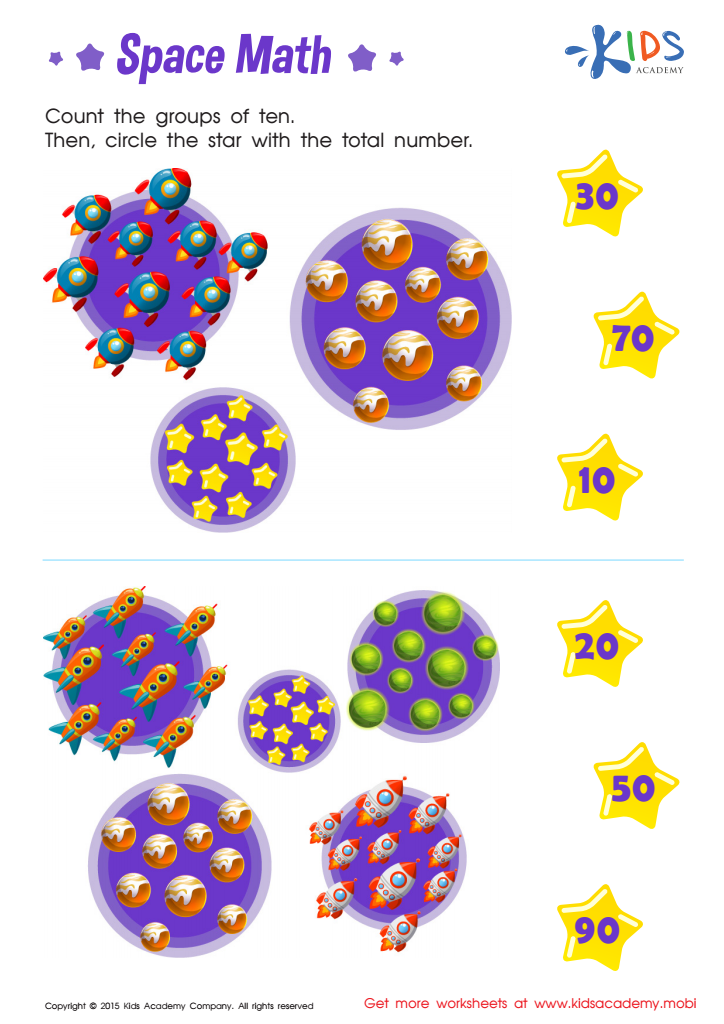
Learn dozens: Space math Worksheet

This worksheet uses Singapore Math's approach to help your child visually understand basic counting and math problems.
Learn dozens: Space math Worksheet
Worksheet
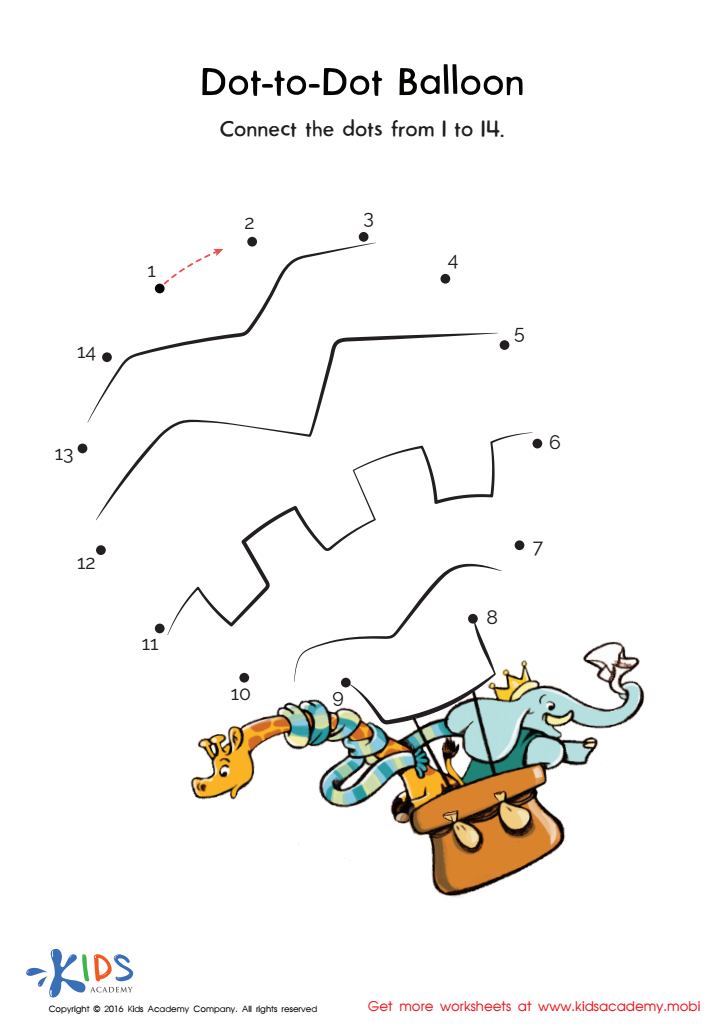
PDF Worksheet Dot to Dot Balloon

Balloon Connect Dots Worksheet

Balloon Connect Dots Worksheet
Worksheet
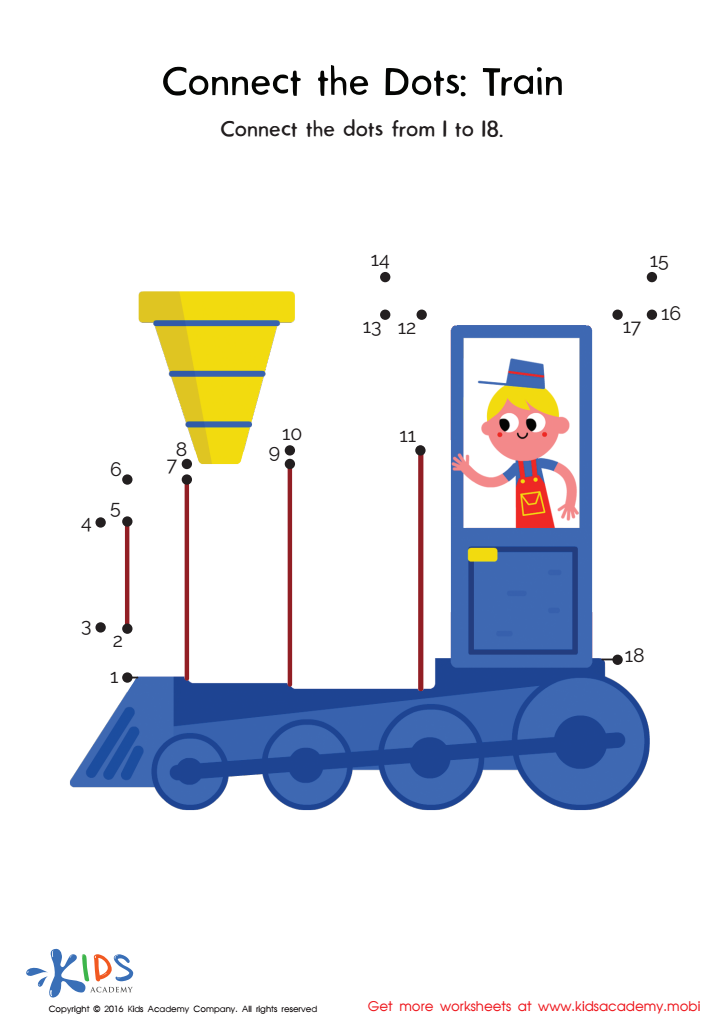
Connect the Dots Printable Worksheet

Train Connect Dots Worksheet

Train Connect Dots Worksheet
Worksheet
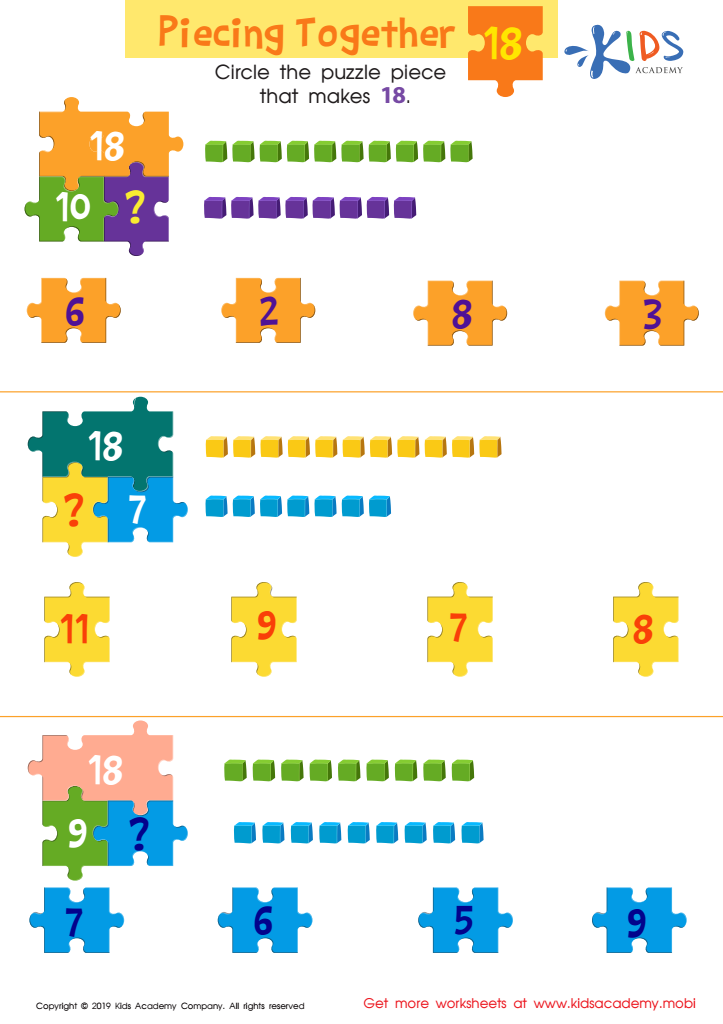
Piecing Together 18 Worksheet

Piecing Together 18 Worksheet

Let your preschoolers learn and have fun with this colorful worksheet. Look at the picture with them and ask what they see. Help them solve the equations missing on each puzzle piece and then circle the one that will make the bottom puzzle piece numbers equal 16. Puzzles and bright colors make learning easy and enjoyable!
Piecing Together 18 Worksheet
Worksheet
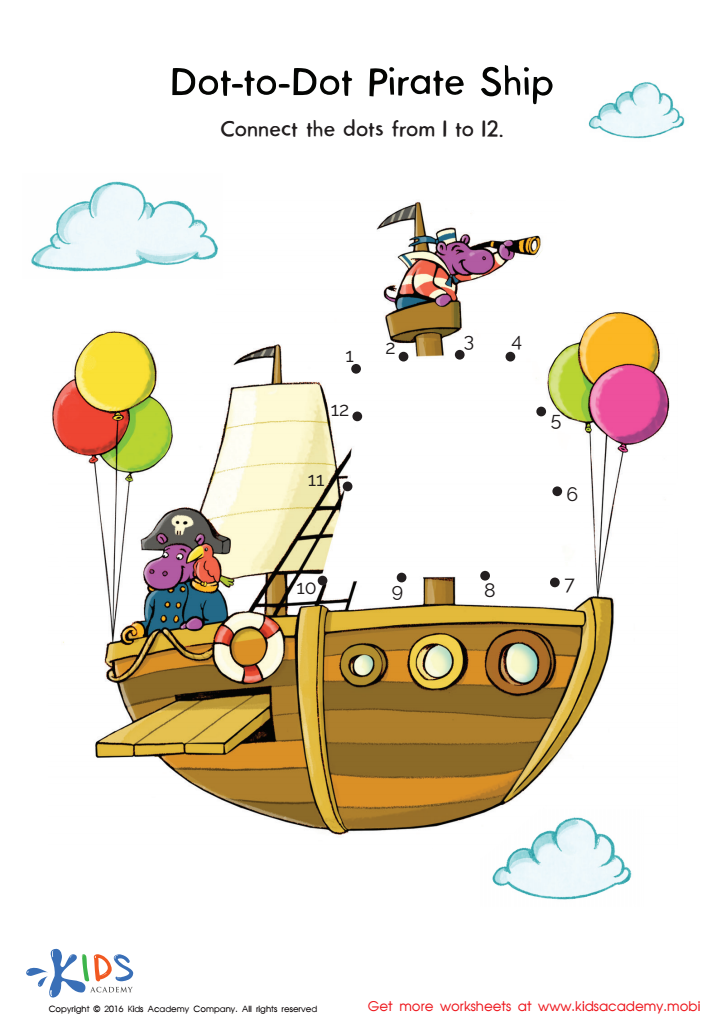
Dot to Dot: Ship
Dot to Dot: Ship

Pirate Ship Connect Dots Worksheet

Encourage your child's creativity with this pirate dot to dot! They'll connect the dots to craft a ship and then decorate the sail. This worksheet will help them practice numeracy, counting, and other reasoning skills. Once they understand how the dots come together to make a picture, they'll be motivated to move on to tougher challenges.
Pirate Ship Connect Dots Worksheet
Worksheet
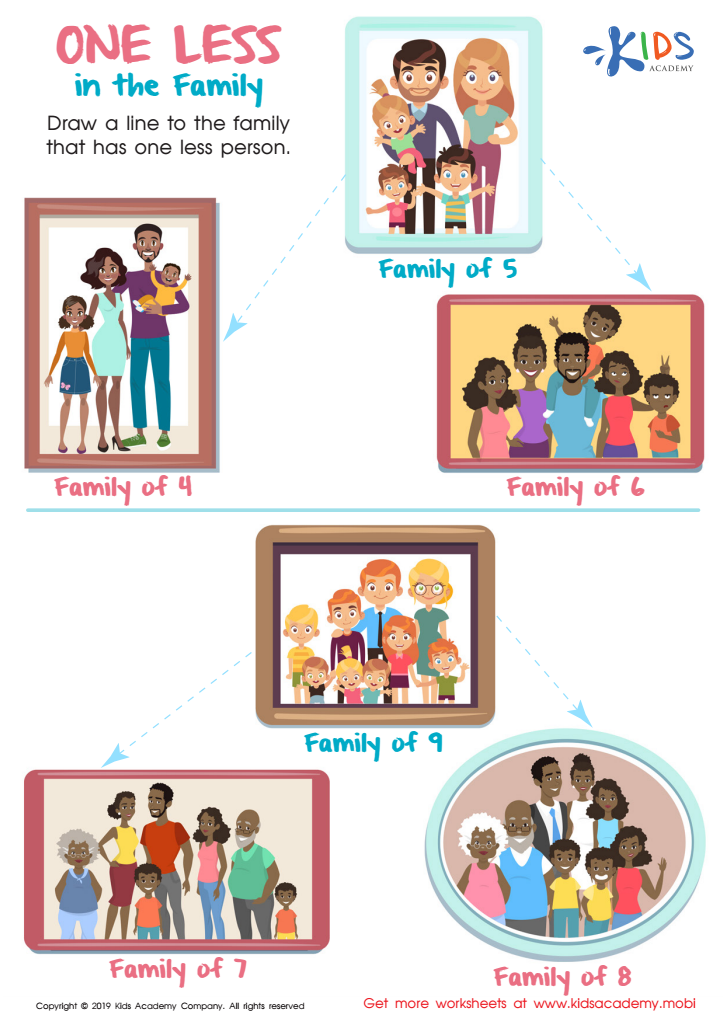
One Less in the Family Worksheet

One Less in the Family Worksheet

How many people are in your family? Can your little ones count and tell you? A family usually consists of a mum, dad and kids, but may also include grandparents, uncles, aunties and cousins. This worksheet has pictures of different families; help your kids count the members and draw a line to the one with one less person.
One Less in the Family Worksheet
Worksheet
Kindergarten Counting Game Printable

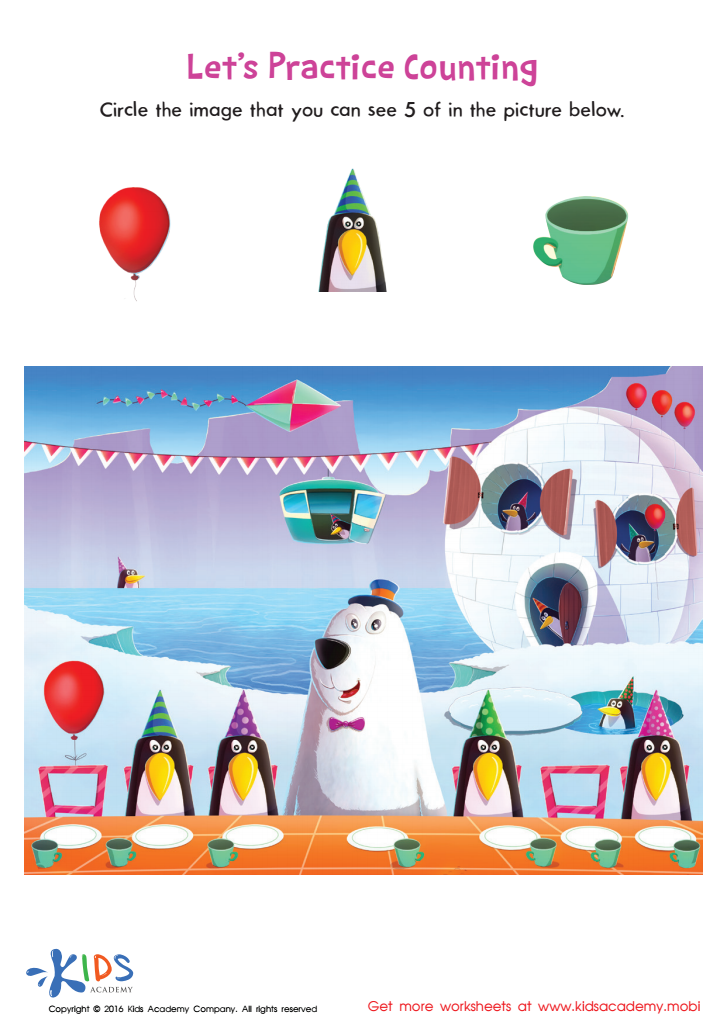
Counting Worksheet: Let's Practice Counting
Celebrate with the Arctic animals! This fun counting worksheet will help your child hone counting, problem-solving and attention skills. Let them explore important concepts through a process of elimination as they help the animals count guests and supplies. A great way to learn and have fun!
Counting Worksheet: Let's Practice Counting
Worksheet
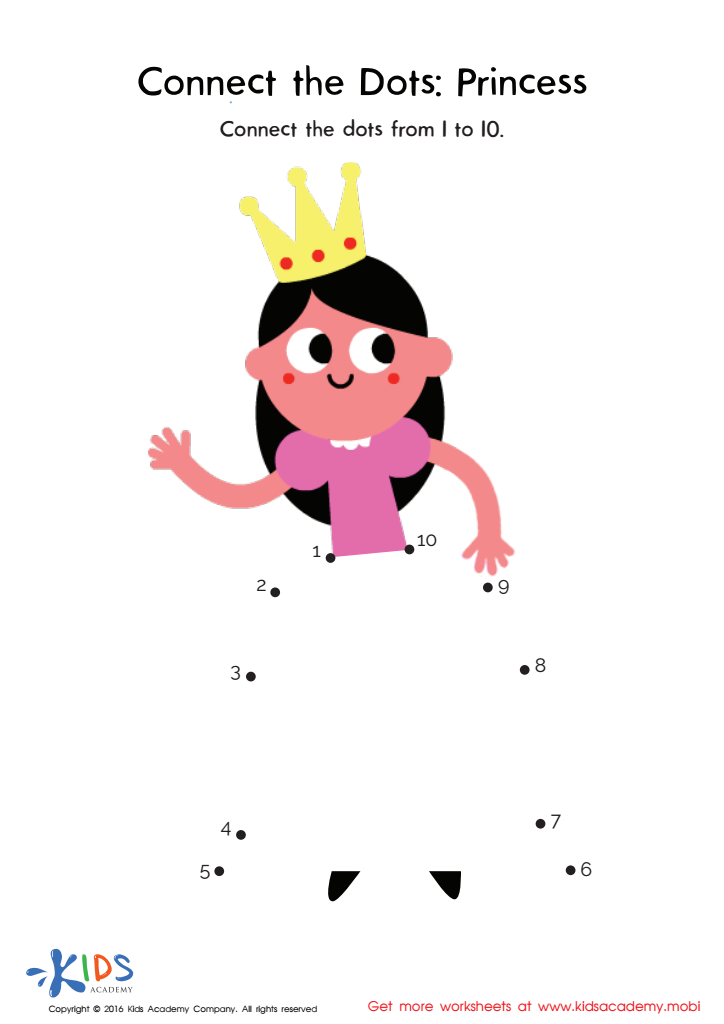
Princess Connect the Dots Worksheet

Princess Connect Dots Worksheet

Kids love fairy tales and their enchanting characters. With this princess connect the dots worksheet, your child will practice recognizing numbers, boost creativity, and find out that following the numbers leads to a beautiful picture. After connecting the dots, let your child decorate the princess’ dress for even more fun. It's a great way for kids to practice skills with plenty of fun and joy!
Princess Connect Dots Worksheet

Worksheet


Number sequencing is a vital foundational skill for young learners aged 4-5. Engaging children in extra challenges focused on this concept fosters cognitive development, supports early math skills, and enhances critical thinking abilities. When parents and teachers prioritize number sequencing activities, they provide children with the opportunity to understand the order of numbers, which is crucial for addition, subtraction, and more complex mathematical concepts later on.

Moreover, these challenges encourage children's ability to recognize patterns, an essential skill not just in mathematics but in problem-solving across various disciplines. Engaging with number sequencing also promotes essential developmental milestones, such as fine motor skills through activities that require writing or manipulating numbers.

Additionally, these activities can be both fun and engaging, making learning a joyful experience. When parents and teachers co-participate, it strengthens familial bonds and promotes a collaborative approach to education. Ultimately, investing in number sequencing skills at an early age equips children with the confidence and competence to navigate future mathematical challenges, ensuring a solid foundation as they progress in their educational journeys. Thus, embracing such initiatives is crucial for holistic child development and fostering a lifelong love for learning.