Problem-Solving Skills Extra Challenge Chess Worksheets for Ages 4-6
12 filtered results
Difficulty Level
Grade
Age
-
From - To
Subject
Activity
Standards
Introduce your little learners to the exciting world of chess with our Problem-Solving Skills Extra Challenge Chess Worksheets designed for ages 4-6. These engaging and educational worksheets help young minds develop essential problem-solving and critical-thinking abilities through fun chess-related puzzles and activities. As children navigate through various challenges, they'll enhance their strategic thinking, attention to detail, and patience. Perfect for both beginners and budding chess enthusiasts, these worksheets provide a playful yet intellectually stimulating way to boost early learning skills. Set your child on a path to mastering the game of kings with this delightful collection!
Favorites
With answer key
Interactive
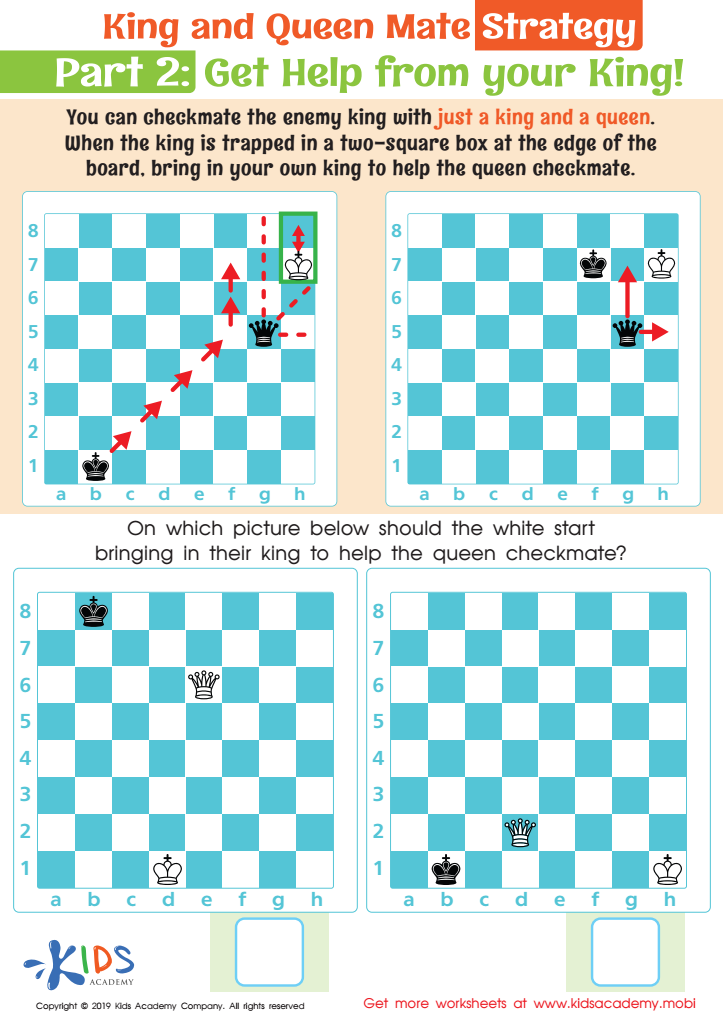
King and Queen Mate Strategy: Part 2 Worksheet
This worksheet helps your child learn to checkmate the opposing king with their king and queen. Descriptive sample boards show the strategy, and more boards help determine which one demonstrates how the king assists the queen.
 Assign to My Students
King and Queen Mate Strategy: Part 2 Worksheet
Worksheet
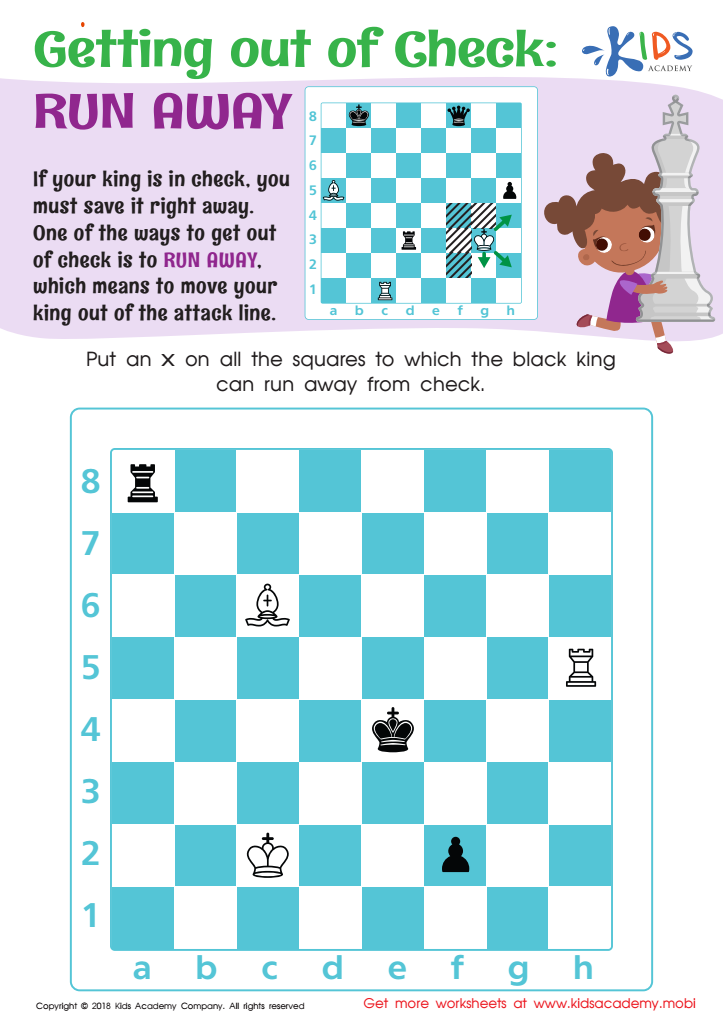
Getting out of Check: Run Away Worksheet
Playing chess boosts your children's brainpower and this worksheet helps them out of sticky situations. It teaches them how to flee with their king to avoid checkmate, as well as how to initiate their own strategic moves on the board. Get your kids on the road to success with this helpful PDF.
Getting out of Check: Run Away Worksheet
Worksheet
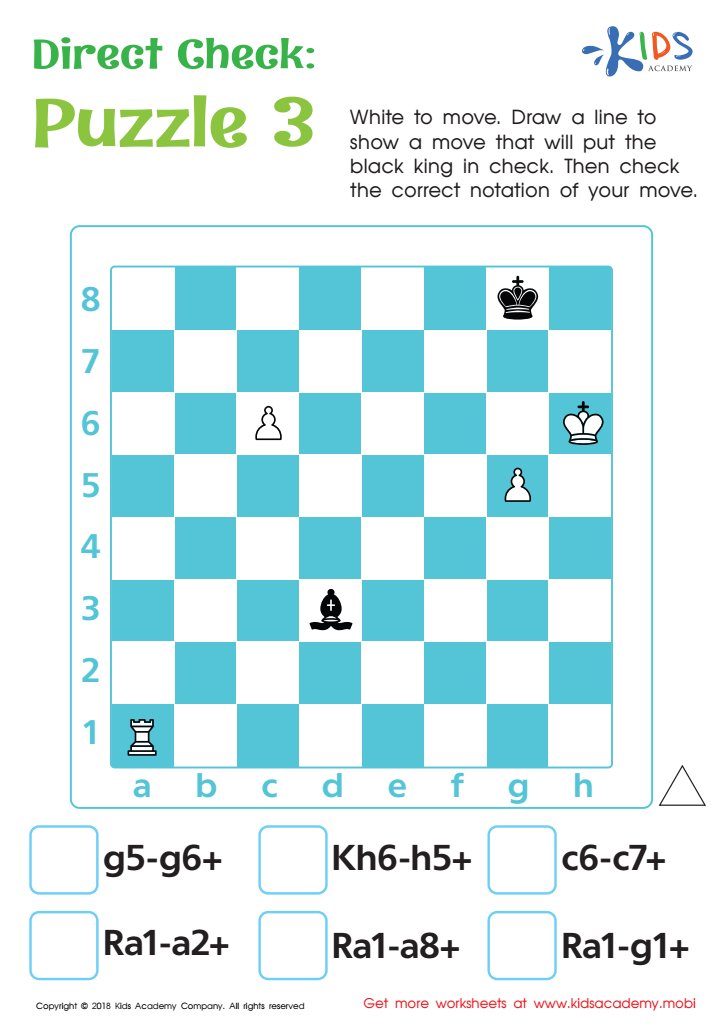
Direct Check: Puzzle 3 Worksheet
Chess is a great way to help your child develop their strategic, mathematical, and thinking skills. Test their understanding with this simple worksheet: they must get the black king in checkmate with white pieces, then select the notation that shows the correct move. See just how much progress they've made!
Direct Check: Puzzle 3 Worksheet
Worksheet
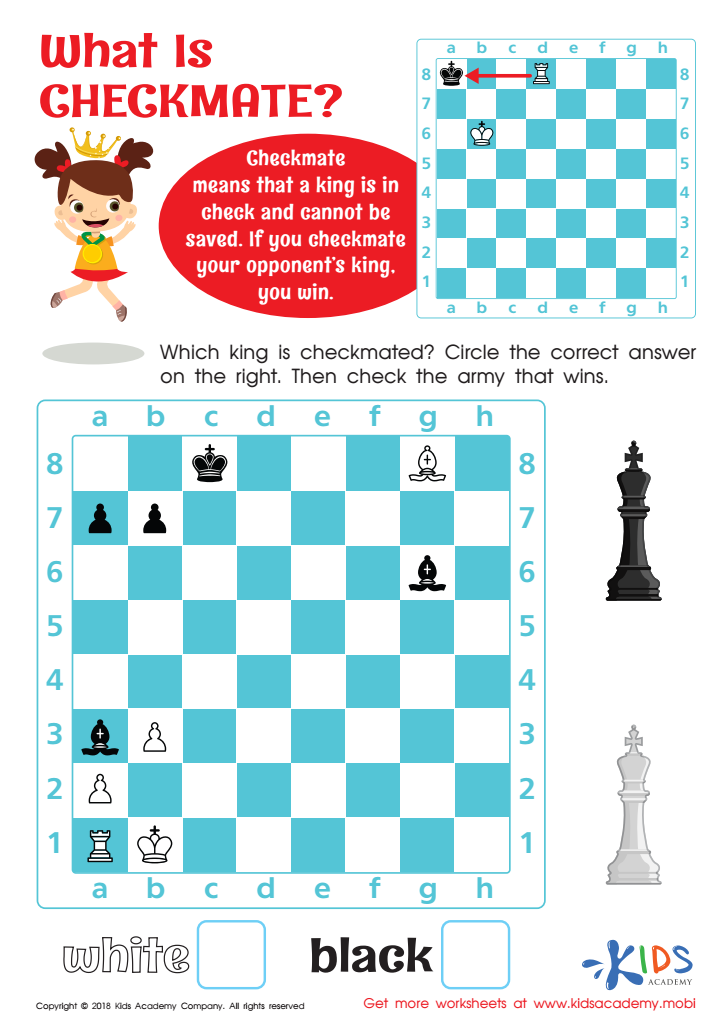
What is Checkmate? Worksheet
This downloadable PDF worksheet lets your child practice identifying when a king is checkmated and how it looks on a chessboard. Checkmate is the best move and with this colorful worksheet, they'll learn that it means their opponent's king is in check and cannot be saved, so they can win!
What is Checkmate? Worksheet
Worksheet
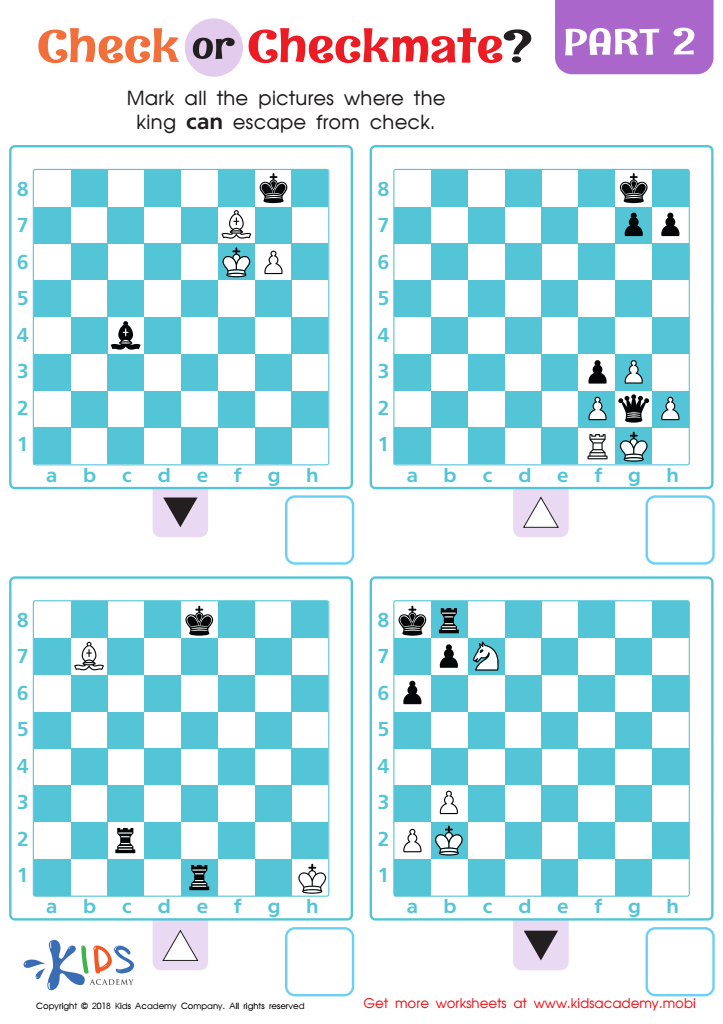
Check or Checkmate: Part 2 Worksheet
Chess is a fun and competitive way for your child to practice strategic thinking, problem-solving and critical reasoning. This free PDF will help them sharpen their skills, by analyzing boards and marking ones where the king can escape check. An invaluable skill when playing on real boards.
Check or Checkmate: Part 2 Worksheet
Worksheet
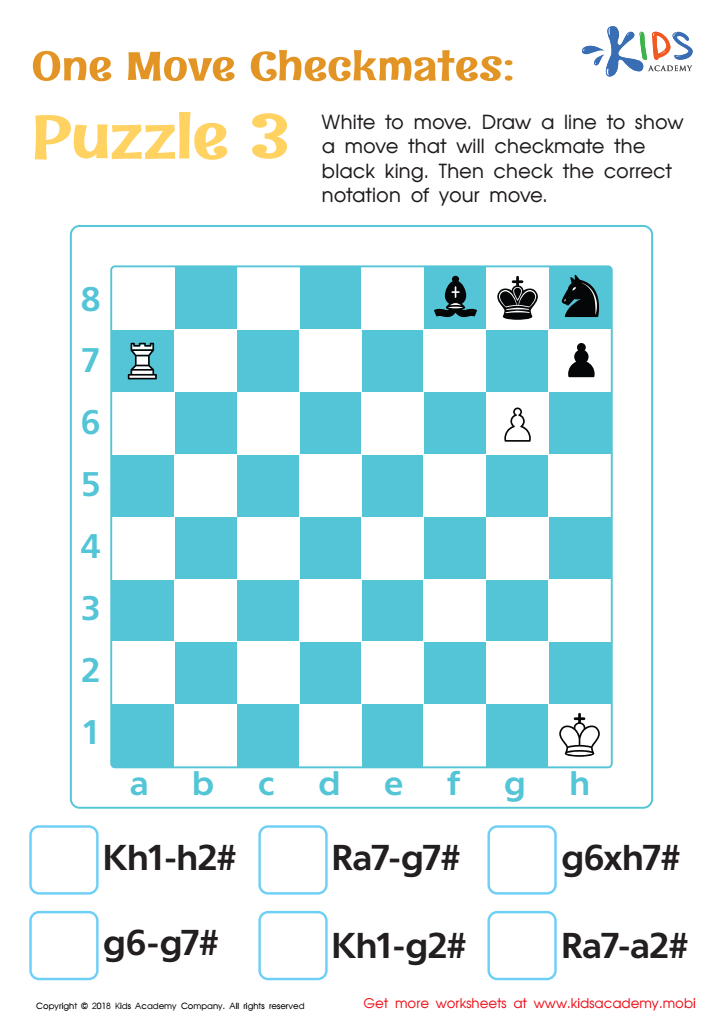
One Move Checkmates: Puzzle 3 Worksheet
Boost your child's critical thinking and strategy skills with this fun puzzle activity. They'll use their logical thinking to plot ways to checkmate the black king, and then check their answer with the given choices. A great way to improve their skills and have a blast doing it!
One Move Checkmates: Puzzle 3 Worksheet
Worksheet
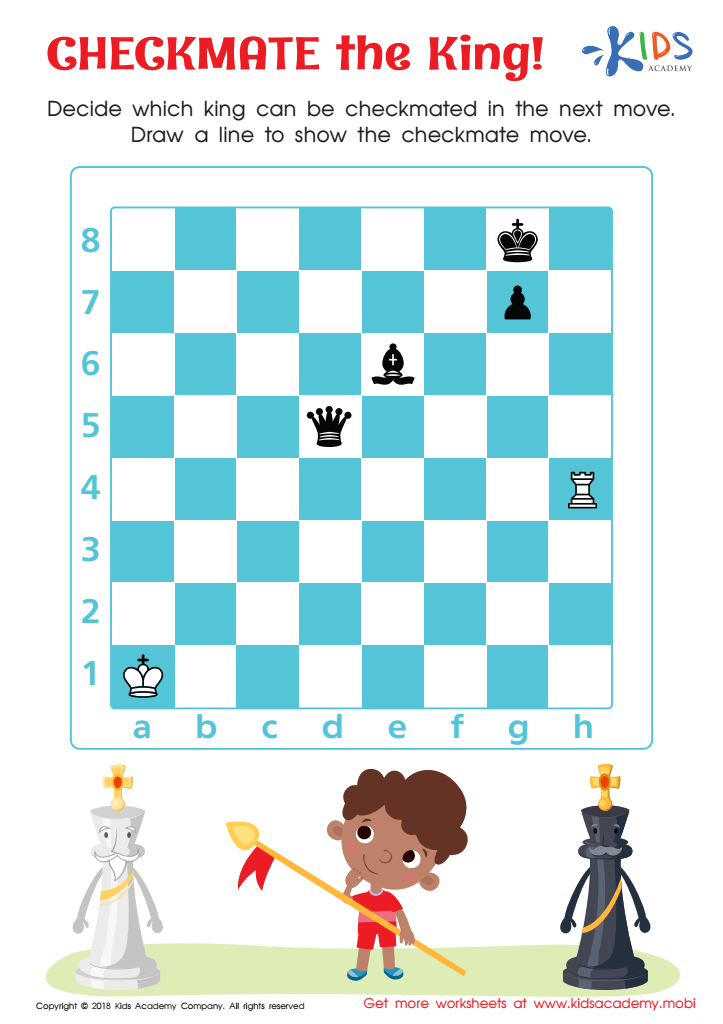
Checkmate the King Worksheet
Chess is great for growing problem-solving and critical thinking skills in children, and it's even better if they have fun winning! This worksheet will help kids practice checkmating their opponent's king. They can use the sample board to draw the line of their winning move. Who doesn't love being a winner?!
Checkmate the King Worksheet
Worksheet
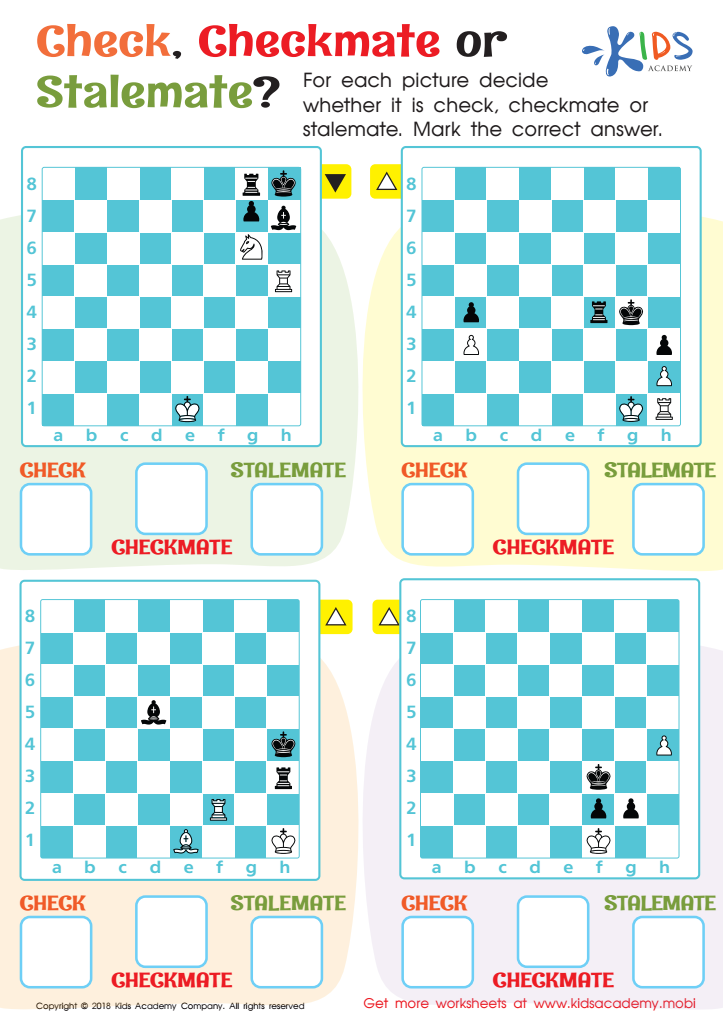
Check. Checkmate or Stalemate? Worksheet
Chess teaches critical thinking, reasoning, and logic skills in a fun way. With this downloadable worksheet, kids can look at chess boards and decide if the sides are in check, checkmate, or stalemate. Win or lose, a stalemate can be a great outcome, and kids can learn and build skills with each move!
Check. Checkmate or Stalemate? Worksheet
Worksheet
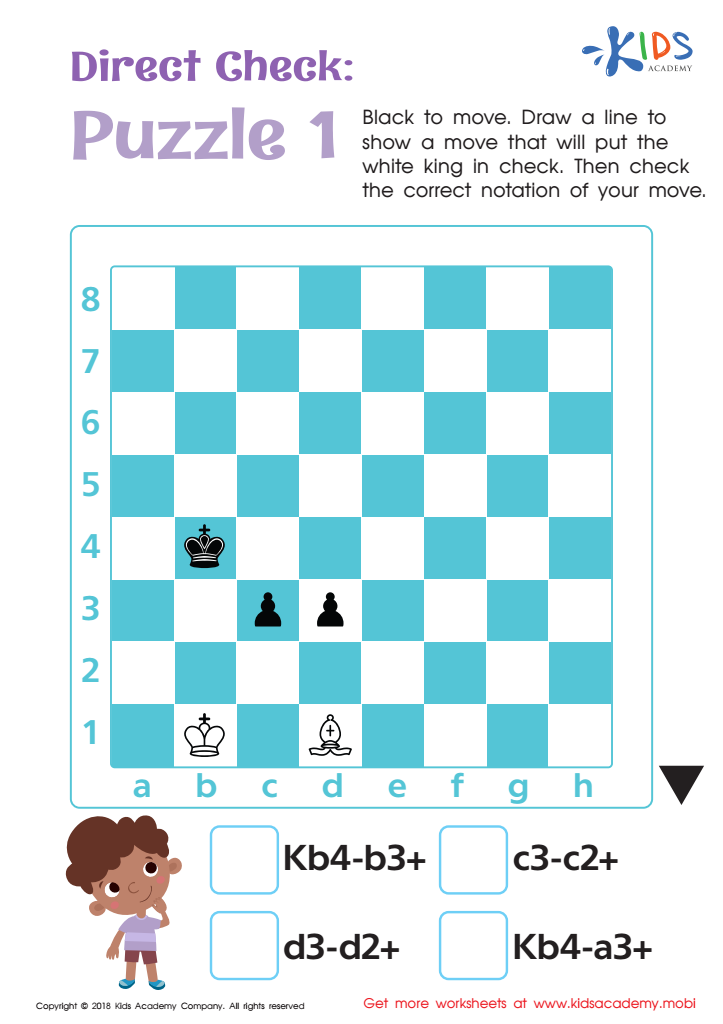
Direct Check: Puzzle 1 Worksheet
Your child can test their chess knowledge with this worksheet. If they've been taking lessons or playing regularly, they'll enjoy connecting the dots to put the white king in checkmate, then checking the correct notation. Challenge their chess skills!
Direct Check: Puzzle 1 Worksheet
Worksheet
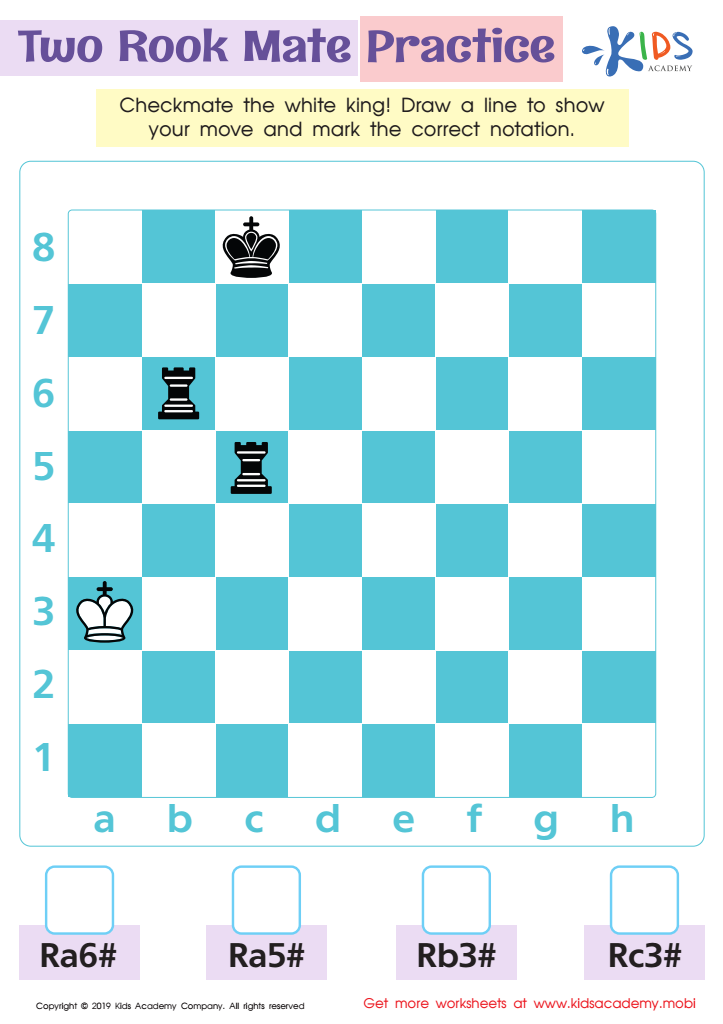
Two Rook Mate Practice Worksheet
Chess is all about checkmating your opponent. This free Two Rook Mate practice worksheet is a fun way for your mini strategist to do just that. They can draw a line showing their move then pick the correct notation for the mate! A great way for them to practice fine motor skills, too.
Two Rook Mate Practice Worksheet
Worksheet
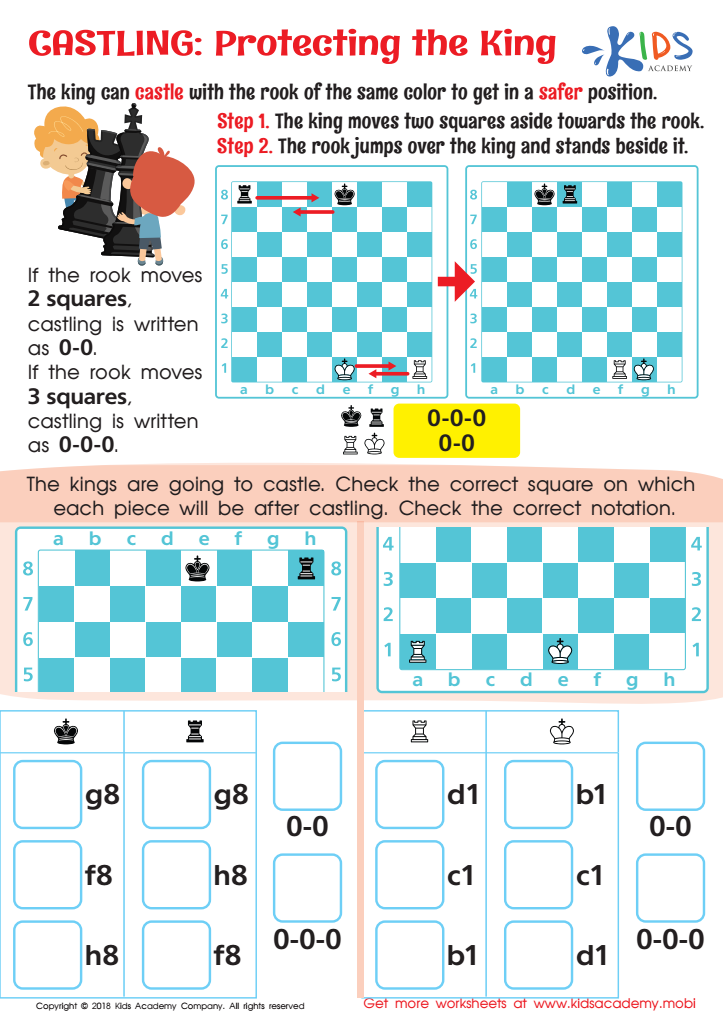
Castling: Protecting the King Worksheet
Castle your king with the rook to get into a safer position! Write 0-0 for a two-square move, or 0-0-0 for a three-square move. Look at the worksheet with your child; on the first chessboard, the king has moved two squares and the rook is beside it. On the second, the rook has jumped over the king. Let your child use their castling knowledge to answer the questions in the easy pdf.
Castling: Protecting the King Worksheet
Worksheet
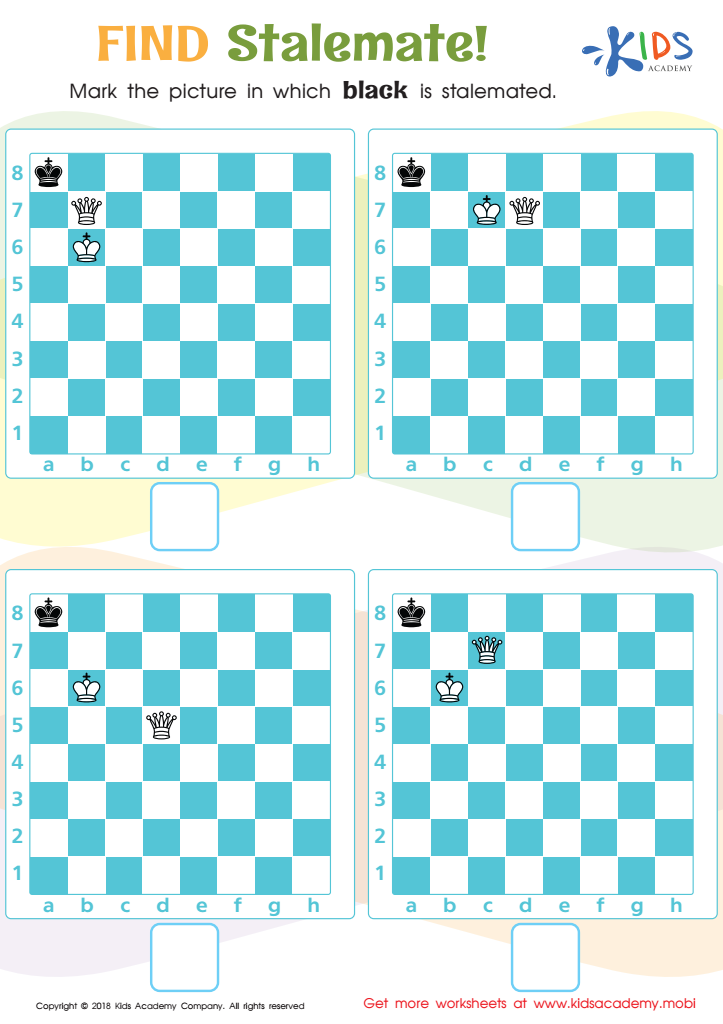
Find Stalemate! Worksheet
Teach your kids Chess and give them more than a hobby - equip them with critical thinking, rationale and problem-solving skills! This free worksheet helps them understand stalemates by examining various sample boards. By providing visual discernment and the joy of the game, your child's logical skills will soar!
Find Stalemate! Worksheet
Worksheet
Join Kids Academy for Free
Who is primarily going to use this learning content?





Problem-solving skills are crucial for young children as they navigate their formative years, and activities like Chess offer an excellent way to develop these abilities. Chess extra challenges specifically designed for ages 4-6 can be incredibly beneficial, nurturing cognitive skills, patience, and strategic thinking from a young age.
Firstly, engaging with chess helps sharpen a child's ability to analyze situations and think critically. Each move must be thought through and planned, promoting foresight and the understanding of cause and effect. This kind of problem-solving practice translates well into academic learning and real-life situations, preparing children to confront challenges with confidence.
Additionally, chess cultivates patience and focus, essential skills for a young child's academic success and social development. The Quiet concentration required during chess teaches children the value of quiet perseverance, while the game's competitive nature subtly emphasizes sportsmanship and resilience.
Moreover, tailored chess challenges encourage a sense of accomplishment and boost self-esteem. Completing chess challenges gives children a sense of evolution and success, positively reinforcing their engagement and willingness to tackle complex problems enthusiastically.
Finally, these activities can support family bonding and peer interaction—children can learn from parents, teachers, and peers, making problem-solving a communal activity that also enhances communication skills and emotional intelligence. In short, integrating chess into early education empowers children with foundational skills that extend far beyond the chessboard.