Basic geometry understanding Extra Challenge Worksheets for Ages 4-7
4 filtered results
-
From - To
Introduce your young learners to the fascinating world of shapes with our "Basic Geometry Understanding Extra Challenge Worksheets" designed specifically for ages 4-7! These engaging worksheets are ideal for enhancing foundational geometry skills through fun and interactive activities. Kids will explore various shapes, identify their properties, and learn to classify them, all while honing their critical thinking skills. Perfect for teachers and parents seeking extra challenges beyond the standard curriculum, these worksheets encourage creativity and problem-solving in an enjoyable format. Foster your child's love for learning and geometry with our thoughtfully crafted extra challenge resources today!
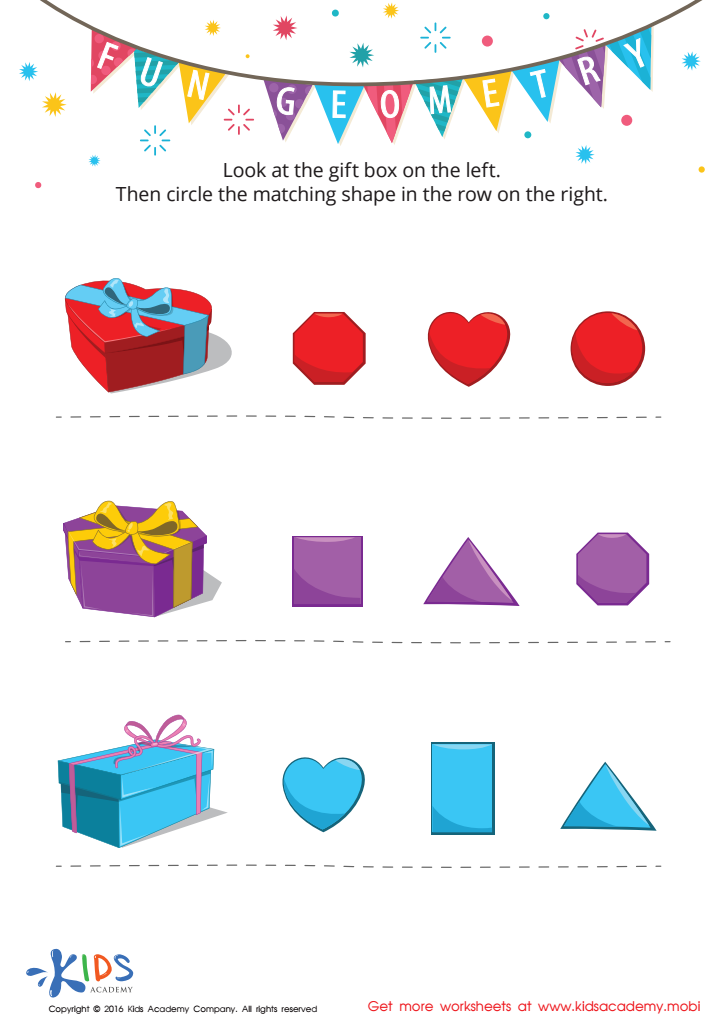
Fun Geometry Worksheet
 Assign to My Students
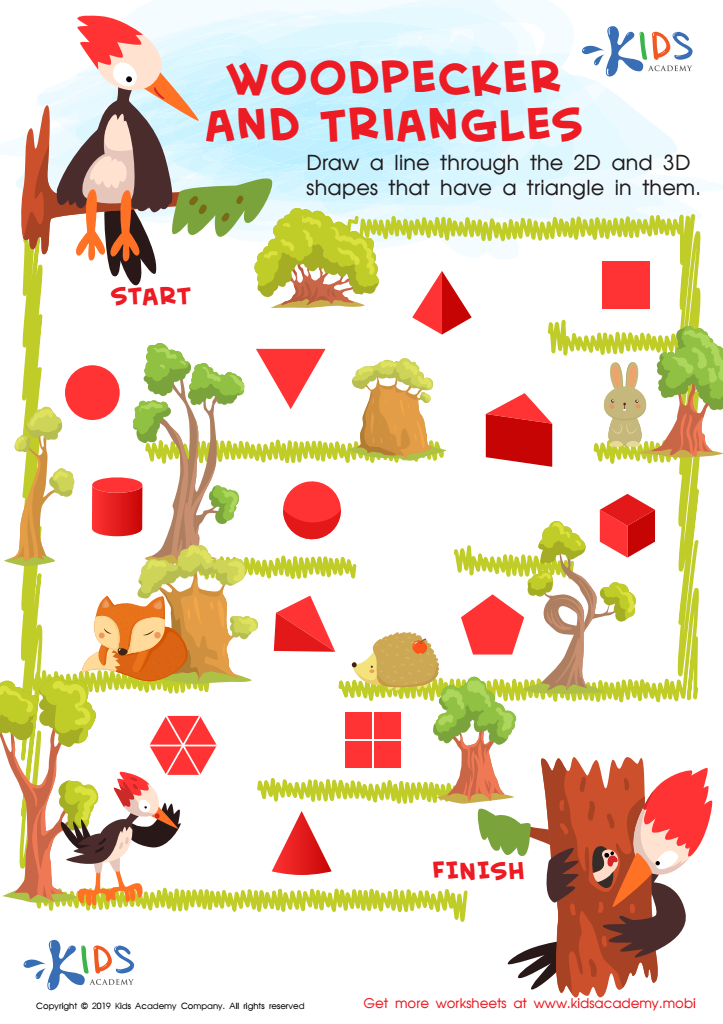
Woodpecker and Triangles Worksheet
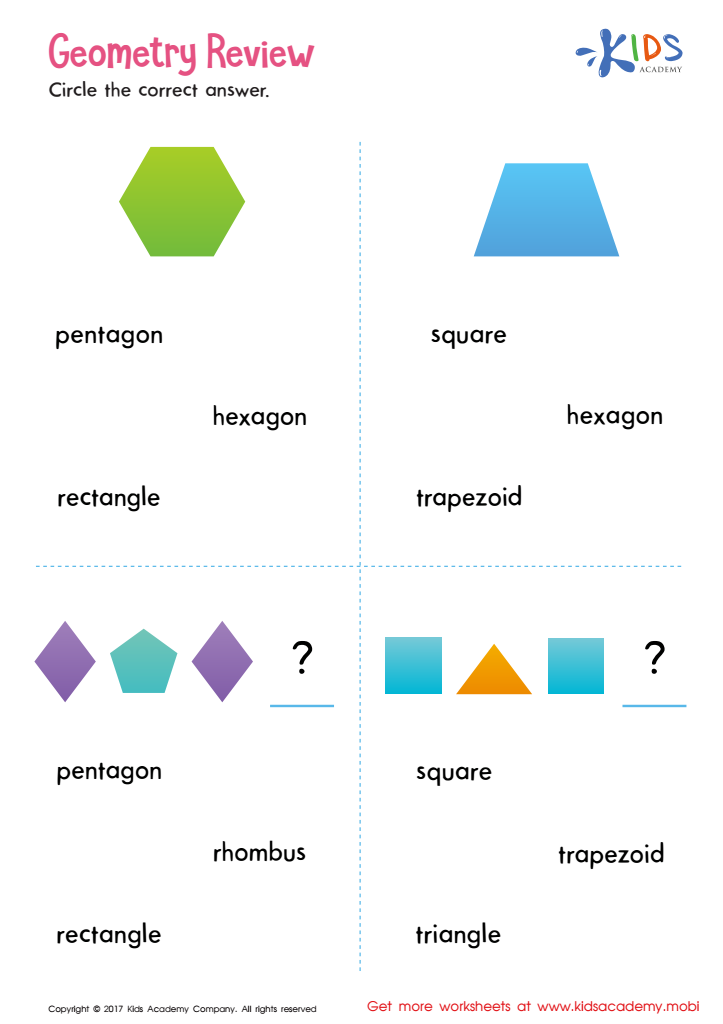
Geometry Review Printable
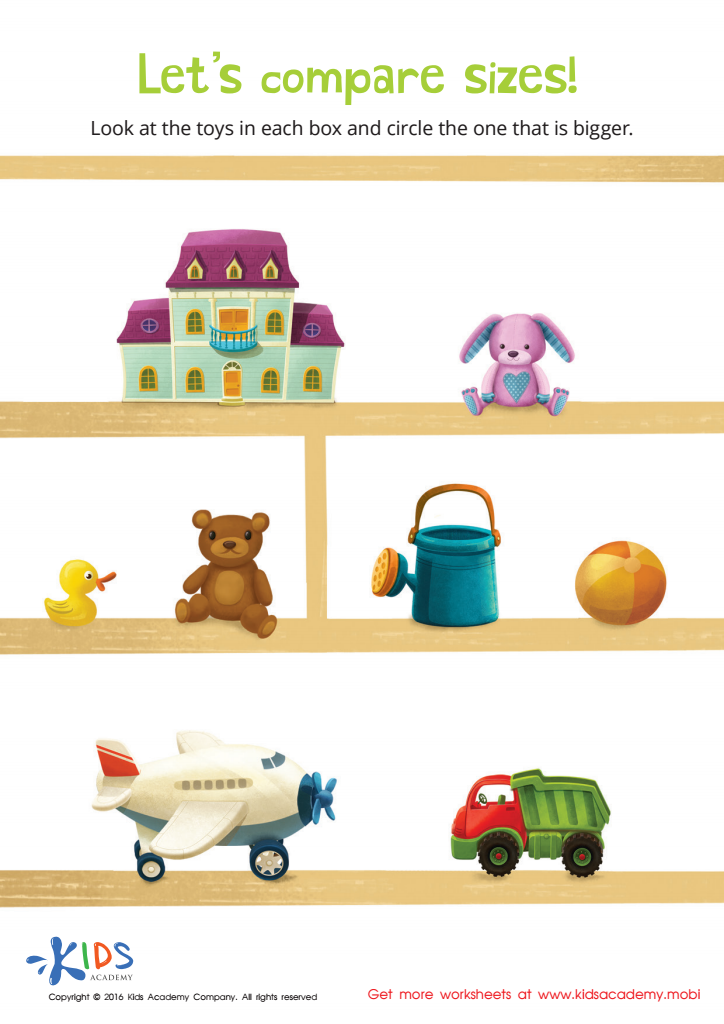
Classifying by Size Sorting Worksheet


.jpg)




Understanding basic geometry is crucial for children aged 4-7 as it lays the foundational skills for spatial reasoning, problem-solving, and critical thinking. At this age, children are naturally curious and often explore their environments. Introducing them to geometric concepts helps them comprehend shapes, sizes, and patterns. This early engagement enhances their ability to visualize and manipulate objects, which is essential in many disciplines, from arts to sciences.
Parents and teachers play a vital role in fostering this understanding. When adults demonstrate enthusiasm for geometry through playful activities—like shape sorting, building block games, or even nature walks that discuss shapes—they ignite children's interest and encourage exploration. This connections strengthen children's cognitive development.
Additionally, a solid grasp of basic geometry can improve academic performance in later years. When children understand concepts like symmetry, angles, and measurements early on, they are better equipped for more complex mathematics as they progress in school.
Furthermore, geometry connects to everyday life, from recognizing shapes in architecture to identifying patterns in nature. Engaging with these concepts enriches a child's understanding of their surroundings and promotes a lifelong love for learning. Thus, supporting children's geometric education becomes a pathway to a well-rounded intellect and enhanced problem-solving skills.








