Shape identification Extra Challenge Geometry Worksheets for Ages 4-7
5 filtered results
-
From - To
Unlock your child's potential with our "Shape Identification Extra Challenge Geometry Worksheets," designed specifically for ages 4-7! These engaging worksheets help young learners explore and identify various shapes while enhancing their critical thinking and problem-solving skills. Through a variety of fun activities, your child will strengthen their understanding of geometry in a playful way. Ideal for teachers and parents alike, these extra challenges provide an enriching experience and cater to different learning styles. Download now to inspire a love for learning while building valuable foundational skills in shape identification! Perfect for classrooms or at-home practice!
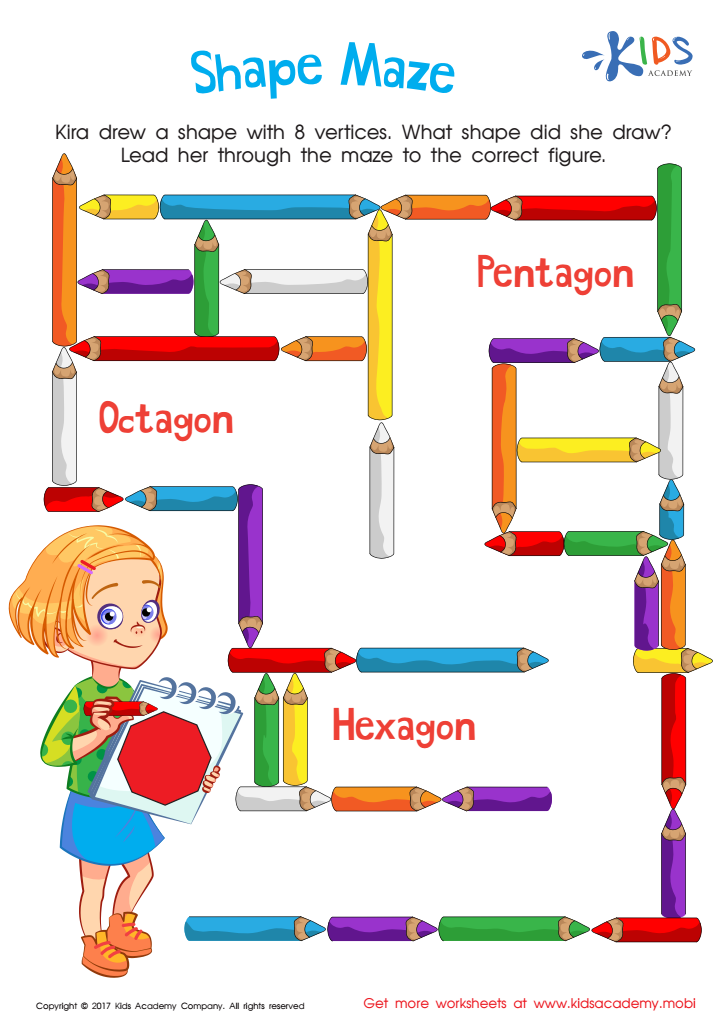
Shape Maze Worksheet
 Assign to My Students











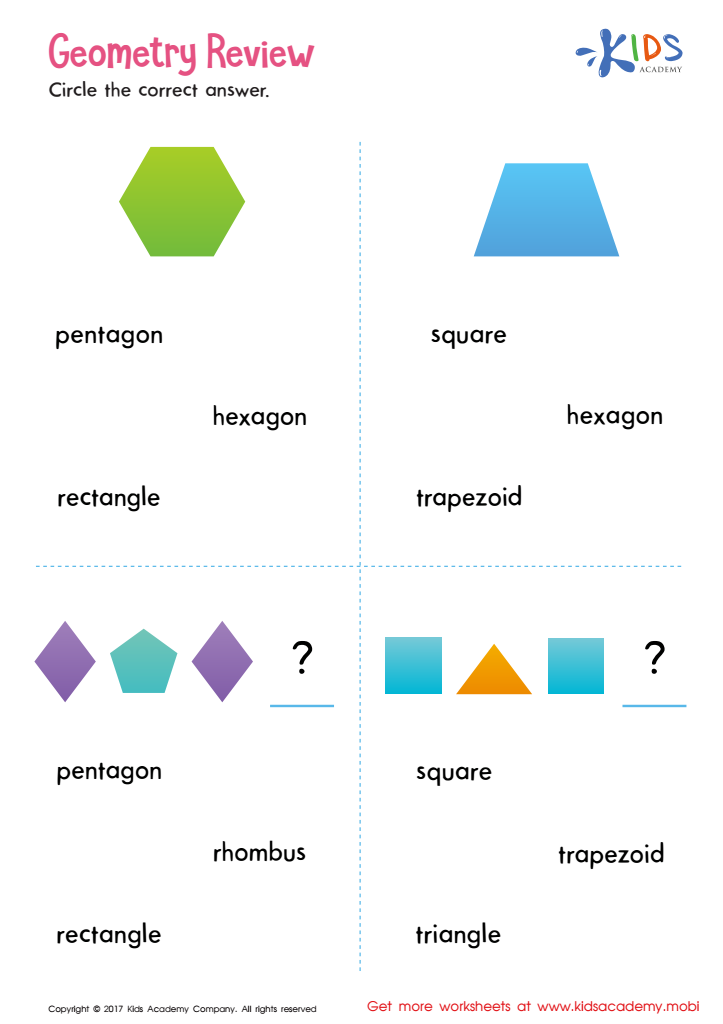
Geometry Review Printable
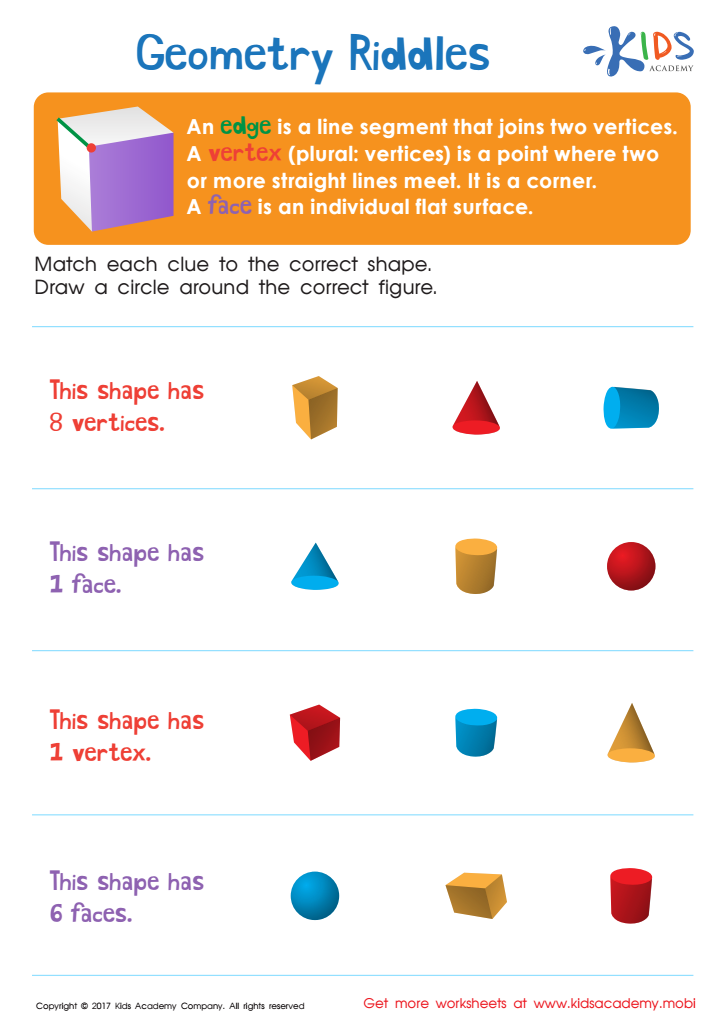
Geometry Riddles Printable
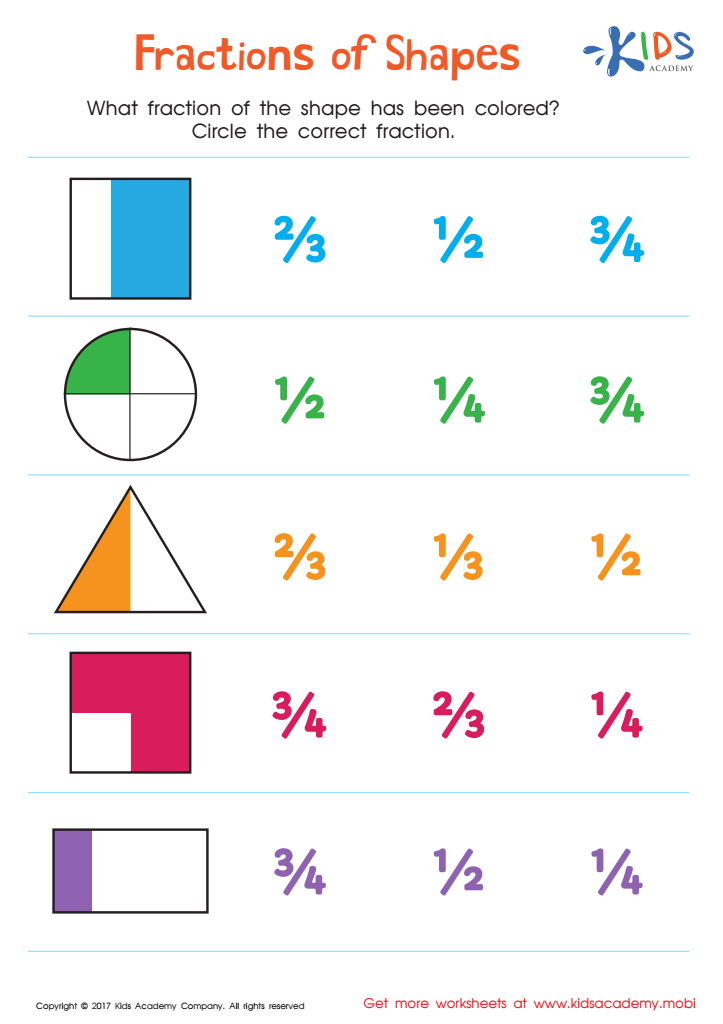
Fractions of Shapes: Math Concept Worksheet

Shapes Worksheet








Parents and teachers should care about Shape Identification Extra Challenge Geometry for ages 4-7 because it lays a critical foundation for children's cognitive development and mathematical understanding. During early childhood, children are naturally curious and highly receptive to learning through play and exploration. Engaging in shape identification activities not only sharpens their spatial reasoning skills but also enhances their ability to categorize and analyze information around them.
Understanding shapes is closely related to the development of problem-solving skills and logical thinking. When children are exposed to different shapes and encouraged to identify, compare, and manipulate them, they start recognizing patterns and relationships, which are essential for more complex mathematical concepts they will encounter later on. This knowledge also extends into daily life, helping them navigate the world more effectively — from recognizing road signs to organizing their toys.
Moreover, shape identification activities foster creativity and imagination as children experiment with various configurations and designs, leading to artistic expression. As parents and teachers facilitate these early learning experiences, they contribute to a child's confidence, critical thinking skills, and love for learning, preparing them for future academic success. Ultimately, investing time in shape identification is an investment in a child's holistic cognitive growth.








