Comparing objects Extra Challenge Worksheets for Ages 4-8
3 filtered results
-
From - To
Introducing our "Comparing Objects Extra Challenge Worksheets" designed for ages 4-8, perfect for enhancing critical thinking skills in young learners! These engaging worksheets help children develop their ability to compare and contrast different objects through fun activities. They will hone their observation skills, boost their vocabulary, and improve their understanding of size, shape, and quantity relationships. With vivid illustrations and interactive questions, these worksheets make learning delightful and effective. Whether in the classroom or at home, these extra challenges are an ideal way to reinforce math foundations while encouraging creativity and exploration. Unlock your child's potential with our hands-on resources today!
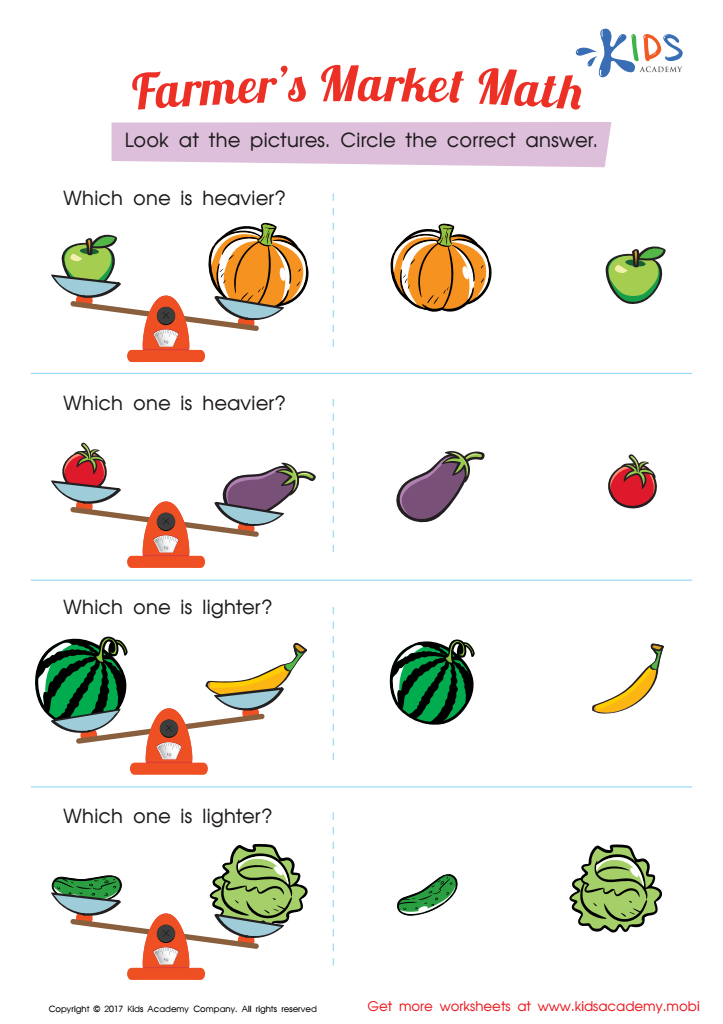
Which One Is Heavier Worksheet
 Assign to My Students
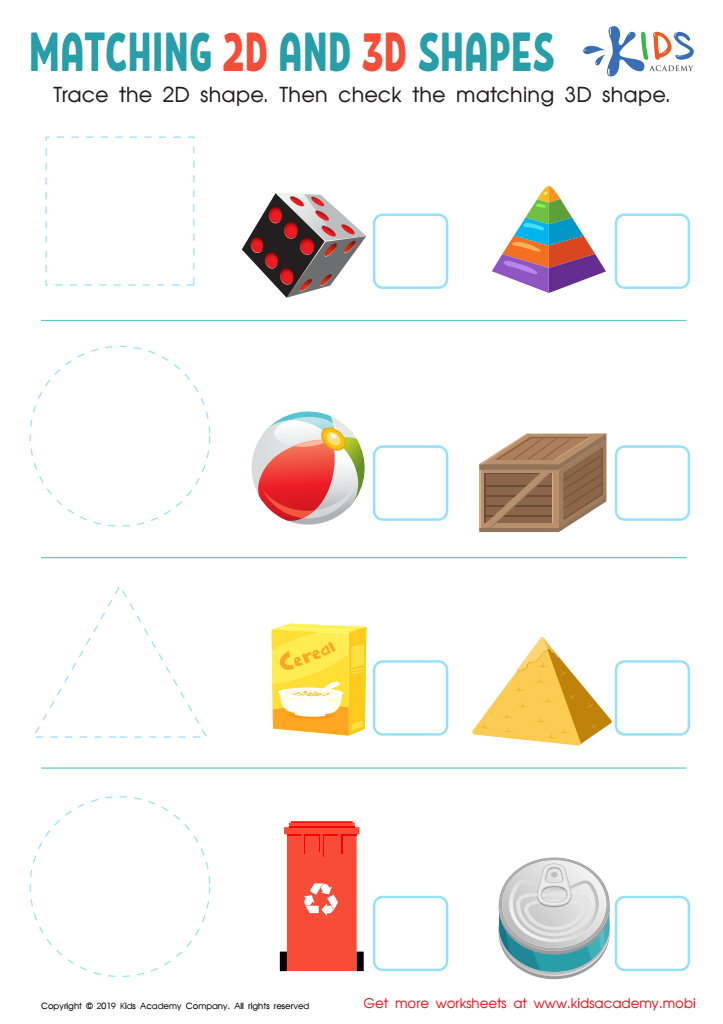
Matching 2D and 3D Shapes Worksheet
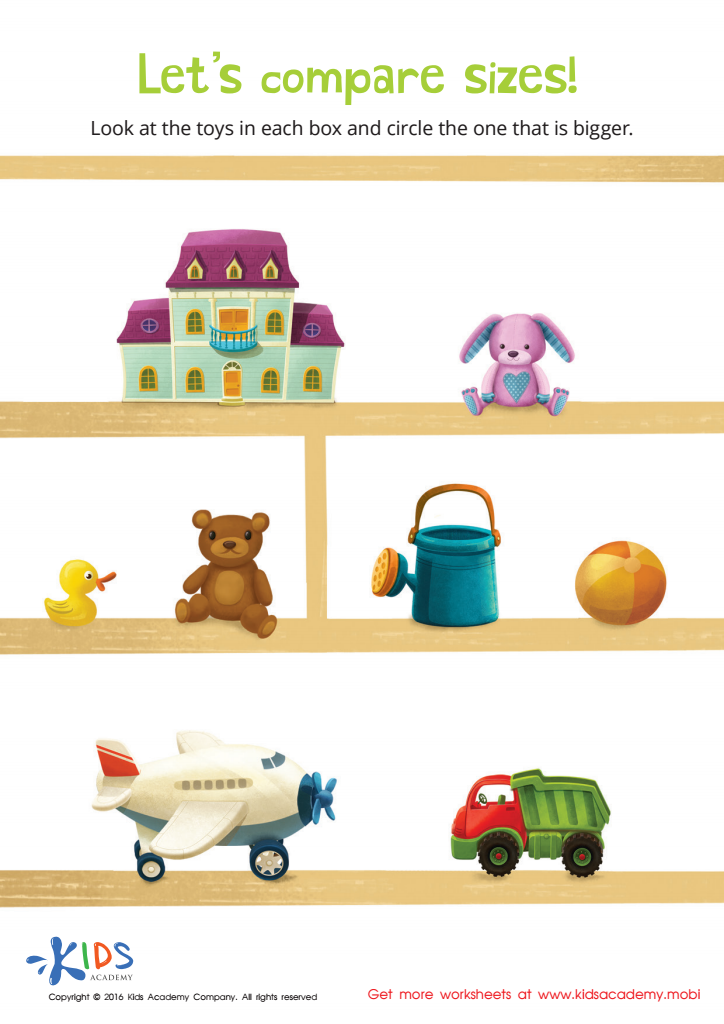
Classifying by Size Sorting Worksheet



.jpg)


Comparing objects is a vital skill for children aged 4-8, fostering critical thinking and cognitive development. Parents and teachers should care about this Extra Challenge because it lays a foundational understanding of mathematical concepts, such as size, weight, length, and volume. These comparisons encourage children to engage in hands-on learning experiences, stimulating curiosity and exploration.
By comparing objects, children learn to observe differences and similarities, which enhances their analytical skills. This practice encourages language development as they articulate their observations, expanding their vocabulary and improving communication skills. It also nurtures problem-solving abilities, empowering children to make logical choices and decisions based on their comparisons.
Engaging children in these activities supports social skills as they often work together, promoting teamwork and collaboration. Moreover, these skills are essential for real-world applications, helping kids make sense of their environment and interactions.
Ultimately, comparing objects helps build a strong foundation for future learning, contributing to a holistic educational experience. Parents and teachers can incorporate this into daily life, making learning fun and interactive, reinforcing the importance of curiosity, observation, and reasoning in children's overall development.








