Mental math improvement Extra Challenge Worksheets for Ages 4-8
3 filtered results
-
From - To
Boost your child's arithmetic skills with our Mental Math Improvement Extra Challenge Worksheets for Ages 4-8! Specifically designed to enhance cognitive development, these worksheets offer fun, engaging activities that stimulate young minds. Each worksheet features challenging yet age-appropriate exercises to improve number sense, addition, subtraction, and problem-solving abilities. Perfect for home or classroom use, our worksheets encourage strategic thinking and build confidence in young learners. Start your child's mental math journey today and watch them excel effortlessly! Explore now and give your little one a head start in mastering essential math skills.
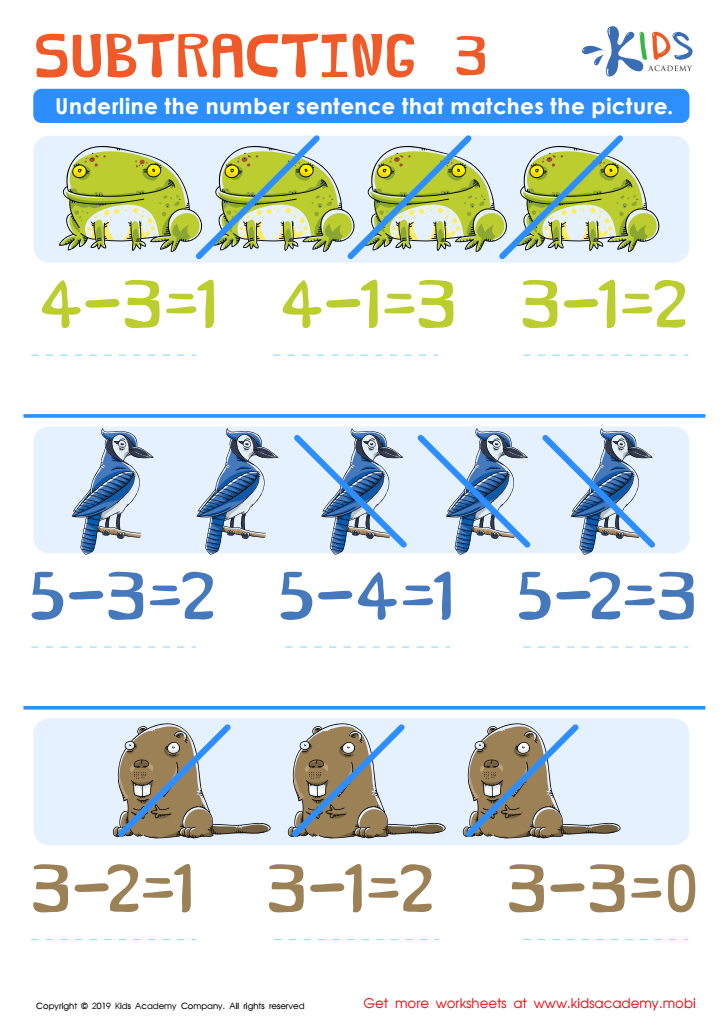
Subtracting 3 Worksheet
 Assign to My Students
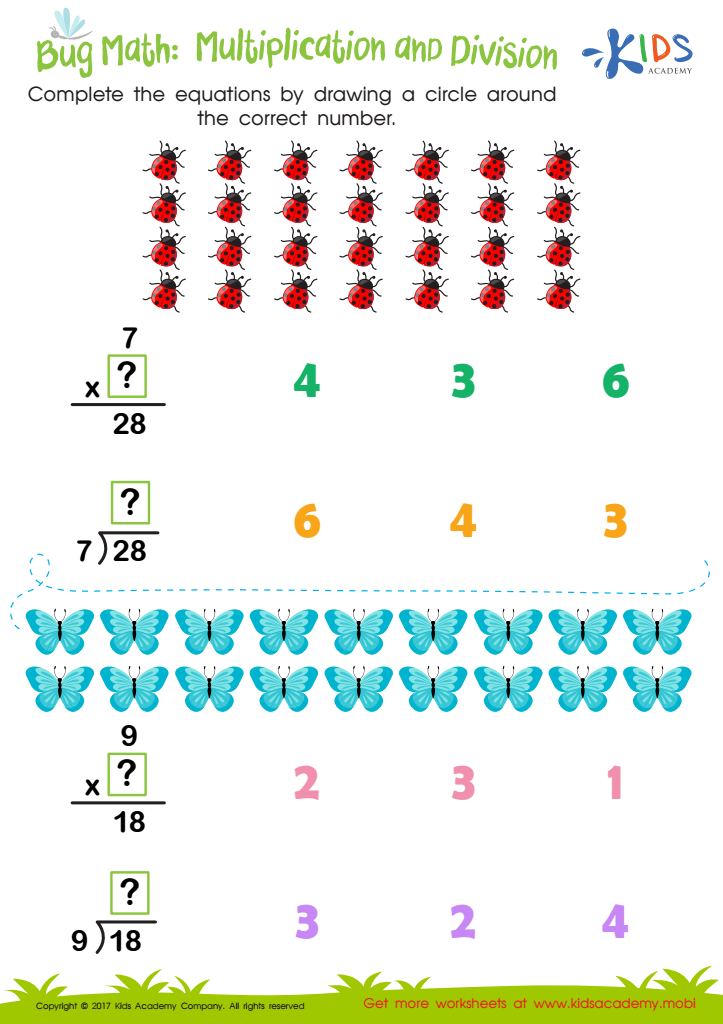
Multiplication and Division Worksheet
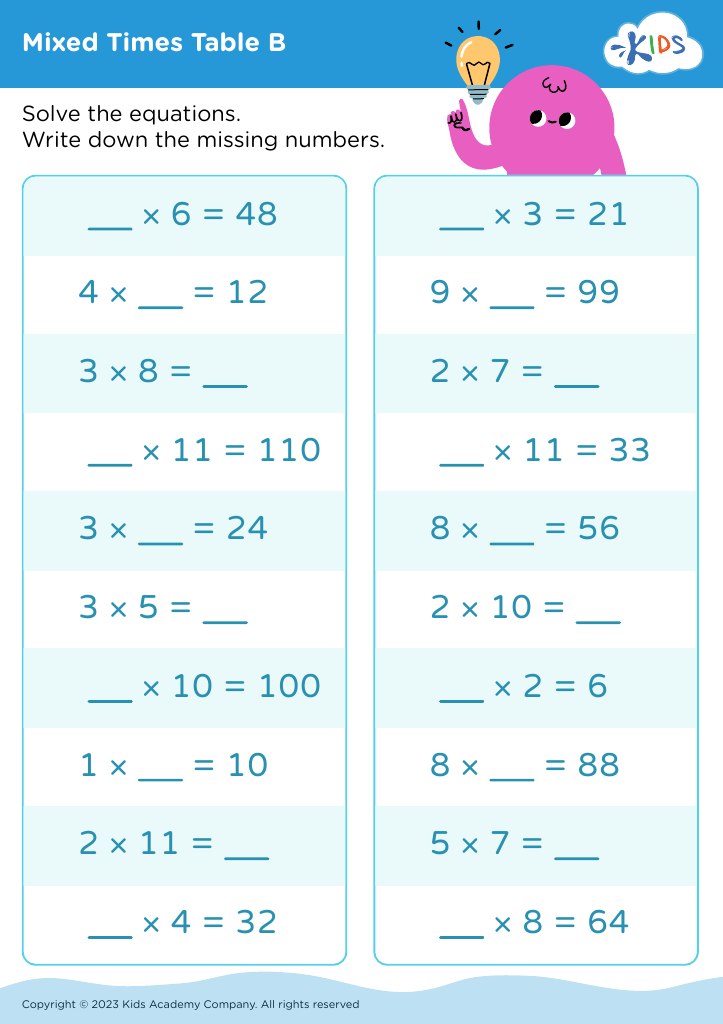







.jpg)
Mental math improvement at an early age (4-8) forms the cornerstone for a child's future academic success and cognitive development. When parents and teachers invest in challenges that enhance mental math skills for young learners, they are essentially empowering them with tools for better problem-solving, critical thinking, and analytical reasoning.
At this developmental stage, children's brains are exceptionally receptive and adaptable. Introducing mental math sharpens their concentration and improves memory, providing them with the ability to process information quickly and efficiently. This foundational math fluency enables smoother progress through more complex math concepts they will encounter later in their academic journey.
Furthermore, boosting mental math proficiency in early childhood equips them with practical life skills. Whether calculating change at a store or estimating time intervals, the ability to perform quick mental calculations is invaluable in everyday life. Early success in math also fosters a positive attitude toward the subject, reducing math anxiety and increasing self-confidence.
By engaging with mental math improvement challenges, parents and teachers can make math fun and stimulating, rather than intimidating. This positive association with math not only promotes a lifelong interest in the subject but also contributes to the overall intellectual growth and development of the child. Hence, prioritizing mental math is a meaningful investment in the child's academic and personal future.








