
Spatial awareness Extra Challenge Worksheets for Ages 4-8
12 filtered results
Difficulty Level
Grade
Age
-
From - To
Subject
Activity
Standards
Unlock your child’s potential with our Spatial Awareness Extra Challenge Worksheets designed for ages 4-8! These engaging worksheets encourage children to enhance their spatial reasoning skills through fun activities that include identifying shapes, following directions, and understanding position and space. Perfect for enrichment in the classroom or at home, these challenges promote critical thinking, problem-solving, and creativity. Each worksheet features colorful illustrations and age-appropriate tasks that captivate young learners. By mastering spatial awareness, children will build a strong foundation for future math concepts and everyday understanding. Discover the joy of learning today with our thoughtfully crafted extra challenge worksheets!
Favorites
With answer key
Interactive
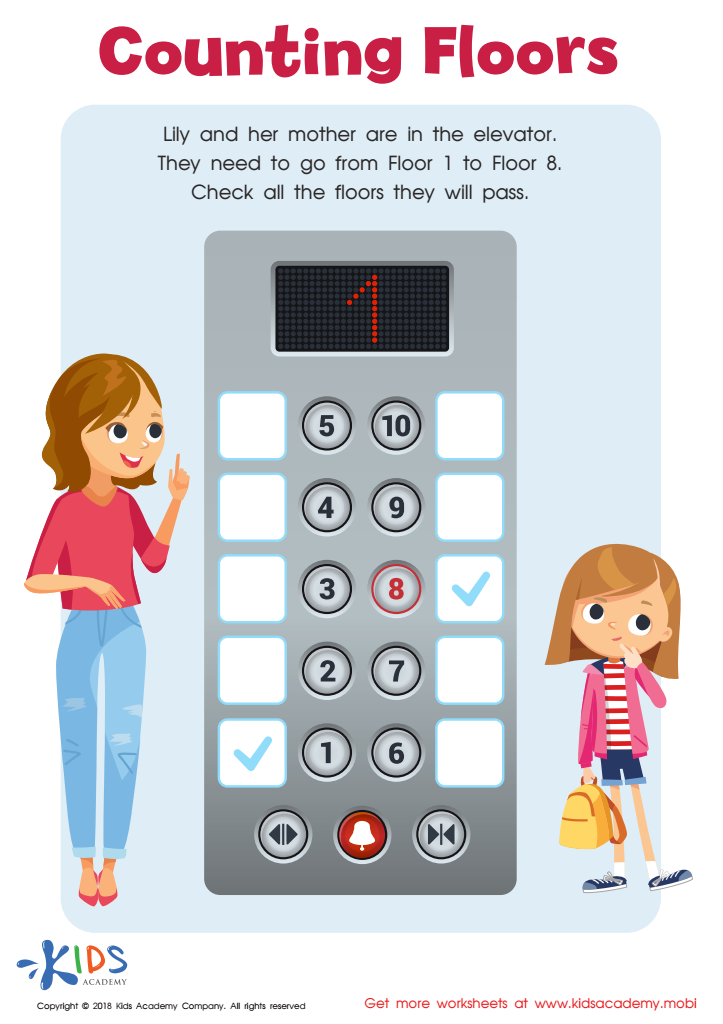
Counting Floors Worksheet
Take your kids on an elevator ride and have them help you. With this worksheet, little ones meet Lily and her mom. They're taking an elevator from Floor 1 to Floor 8. Ask them to check the floors they pass and help the two reach their destination.
 Assign to My Students
Counting Floors Worksheet
Worksheet
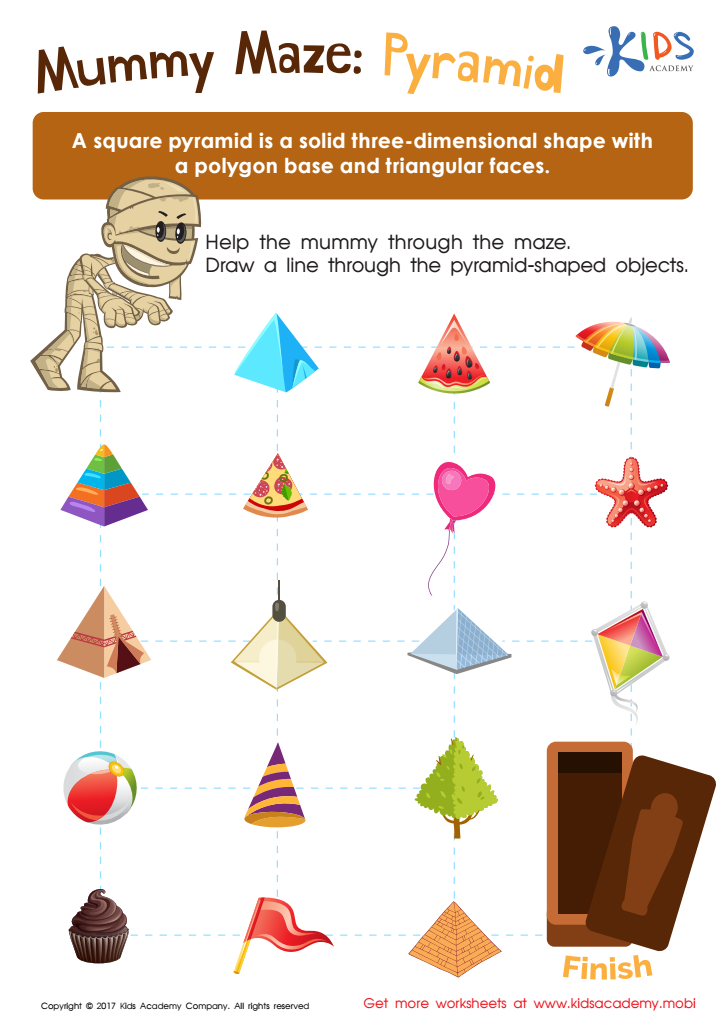
Mummy Maze: Pyramid Printable
Let's learn to spot 3D shapes, such as the iconic pyramid! This fun pyramid geometry worksheet PDF provides interesting illustrations and a maze to help your child identify pyramids in the pictures.
Mummy Maze: Pyramid Printable
Worksheet
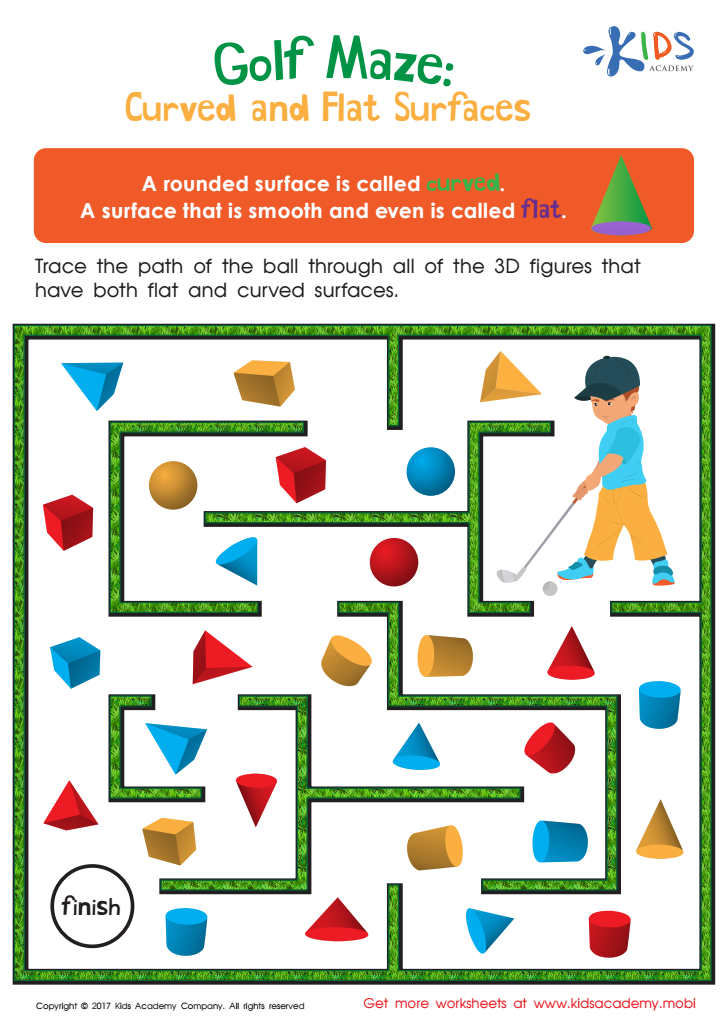
Golf Maze: Curved and Flat Surfaces Worksheet
Give your child a fun and educational challenge with this geometry maze! Your child will navigate 3D shapes to find objects with flat and curved surfaces, while learning important math concepts.
Golf Maze: Curved and Flat Surfaces Worksheet
Worksheet
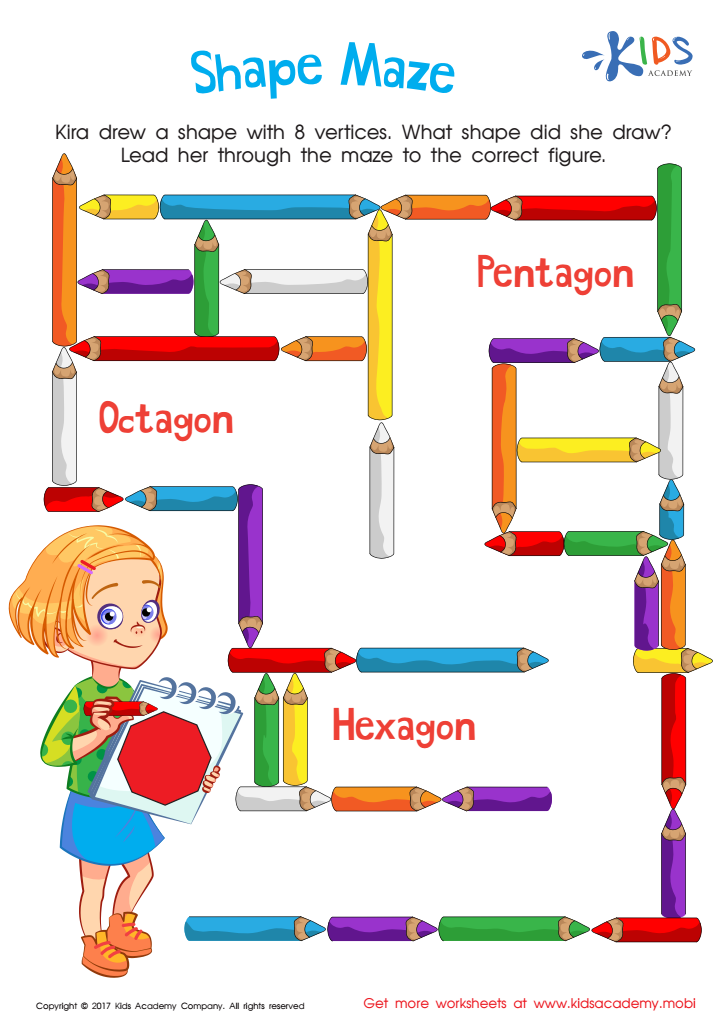
Shape Maze Worksheet
Test your child's geometry knowledge with this fun printable maze! They'll need to identify shapes with 8 vertices to find their way through the maze and get the correct answer.
Shape Maze Worksheet
Worksheet
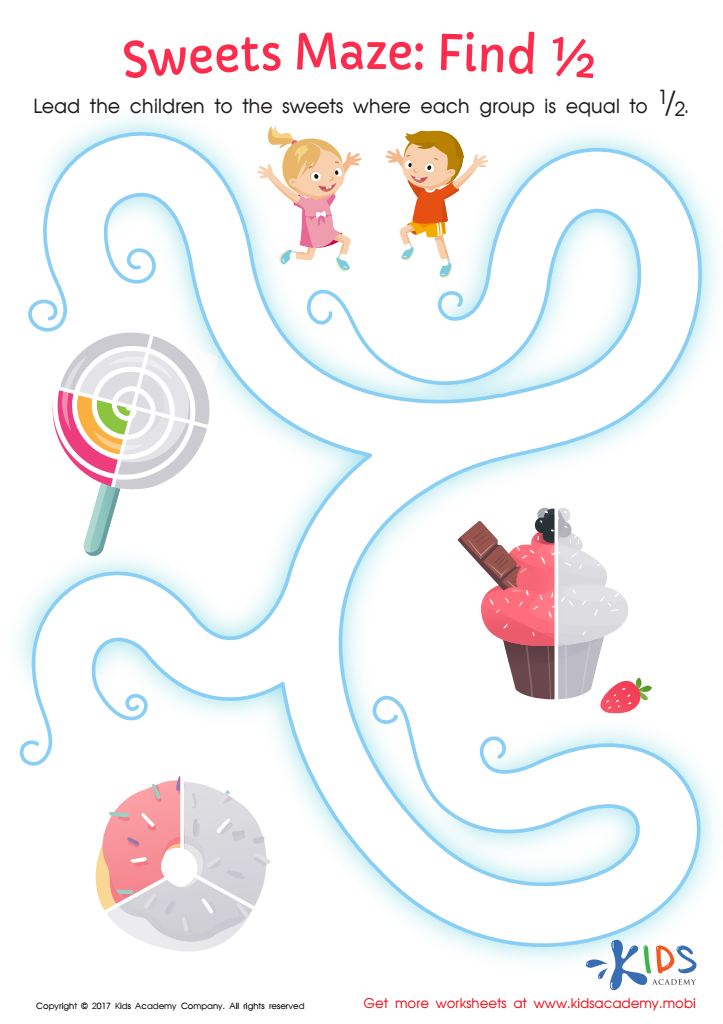
Fractions: Sweets Maze Worksheet
Kids will enjoy mastering parts of a whole with this tantalizing maze featuring tasty treats. Visuals help them understand fractions and the fun theme will motivate them to learn! Get started now to help your child find and identify ½!
Fractions: Sweets Maze Worksheet
Worksheet
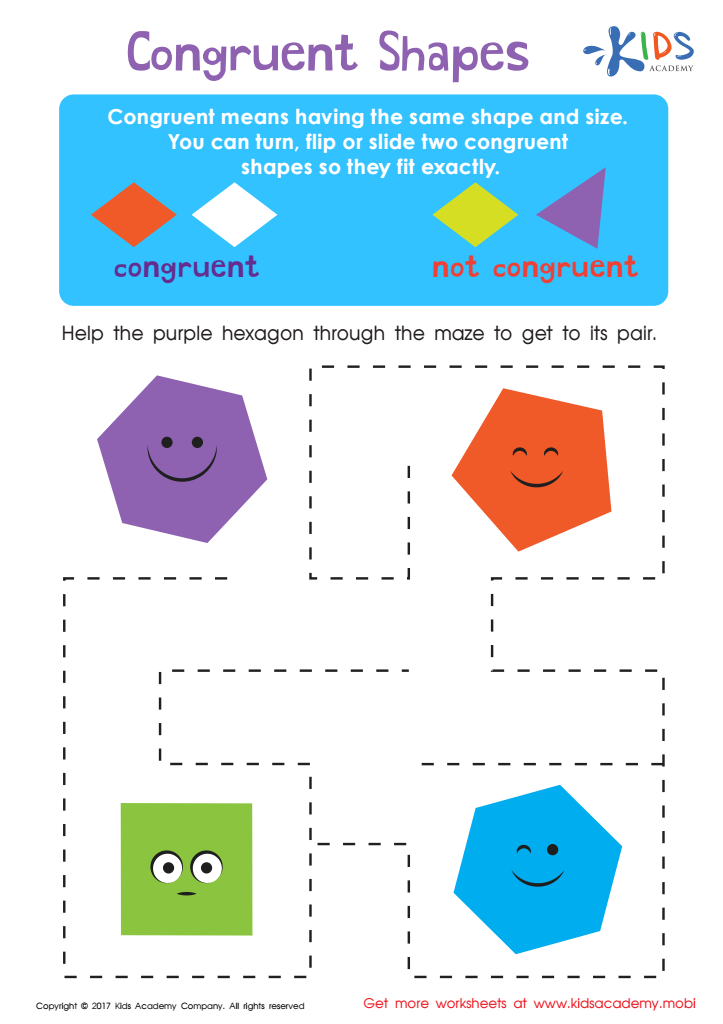
Congruent Shapes Worksheet
Help your child find the twin of the purple hexagon! This congruent shapes worksheet is great for increasing vocabulary while challenging mental rotation skills.
Congruent Shapes Worksheet
Worksheet
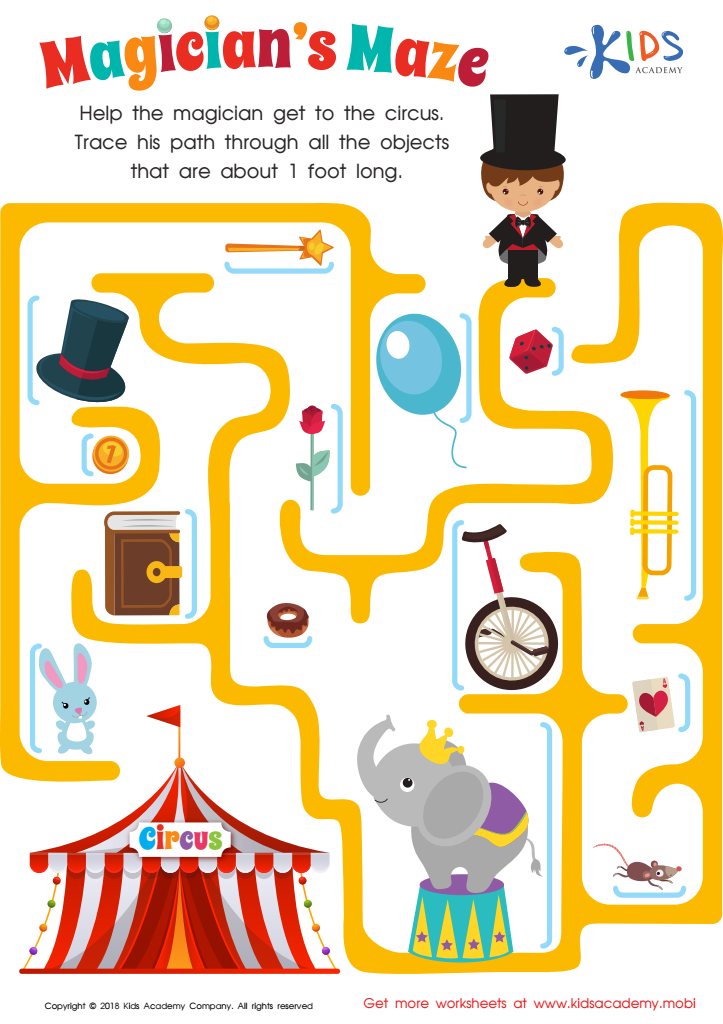
Estimating Length: Magician's Maze Worksheet
Does your kid want to practice magic and have a blast? This exercise will be a great way to help them do so! In the worksheet, they'll need to guide the magician to the circus. How? By tracing his path through the 1-foot long obstacles in the maze. Once they help him get through the objects, the circus will be just a few steps away!
Estimating Length: Magician's Maze Worksheet
Worksheet
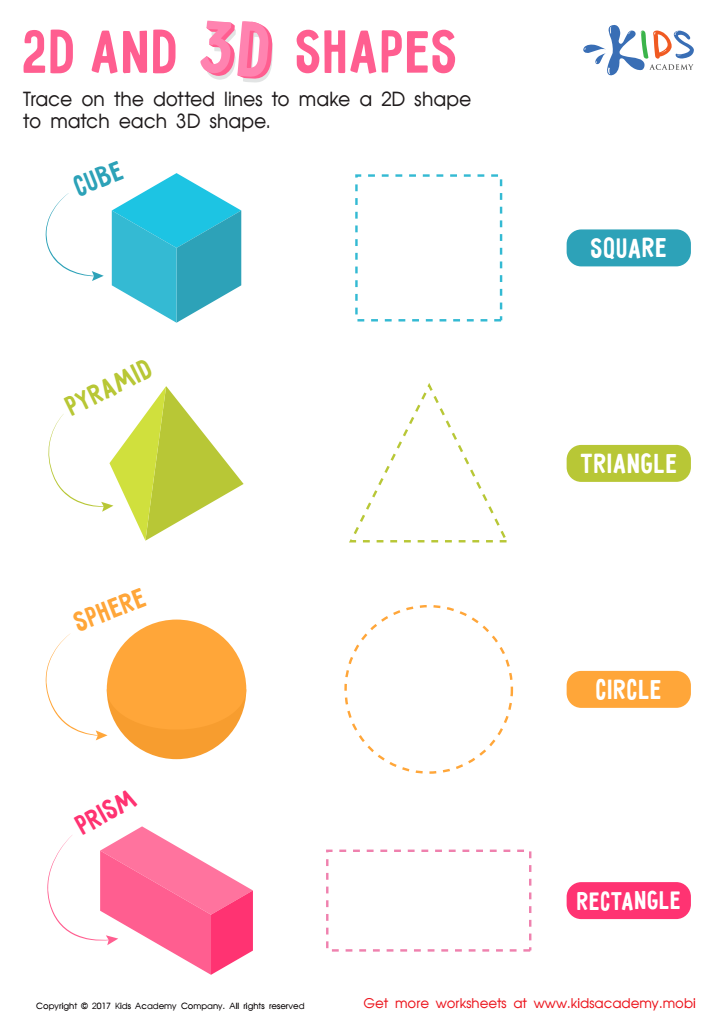
2D and 3D Shapes Worksheet
Introduce your child to 3D and 2D with this traceable worksheet. With dotted lines, help them trace and make a 2D shape for each 3D shape: square, triangle, rectangle, and circle. Show them there's more than one way to draw! You may have taken them to a 3D movie, or they've seen some fantastic 3D art. Now they can wonder no more.
2D and 3D Shapes Worksheet
Worksheet
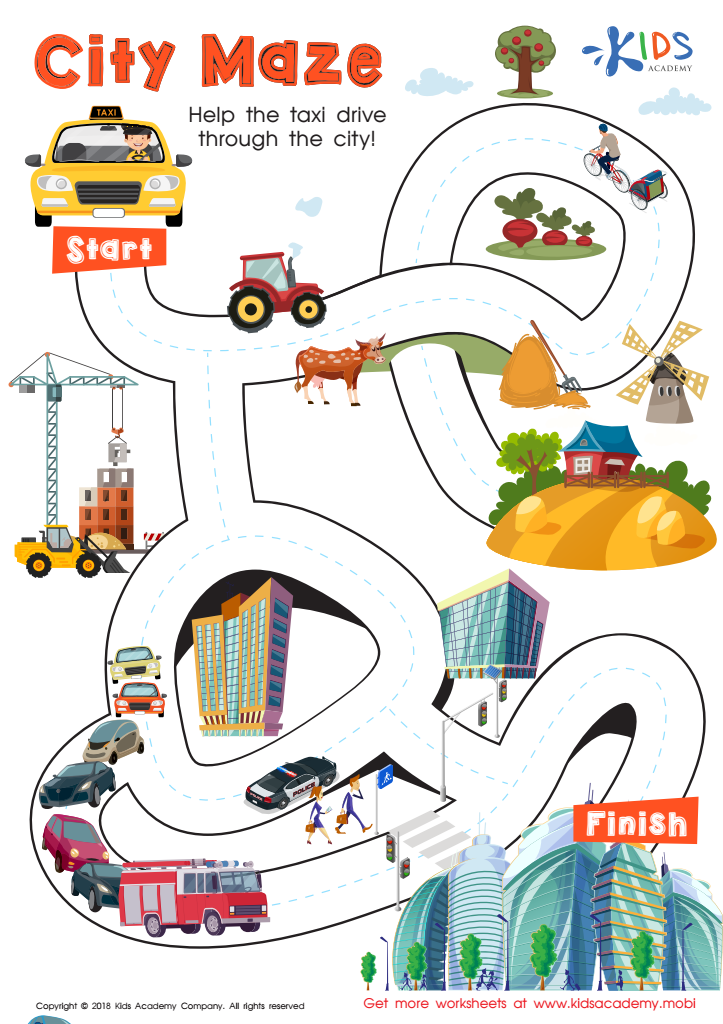
City Maze Worksheet
Kids love mazes! This free PDF city maze worksheet is sure to be a hit. Help your friend the taxi driver get through the maze, following traceable lines through different communities to the big city. It's a fun and challenging way to practice fine motor skills and succeed!
City Maze Worksheet
Worksheet
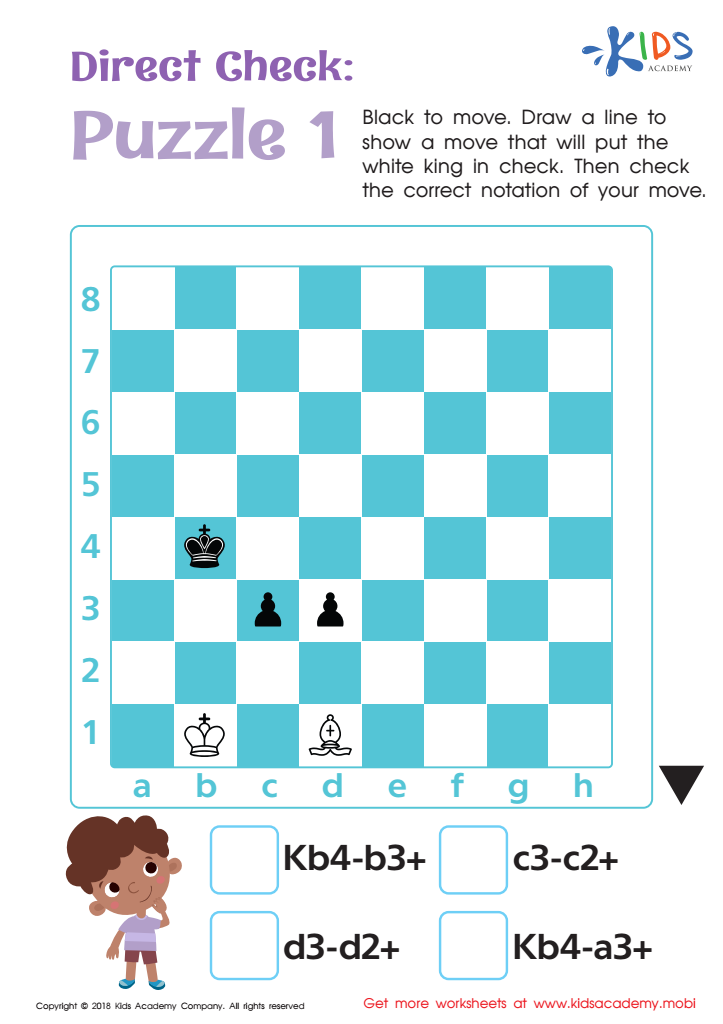
Direct Check: Puzzle 1 Worksheet
Your child can test their chess knowledge with this worksheet. If they've been taking lessons or playing regularly, they'll enjoy connecting the dots to put the white king in checkmate, then checking the correct notation. Challenge their chess skills!
Direct Check: Puzzle 1 Worksheet
Worksheet
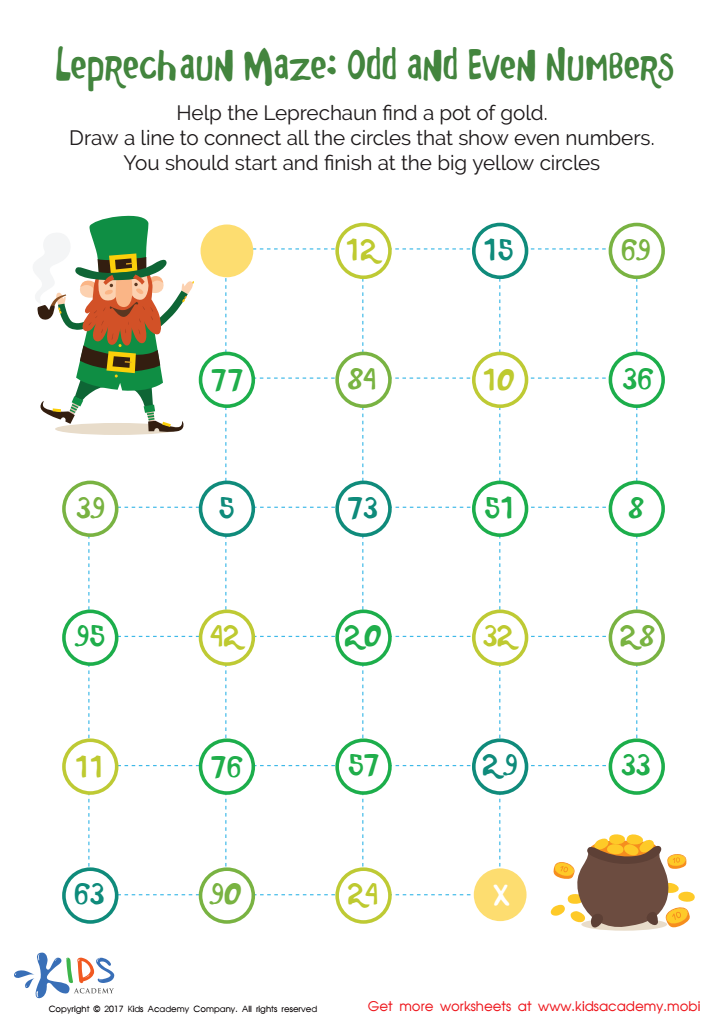
Leprechaun Maze Printable
Help the leprechaun find his pot of gold! Challenge your learner with this St. Patrick's Day worksheet. Let them identify odd or even numbers in the maze and connect the dots. It will be a fun way to celebrate St. Patrick's Day!
Leprechaun Maze Printable
Worksheet
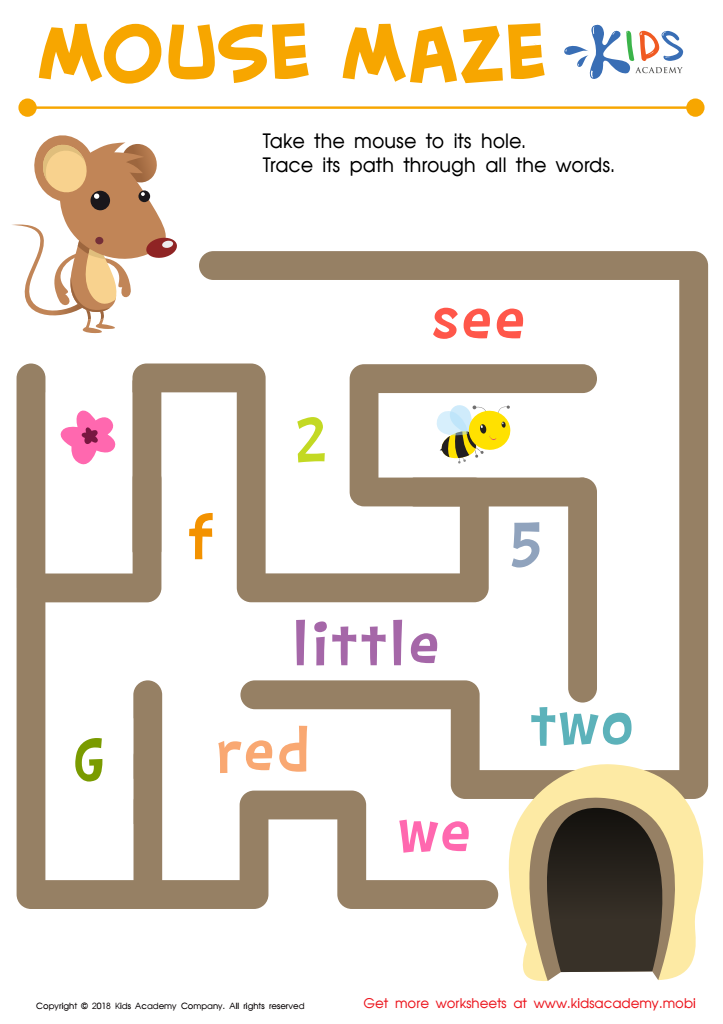
Find Words Mouse Maze Worksheet
Help your child identify words and guide the mouse home! Ask them to point out the colorful animal on the worksheet, then take their hand and show them how to trace the path, going through all the words in the maze to get the mouse back to its hole.
Find Words Mouse Maze Worksheet
Worksheet
Join Kids Academy for Free
Who is primarily going to use this learning content?








Spatial awareness is a crucial skill that helps children understand their environment and how to navigate it effectively. For parents and teachers of children aged 4-8, fostering spatial awareness can have significant benefits for cognitive and physical development. This skill enables kids to comprehend the relationships between objects, unify visual and tactile experiences, and enhance problem-solving abilities.
Improving spatial awareness can enrich a child's performance in various areas, including mathematics, reading, and navigation, as it lays the foundation for concepts like geometry, measurement, and mapping. This is especially important as spatial reasoning has been linked to academic success in STEM fields (science, technology, engineering, and mathematics) later in life.
Moreover, activities that enhance spatial awareness—such as building blocks, puzzles, and outdoor play—also promote fine and gross motor skills, socialization, and creativity. By engaging children in these activities, parents and teachers create opportunities for exploration and active learning.
Ultimately, investing time and resources in developing spatial awareness not only nurtures essential life skills but also builds confidence in young learners as they interact with and make sense of the world around them. Encouraging this development from an early age sets a strong foundation for lifelong learning and success.








