Understanding graphs Extra Challenge Worksheets for Ages 4-8
3 filtered results
-
From - To
Our "Understanding Graphs Extra Challenge Worksheets for Ages 4-8" are designed to enhance young learners' analytical skills through fun and engaging activities. These worksheets introduce children to various types of graphs, helping them recognize patterns, interpret data, and solve simple problems. By presenting information in a colorful and accessible way, our worksheets make learning graph skills enjoyable and interactive. Perfect for classroom or at-home practice, these worksheets cater to a range of skill levels and encourage critical thinking. Give your child the tools to succeed in math and build a solid foundation for future data analysis skills.
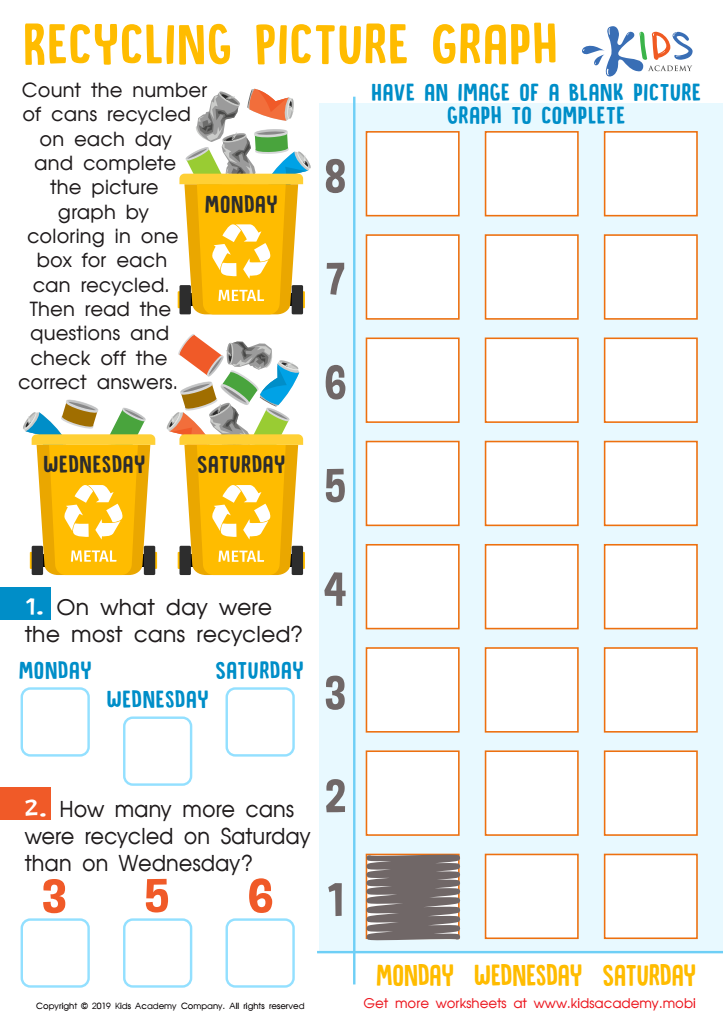
Recycling Picture Graph Worksheet
 Assign to My Students
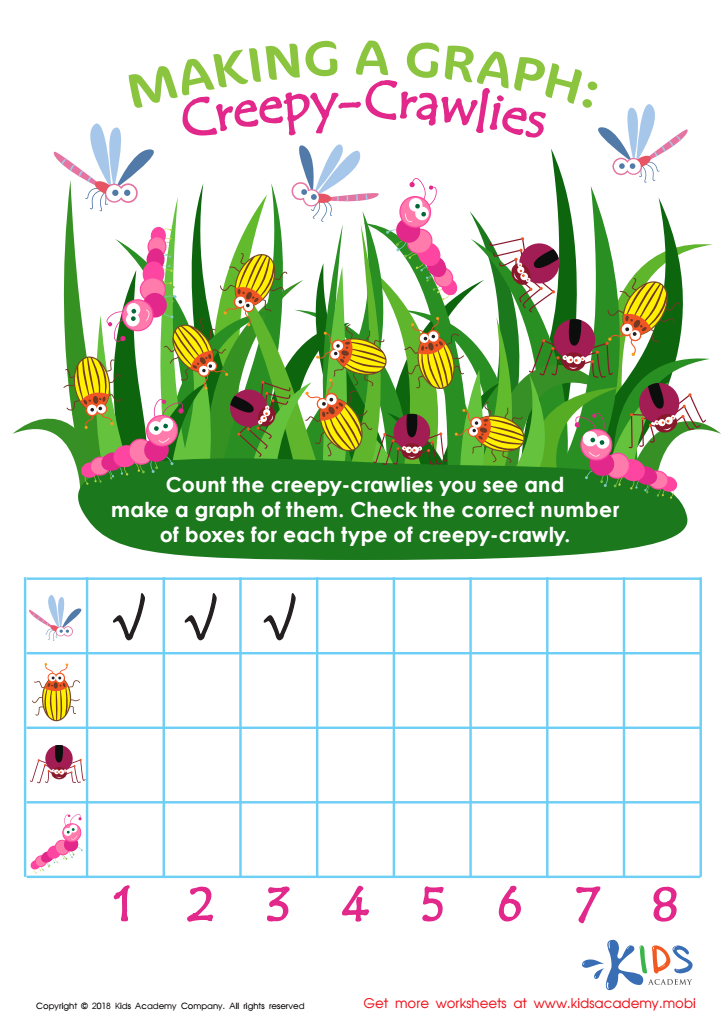
Making a Graph: Creepy Crawlies Worksheet
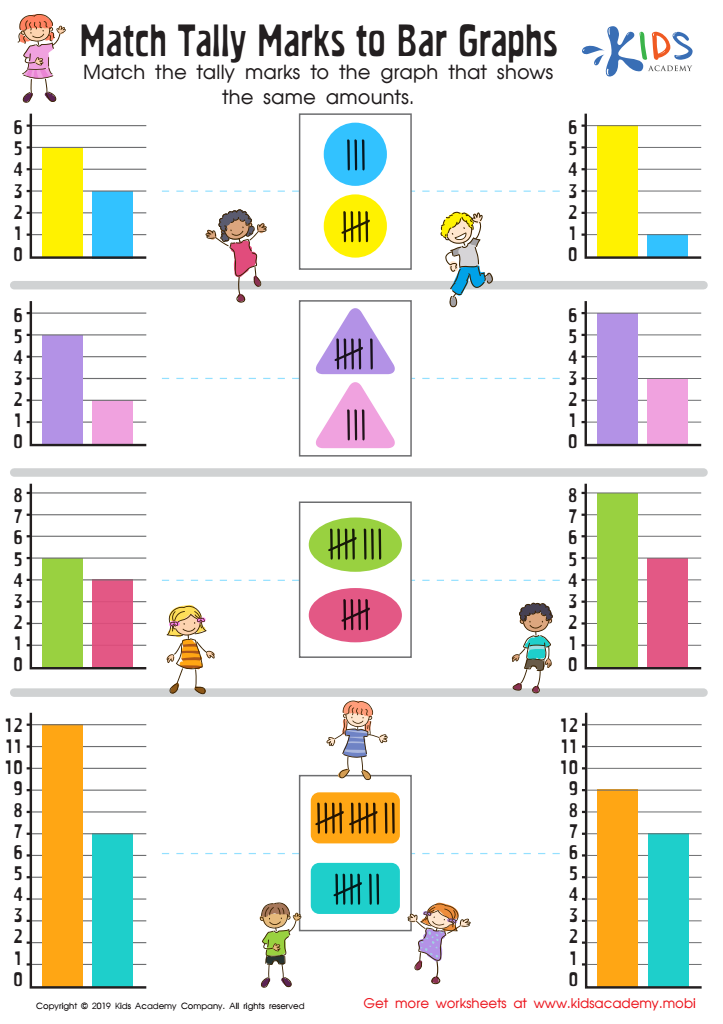
Match Tally Marks to Bar Graphs Worksheet







Understanding graphs at an early age sets crucial foundational skills. For children aged 4-8, grasping basic graph concepts will empower them with essential life skills, both academically and in everyday situations.
Firstly, early exposure to graphs enhances critical thinking. Children learn to interpret, analyze, and make decisions based on data. This reinforces logical reasoning and problem-solving skills. While they explore graphs depicting favorite fruits or daily weather, they hone the ability to visualize information efficiently.
Secondly, engaging with graphs boosts mathematical confidence and competence. Children familiarize themselves with comparing quantities, identifying patterns, and understanding measurements in a fun, visual manner. Mastery of these skills is fundamental for more advanced mathematical concepts.
Furthermore, understanding graphs enriches communication. Young learners articulate their findings and observations, laying groundwork for strong language and presentation skills. Collaborative graph activities also nurture teamwork and social skills.
Finally, the inclusion of graph comprehension aligns classroom learning with real-world scenarios, making education more relatable and practical. Whether reading a simple bar graph or a pictogram, children start seeing connections between their studies and daily life, fostering a lifelong appreciation for learning.
Parents and teachers should value these early challenges because they build a resilient and versatile foundation, equipping children to navigate a data-driven world with confidence and curiosity.








