Shape Recognition Extra Challenge Tracing Shapes Worksheets for Ages 4-8
4 filtered results
-
From - To
Enhance your child's shape recognition skills with our "Shape Recognition Extra Challenge Tracing Shapes Worksheets" designed specifically for ages 4-8. These engaging and interactive worksheets encourage young learners to trace various shapes, reinforcing both their fine motor skills and understanding of geometry. Each worksheet introduces a mix of basic and complex shapes, providing an extra challenge for those ready to advance their learning. Ideal for at-home practice or classroom use, these resources promote concentration and precision while making learning fun. Foster a love for shapes and early math skills today with our easy-to-use tracing worksheets!
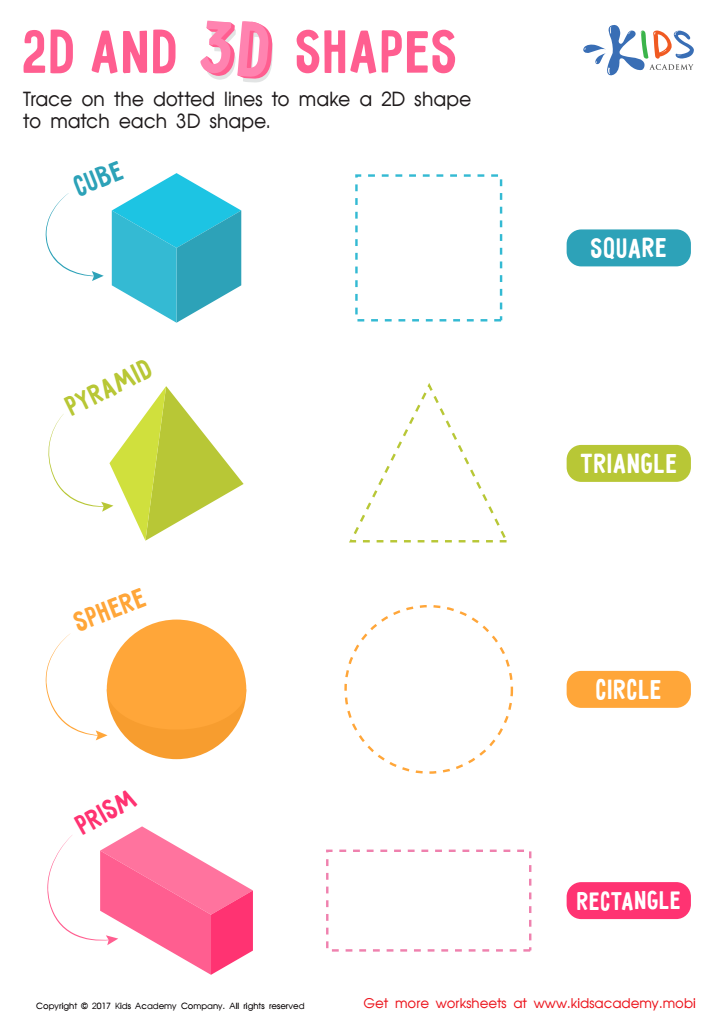
2D and 3D Shapes Worksheet
 Assign to My Students
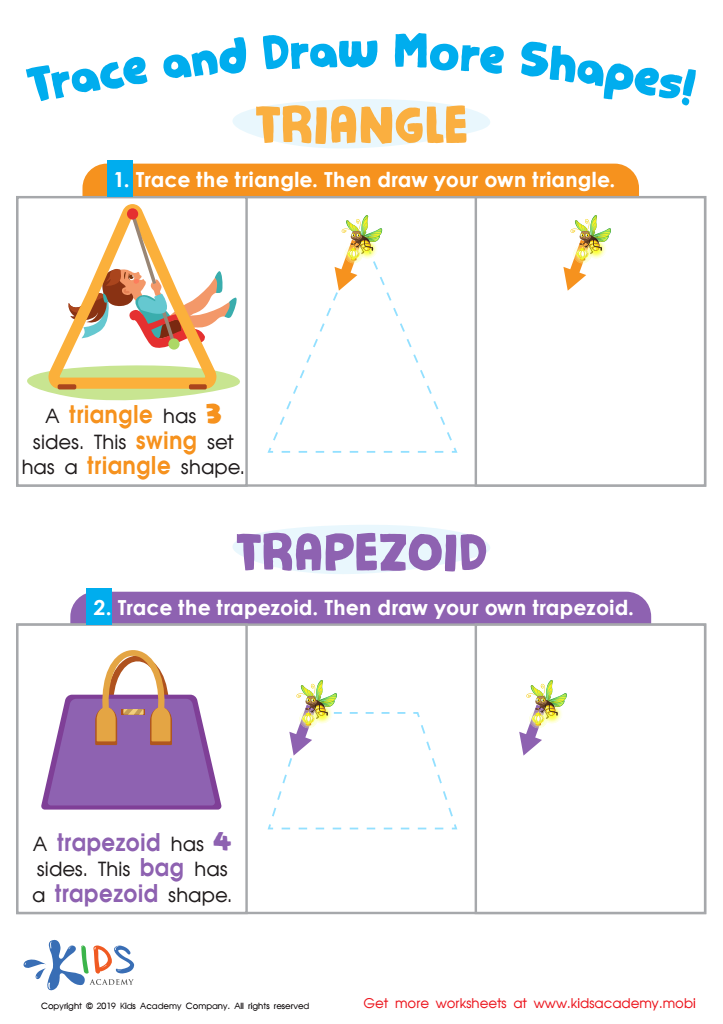
Trace and Draw More Shapes Worksheet
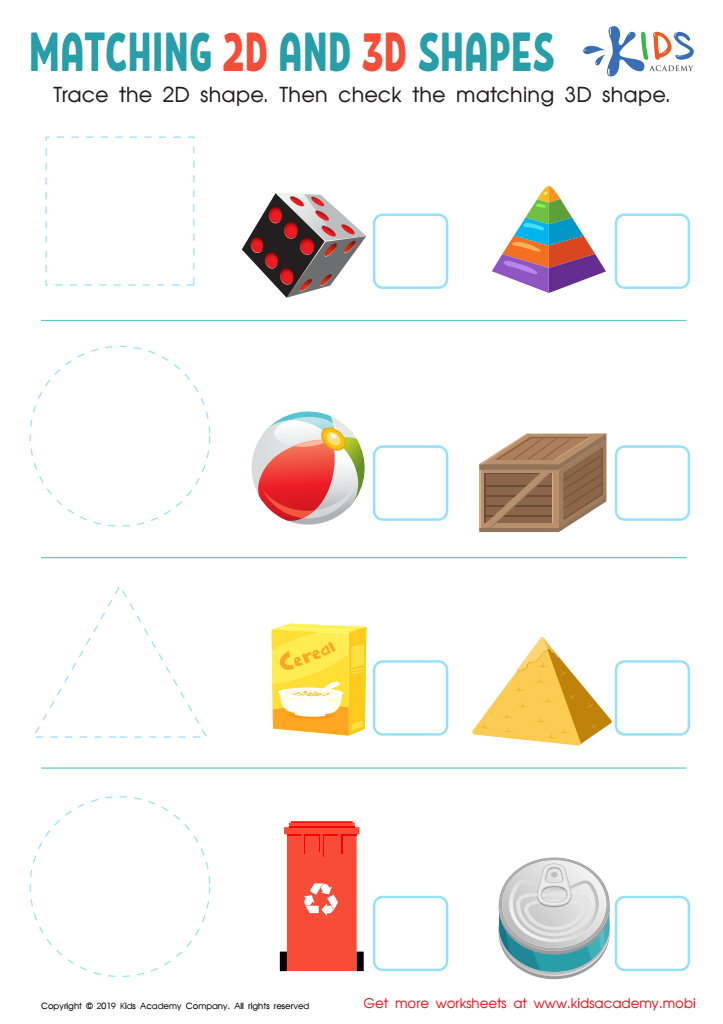
Matching 2D and 3D Shapes Worksheet
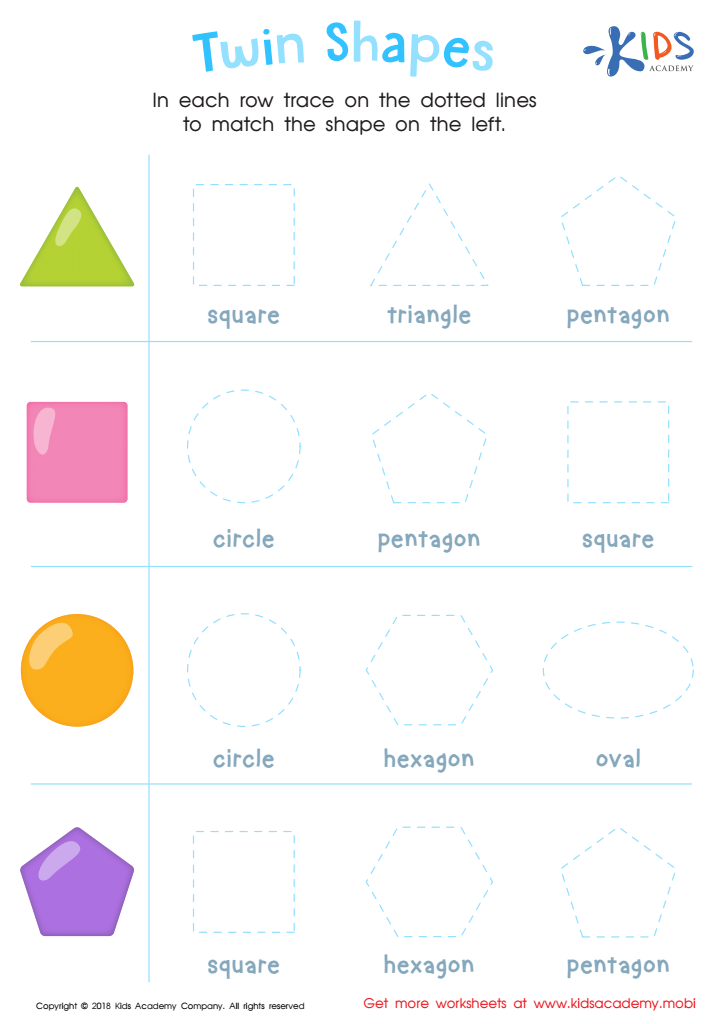
Twin Shapes Dot-to-Dot Worksheet








Shape recognition is a foundational skill that supports children's overall development and learning. For parents and teachers, engaging children in activities like Shape Recognition Extra Challenge Tracing Shapes can greatly enhance their cognitive skills. First, shape recognition enhances visual perception, which is crucial for effective reading and writing. Children learn to identify shapes, leading to better pattern recognition, an essential aspect of mathematics and spatial awareness.
Second, tracing shapes encourages fine motor skills development. As children grasp pencils or crayons to trace shapes, they strengthen hand-eye coordination and dexterity, preparing them for more complex tasks such as writing letters and numbers.
Moreover, this activity fosters critical thinking as children start to understand how shapes connect and differ. They can explore concepts like symmetry and congruence, which are vital in math.
Involving parents in this activity deepens the learning experience, as joint participation nurtures parent-child bonding and emotional support. This engagement also provides opportunities for parents to reinforce the practical use of shapes in everyday life, such as in architecture or nature.
Ultimately, Shape Recognition Extra Challenge activities are essential for holistic learning as they not only build math readiness but also positively influence fine motor skills, cognitive development, and family involvement in education.