
Interpreting data Extra Challenge Worksheets for Ages 4-9
3 filtered results
Difficulty Level
Grade
Age
-
From - To
Subject
Activity
Standards
Discover our "Interpreting Data Extra Challenge Worksheets" designed for children ages 4-9! These engaging worksheets foster essential data interpretation skills through fun and interactive activities. Kids will love exploring visually compelling graphs, charts, and tables while developing critical thinking and analytical abilities. Each worksheet features age-appropriate challenges that aim to enhance confidence in understanding and interpreting information. Perfect for reinforcing classroom learning or home study, these worksheets are an excellent resource for teachers and parents alike. Help your child build a strong foundation in data literacy today with our creative and stimulating worksheets – the perfect extra challenge for curious minds!
Favorites
With answer key
Interactive
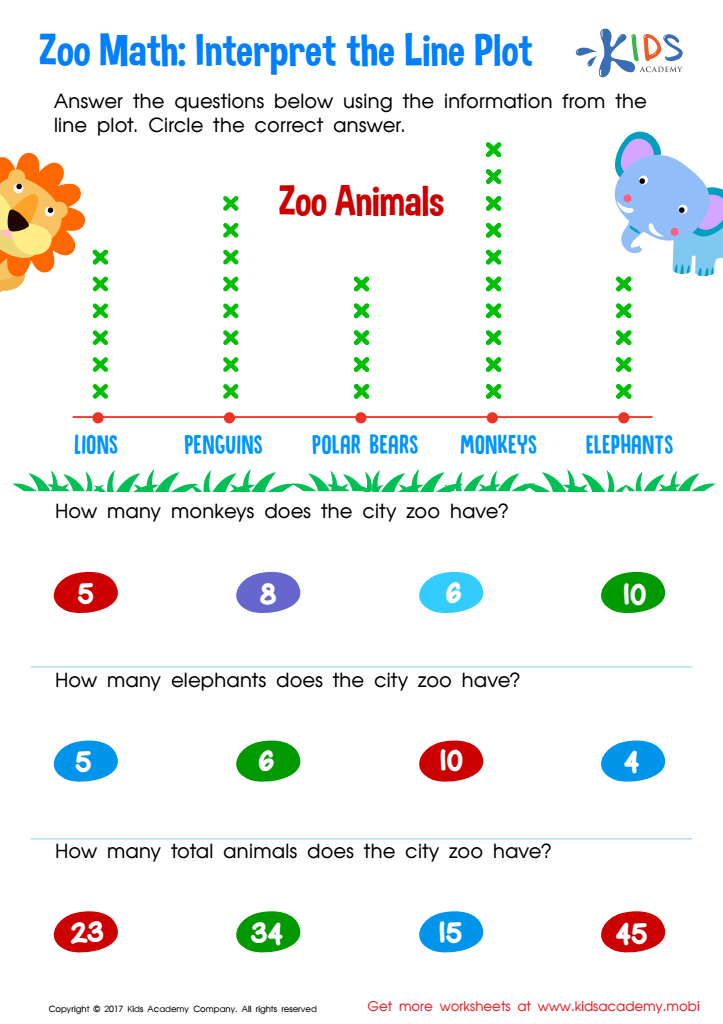
Interpret Line Plot Worksheet
Kids can learn to read graphs and analyze data easily with line plots. A fun zoo animal worksheet motivates kids to answer questions by reading the line plot and finding out how many animals a local zoo has.
 Assign to My Students
Interpret Line Plot Worksheet
Worksheet
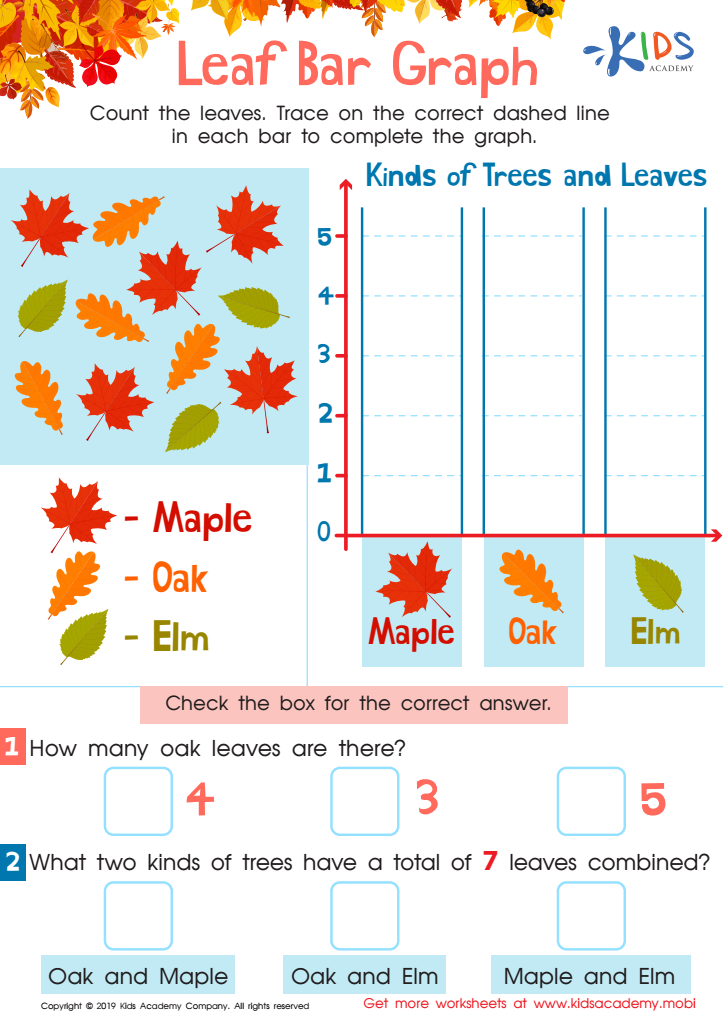
Leaf Bar Graph Worksheet
You can help your kids make learning easier and more enjoyable. While their teachers provide lessons and homework, you can take their education further. This worksheet can assist them in mastering bar charts. Count the leaves, then trace the correct line for each bar to complete the graph.
Leaf Bar Graph Worksheet
Worksheet
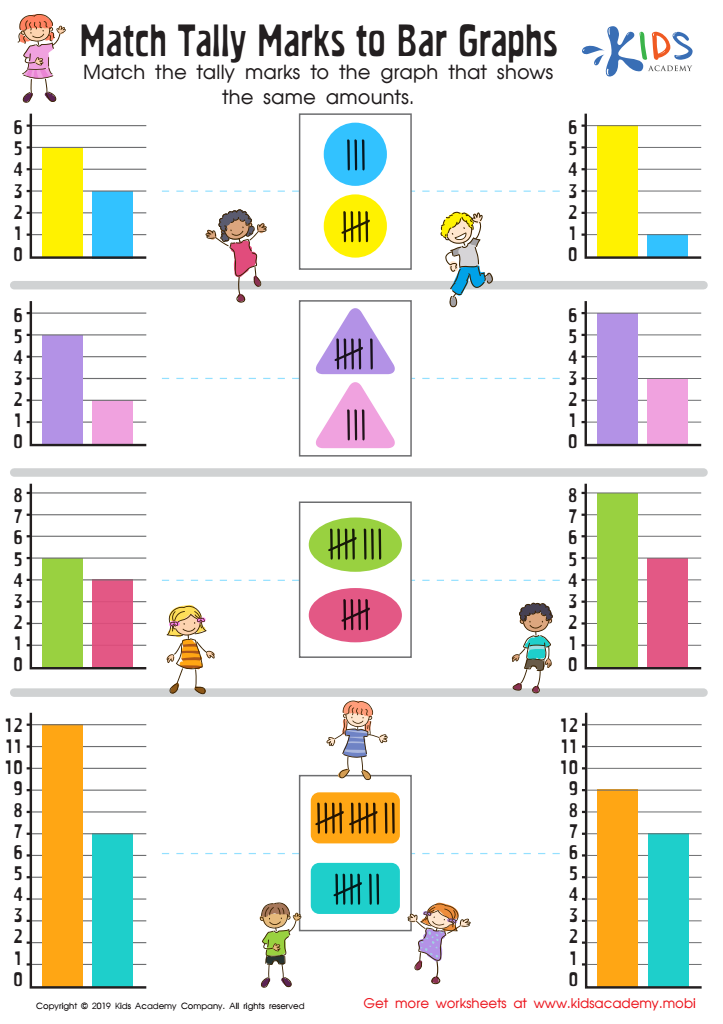
Match Tally Marks to Bar Graphs Worksheet
Learning math can be tough for kids. Rules and formulas can be confusing. Don't worry, this worksheet can help them understand graphs better. Show them how to match the tally marks with the graph that shows the same amount. It will help them grasp the basics and prepare them for more complex equations.
Match Tally Marks to Bar Graphs Worksheet
Worksheet
Join Kids Academy for Free
Who is primarily going to use this learning content?




.jpg)


Interpreting data is crucial for parents and teachers, especially for children aged 4-9, as it lays the foundation for critical thinking and problem-solving skills. At this formative stage, children are learning how to make sense of information, and their ability to interpret data can significantly impact their learning journey.
By understanding data, children can learn to recognize patterns, make predictions, and draw conclusions based on evidence. This skill fosters curiosity and encourages them to ask questions, leading to deeper engagement with their surroundings. For teachers, interpreting data about students' performance—such as assessment scores or participation rates—helps in tailoring instruction to meet individual needs, ensuring that each child can progress at their own pace.
Moreover, parents can support their children's learning by exploring everyday data together, such as weather charts or age comparisons. This collaborative activity not only strengthens their bond but also instills a sense of confidence in navigating information. Overall, prioritizing the interpretation of data enriches educational experiences, equips children with essential life skills, and prepares them for future academic challenges. Encouraging young learners in this area sets a strong precedent for lifelong learning.








