Shape identification Extra Challenge Worksheets for Ages 4-9
6 filtered results
-
From - To
Discover our engaging Shape Identification Extra Challenge Worksheets designed specifically for children ages 4 to 9! These worksheets provide an exciting opportunity for young learners to enhance their shape recognition skills through fun and interactive activities. Tailored to challenge and stimulate critical thinking, students will explore various shapes, their properties, and real-world applications. From identifying shapes in different contexts to solving shape-based puzzles, these worksheets foster creativity and strengthen cognitive development. Perfect for classroom use or at-home learning, our printable resources support educators and parents in reinforcing essential geometry skills while keeping students motivated and entertained. Explore shapes like never before!
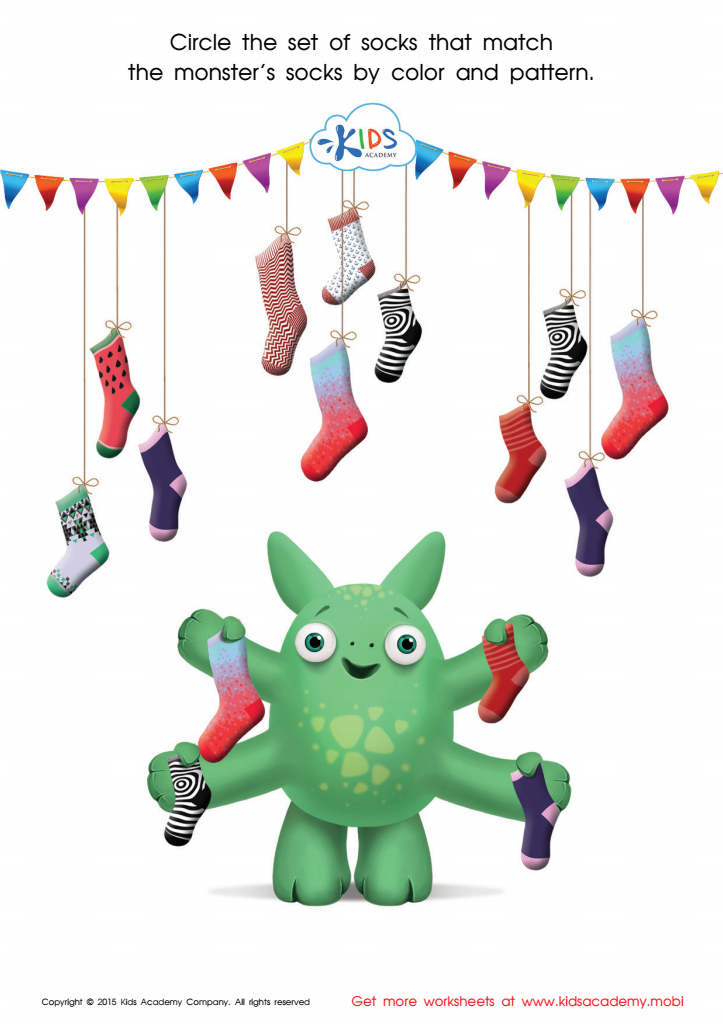
Sort the Monster's Socks Worksheet
 Assign to My Students
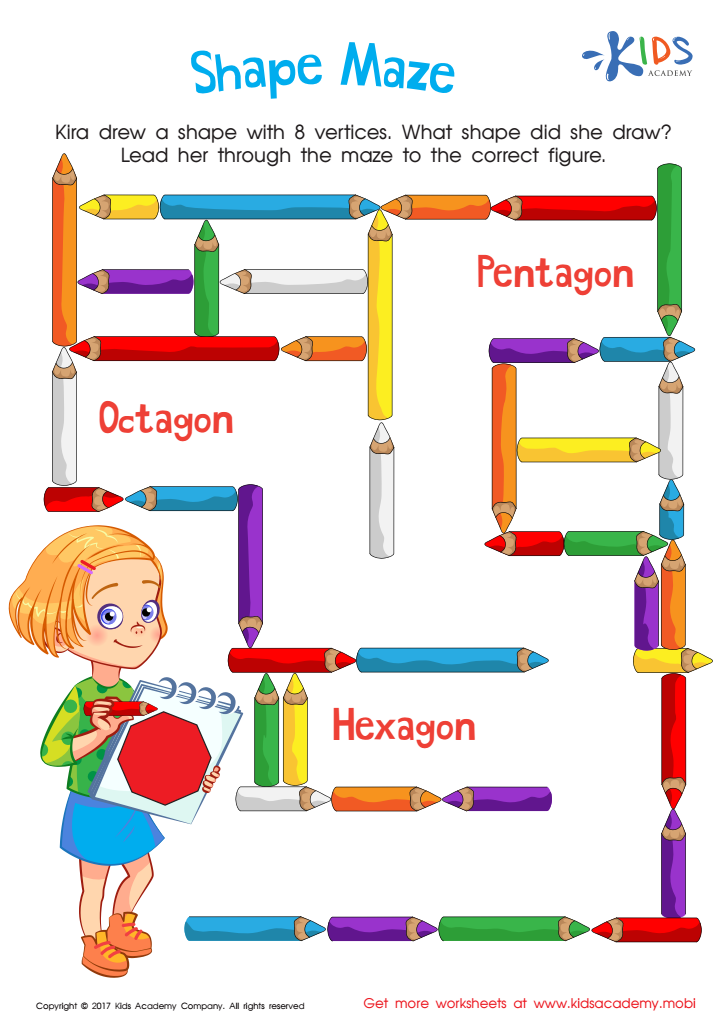
Shape Maze Worksheet
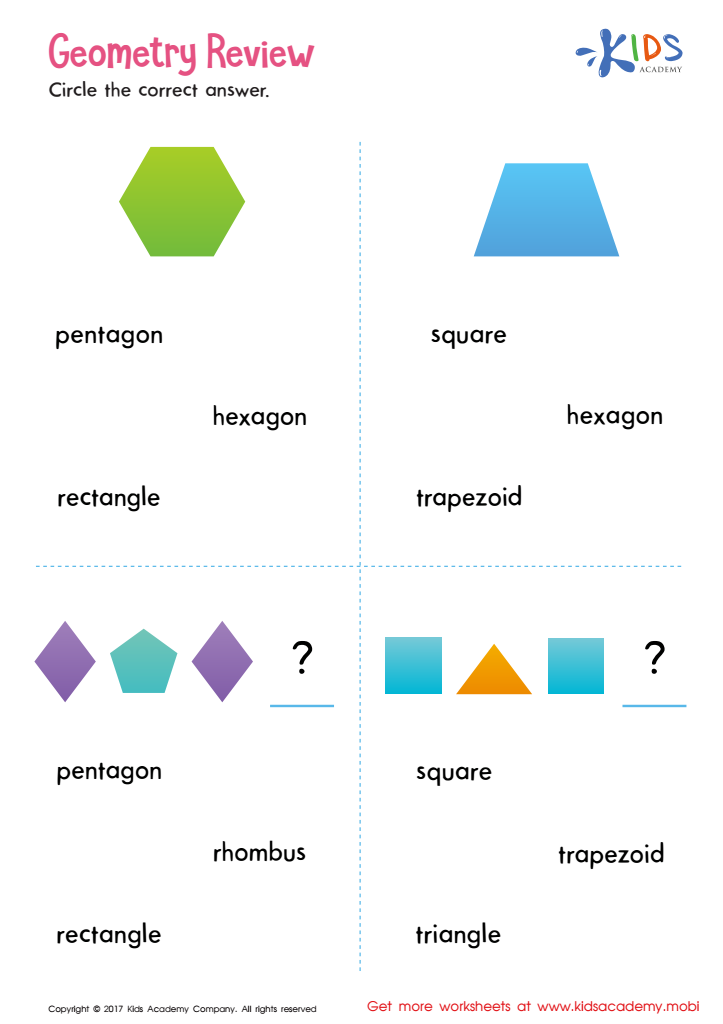
Geometry Review Printable
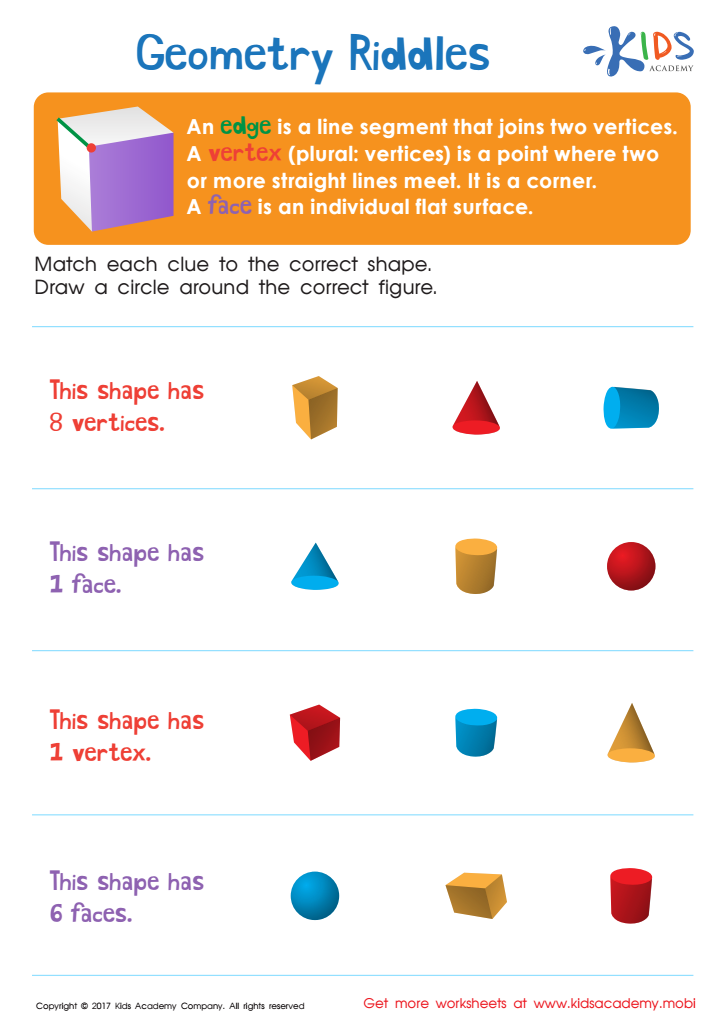
Geometry Riddles Printable
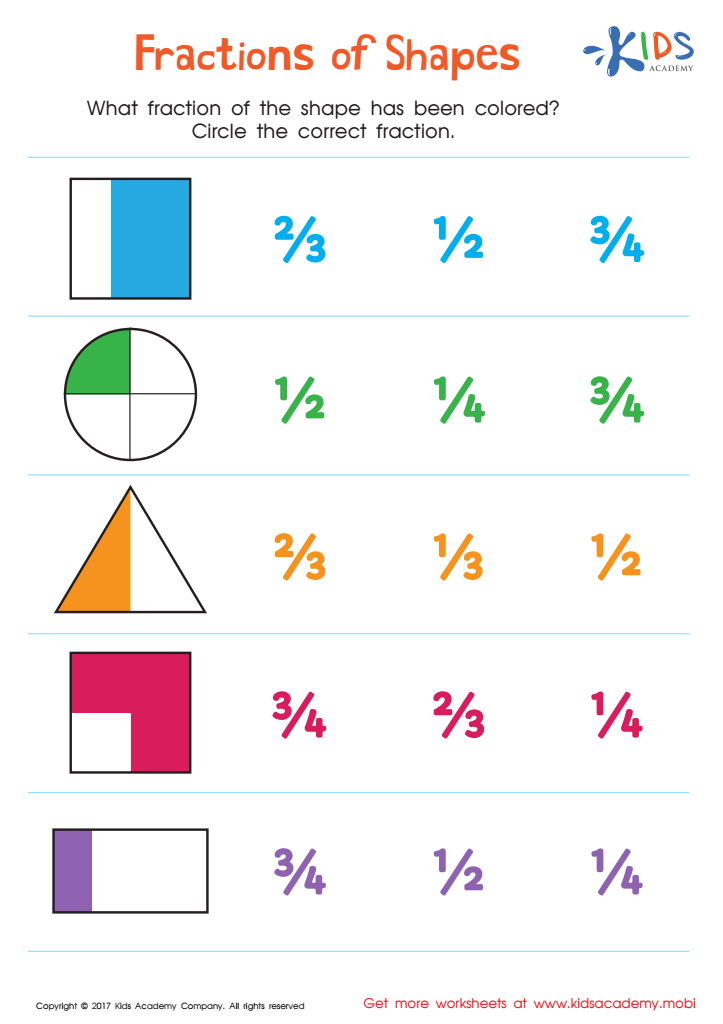
Fractions of Shapes: Math Concept Worksheet
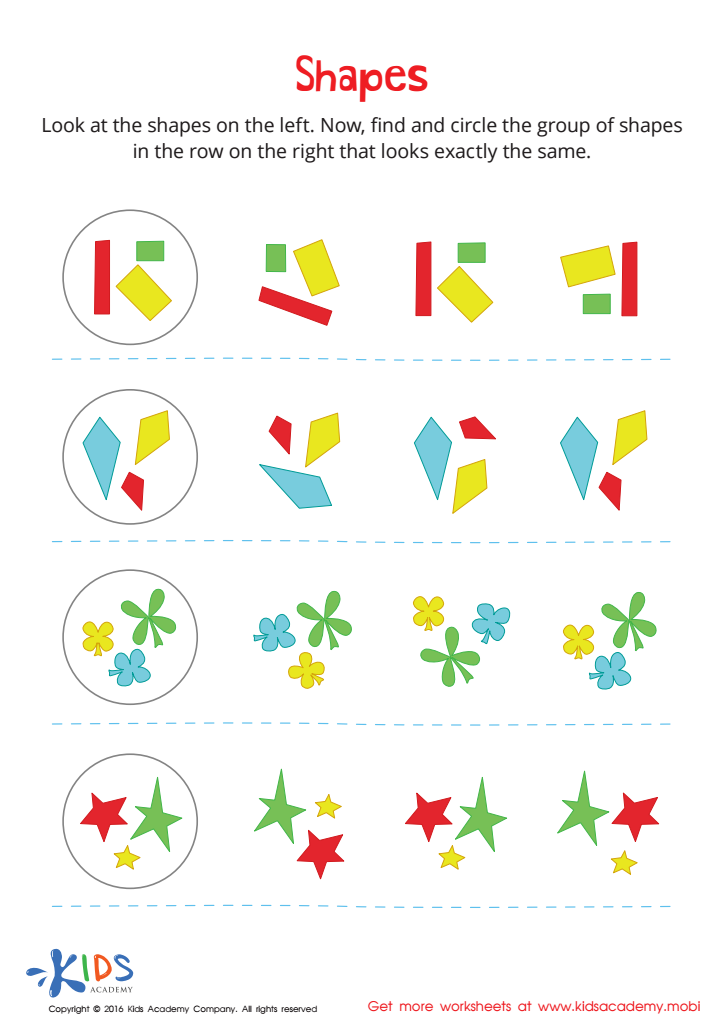
Shapes Worksheet








Shape identification is a fundamental skill for children aged 4-9 that lays the groundwork for various cognitive and academic skills. Understanding shapes enhances spatial awareness, problem-solving abilities, and critical thinking. By incorporating extra challenges in shape identification, parents and teachers can stimulate students’ minds, making learning more engaging and enjoyable.
Engaging children in additional shape challenges can also foster creativity and imagination. As they explore different shapes through art, construction, and nature, they learn to recognize and apply geometric concepts in real-world contexts. This hands-on approach builds a strong foundation for future mathematical learning, as understanding shapes is crucial for understanding more complex concepts like fractions, even symmetry, and measurement.
Moreover, these extra challenges can boost confidence and motivation. When children successfully tackle shape identification tasks, they experience a sense of accomplishment that encourages them to tackle more challenging concepts. Additionally, collaboration in group activities promotes social skills and teamwork.
In conclusion, shape identification extra challenges benefit children not just academically but holistically, while empowering parents and teachers to nurture well-rounded, curious, and capable learners. By fostering a rich learning environment, adults help children develop essential skills that will serve them well throughout their educational journeys and beyond.








